


Primary sourceSculpture1889
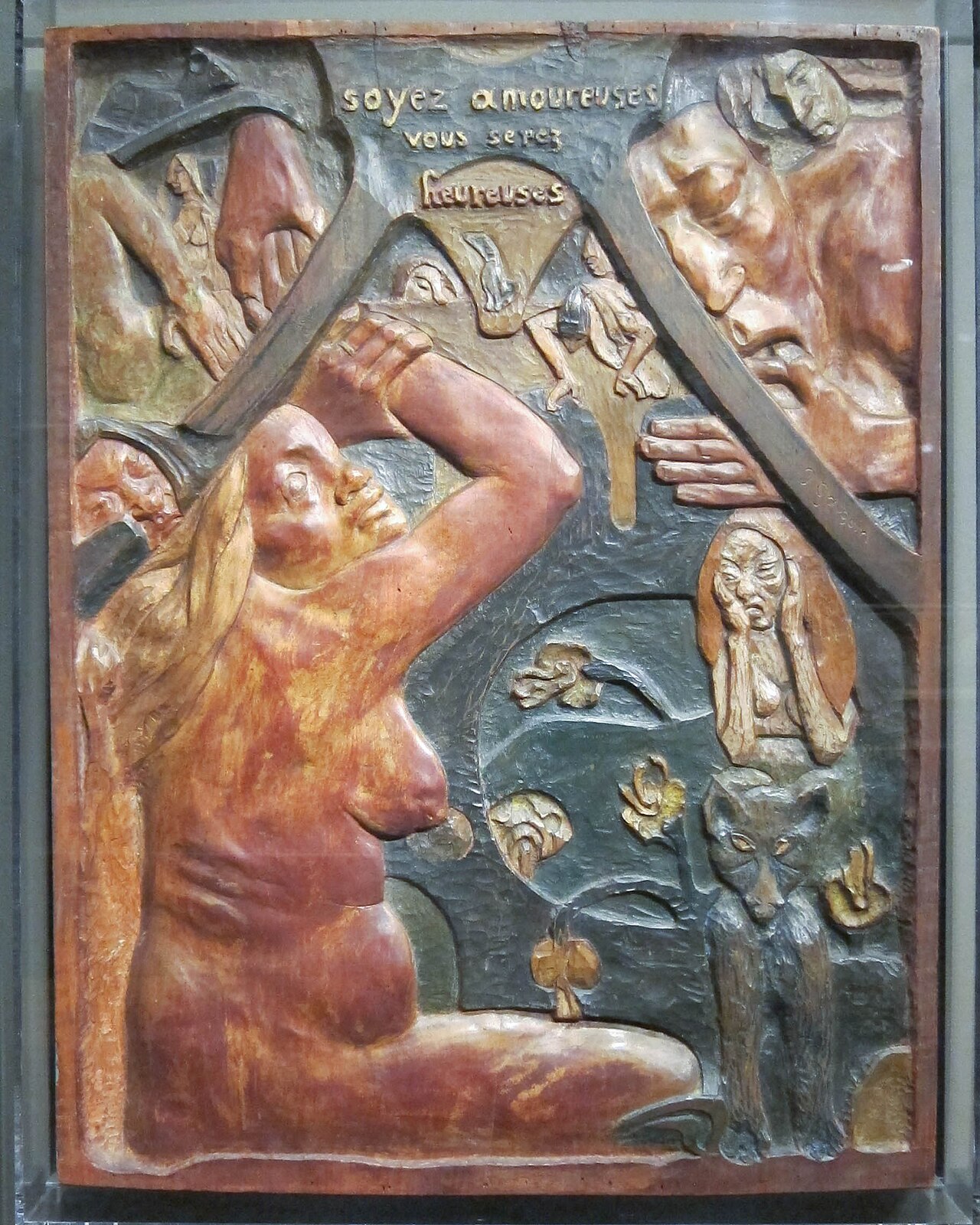
Soyez amoureuses vous serez heureuses
Paul Gauguin · 1889
A carved and painted wooden relief of 1889 by Gauguin, including a self-portrait, exploring themes of desire, guilt, and sexual power.
Carved by Gauguin, this relief includes a self-portrait and reflects his conflicted feelings about desire and colonial guilt.
About this source
What it is
This is a carved and polychromed wood relief made by Paul Gauguin in autumn 1889, now held by the Museum of Fine Arts, Boston. It shows Gauguin himself in the upper right, sucking his thumb and grasping the hand of a nude woman who seems to recoil, along with other figures, a fox, and flowers.
Why it matters
First shown in Brussels in 1891 to hostile reviews, the relief was reassessed after a 1906 retrospective and went on to influence later artists including Matisse and Picasso. Its bitter, ironic title reflects Gauguin's conflicted feelings about European morality, colonial guilt, and his own sexual conduct. Vincent van Gogh mentioned the work in a letter to his brother Theo, who owned it for a time.
Look closer
- Why might Gauguin have given this disturbing scene such a hopeful-sounding title?
- What does the fox, included elsewhere in Gauguin's work as a symbol, seem to be doing in this scene?
- How does Gauguin portray himself compared to the woman beside him?
This sculpture is part of the curated material that grounds the AI version of Paul Gauguin on Humy.ai — when students ask about related events, the AI can quote it and cite it.
More Paul Gauguin sources
Browse all 97 →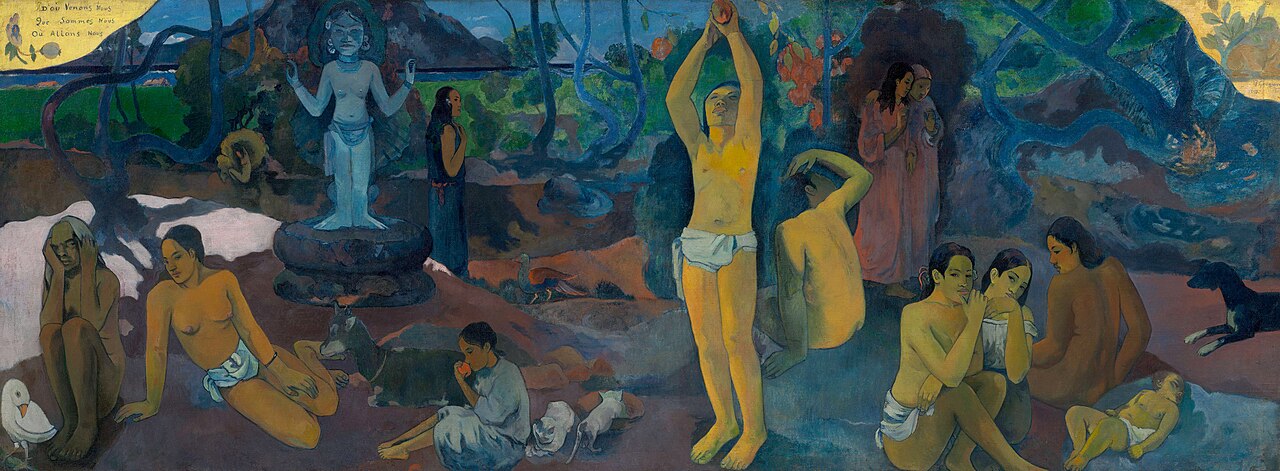 Painting
Primary source
Where Do We Come From? What Are We? Where Are We Going?
Paul Gauguin · 1897-98
 Painting
Primary source
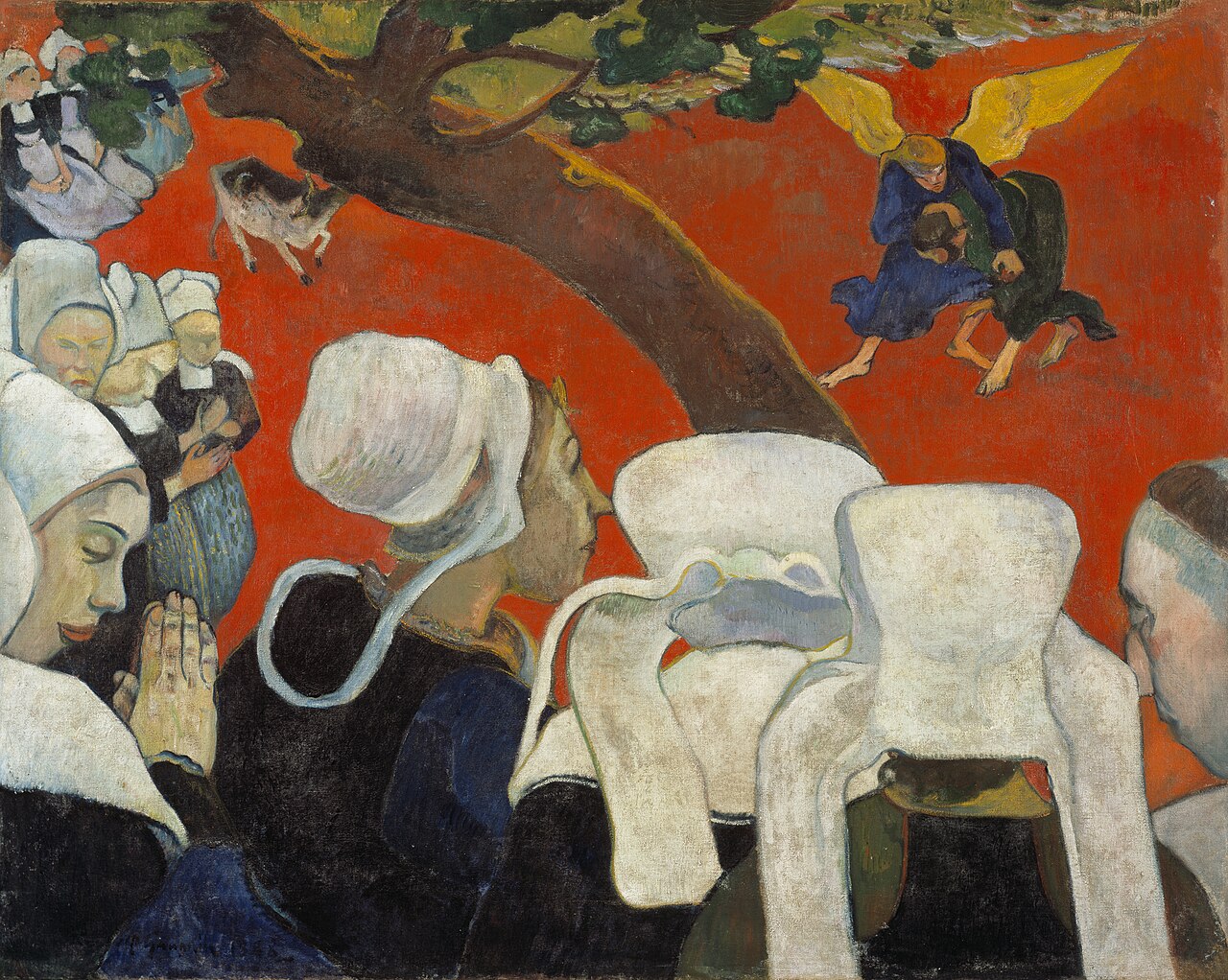
Vision After the Sermon
Paul Gauguin · 1888
 Painting
Primary source
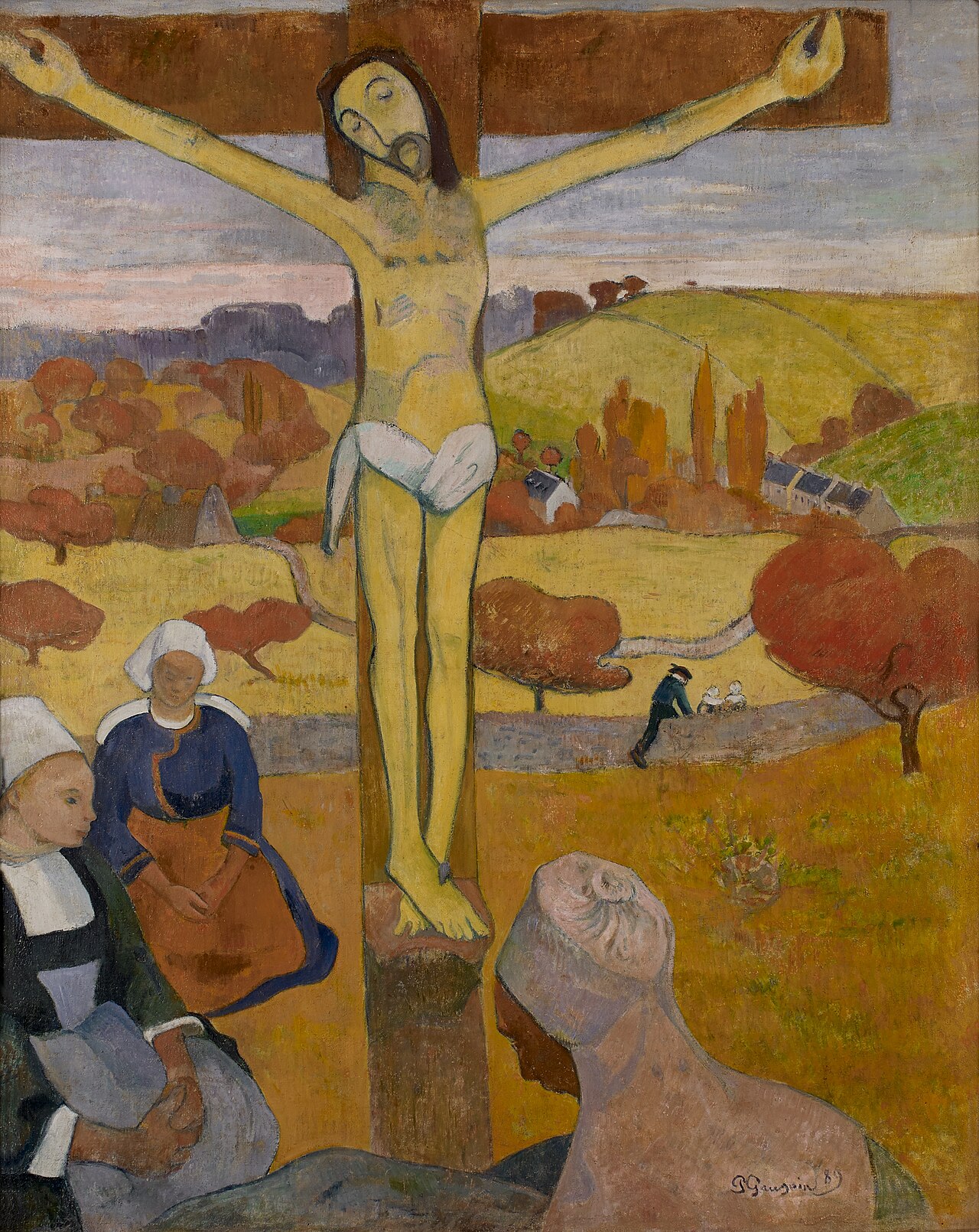
The Yellow Christ
Paul Gauguin · 1889
 Painting
Primary source
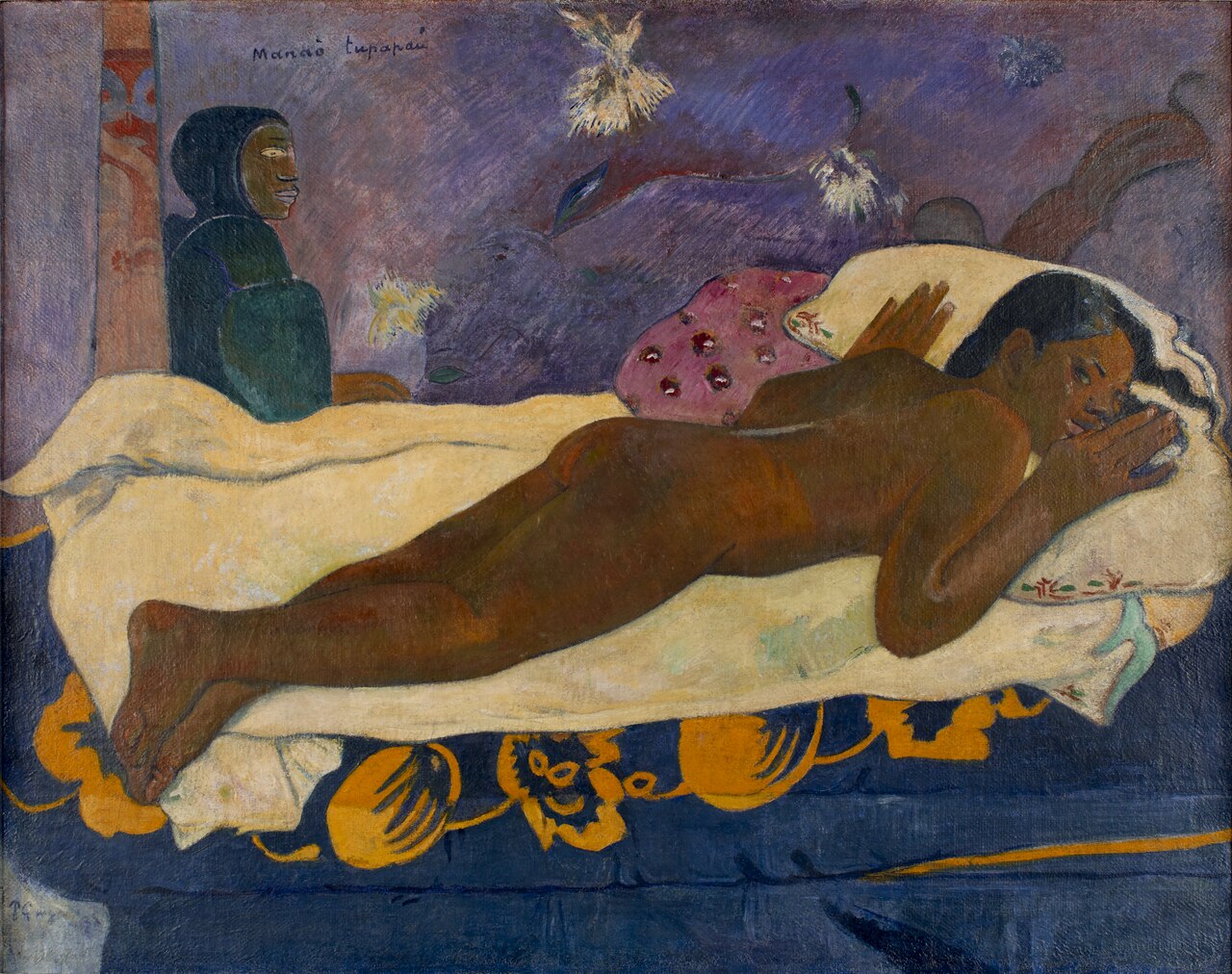
Manaò tupapaú
Paul Gauguin · 1892
Free account
Read every Paul Gauguin source
Sign up free →
Ready when you are
Start chatting with Paul Gauguin now.
20 messages free · No credit card · Available in 50+ languages.