


Secondary sourceSculptureca. 1250
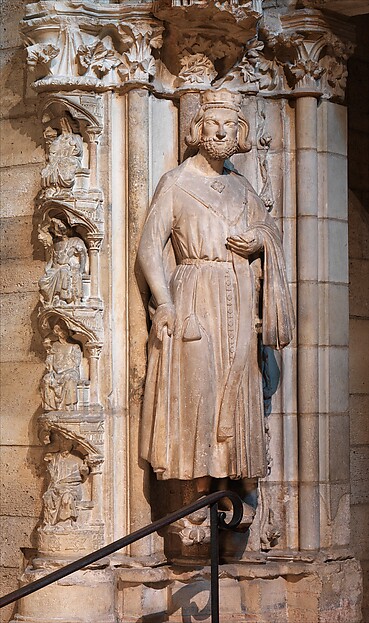
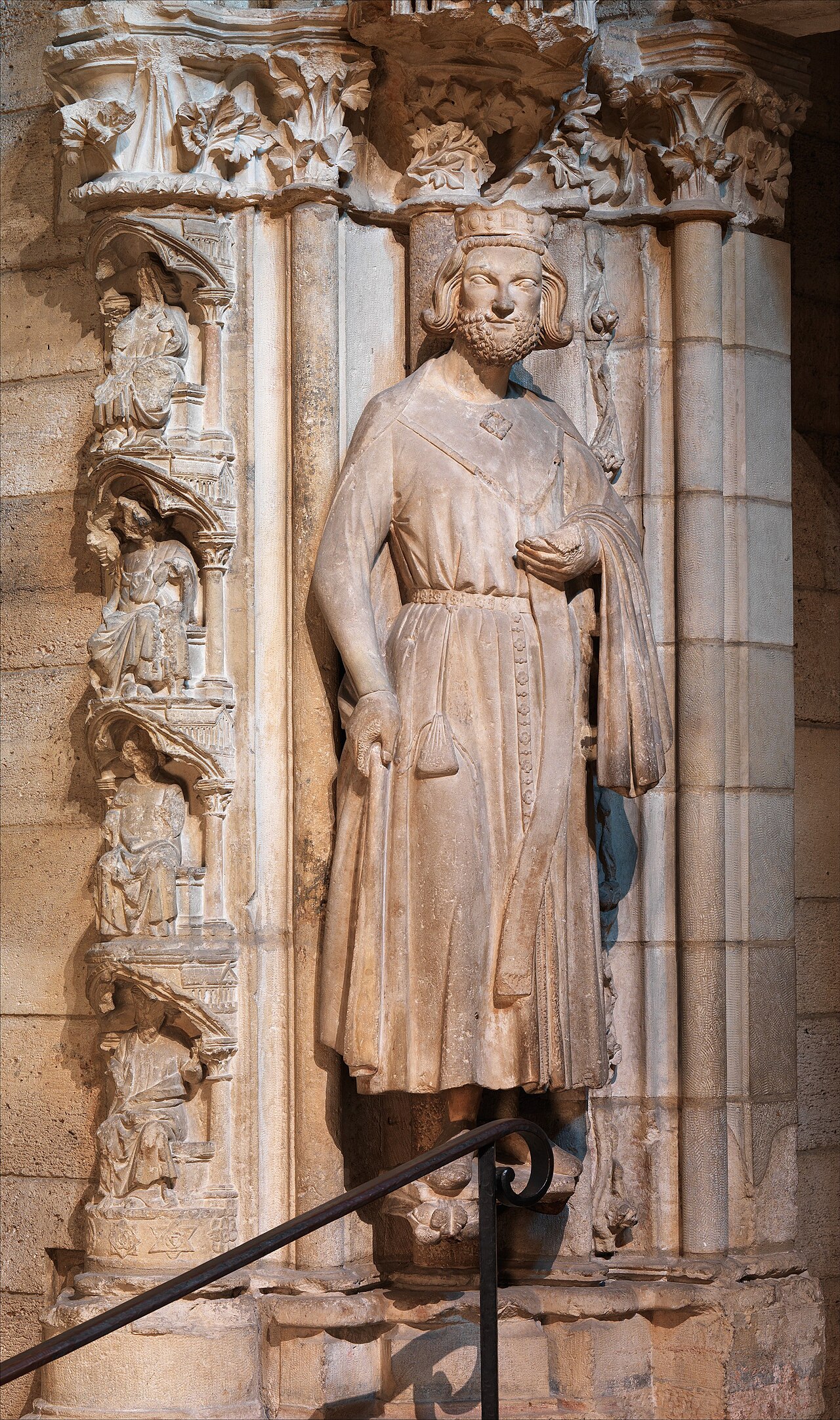
Statue of King Clovis I
ca. 1250
A medieval limestone statue of Clovis I, made centuries after his reign. It shows how later France imagined its first king.
Clovis is the subject of this statue, which shows how a later medieval France imagined its first king.
About this source
What it is
This is a French limestone statue with traces of paint, dated around 1250. It shows a bearded, crowned king standing against a pillar. He wears a long robe with a belt, and a cloak is draped over one arm. He holds an object in one hand. The statue is in The Cloisters, part of The Metropolitan Museum of Art in New York, and entered the collection in 1940.
Why it matters
Clovis ruled the Franks from 481 to 511, so this statue was carved many centuries after his time. It does not show what he really looked like. It shows how people in medieval France pictured their first king, as a crowned ruler in a settled stone setting. The statue reveals the values and identity of the later medieval church and kingdom that cared for and displayed it.
Look closer
- What clues in the crown, robe, and cloak tell you that this is a king?
- Why might a medieval patron want a statue of a king from centuries earlier?
- What does the statue leave out about Clovis's own life and actions?
This sculpture is part of the curated material that grounds the AI version of Clovis I on Humy.ai — when students ask about related events, the AI can quote it and cite it.

Ready when you are
Start chatting with Clovis I now.
20 messages free · No credit card · Available in 50+ languages.