


Primary sourceDocumentc. 20 AD
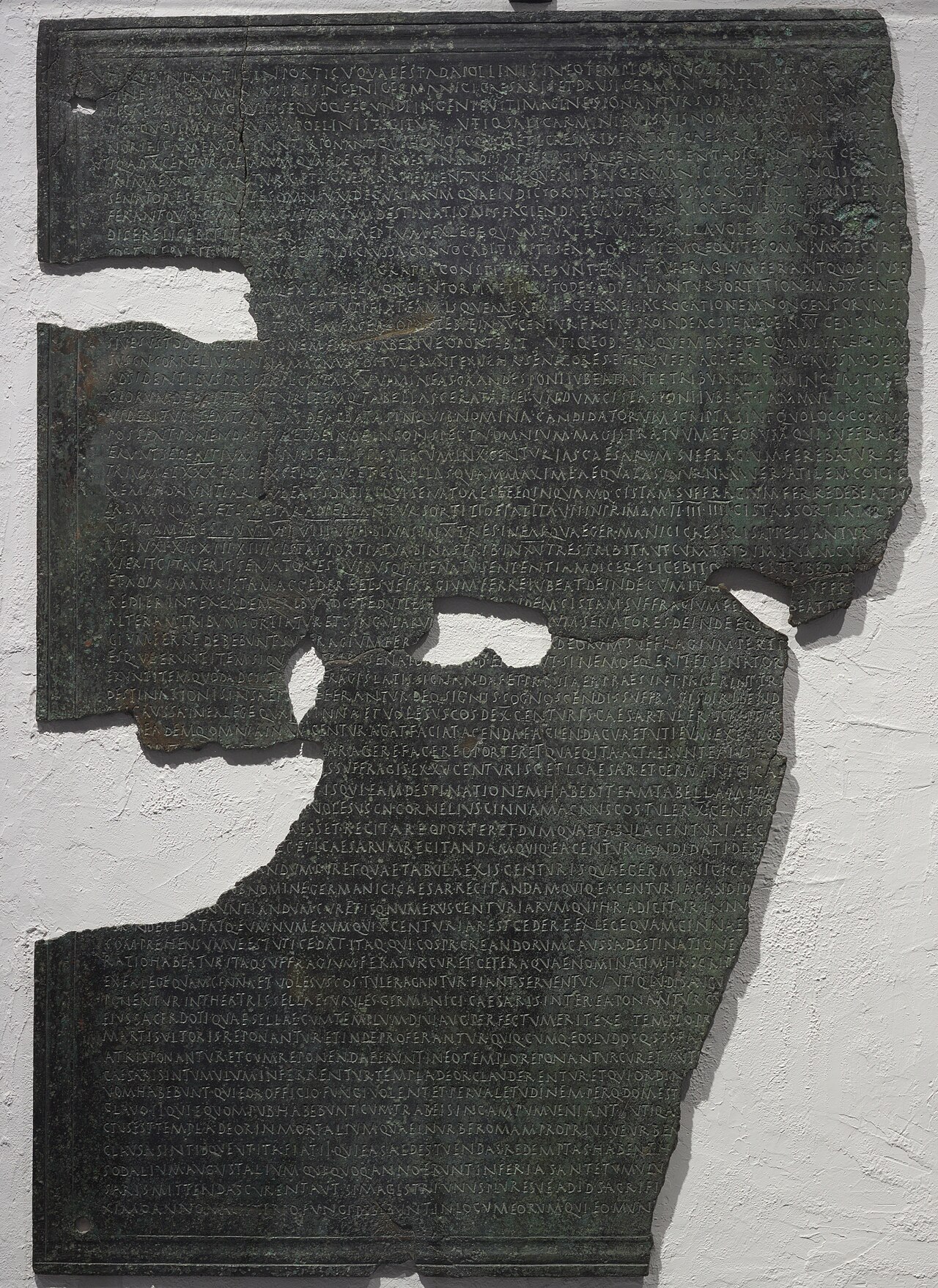
Tabula Hebana
c. 20 AD
A bronze inscription recording a Roman law that created voting units named in honor of Germanicus after his death.
This official document shows how Germanicus's memory was honored through naming voting units after him following his death.
Free Humy account · No credit card · 124,282 sources to read
About this source
What it is
The Tabula Hebana is a bronze tablet inscribed with part of the Lex Valeria Aurelia, a Roman law. It dates to around AD 20 and is held at the National Archaeological Museum.
Why it matters
The law created new voting centuries (groups used in Roman elections) named after Germanicus. This shows how, after his death, Germanicus's memory was formally built into Roman political institutions, reflecting both his popularity and the importance of his family to the imperial succession.
Look closer
- Why would the Roman state want to honor a dead prince by naming parts of its voting system after him?
- What does this inscription tell us about how Romans used public monuments and institutions to shape memory?
- What is missing or broken in the surviving bronze, and how might that affect what we can know?
This document is part of the curated material that grounds the AI version of Germanicus on Humy.ai — when students ask about related events, the AI can quote it and cite it.
More Germanicus sources
Browse all 87 →

Ready when you are
Start chatting with Germanicus now.
20 messages free · No credit card · Available in 50+ languages.