


Secondary sourcePaintingQing Dynasty (1644-1911)
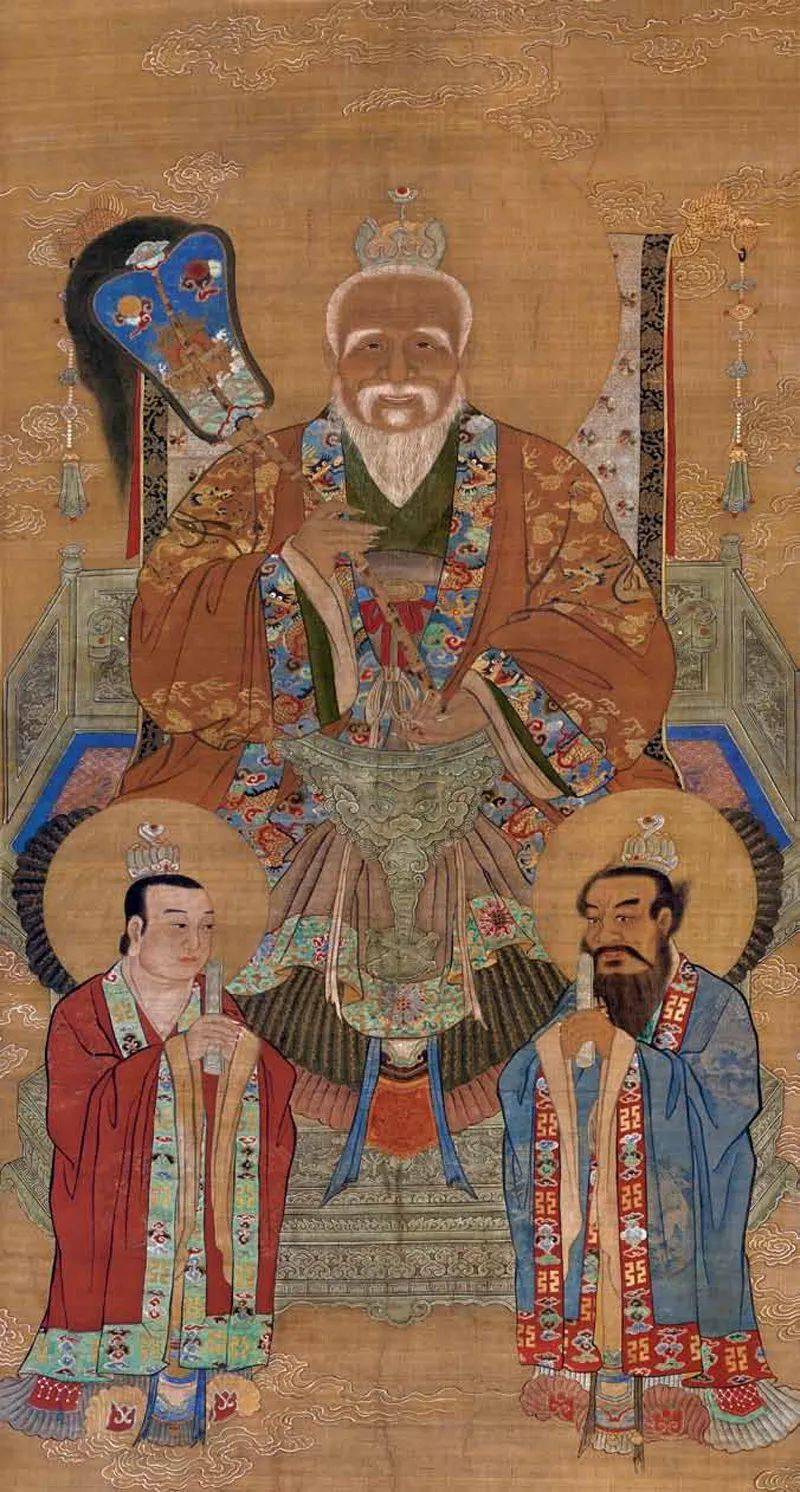
Taiqing Daode Tianzun, Qing dynasty painting
Qing Dynasty (1644-1911)
A Qing dynasty hanging scroll on gold silk showing Taiqing Daode Tianzun, the deified Laozi. It shows his later religious form.
Shows Laozi as the deified Taiqing Daode Tianzun in the Qing period, reflecting centuries of later religious veneration.
About this source
What it is
This is a hanging scroll painting on gold silk from the Qing dynasty, 1644 to 1911. It shows a bearded, white-haired elder seated on a throne, wearing a crown and embroidered robes. Two smaller attendant figures in halos stand beside him, one in red and one in blue, holding ceremonial tablets. Clouds decorate the background. The painter is unknown. The record identifies the seated figure as Taiqing Daode Tianzun, the deified Laozi.
Why it matters
The painting shows that Laozi was still honored as a god in the Qing period, long after his lifetime. The image reflects later Taoist religious ideas. It can help students see that a historical thinker could become a religious figure whose appearance was shaped by artists and believers.
Look closer
- How does the painter show the seated figure's authority and age?
- Why might the two attendants be painted in different colors?
- What can a religious image tell us about the beliefs of its time, and what can it not tell us about the thinker?
This painting is part of the curated material that grounds the AI version of Laozi on Humy.ai — when students ask about related events, the AI can quote it and cite it.
More Laozi sources
Meet the AI Laozi →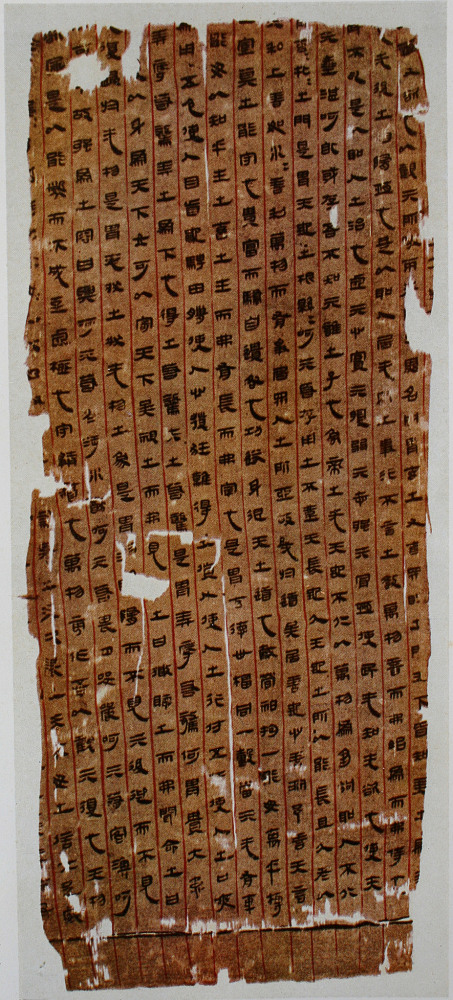 Book
Secondary source
Tao Te Ching
Laozi · c. 4th-3rd century BCE
 Artifact
Primary source
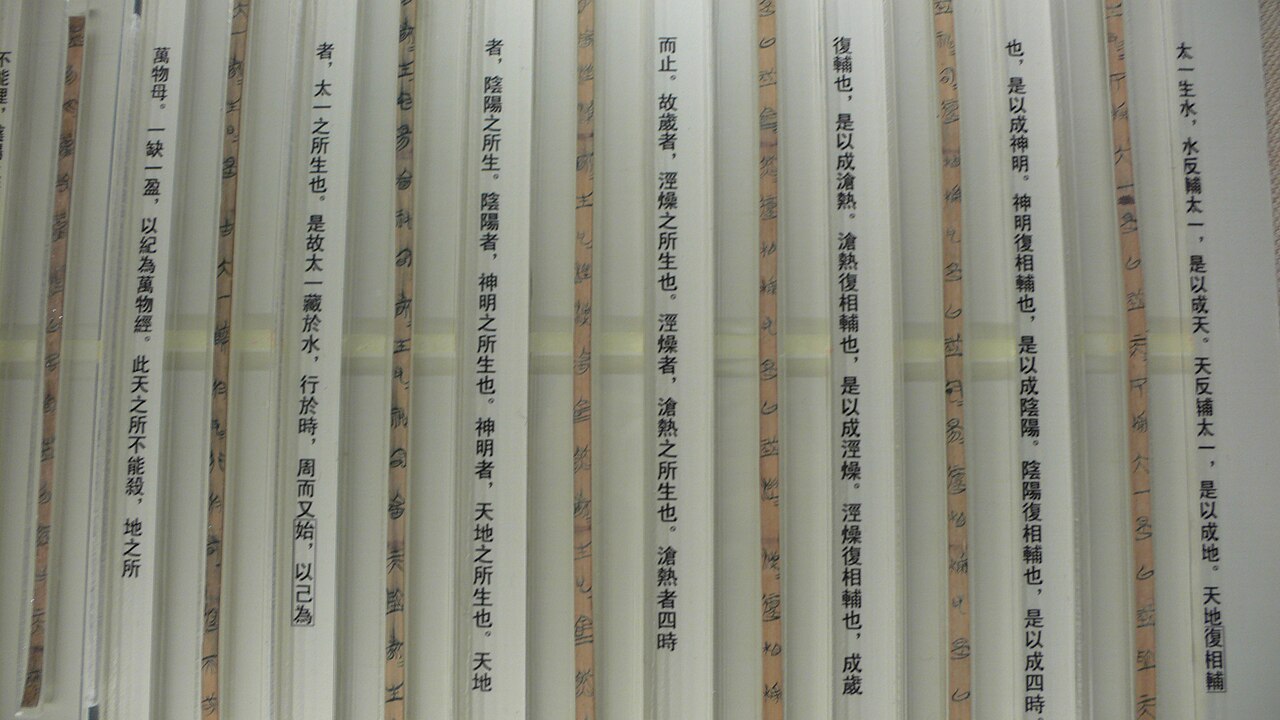
Bamboo Texts of Guodian
c. 300 BCE
 Book
Primary source
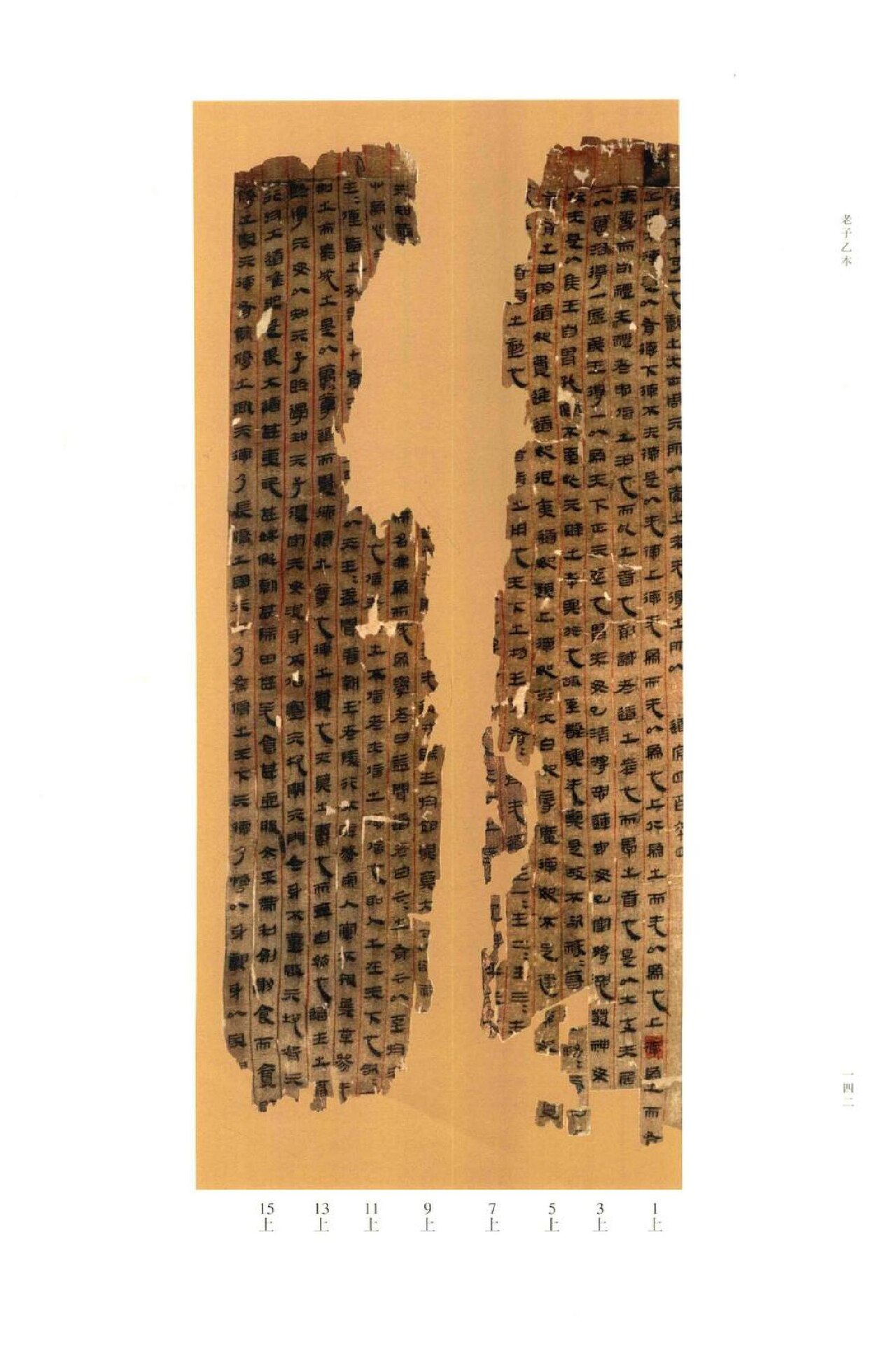
Mawangdui Silk Texts of the Laozi
Anonymous Han scribes · c. 200-168 BCE
 Book
Secondary source
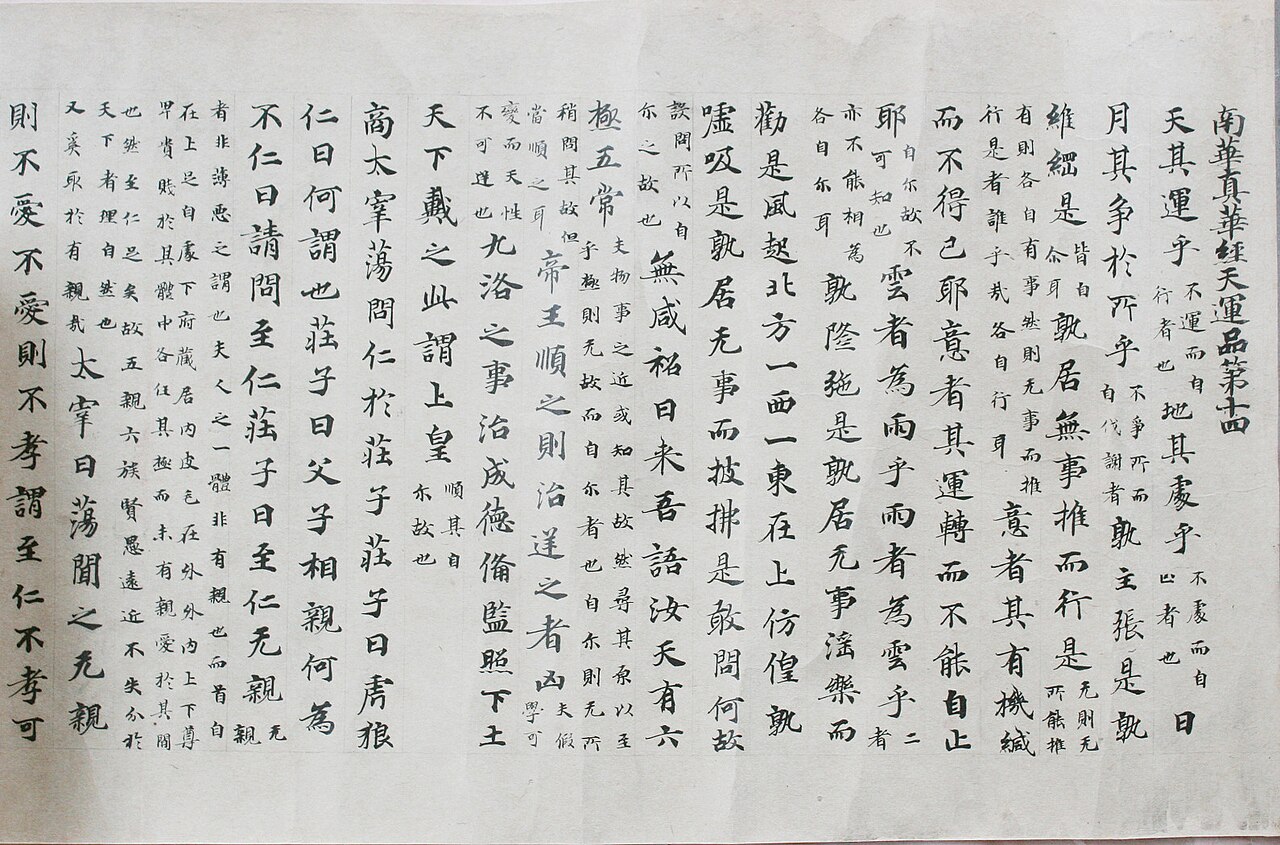
Zhuangzi
Zhuang Zhou · c. 300 BCE
 Painting
Secondary source
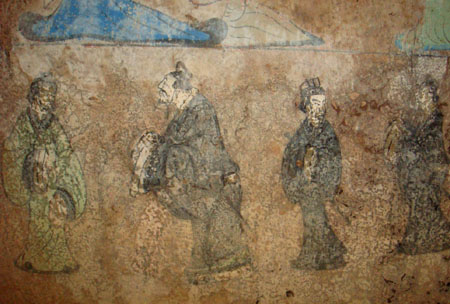
Confucius and Laozi fresco, Dongping tomb
Anonymous Chinese painter of the Western Han period · Western Han period, c. 2000 years old
Ready when you are
Start chatting with Laozi now.
20 messages free · No credit card · Available in 50+ languages.