


Secondary sourcePainting1909
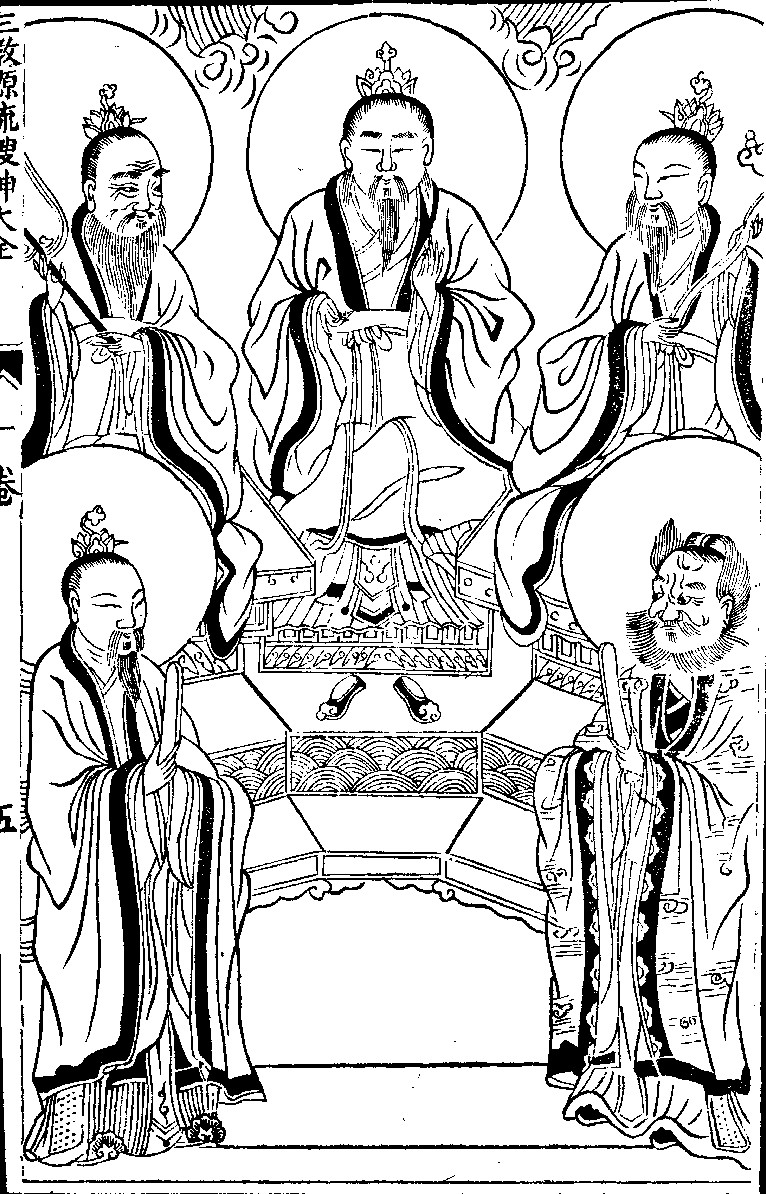
Taishang Laojun illustration from Sanjiao Yuanliu Soushen Daquan
1909
A 1909 book illustration of Laozi as the deity Taishang Laojun, taken from a Ming-era compendium of gods. It shows how later Taoism pictured him.
Shows Laozi as the deity Taishang Laojun, the form in which later Taoism pictured him, which is why it belongs in his archive.
About this source
What it is
This is an illustration from Sanjiao Yuanliu Soushen Daquan, a compendium of gods, shown here in a 1909 printing. It is a black and white woodcut-style print of five deities or immortals in a hall. The central figure wears a crown and sits on a raised platform, with an altar and ornamental rails in front. The Chinese text runs down the left edge. The archive record identifies the central figure as Taishang Laojun, the deity linked to Laozi.
Why it matters
The image shows that Laozi was pictured not only as a philosopher but as a god within later Taoist religion. The compendium that the illustration comes from gathered deities from the three teachings. Seeing him crowned on a platform among other immortals helps students understand how his image changed after his teachings were written down.
Look closer
- How does the crowned central figure differ from the figures around him, and what does his position suggest?
- Who do you think the book was made for, and why would it include so many gods?
- What does this picture leave out about Laozi's own words in the Daodejing?
This painting is part of the curated material that grounds the AI version of Laozi on Humy.ai — when students ask about related events, the AI can quote it and cite it.
More Laozi sources
Meet the AI Laozi →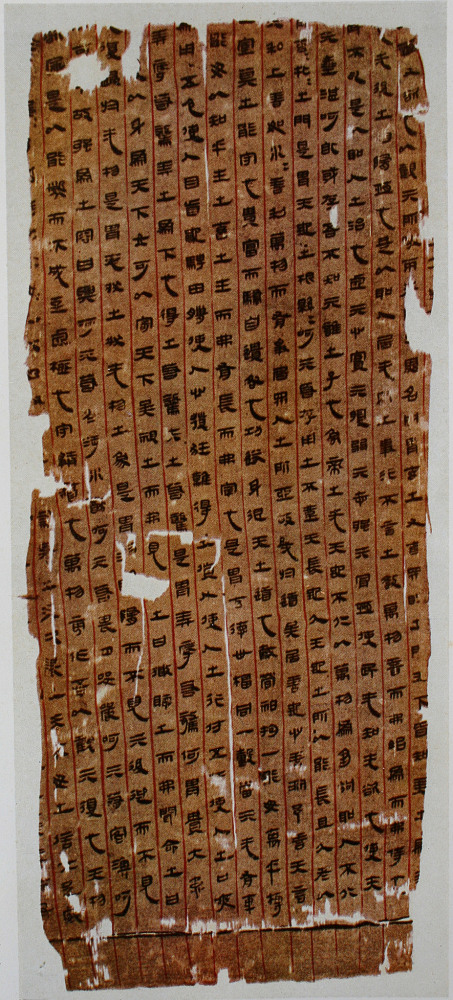 Book
Secondary source
Tao Te Ching
Laozi · c. 4th-3rd century BCE
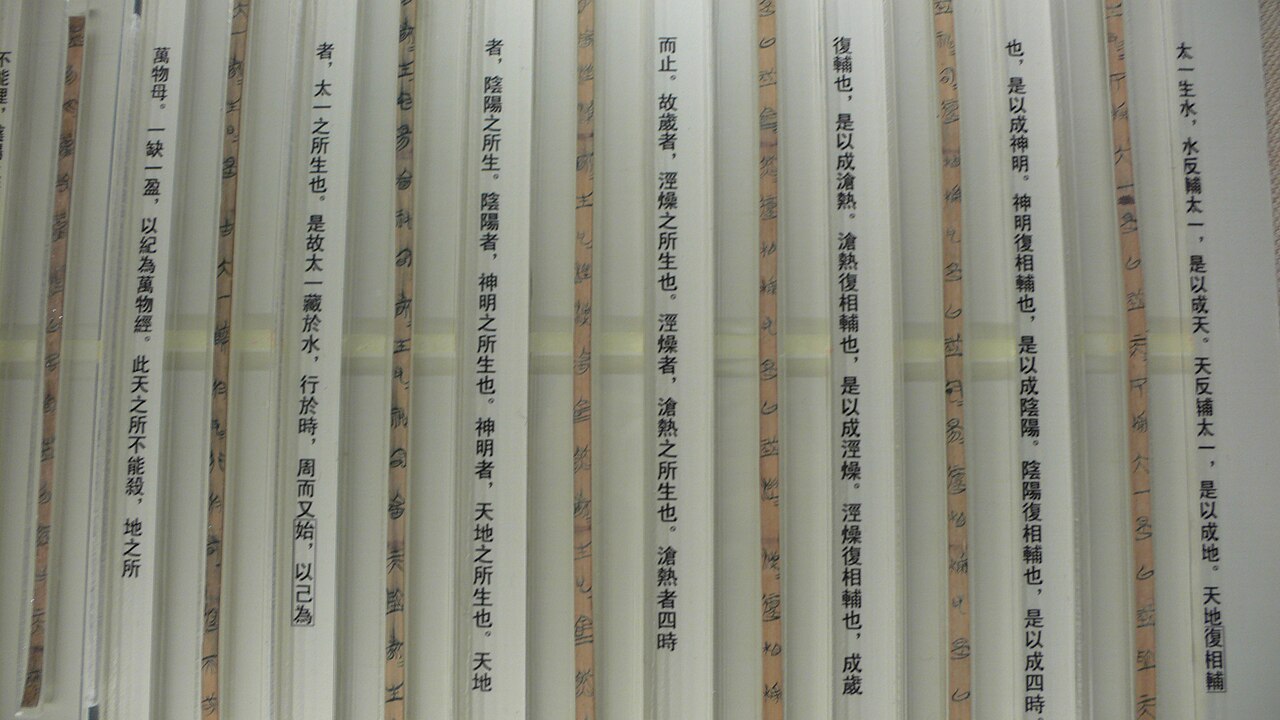 Artifact
Primary source
Bamboo Texts of Guodian
c. 300 BCE
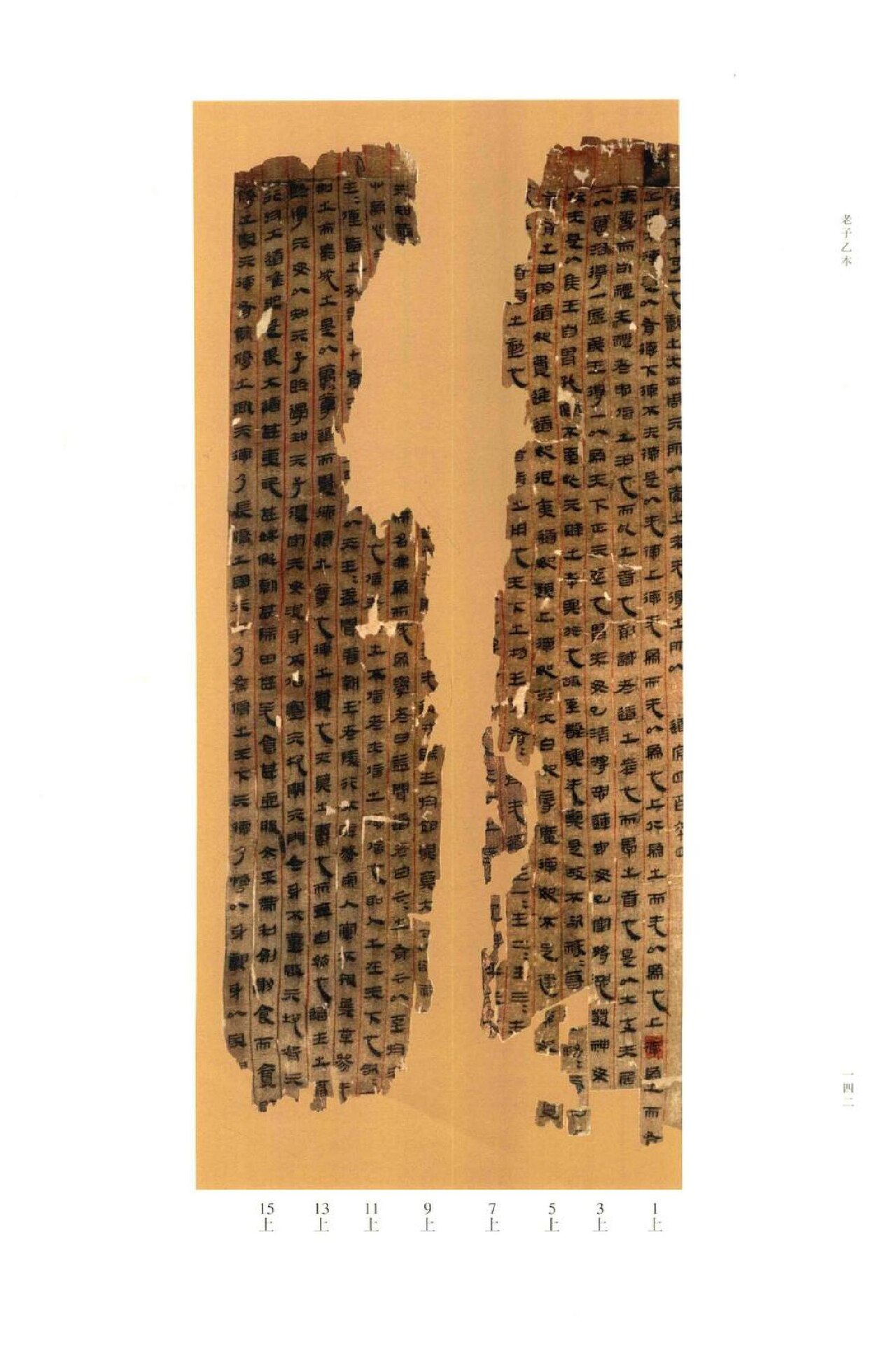 Book
Primary source
Mawangdui Silk Texts of the Laozi
Anonymous Han scribes · c. 200-168 BCE
 Book
Secondary source
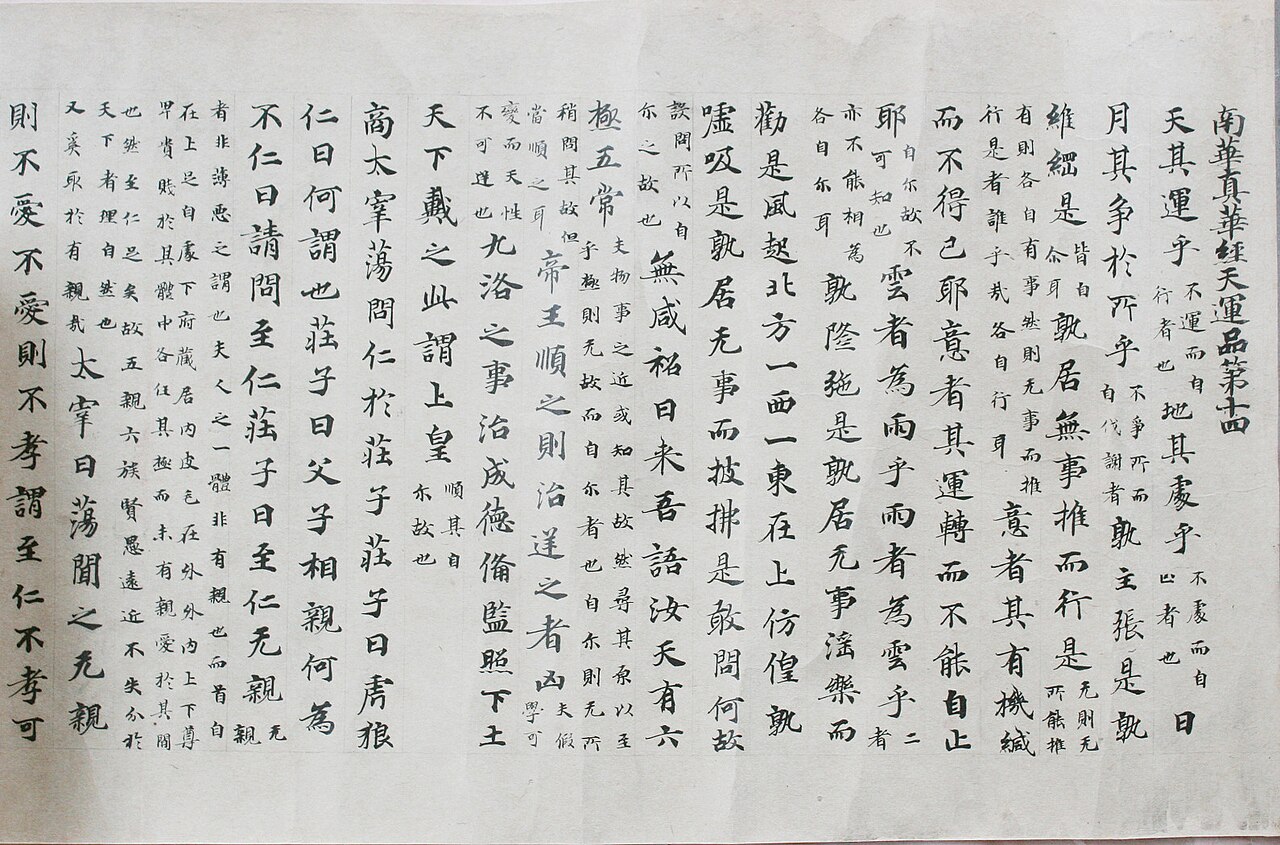
Zhuangzi
Zhuang Zhou · c. 300 BCE
 Painting
Secondary source
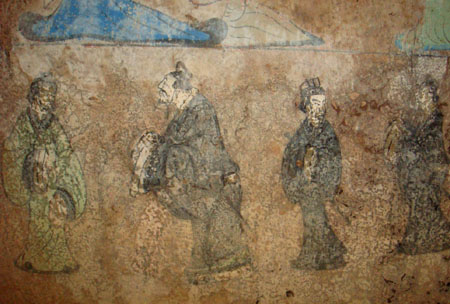
Confucius and Laozi fresco, Dongping tomb
Anonymous Chinese painter of the Western Han period · Western Han period, c. 2000 years old
Ready when you are
Start chatting with Laozi now.
20 messages free · No credit card · Available in 50+ languages.