


Secondary sourceArtifact2007 (date of photograph)
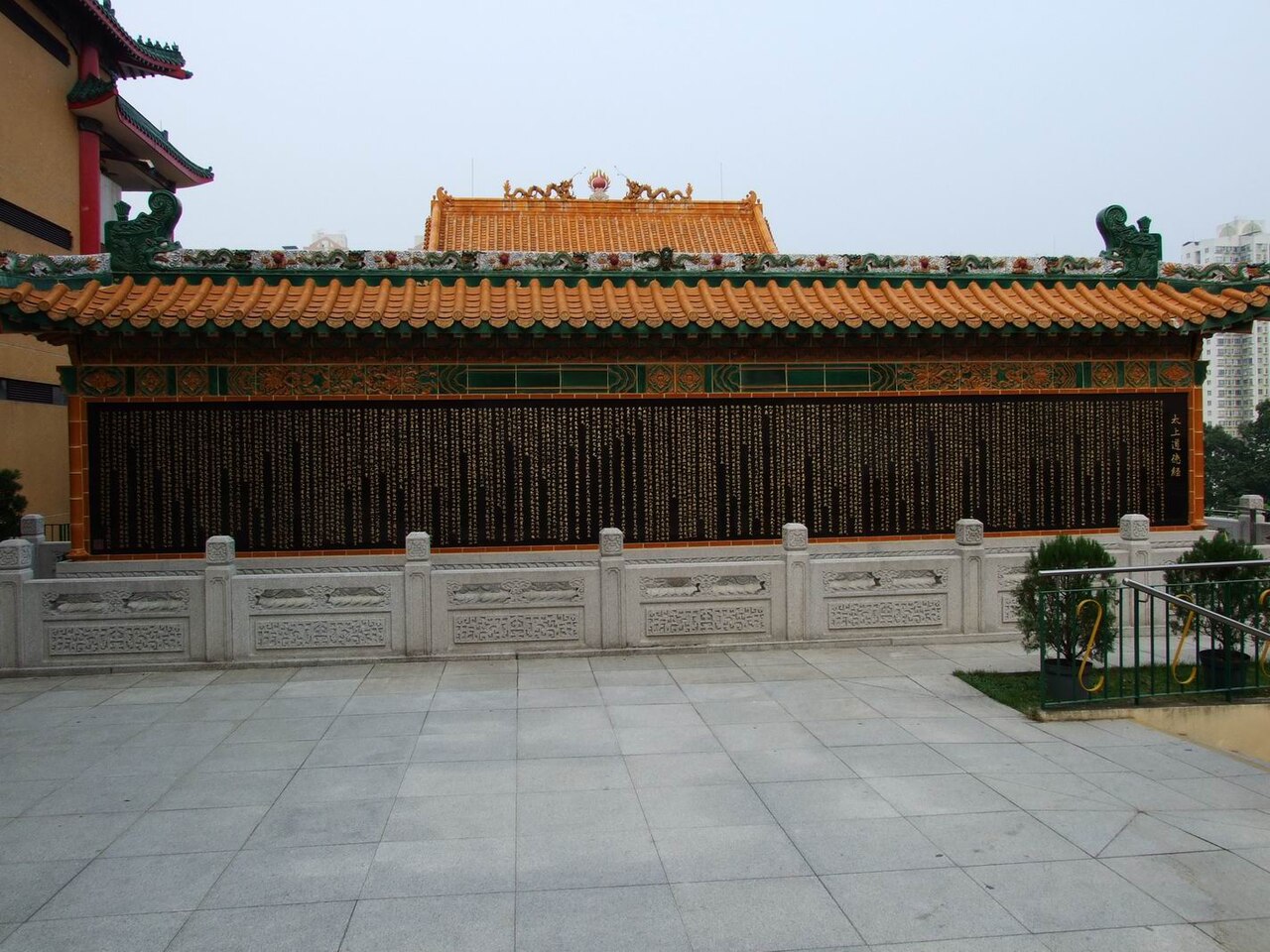
Tao Te Ching inscribed on temple wall, Hong Kong
Chong Fat · 2007 (date of photograph)
A photograph of the Daodejing carved in small gold characters on a long black stone wall of a Hong Kong temple. It shows how the text is displayed for devotion today.
Shows the Daodejing, traditionally attributed to Laozi, displayed as devotional inscription in a Hong Kong temple.
About this source
What it is
This is a 2007 photograph, by a photographer named Chong Fat, of a long black stone wall. Rows of small gold-colored characters are inscribed on it. The wall sits beneath an orange-tiled roof with green and gold trim, above a stone balustrade with carved panels. The Commons record gives the title as 蓬瀛仙館太上道德經壁, which names the Taoist text of the Daodejing. The record does not give the date the wall was carved.
Why it matters
The Daodejing is traditionally attributed to Laozi, and this wall shows the text being kept as a sacred object in a place of worship. Carving it in stone turns a short book into a public monument. The photograph reveals how later Taoist communities have honored the text, rather than how it was first written.
Look closer
- Why might someone choose to carve a religious text on a large wall rather than print it in a book?
- Who would read this wall, and how would they have approached it?
- What does the photograph not show about the text itself, such as its wording or translation?
This artifact is part of the curated material that grounds the AI version of Laozi on Humy.ai — when students ask about related events, the AI can quote it and cite it.
More Laozi sources
Meet the AI Laozi →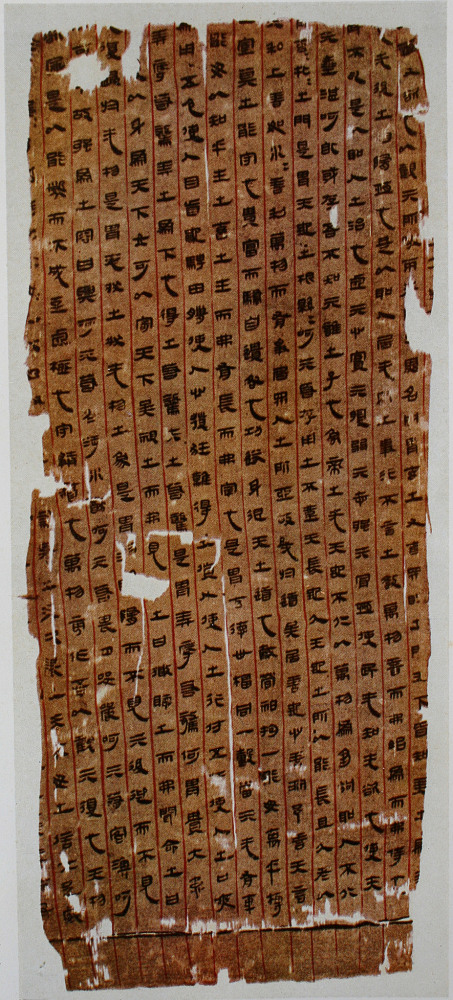 Book
Secondary source
Tao Te Ching
Laozi · c. 4th-3rd century BCE
 Artifact
Primary source
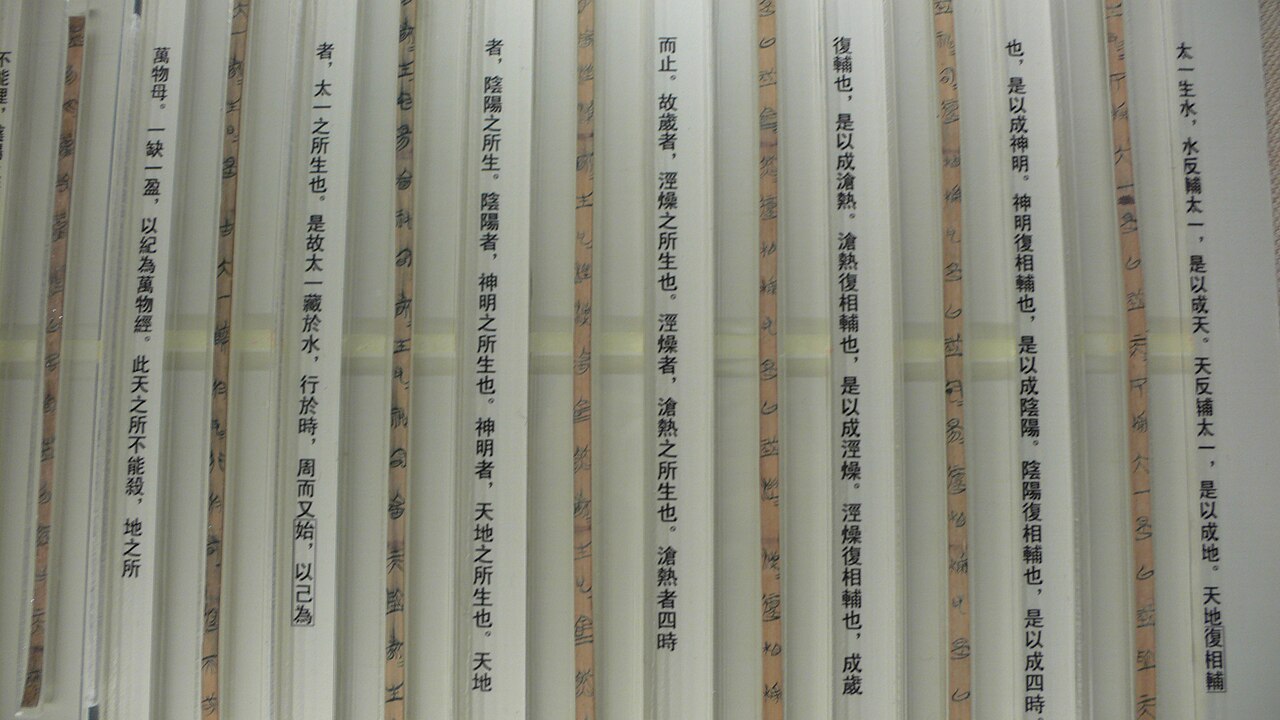
Bamboo Texts of Guodian
c. 300 BCE
 Book
Primary source
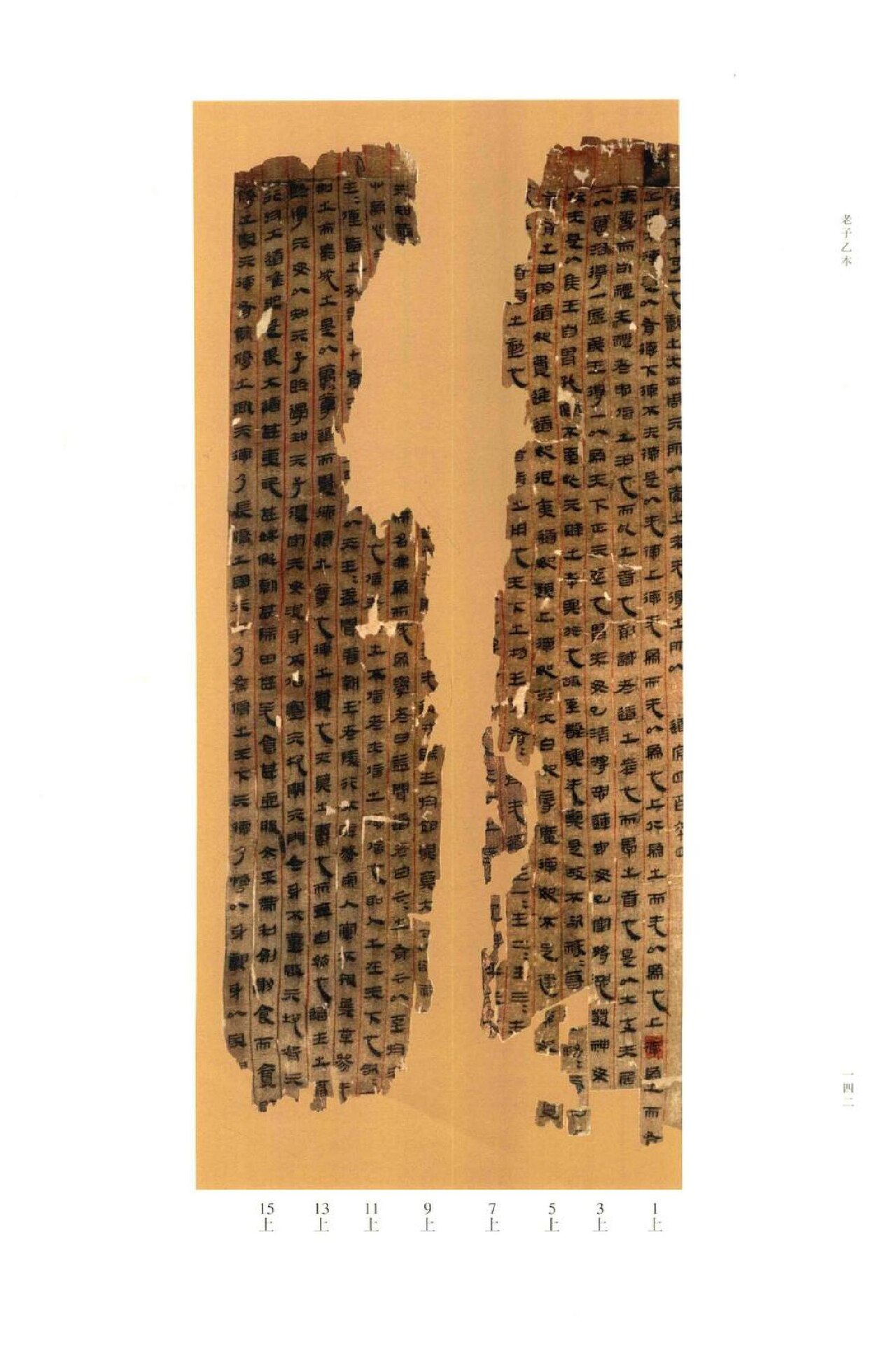
Mawangdui Silk Texts of the Laozi
Anonymous Han scribes · c. 200-168 BCE
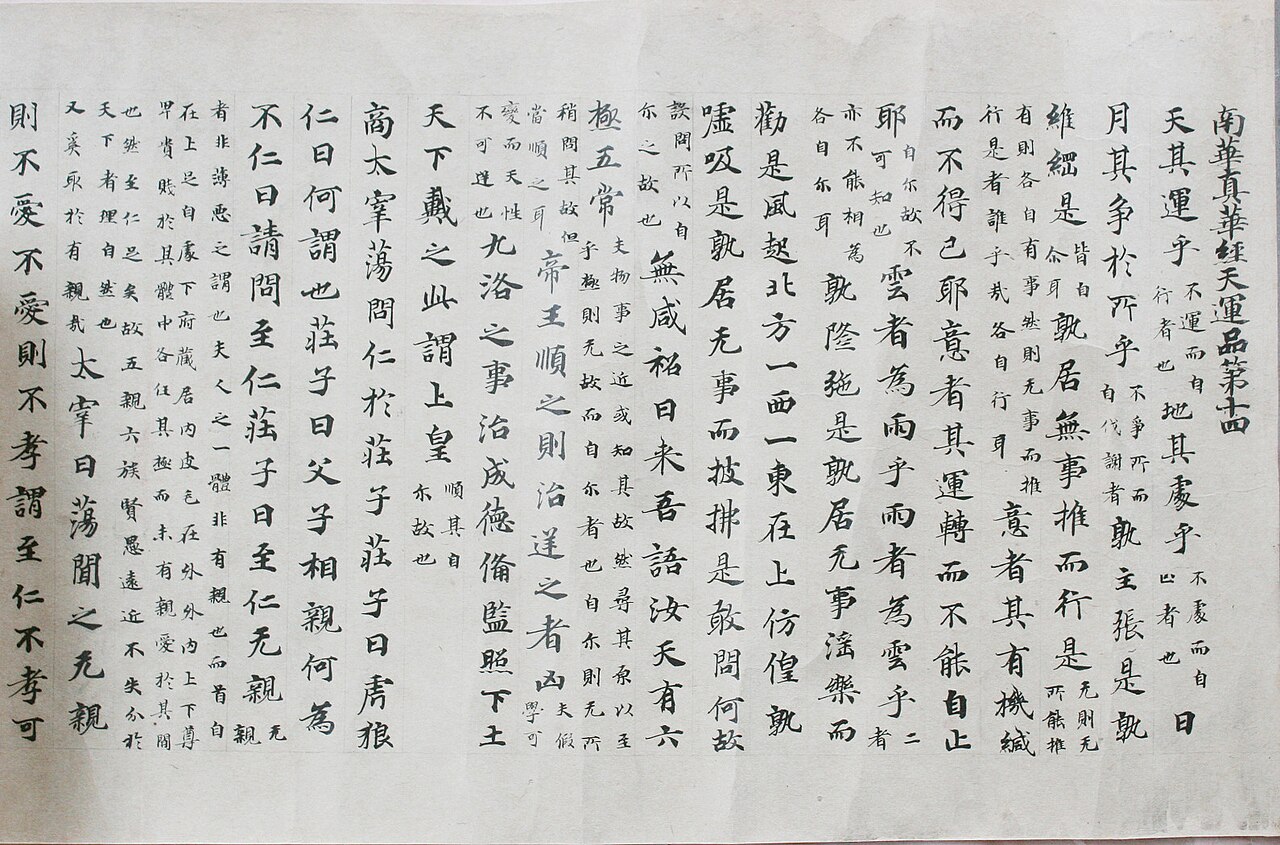 Book
Secondary source
Zhuangzi
Zhuang Zhou · c. 300 BCE
 Painting
Secondary source
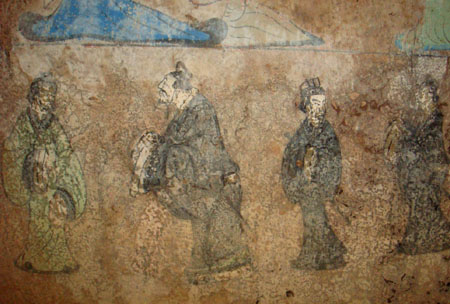
Confucius and Laozi fresco, Dongping tomb
Anonymous Chinese painter of the Western Han period · Western Han period, c. 2000 years old
Ready when you are
Start chatting with Laozi now.
20 messages free · No credit card · Available in 50+ languages.