


Primary sourceSculpturec. 1249 BCE
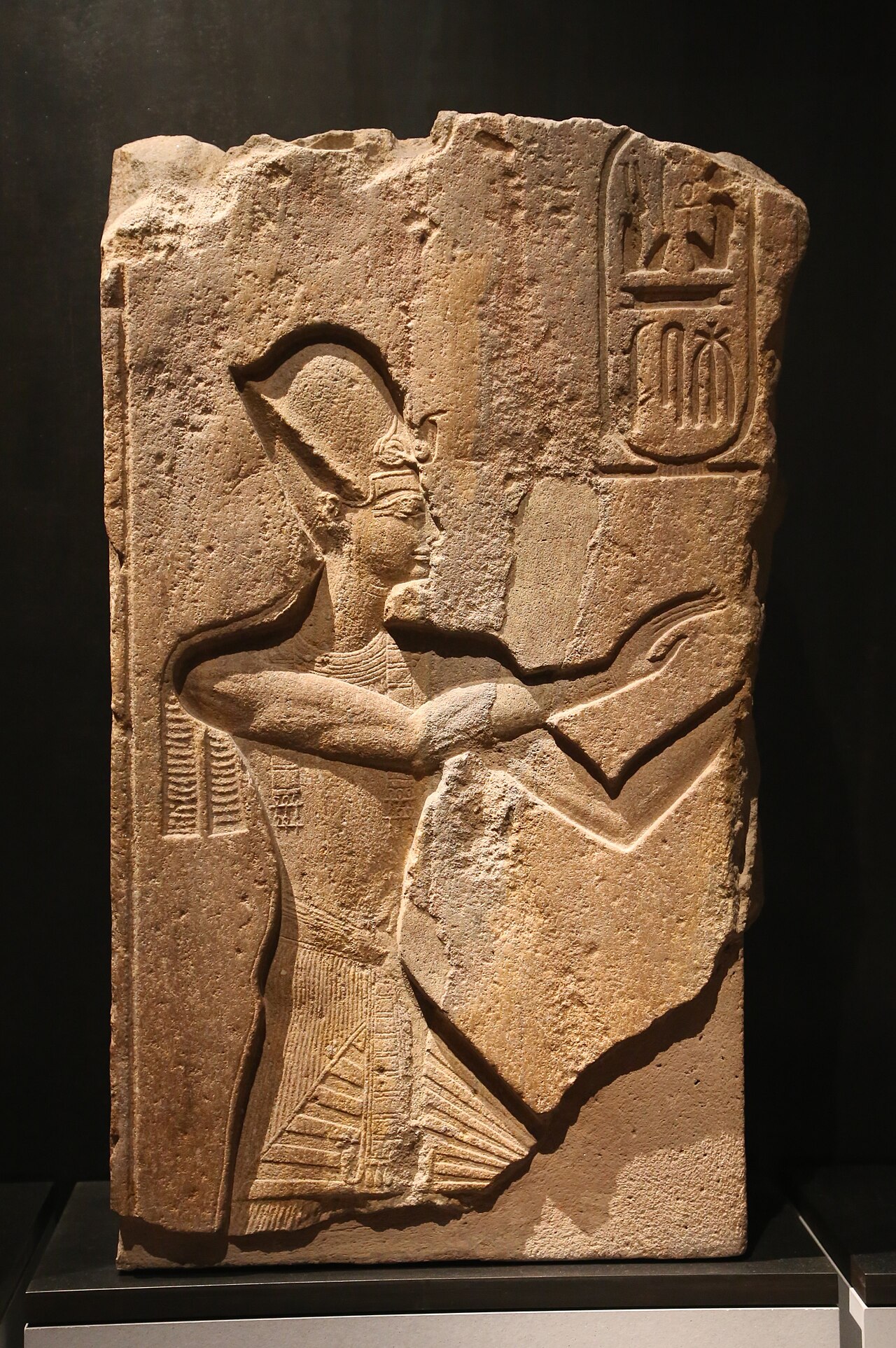
Temple Relief of Ramses II Praying
c. 1249 BCE
A carved sandstone relief showing Ramesses II in profile, arms raised in an act of worship, with his cartouche above him.
This relief depicts Ramesses II himself, shown in a pose of worship rather than war.
About this source
What it is
This is a fragment of a sandstone temple relief carved in ancient Egypt around 1249 BCE. It shows an Egyptian pharaoh, identified by his cartouche, wearing a tall crown and raising his arms in an offering gesture. It is now kept in the State Museum of Egyptian Art.
Why it matters
Egyptian temples usually paired two kinds of royal image: the pharaoh as a mighty warrior, and the pharaoh as a devoted worshipper of the gods. This relief belongs to the second type. It shows how Ramesses II wanted to be remembered not only for his battles but also for his piety, reinforcing his claim to rule as a figure close to the gods.
Look closer
- What does the pose of the figure tell you about the purpose of this image?
- Why might temple art show a king performing religious acts rather than ruling or fighting?
- What is missing from this broken fragment that might have told us more?
This sculpture is part of the curated material that grounds the AI version of Ramses II (Ramses the Great) on Humy.ai — when students ask about related events, the AI can quote it and cite it.
More Ramses II (Ramses the Great) sources
Meet the AI Ramses II (Ramses the Great) →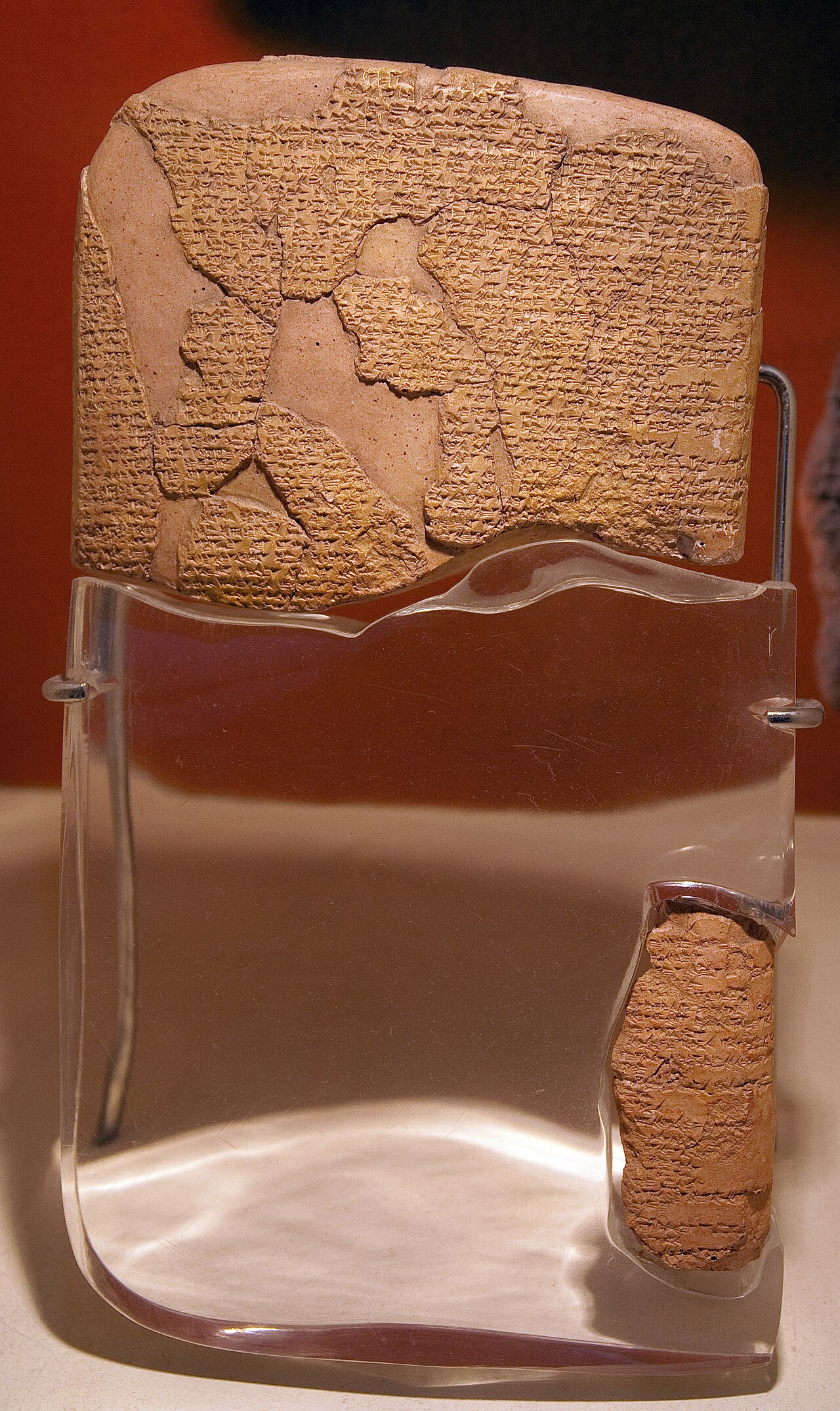 Document
Primary source
Egyptian–Hittite Peace Treaty
c. 1258 BCE
 Photograph
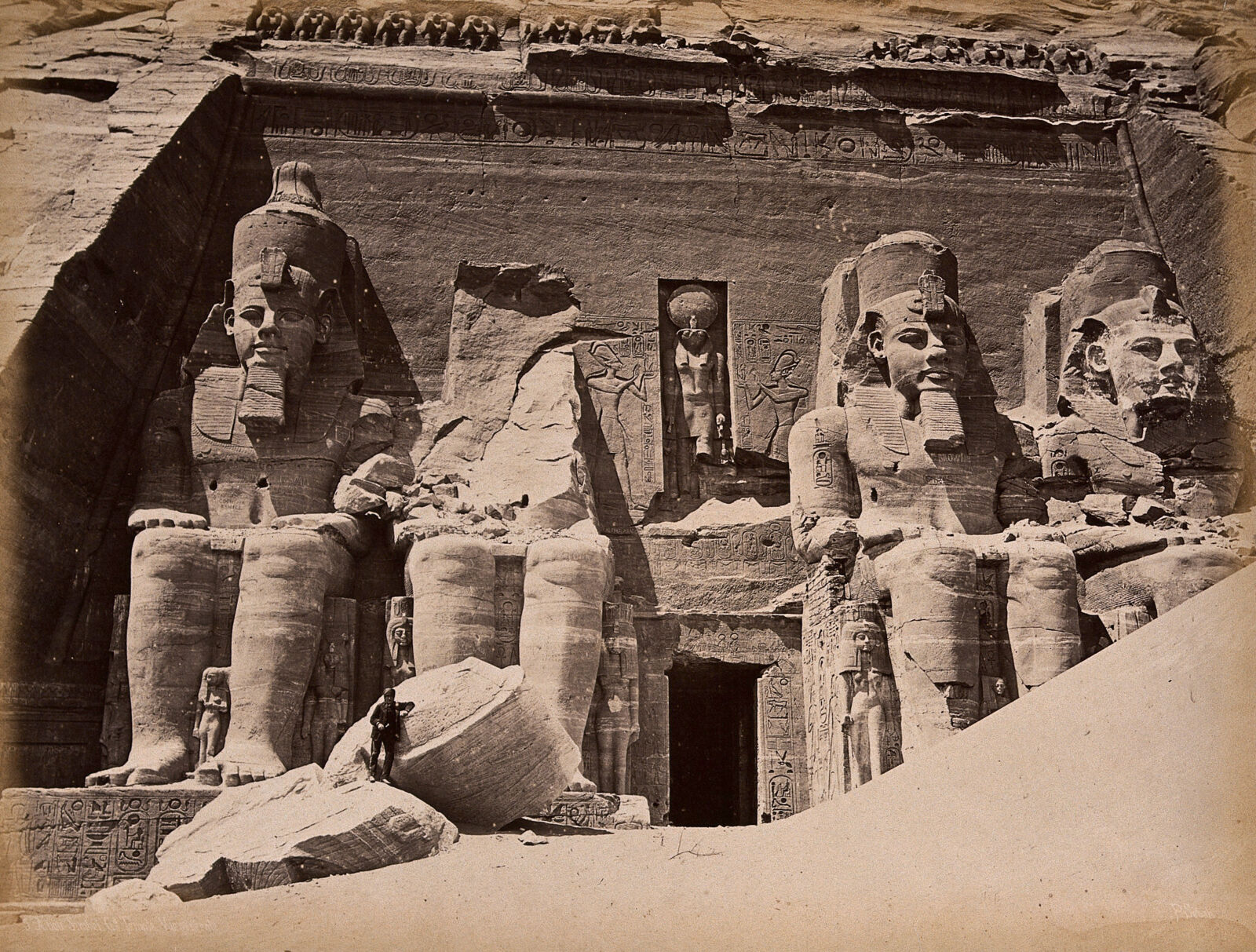
Secondary source
Abu Simbel Temple Colossi
Pascal Sébah · 1875
 Artifact
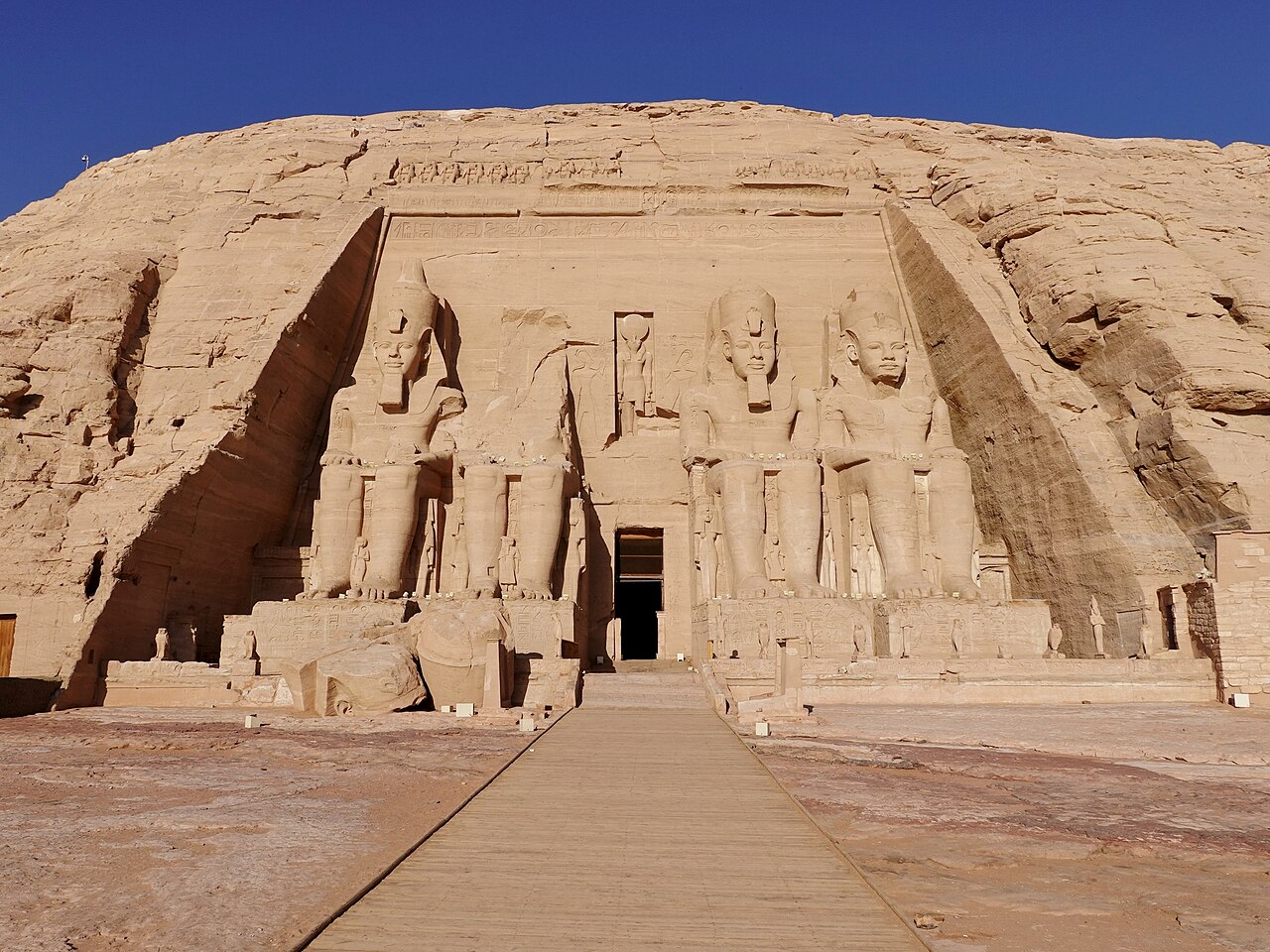
Primary source
Abu Simbel
Ramesses II · c. 1273 BCE
 Photograph
Secondary source
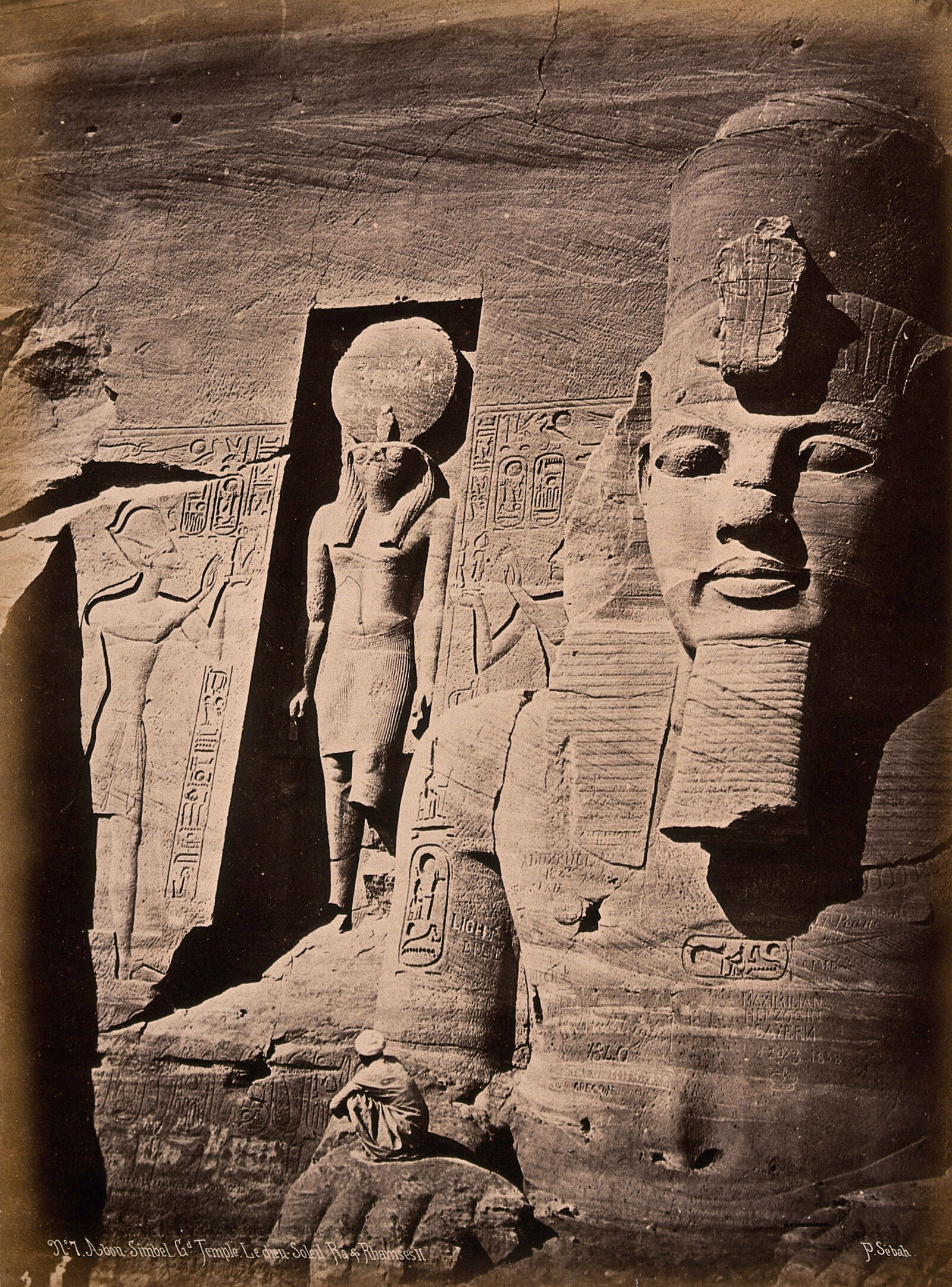
Facade Detail of Abu Simbel Showing Ramesses II and Ra
Pascal Sébah · 1875
 Photograph
Secondary source
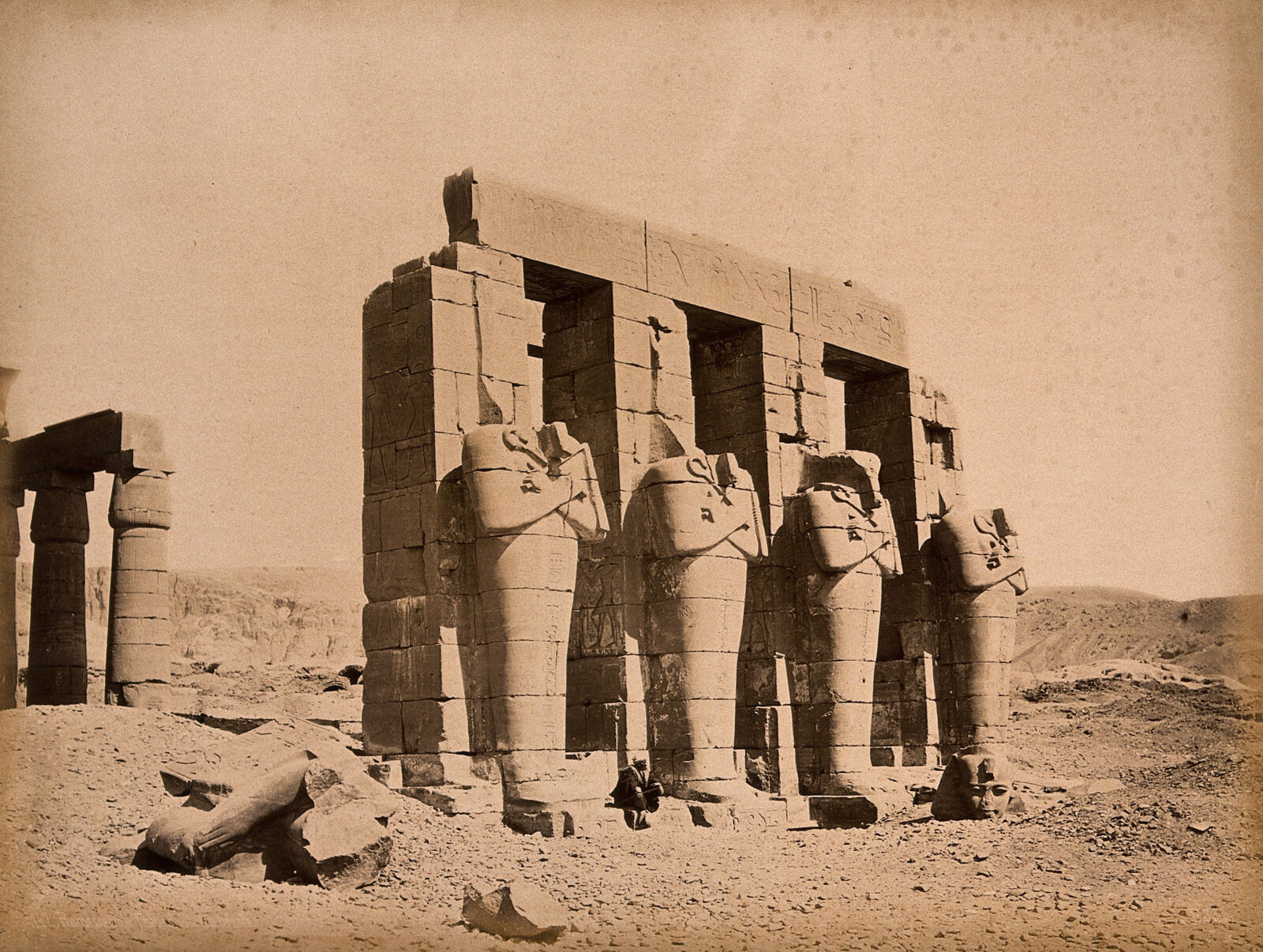
Ramesseum Colossi in Ruins
Pascal Sébah · c. 1875
Ready when you are
Start chatting with Ramses II (Ramses the Great) now.
20 messages free · No credit card · Available in 50+ languages.