


Secondary sourcePainting1858
Tesoro letterario di Ercolano, plate 56a
Giacomo Castrucci · 1858
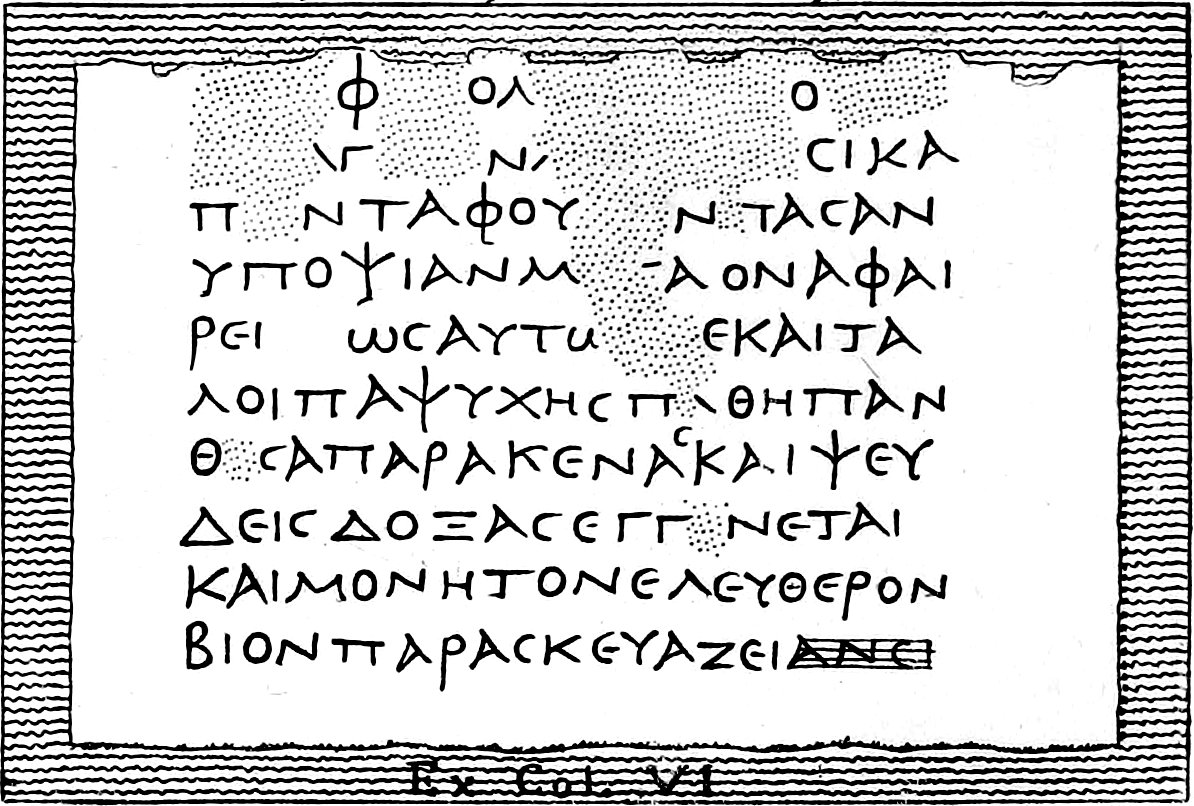
An engraved plate from an 1858 book on the Herculaneum papyri, showing lines of Greek capital letters with damaged parts shaded. The papyri include Epicurean texts.
Shows how scholars published the Herculaneum papyri, which include Epicurean texts, so students can see how his writings were preserved.
About this source
What it is
This is an engraved plate from the book Tesoro letterario di Ercolano, published in Naples in 1858 by the Stamperia e cartiere del Fibreno. It shows lines of Greek capital letters in a rectangular frame, with stippled shading where the papyrus is damaged or missing. The caption reads Ex Col. VI. The plate is attributed to Giacomo Castrucci.
Why it matters
The Herculaneum papyri were found in a buried villa and were studied by scholars in the 1800s, who produced printed editions. Books like this made the damaged texts available to other scholars. This plate is a printed illustration made long after the ancient writing, so it shows how the texts were understood in the 19th century.
Look closer
- Which letters are clear, and which parts are shaded as damaged?
- Why would a printed book show damaged text with shading?
- What might the book leave out about the people who read or copied these papyri?
This painting is part of the curated material that grounds the AI version of Epicurus on Humy.ai — when students ask about related events, the AI can quote it and cite it.
More Epicurus sources
Browse all 84 →Primary source
Letter to Menoeceus
Epicurus · 4th-3rd century BCE
Primary source
Letter to Herodotus
Epicurus · 4th-3rd century BCE
Secondary source
Lives of the Eminent Philosophers, Book X
Diogenes Laërtius · 3rd century CE
 Book
Secondary source
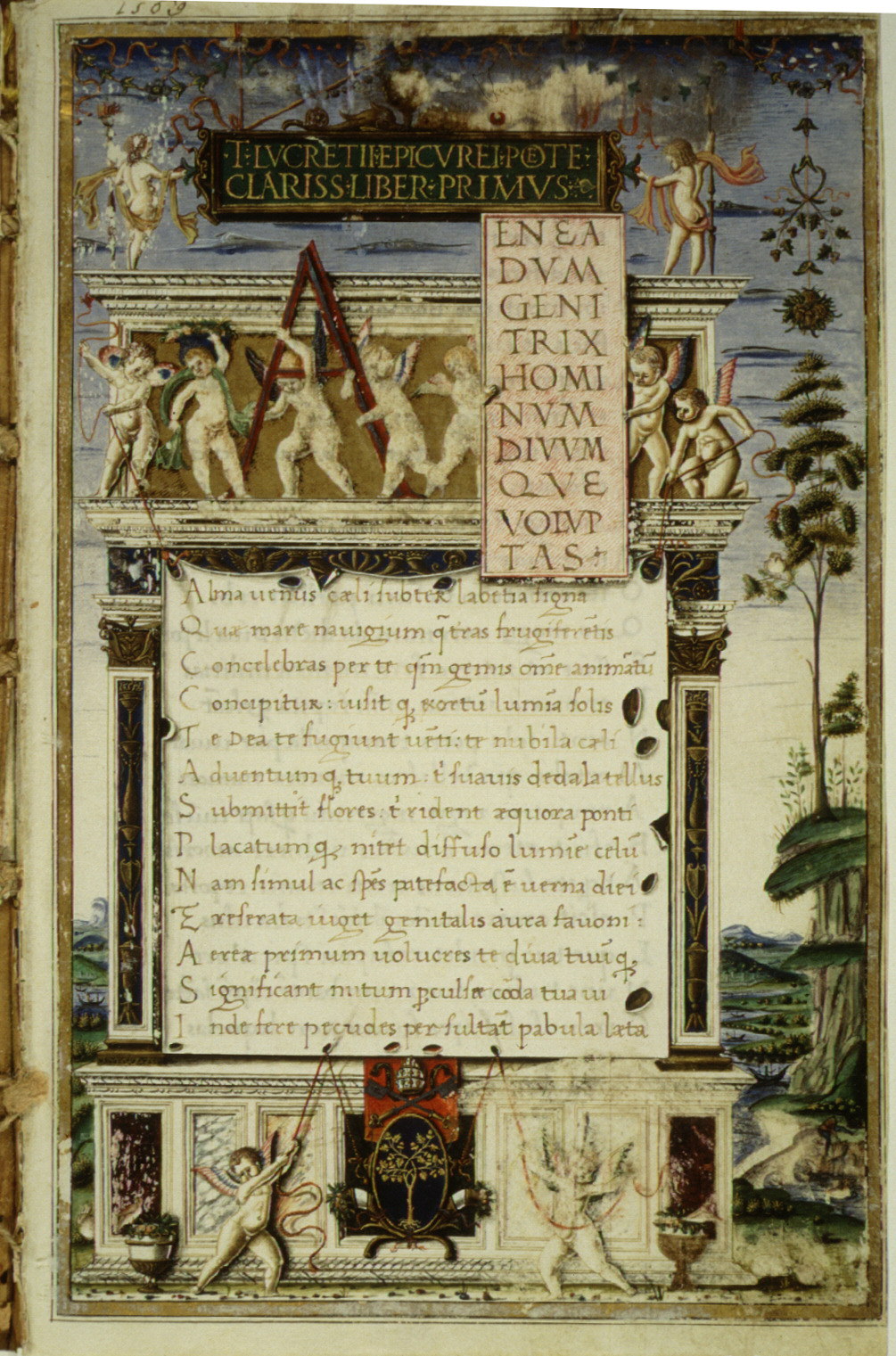
De rerum natura
Lucretius · c. 100 BC
Free account
Read every Epicurus source
Sign up free →
Ready when you are
Start chatting with Epicurus now.
20 messages free · No credit card · Available in 50+ languages.