


Primary sourceDocument1533
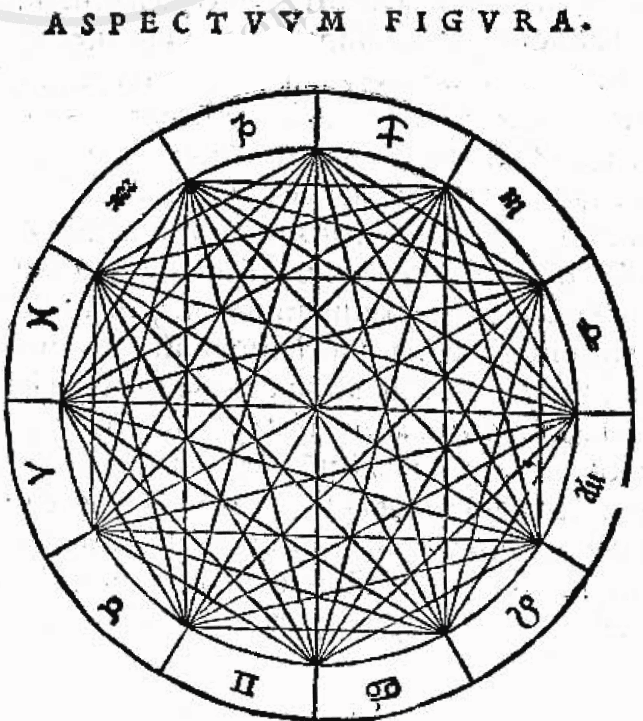
Tetrabiblos Aspects Diagram
Hervagius or anonymous engraver · 1533
An astrological diagram from a 1533 edition of Ptolemy's Tetrabiblos, showing how zodiac signs relate to each other.
This diagram illustrates Ptolemy's astrological system as set out in his Tetrabiblos, reprinted in 1533.
About this source
What it is
This printed diagram comes from the 1533 Hervagius edition of Ptolemy's Tetrabiblos, published in Basel with a Latin translation by Plato of Tivoli. It shows the zodiac divided into twelve segments, with lines connecting points to show how the signs relate to each other by aspect.
Why it matters
The Tetrabiblos was Ptolemy's major work on astrology, and this diagram reflects how closely astronomy and astrology were linked in his time and for centuries afterward. The 1533 printing shows how his ideas continued to be studied and translated long after his death.
Look closer
- What does this diagram suggest about how ancient and Renaissance scholars thought the stars and planets influenced events?
- Why might Ptolemy's astrological work have been printed and translated so many centuries later?
- How does this diagram's design help explain complex relationships between the zodiac signs?
This document is part of the curated material that grounds the AI version of Ptolemy on Humy.ai — when students ask about related events, the AI can quote it and cite it.
More Ptolemy sources
Browse all 90 → Book
Primary source
Geography
Ptolemy · c. 150 AD
 Artifact
Secondary source
Ptolemy's World Map
Ptolemy · c. 150 AD (reconstructed after 1295)
 Book
Primary source
Tetrabiblos
Ptolemy · c. 2nd century AD
 Book
Primary source
De revolutionibus orbium coelestium
Nicolaus Copernicus · 1543
Free account
Read every Ptolemy source
Sign up free →
Ready when you are
Start chatting with Ptolemy now.
20 messages free · No credit card · Available in 50+ languages.