


Primary sourceBook1845
The Arrow and the Song
Henry Wadsworth Longfellow · 1845
A short lyric poem by Longfellow, first published in 1845, about a lost arrow and a lost song that return to the poet in different ways.
This widely anthologized lyric shows Longfellow's short, memorable verse, which made his name familiar to many readers.
Free Humy account · No credit card · 120,288 sources to read
About this source
What it is
This is a short lyric poem by Longfellow, dated 1845. It has three stanzas. The speaker shoots an arrow and breathes a song into the air, and both fall to earth where he does not know. Long afterward he finds the arrow in an oak, still unbroken, and finds the whole song again in the heart of a friend.
Why it matters
The poem was popular in anthologies and was often recited, according to a curator's note. It shows Longfellow's gift for clear, simple language that can carry a lesson about how words and ideas travel and last. Its image of a friend keeping a song alive also reflects the close bonds and shared reading that mattered to literary circles of his time.
Look closer
- What does the arrow stand for, and what does the song stand for, and how are they alike?
- Why might the poet be surprised to find each one again, and what does the poem say about where ideas are kept?
This book is part of the curated material that grounds the AI version of Henry Wadsworth Longfellow on Humy.ai — when students ask about related events, the AI can quote it and cite it.
More Henry Wadsworth Longfellow sources
Browse all 96 →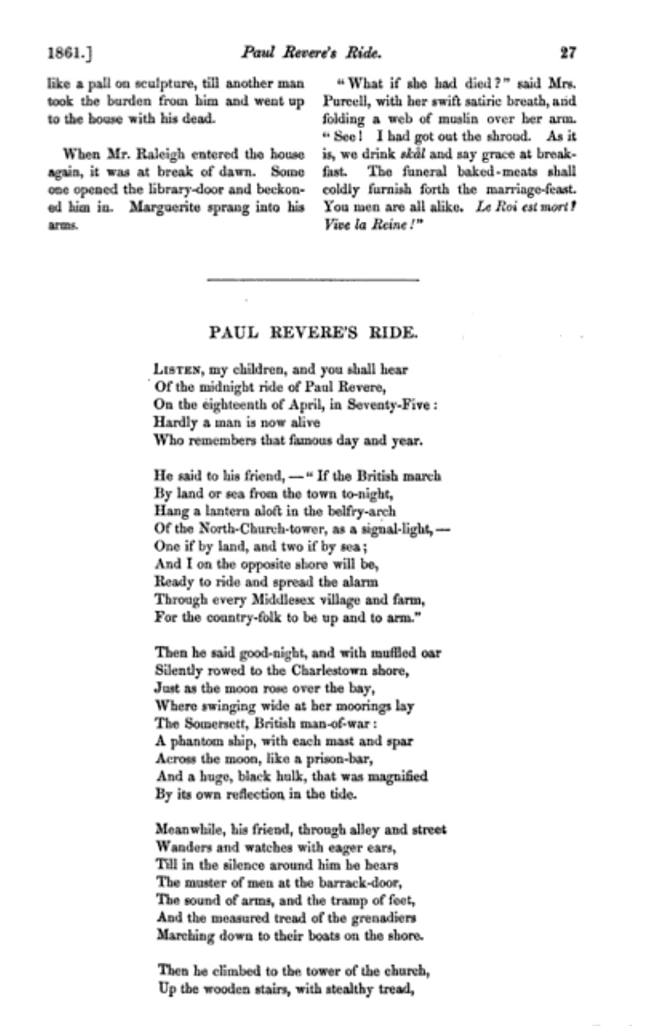 Book
Secondary source
Paul Revere's Ride
Henry Wadsworth Longfellow · 1860
Primary source
The Song of Hiawatha
Henry Wadsworth Longfellow · 1855
Primary source
Evangeline
Henry Wadsworth Longfellow · 1847
Primary source
A Psalm of Life
Henry Wadsworth Longfellow · 1838
Free account
Read every Henry Wadsworth Longfellow source
Sign up free →
Ready when you are
Start chatting with Henry Wadsworth Longfellow now.
20 messages free · No credit card · Available in 50+ languages.