


Primary sourceBook1844
The Arsenal at Springfield
Henry Wadsworth Longfellow · 1844
An anti-war poem by Longfellow inspired by a visit to the Springfield Armory, expressing his and his wife Fanny's pacifist views.
Longfellow wrote this anti-war poem, prompted by his wife Fanny, reflecting the couple's pacifist beliefs.
Free Humy account · No credit card · 120,288 sources to read
About this source
What it is
This is a poem written by Henry Wadsworth Longfellow in 1844. It was inspired by a visit to the arsenal at Springfield, Massachusetts, where rows of stored weapons led the poet to imagine the sounds of war and suffering they represented across history.
Why it matters
The poem was prompted by his wife Fanny during their visit, and it expresses the couple's shared pacifist convictions. Longfellow imagines the weapons as instruments in a terrible symphony of war, connecting ancient and modern violence across cultures and centuries, from Saxon warriors to Aztec priests.
Look closer
- Why might weapons stored quietly in an arsenal inspire thoughts of war's noise and suffering?
- What does the poem's sweep across many cultures and eras suggest about how Longfellow viewed war?
- How might personal experience, like a visit with a loved one, shape a poem's political message?
This book is part of the curated material that grounds the AI version of Henry Wadsworth Longfellow on Humy.ai — when students ask about related events, the AI can quote it and cite it.
More Henry Wadsworth Longfellow sources
Browse all 96 →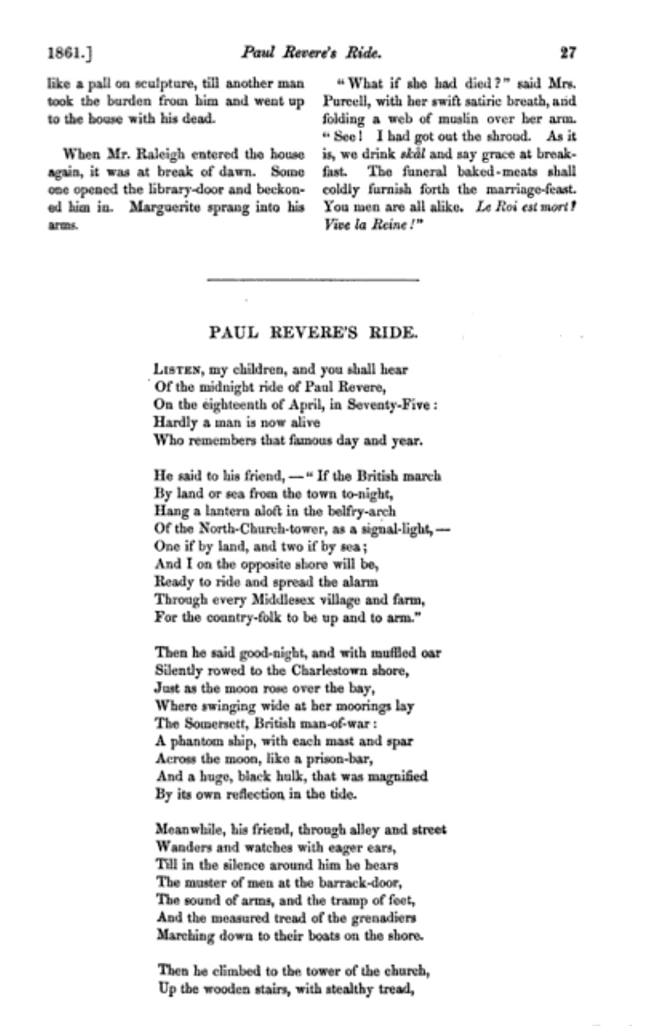 Book
Secondary source
Paul Revere's Ride
Henry Wadsworth Longfellow · 1860
Primary source
The Song of Hiawatha
Henry Wadsworth Longfellow · 1855
Primary source
Evangeline
Henry Wadsworth Longfellow · 1847
Primary source
A Psalm of Life
Henry Wadsworth Longfellow · 1838
Free account
Read every Henry Wadsworth Longfellow source
Sign up free →
Ready when you are
Start chatting with Henry Wadsworth Longfellow now.
20 messages free · No credit card · Available in 50+ languages.