


Secondary sourcePainting1782
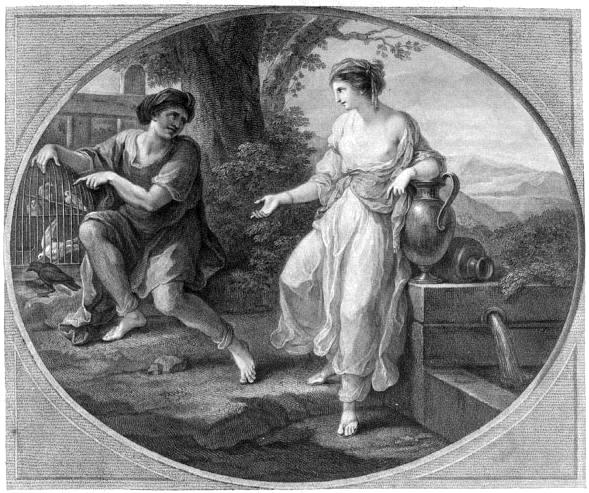
The Beautiful Rhodope in Love with Aesop
Francesco Bartolozzi, after Angelica Kauffman · 1782
An 18th-century engraving after a painting by Angelica Kauffman, showing the ancient story of the courtesan Rhodopis and Aesop.
An imagined 18th-century scene linking Aesop to Rhodopis, based on an ancient story that both were once enslaved by Iadmon.
About this source
What it is
This engraving by Francesco Bartolozzi reproduces a painting by Angelica Kauffman. It was licensed in 1782 and shows a scene from the ancient legend connecting the courtesan Rhodopis with Aesop.
Why it matters
According to the ancient historian Herodotus, both Rhodopis and Aesop were once enslaved by the same man, Iadmon. This print shows how later European artists, including Kauffman and her engraver Bartolozzi, imagined and romanticised ancient stories about Aesop centuries after his lifetime, turning a brief historical detail into a sentimental scene.
Look closer
- What mood does the artist create through the poses and setting of the two figures?
- How does this 18th-century image differ from what we actually know from ancient sources about Aesop and Rhodopis?
- Why might artists be drawn to imagine a romantic connection where ancient sources give only a shared owner?
This painting is part of the curated material that grounds the AI version of Aesop on Humy.ai — when students ask about related events, the AI can quote it and cite it.
More Aesop sources
Browse all 85 →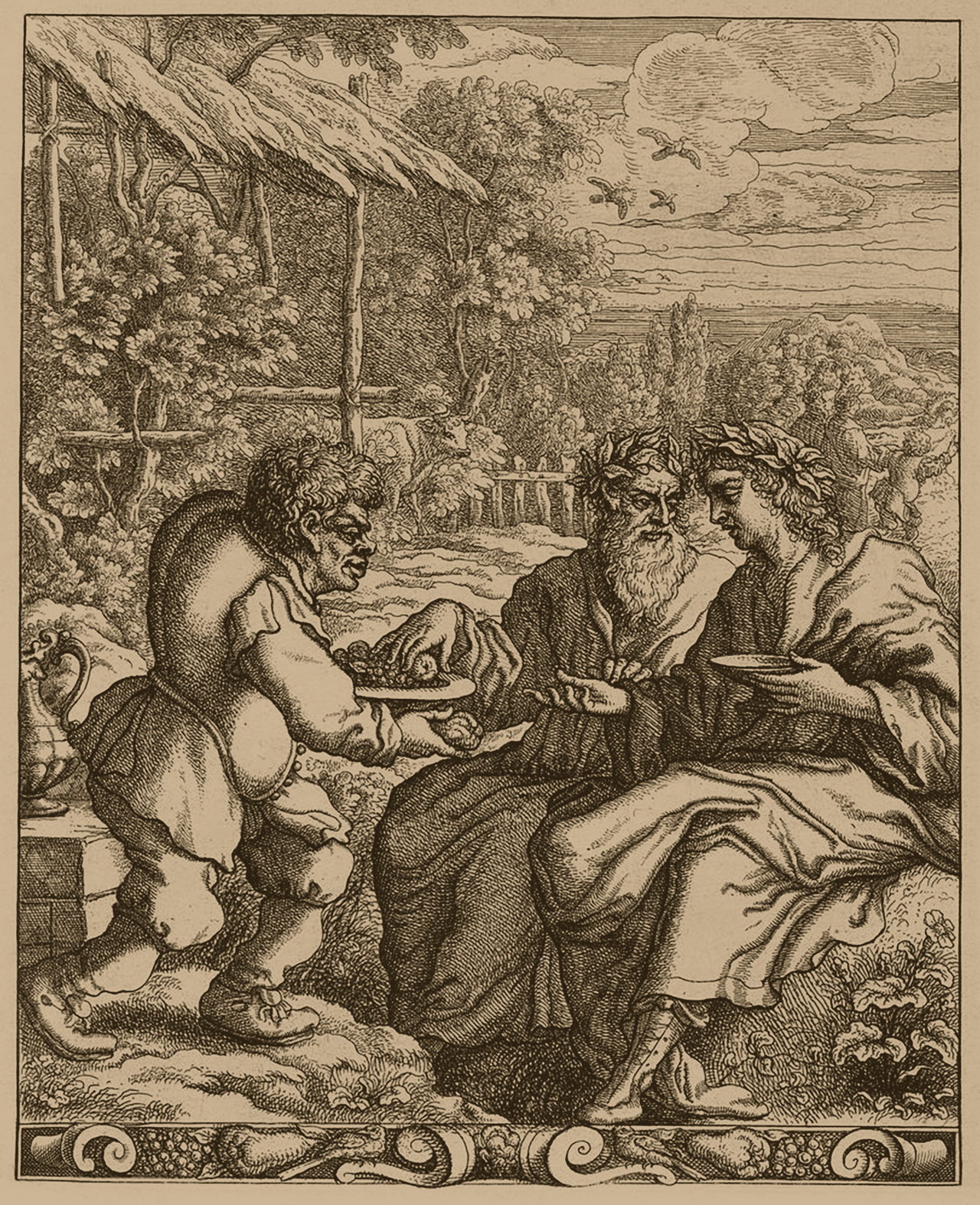 Book
Secondary source
Aesop's Fables
Aesop (attributed) · compiled from the 3rd century BCE onward
 Artifact
Secondary source
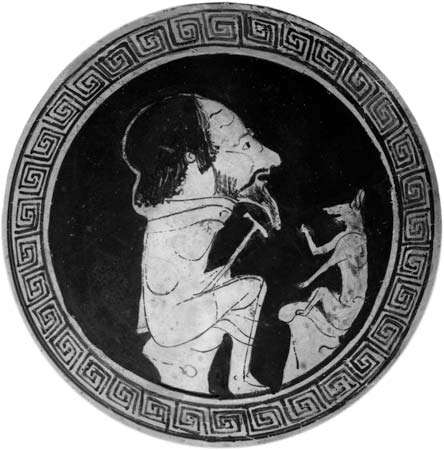
Aesop and the Fox (Red-Figure Kylix)
Unknown Greek artist · c. 450 BCE
 Book
Secondary source
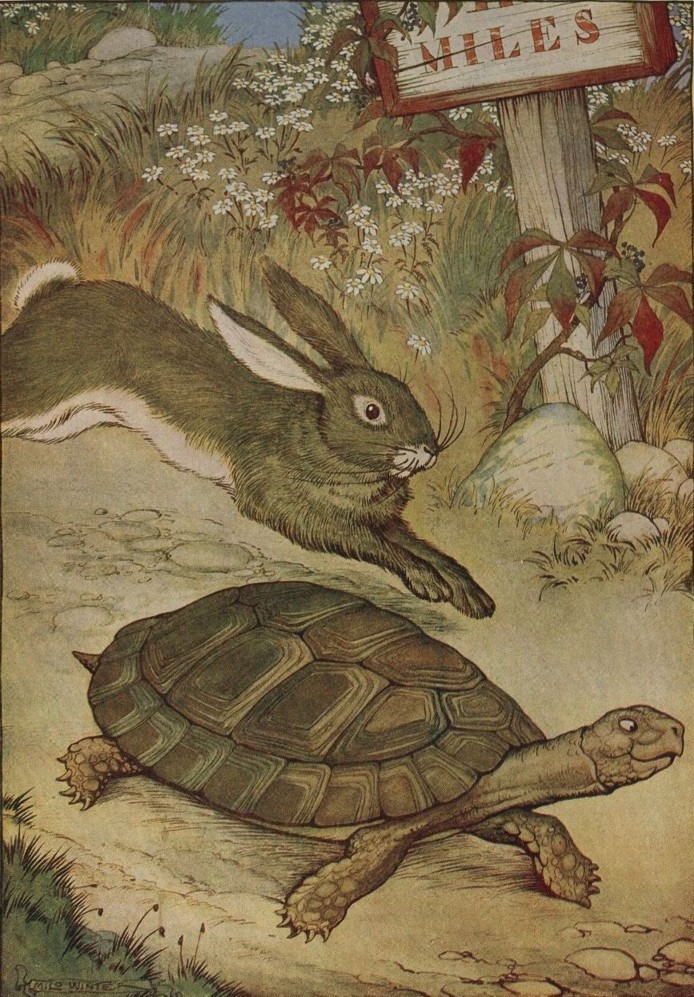
The Tortoise and the Hare
Aesop (attributed) · ancient Greek origin, no early Latin version; printed from 16th century
 Book
Secondary source
The Boy Who Cried Wolf
Aesop (attributed) · ancient Greek origin; translated into Latin in the 15th century
Free account
Read every Aesop source
Sign up free →
Ready when you are
Start chatting with Aesop now.
20 messages free · No credit card · Available in 50+ languages.