


Primary sourcePainting1792
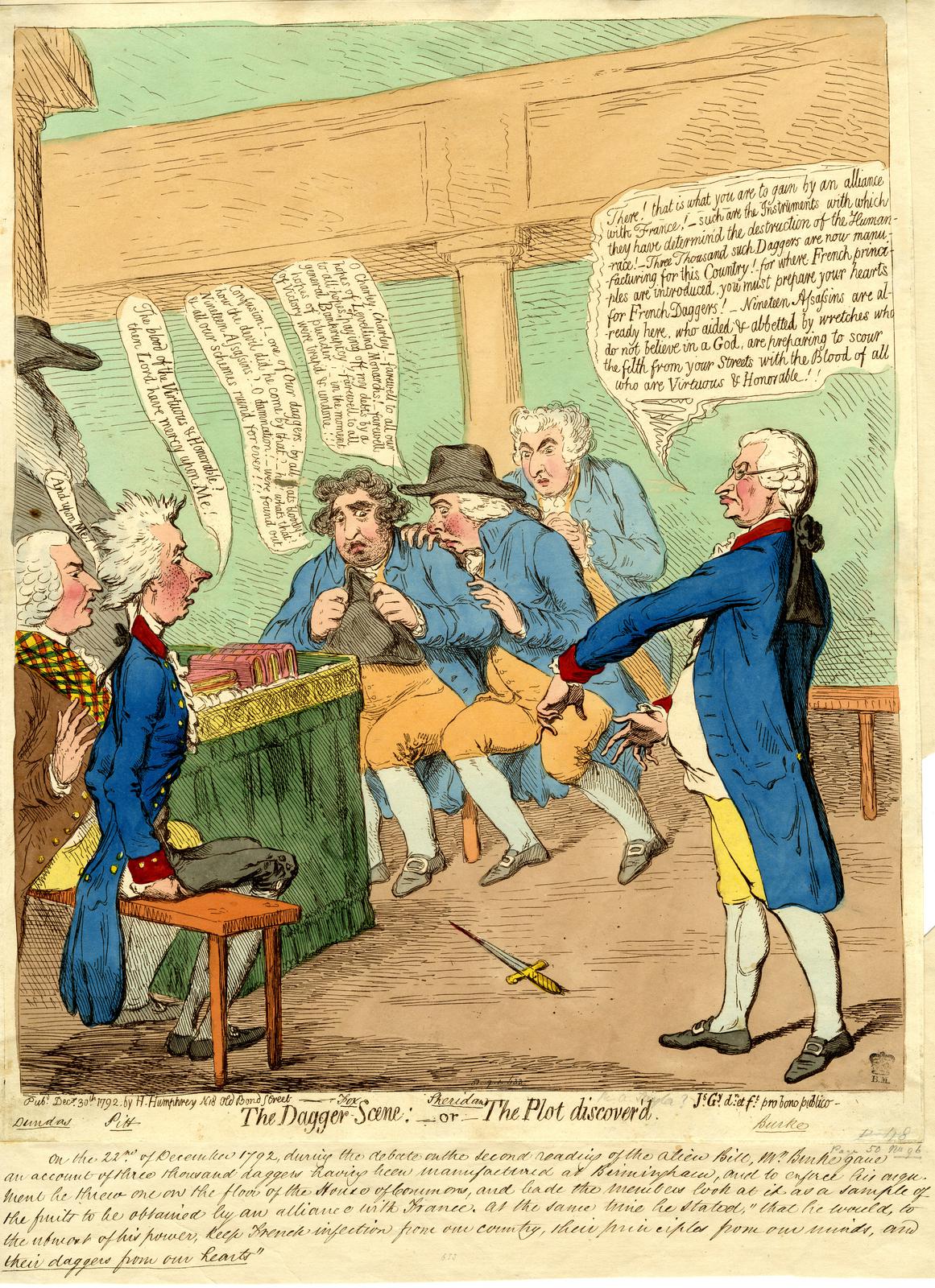
The Dagger Scene; or, The Plot Discover'd
James Gillray · 1792
A hand-coloured satirical print by James Gillray mocking Edmund Burke's dramatic gesture of throwing a dagger onto the floor of the House of Commons in 1792.
Burke is the central figure caricatured, shown throwing the dagger that gives the print its name.
About this source
What it is
This is a hand-coloured satirical print made by the caricaturist James Gillray in 1792, now held by the British Museum. It mocks a real scene in the House of Commons on 28 December 1792, when Edmund Burke dramatically threw a dagger onto the floor of the chamber as a warning about revolutionary violence.
Why it matters
The print shows Burke, grown heavy and dressed in fine clothes, lecturing a frightened-looking William Pitt and Henry Dundas while Charles James Fox and Richard Sheridan react with alarm. It captures how Burke's fierce opposition to the French Revolution was seen by contemporaries: some thought him a prophetic defender of order, others thought his warnings theatrical and excessive. Gillray's exaggerated style reveals how political cartoons shaped public opinion about real debates in Parliament.
Look closer
- What does Burke's exaggerated appearance suggest about Gillray's opinion of him?
- Why might Gillray give speech balloons to some figures and not others?
- How does a satirical cartoon differ from a written record of what was actually said?
This painting is part of the curated material that grounds the AI version of Edmund Burke on Humy.ai — when students ask about related events, the AI can quote it and cite it.
More Edmund Burke sources
Meet the AI Edmund Burke →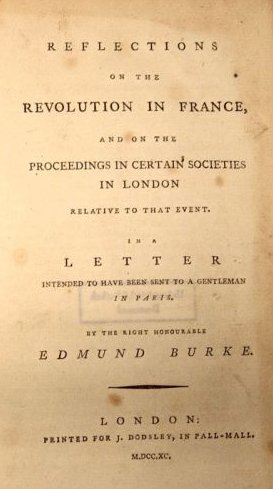 Book
Primary source
Reflections on the Revolution in France
Edmund Burke · November 1790
 Speech
Primary source
Speech to the Electors of Bristol
Edmund Burke · 3 November 1774
 Book
Primary source
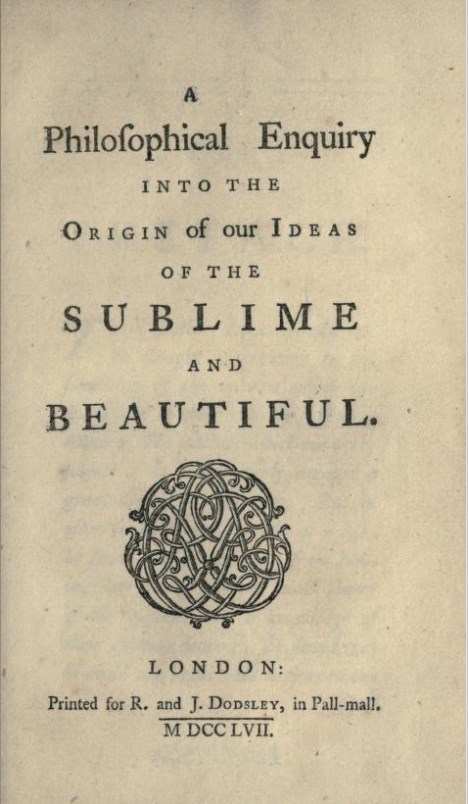
A Philosophical Enquiry into the Origin of Our Ideas of the Sublime and Beautiful
Edmund Burke · 1757
Primary source
Thoughts on the Cause of the Present Discontents
Edmund Burke · 23 April 1770
 Painting
Primary source
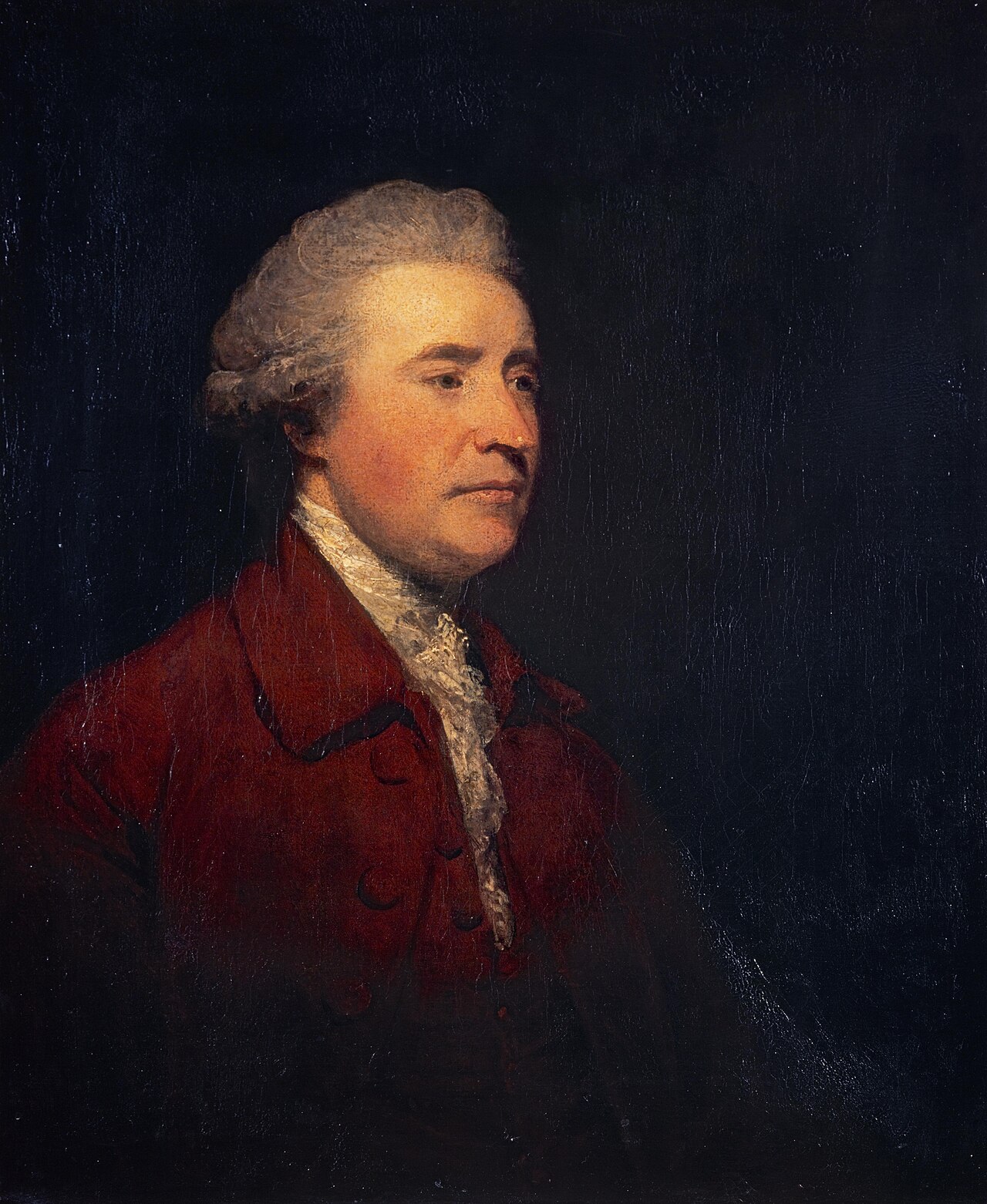
Edmund Burke, 1729-1797. Statesman, orator and author
Joshua Reynolds · 1774
Ready when you are
Start chatting with Edmund Burke now.
20 messages free · No credit card · Available in 50+ languages.