


Secondary sourcePainting1475
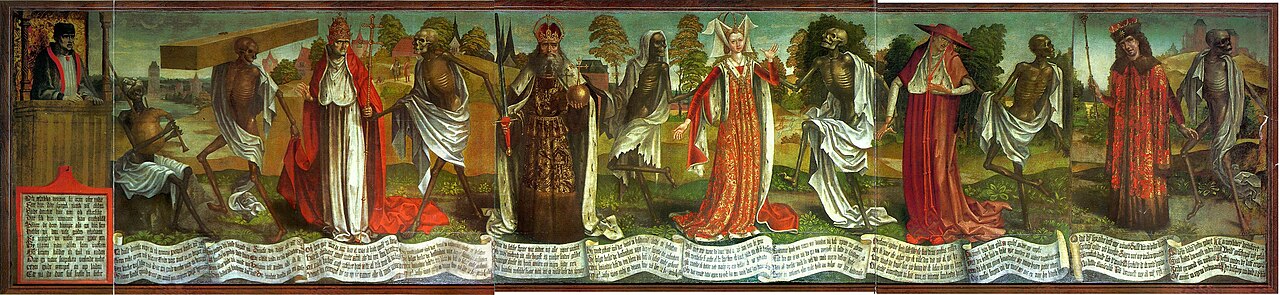
The Danse Macabre
Bernt Notke · 1475
A surviving fragment of a medieval Dance of Death painting showing Death leading people of every rank, from popes to peasants.
This Dance of Death painting reflects the visual culture that developed in response to the Black Death's recurring mortality.
About this source
What it is
This painting is a fragment of a Danse Macabre by Bernt Notke, created at the end of the fifteenth century and now displayed in St. Nicholas Church, Tallinn. It reproduces an earlier work by Notke in Lübeck and shows skeletal figures of Death dancing with people from every social rank, accompanied by verses in Low German.
Why it matters
The Dance of Death theme spread widely in art and literature of the late Middle Ages as a memento mori, reminding viewers that death comes for everyone regardless of status. This visual tradition grew directly out of the repeated mortality caused by the Black Death and later outbreaks, showing how communities processed mass death through shared images.
Look closer
- Why does Death dance with people of every rank, from pope to peasant?
- What might the verses accompanying the figures have told viewers who could read Low German?
- What does the painting's survival through war and restoration tell you about how fragile historical evidence can be?
This painting is part of the curated material that grounds the AI version of The Black Death on Humy.ai — when students ask about related events, the AI can quote it and cite it.
More The Black Death sources
Meet the AI The Black Death →Secondary source
The Decameron
Giovanni Boccaccio · 1351
Primary source
Statute of Labourers 1351
1351
 Painting
Primary source
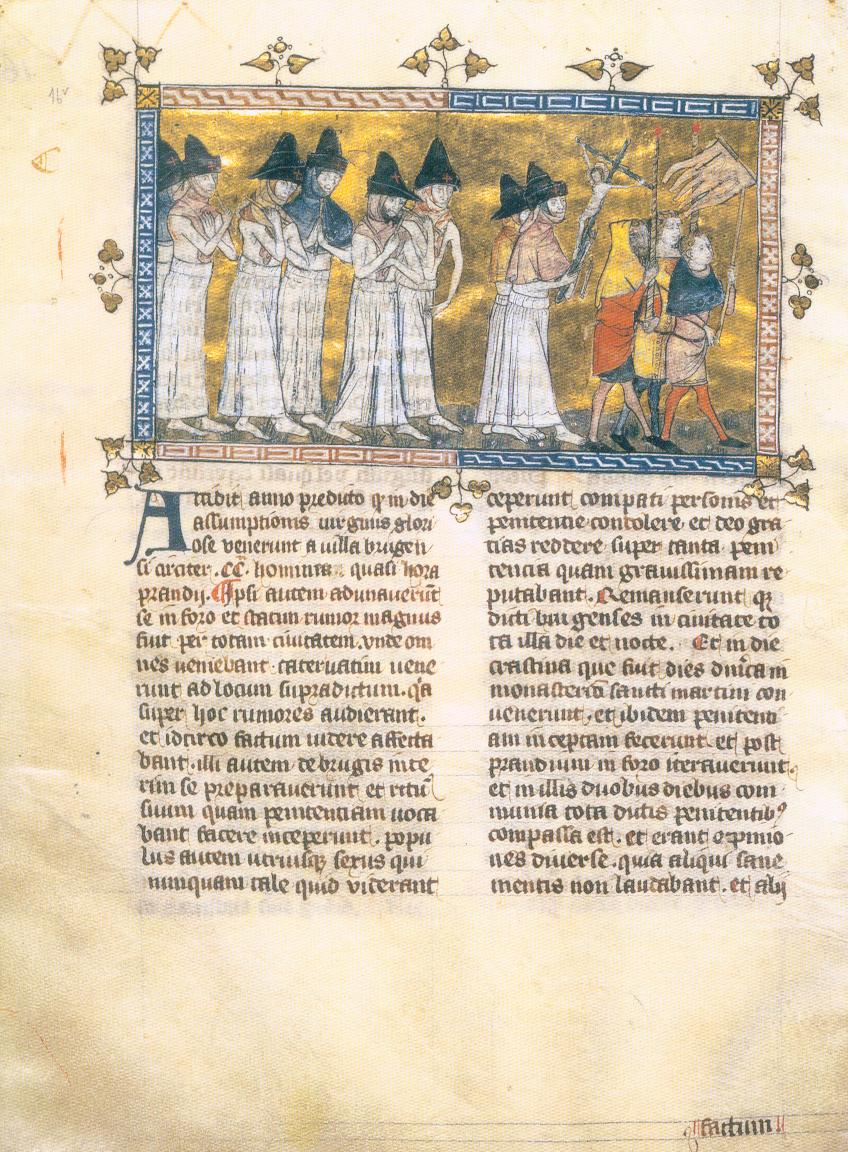
Depiction of the Flagellant Processions
Pierart dou Tielt · c. 1350
 Painting
Primary source
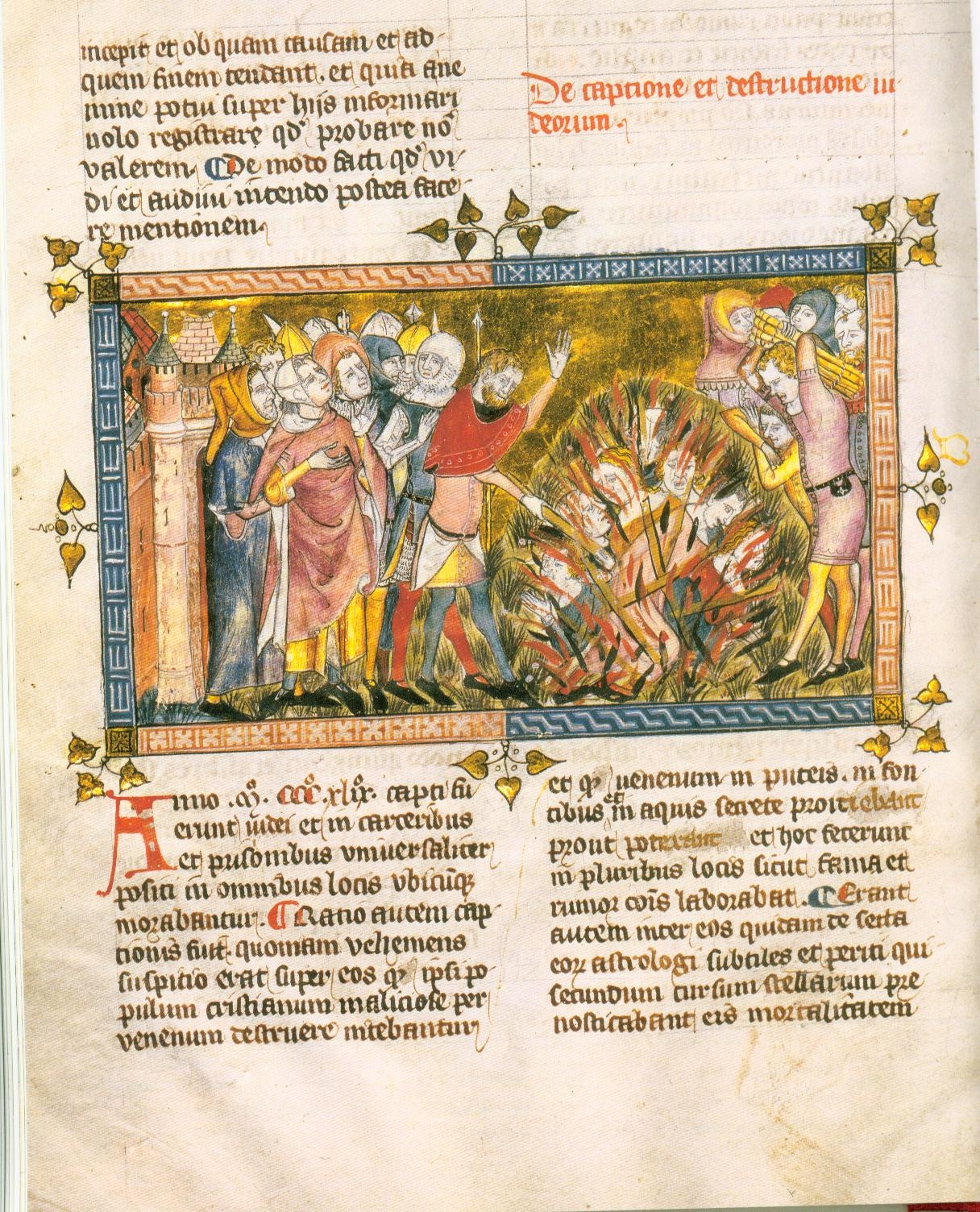
Execution of Jews
c. 1350
 Book
Primary source
The Annals of Ireland by Friar John Clyn
John Clyn · 1348-1349
Ready when you are
Start chatting with The Black Death now.
20 messages free · No credit card · Available in 50+ languages.