


Secondary sourcePainting1861
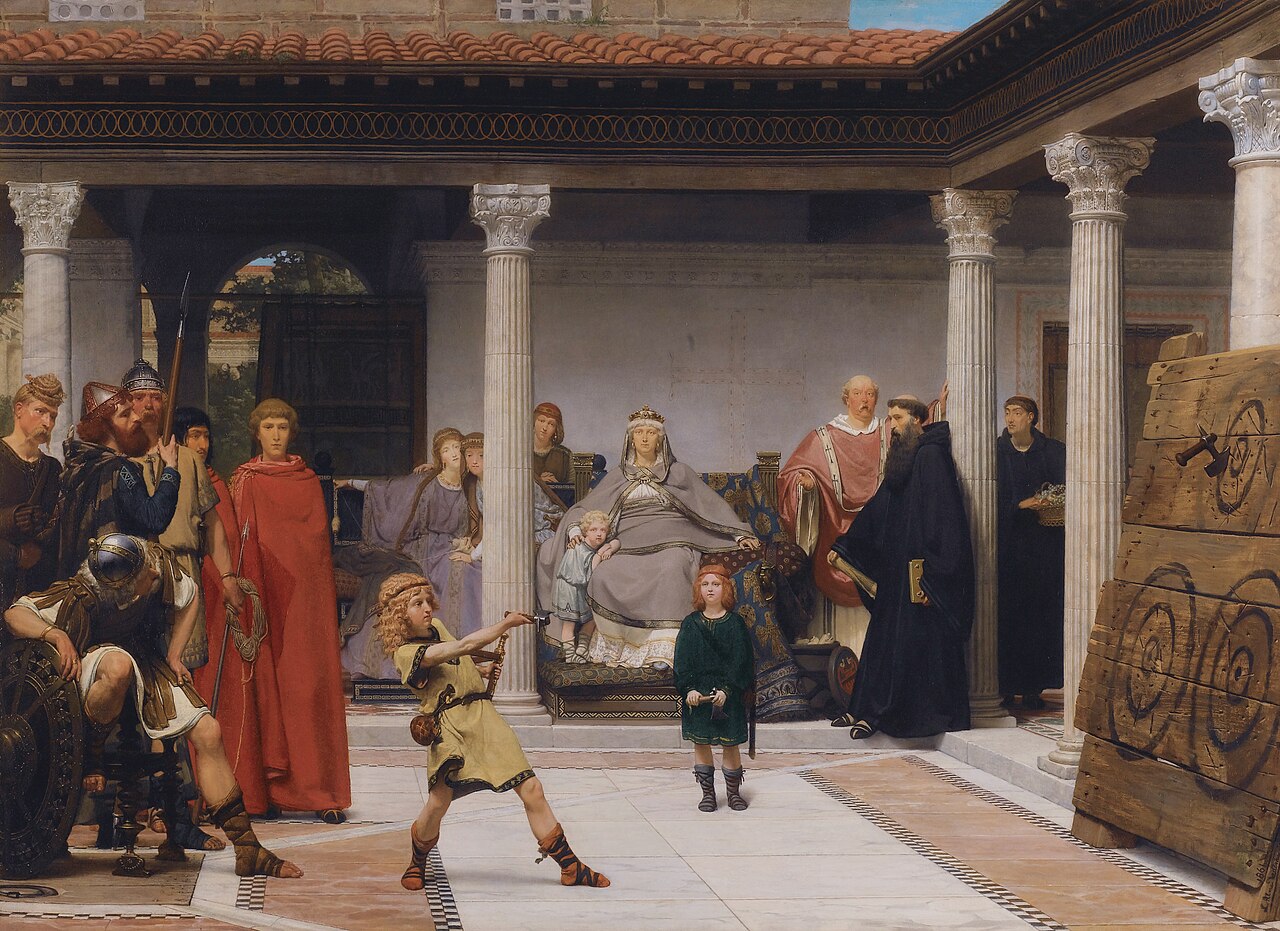
The Education of the Children of Clovis
Lawrence Alma-Tadema · 1861
An 1861 painting imagining Queen Clotilde teaching the sons of Clovis after his death, showing the Merovingian court through a Victorian lens.
Shows the Merovingian court after Clovis's death, providing context for the dynasty he founded.
About this source
What it is
This painting was made in 1861 by Lawrence Alma-Tadema. It shows a queen seated on a raised throne in a Roman-style courtyard, with a young boy holding a sword standing before her, another boy nearby, and armed warriors and robed men standing around a large wooden chest.
Why it matters
The painting imagines Clovis's widow, Clotilde, educating his sons after his death, a scene set in the Merovingian court that followed his reign. Painted in the 19th century, it reflects how artists of that period imagined early medieval royal family life, mixing historical interest with their own ideas about classical settings and domestic virtue.
Look closer
- What details in the setting look more Roman than early medieval, and why might the artist have included them?
- What is the boy with the sword being taught, and what might that suggest about his future role?
- How does this painting show the court after Clovis's death rather than Clovis himself?
This painting is part of the curated material that grounds the AI version of Clovis I on Humy.ai — when students ask about related events, the AI can quote it and cite it.
Ready when you are
Start chatting with Clovis I now.
20 messages free · No credit card · Available in 50+ languages.