


Primary sourcePainting1594
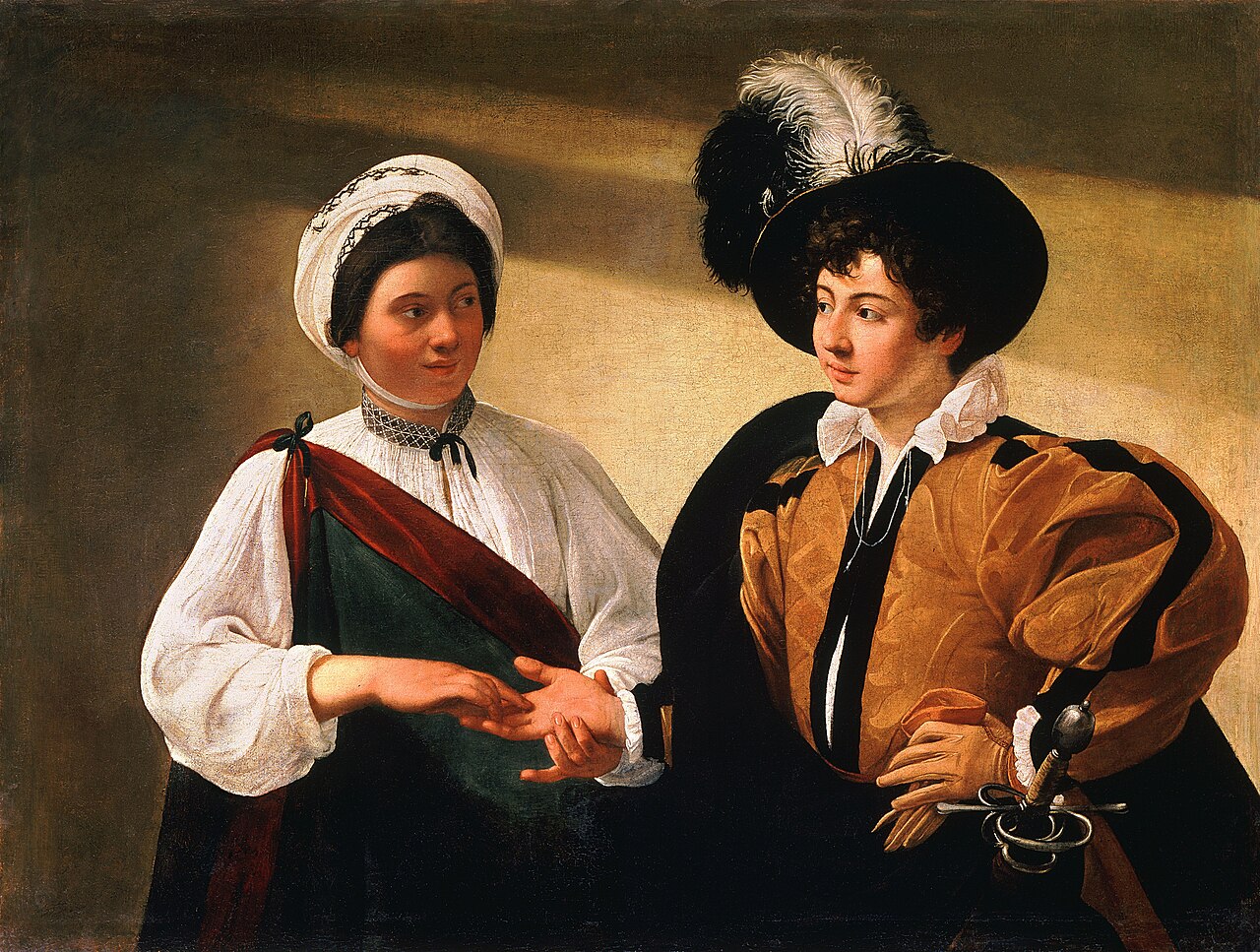
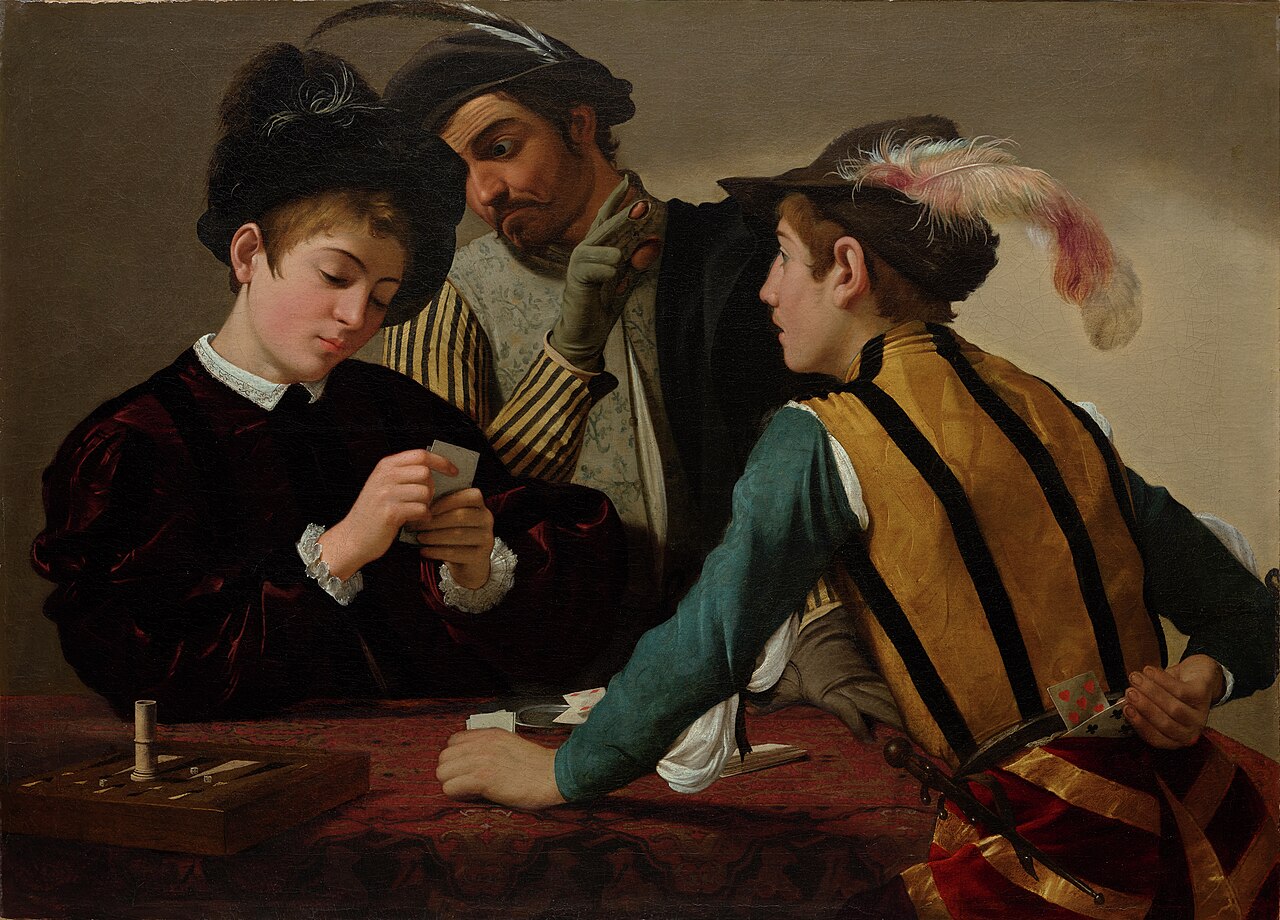
The Fortune Teller
Caravaggio · 1594
An early painting by Caravaggio showing a Romani girl reading a young man's palm while secretly slipping a ring from his finger.
One of Caravaggio's earliest multi-figure paintings, showing his new style of depicting ordinary life from observation.
About this source
What it is
This painting was made by Caravaggio around 1594, probably his first composition with more than one figure. It shows a well-dressed young man having his palm read by a Romani girl, who is quietly stealing his ring as he gazes at her. This version is held in the Louvre; a related version made for Cardinal del Monte is in Rome.
Why it matters
The painting introduced a new kind of subject to Roman art: ordinary street life rather than myth or religion. A contemporary poet, Gaspare Murtola, even compared Caravaggio's skill at deception in paint to the girl's trickery in the scene. It shows how Caravaggio built his early reputation by painting people and moments he observed directly, rather than copying older art.
Look closer
- What does the young man notice, and what does he fail to notice?
- How does Caravaggio use light and plain background to focus attention on the two figures?
- Why might this everyday scene have seemed new or shocking to viewers used to religious and mythological subjects?
This painting is part of the curated material that grounds the AI version of Caravaggio on Humy.ai — when students ask about related events, the AI can quote it and cite it.
More Caravaggio sources
Browse all 90 →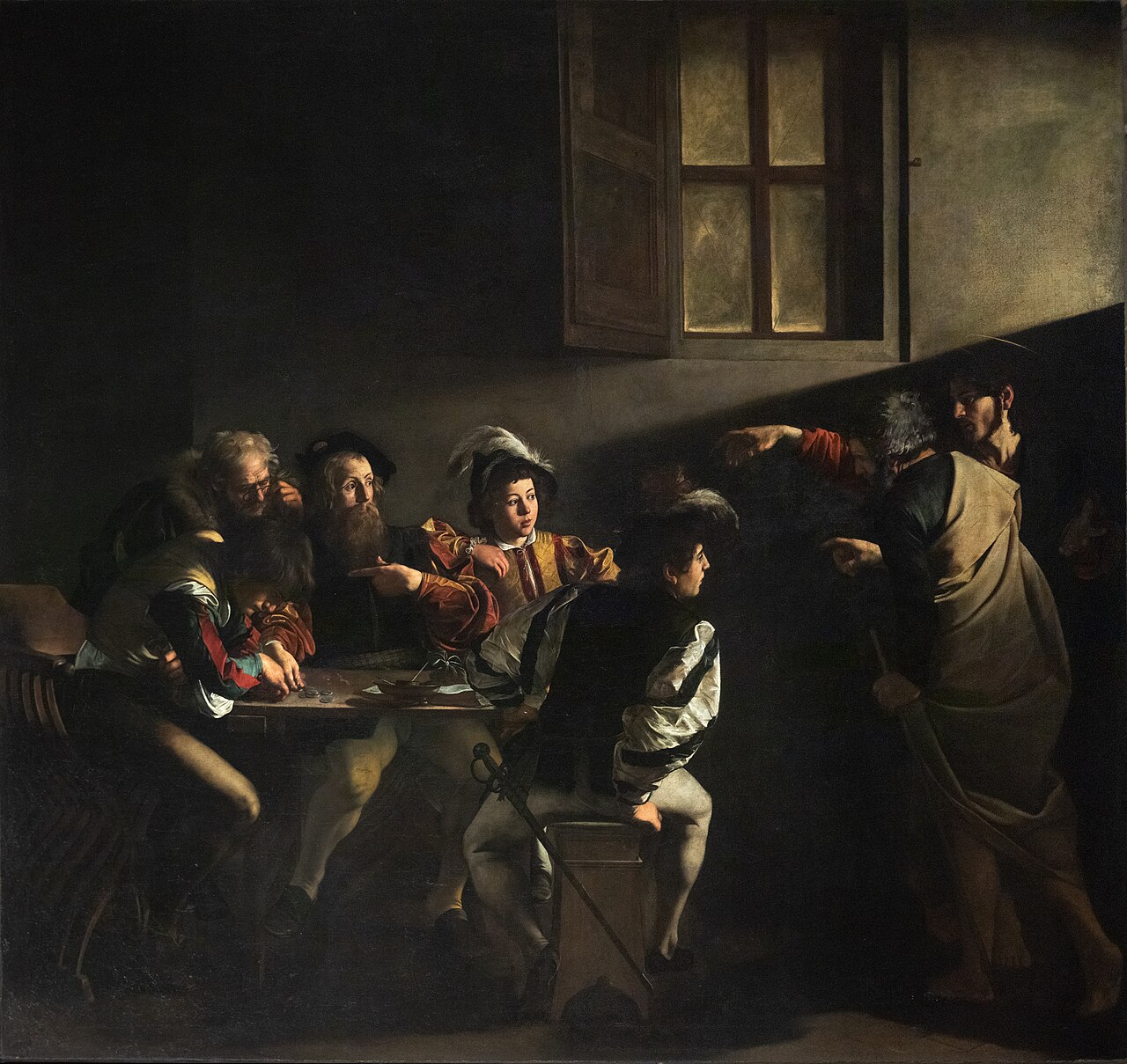 Painting
Secondary source
The Calling of Saint Matthew
Caravaggio · 1599–1600
 Artifact
Primary source
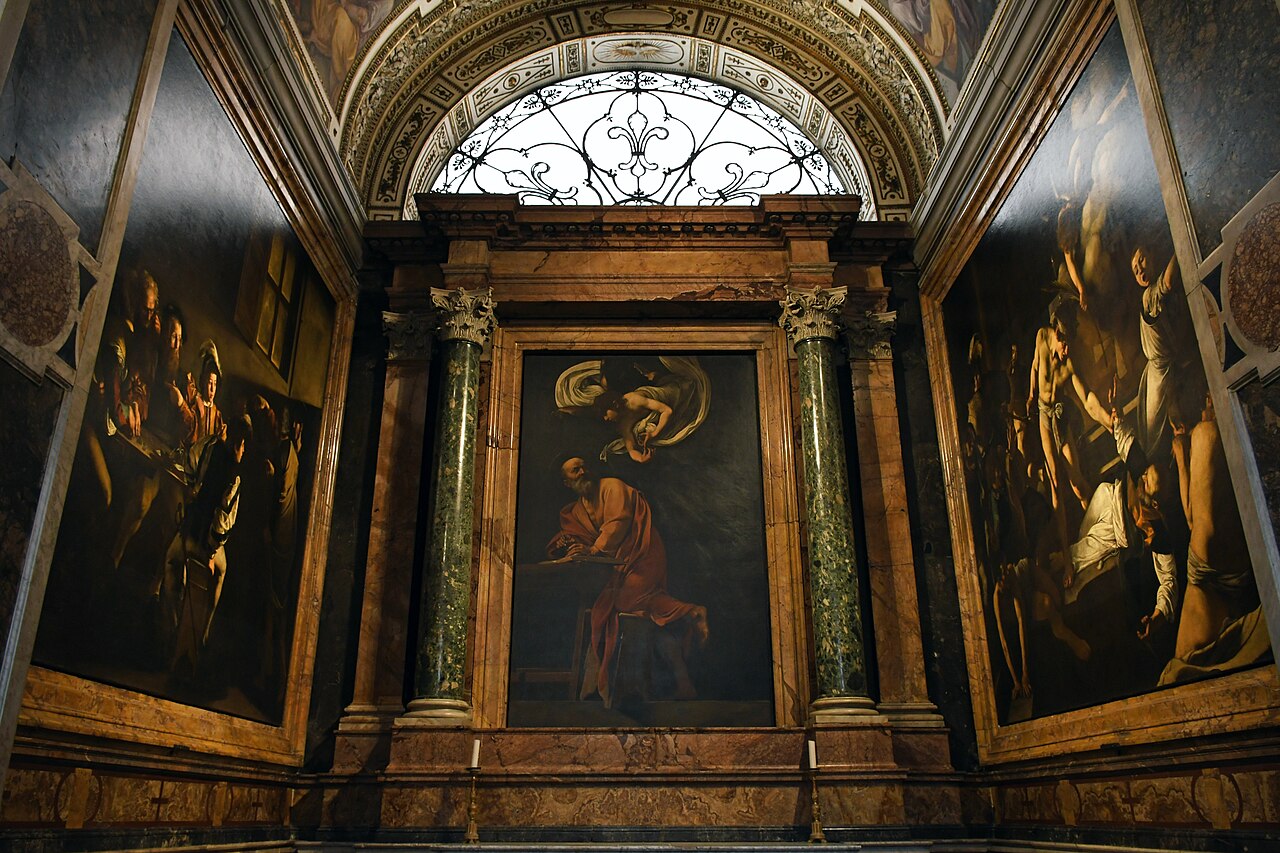
Contarelli Chapel
Caravaggio · 1600
 Painting
Secondary source
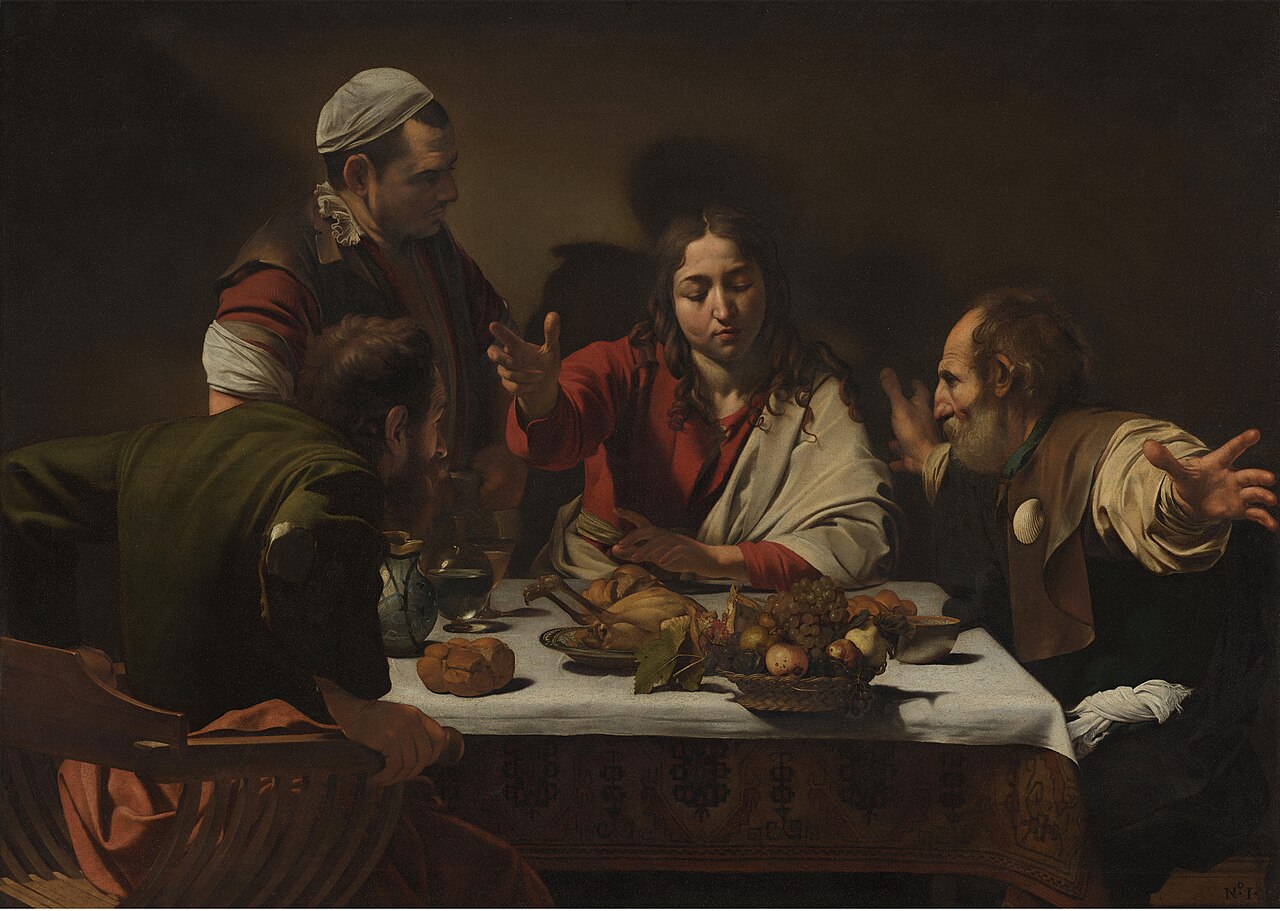
Supper at Emmaus
Caravaggio · 1601
 Painting
Secondary source
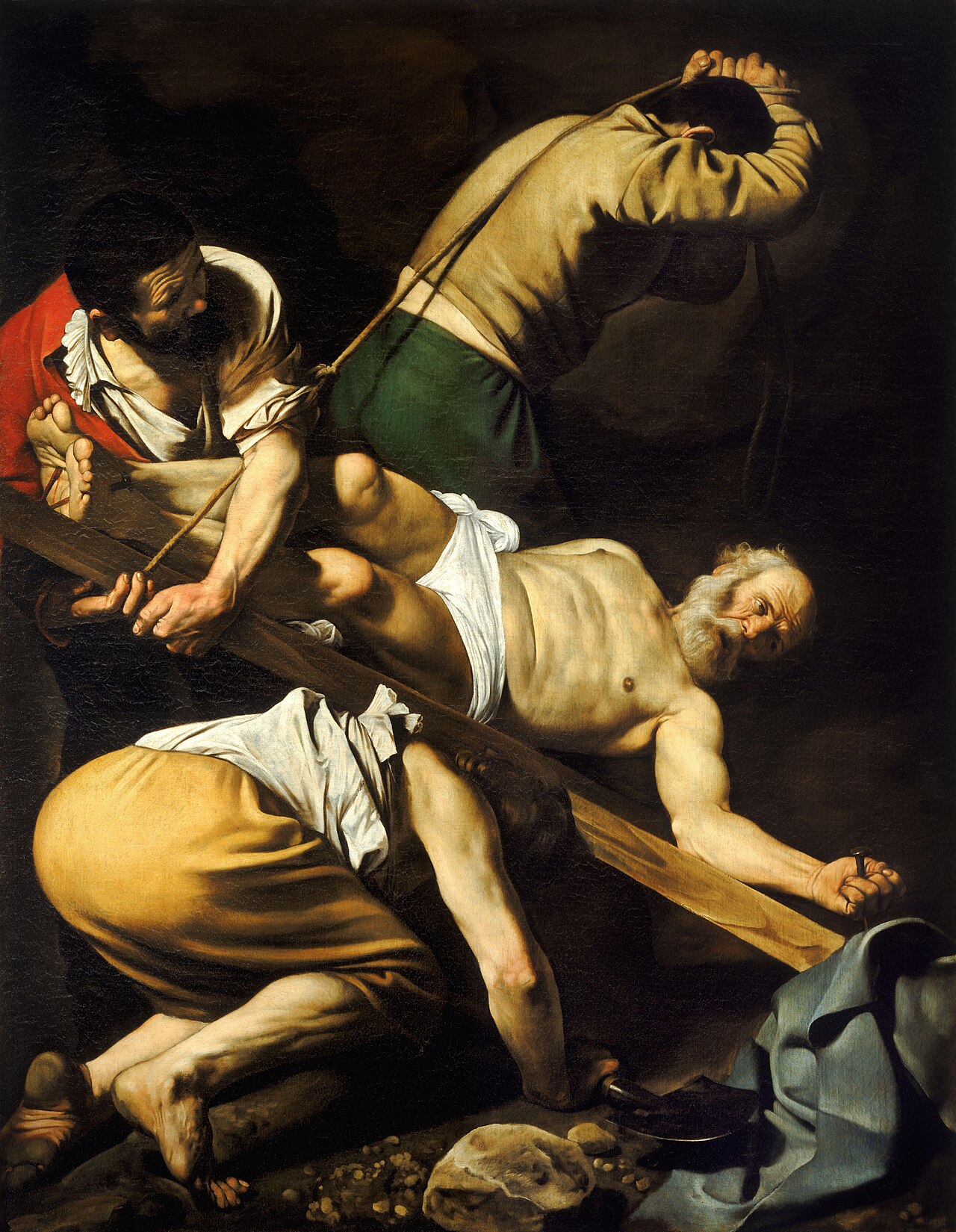
Crucifixion of Saint Peter
Caravaggio · 1600-1601
Free account
Read every Caravaggio source
Sign up free →
Ready when you are
Start chatting with Caravaggio now.
20 messages free · No credit card · Available in 50+ languages.