


Secondary sourcePainting1501
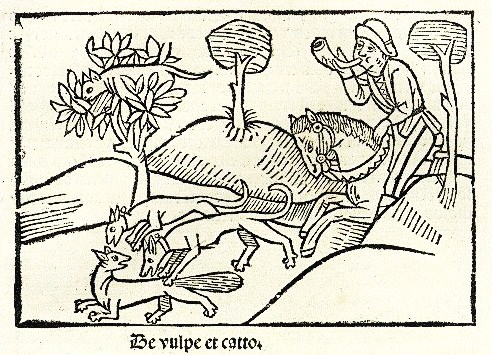
The Fox and the Cat, woodcut from Steinhöwel's Aesop (1501)
Heinrich Steinhöwel · 1501
A woodcut from a 1501 Aesop edition showing a fox and a cat in a hilly landscape. It shows how early printers illustrated fables attributed to Aesop.
Aesop is the figure behind the fables in this 1501 Steinhöwel edition, so this woodcut shows how his tales were illustrated centuries after he lived.
About this source
What it is
This is a black-and-white woodcut illustrating the fable of the fox and the cat. It comes from Heinrich Steinhöwel's 1501 printed Aesop edition, and its caption reads 'De vulpe et cato'. The image shows a fox and a cat standing in a hilly landscape, a man in a hat blowing a horn, a horse and hounds nearby, and a bare tree and leafy bush at the left.
Why it matters
The fables in this book are attributed to Aesop, a storyteller of ancient Greece, but this picture was made around 1501, long after his lifetime. It is an example of how printers in the early age of the printing press chose to present old tales to new readers. The woodcut tells us more about the printing culture of Steinhöwel's time than about Aesop himself.
Look closer
- What do the fox and the cat seem to be doing, and what does their setting suggest about the story?
- Why might a printer include a man with a horn and hounds in an illustration of a fable?
- What do you think this picture leaves out that the written fable would have explained?
This painting is part of the curated material that grounds the AI version of Aesop on Humy.ai — when students ask about related events, the AI can quote it and cite it.
More Aesop sources
Browse all 85 →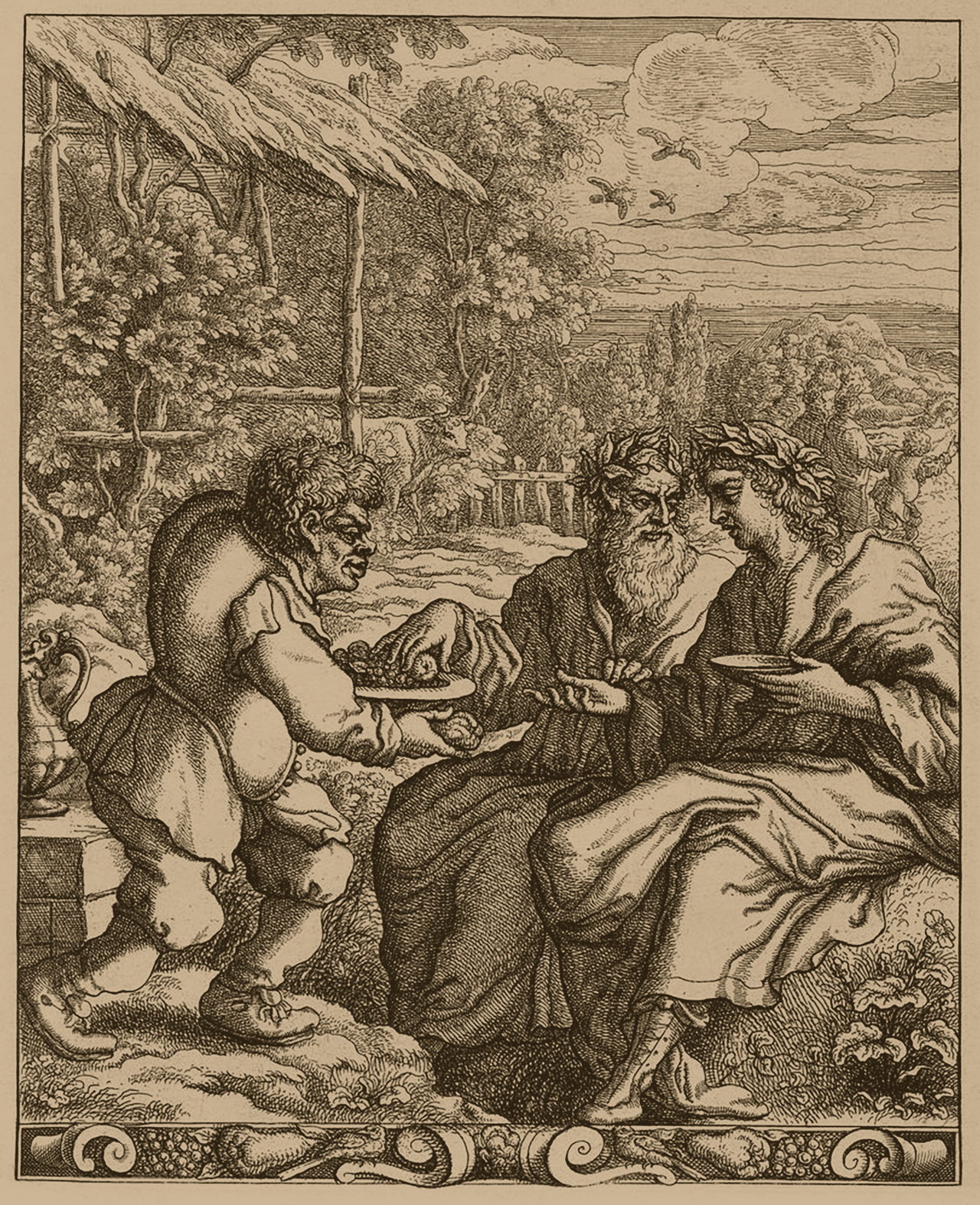 Book
Secondary source
Aesop's Fables
Aesop (attributed) · compiled from the 3rd century BCE onward
 Artifact
Secondary source
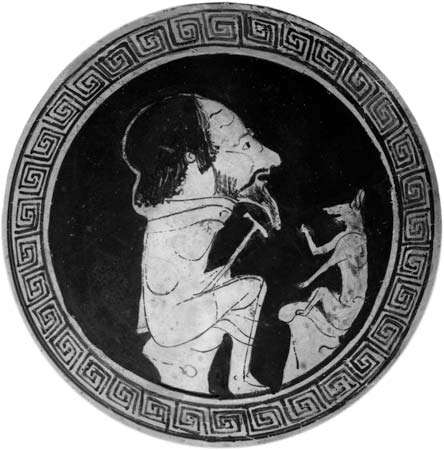
Aesop and the Fox (Red-Figure Kylix)
Unknown Greek artist · c. 450 BCE
 Book
Secondary source
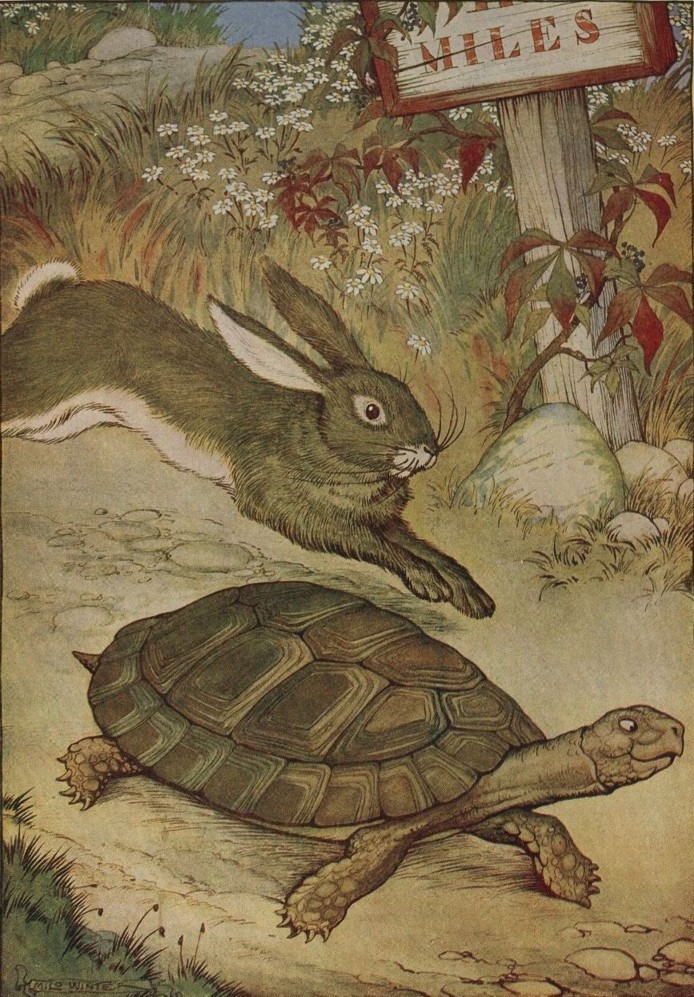
The Tortoise and the Hare
Aesop (attributed) · ancient Greek origin, no early Latin version; printed from 16th century
 Book
Secondary source
The Boy Who Cried Wolf
Aesop (attributed) · ancient Greek origin; translated into Latin in the 15th century
Free account
Read every Aesop source
Sign up free →
Ready when you are
Start chatting with Aesop now.
20 messages free · No credit card · Available in 50+ languages.