


Secondary sourcePainting
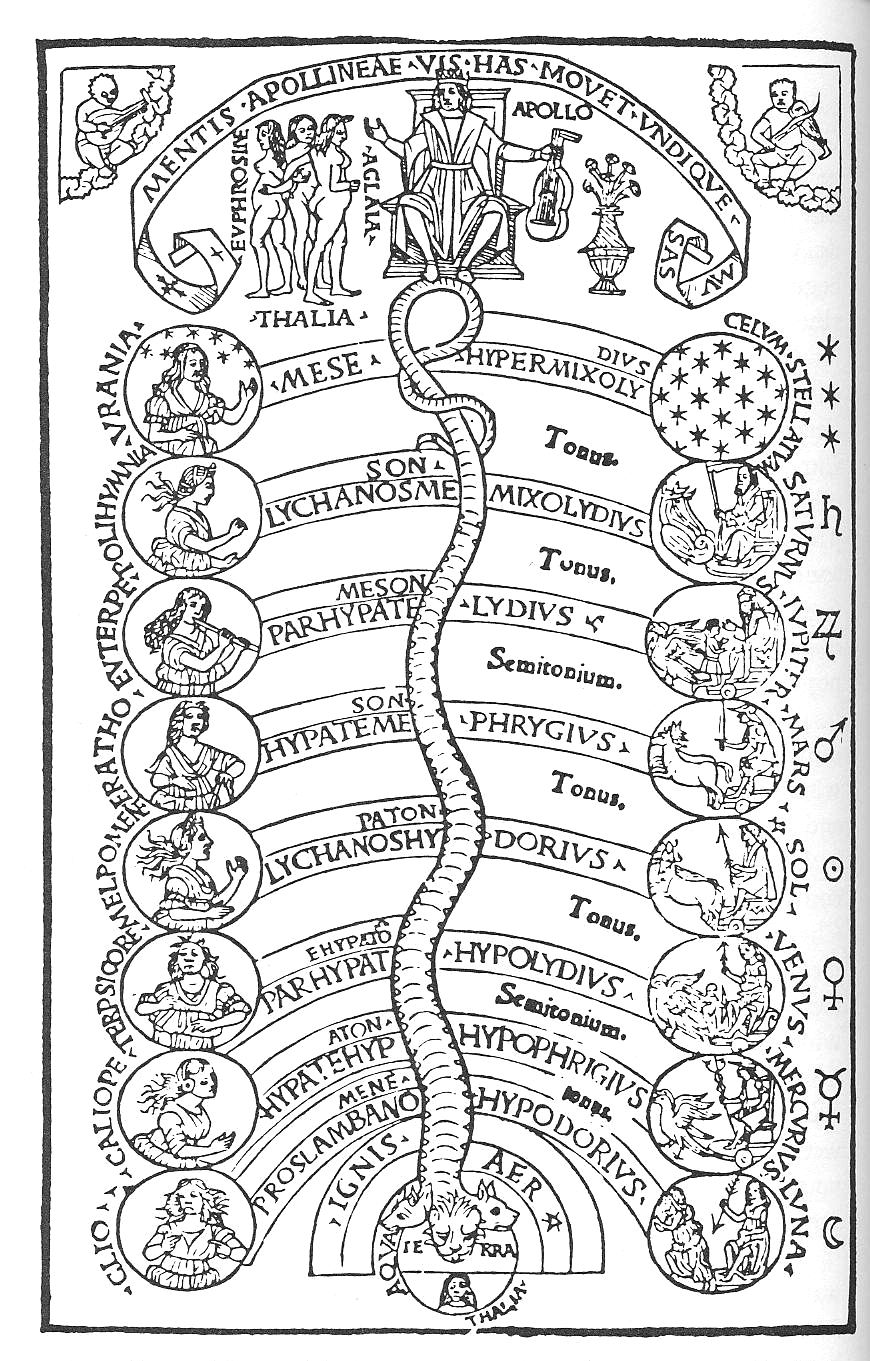
The Music of the Spheres
Guillaume Le Signerre
A Renaissance engraving visualizing the 'harmony of the spheres,' a cosmic musical theory traditionally credited to Pythagoras.
Visualizes the theory of cosmic musical harmony traditionally attributed to Pythagoras.
About this source
What it is
This engraving, made by Guillaume Le Signerre in Renaissance Italy, diagrams the 'music of the spheres.' It shows the god Apollo with a lyre at the center, surrounded by the nine Muses, with planetary symbols and musical ratios arranged around them.
Why it matters
The idea that the planets moved in mathematical, musical harmony was traditionally traced back to Pythagoras. This print shows how Renaissance scholars combined classical mythology, astronomy, and music theory into a single picture of a harmonious universe, continuing a tradition that would later influence thinkers such as Johannes Kepler.
Look closer
- Why combine gods, planets, and musical notation all in one diagram?
- What does the careful geometric arrangement suggest about the kind of order the artist wanted to show?
- How does this engraving connect ancient ideas credited to Pythagoras with Renaissance science and art?
This painting is part of the curated material that grounds the AI version of Pythagoras on Humy.ai — when students ask about related events, the AI can quote it and cite it.
More Pythagoras sources
Meet the AI Pythagoras → Book
Secondary source
Lives and Opinions of Eminent Philosophers, Book V (Life of Aristotle)
Diogenes Laërtius · c. 3rd century CE
 Book
Secondary source
Histories
Herodotus · c. 440 BCE
 Painting
Secondary source
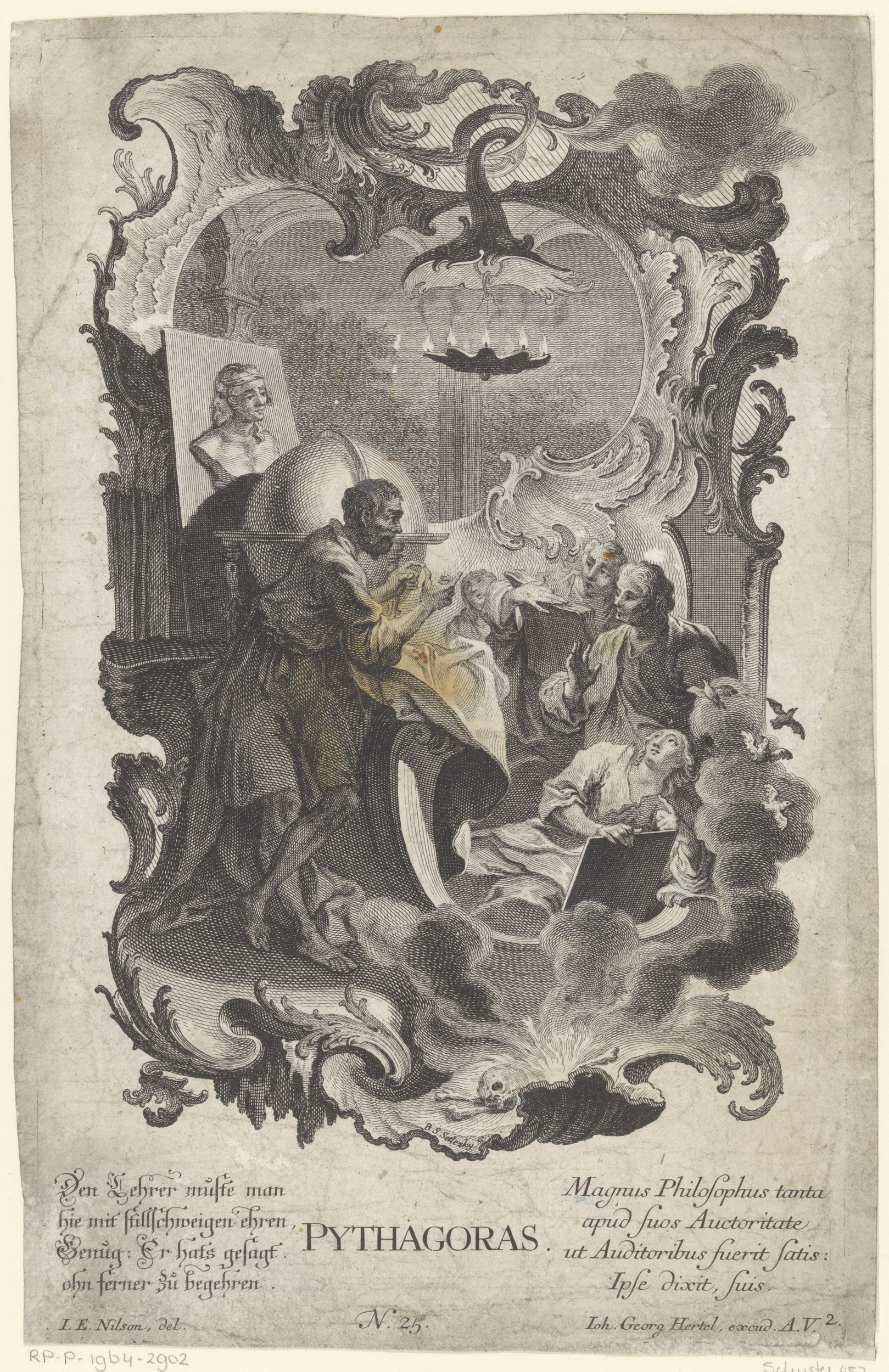
Pythagoras Leaning on a Globe with Four Listeners
 Book
Secondary source
Metaphysics
Aristotle · c. 400 BCE
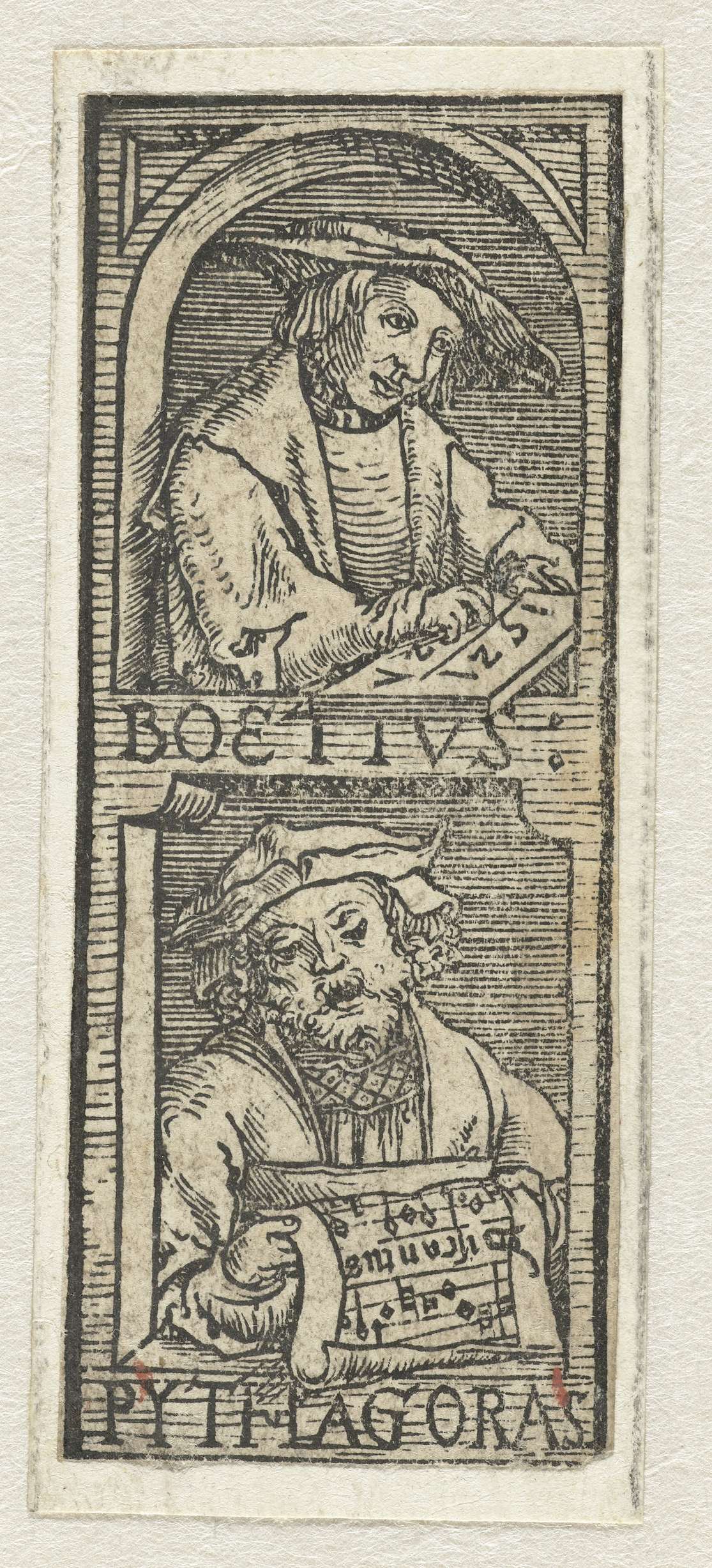 Painting
Secondary source
Boethius and Pythagoras
1521
Ready when you are
Start chatting with Pythagoras now.
20 messages free · No credit card · Available in 50+ languages.