


Secondary sourcePaintingc. 1670-1680
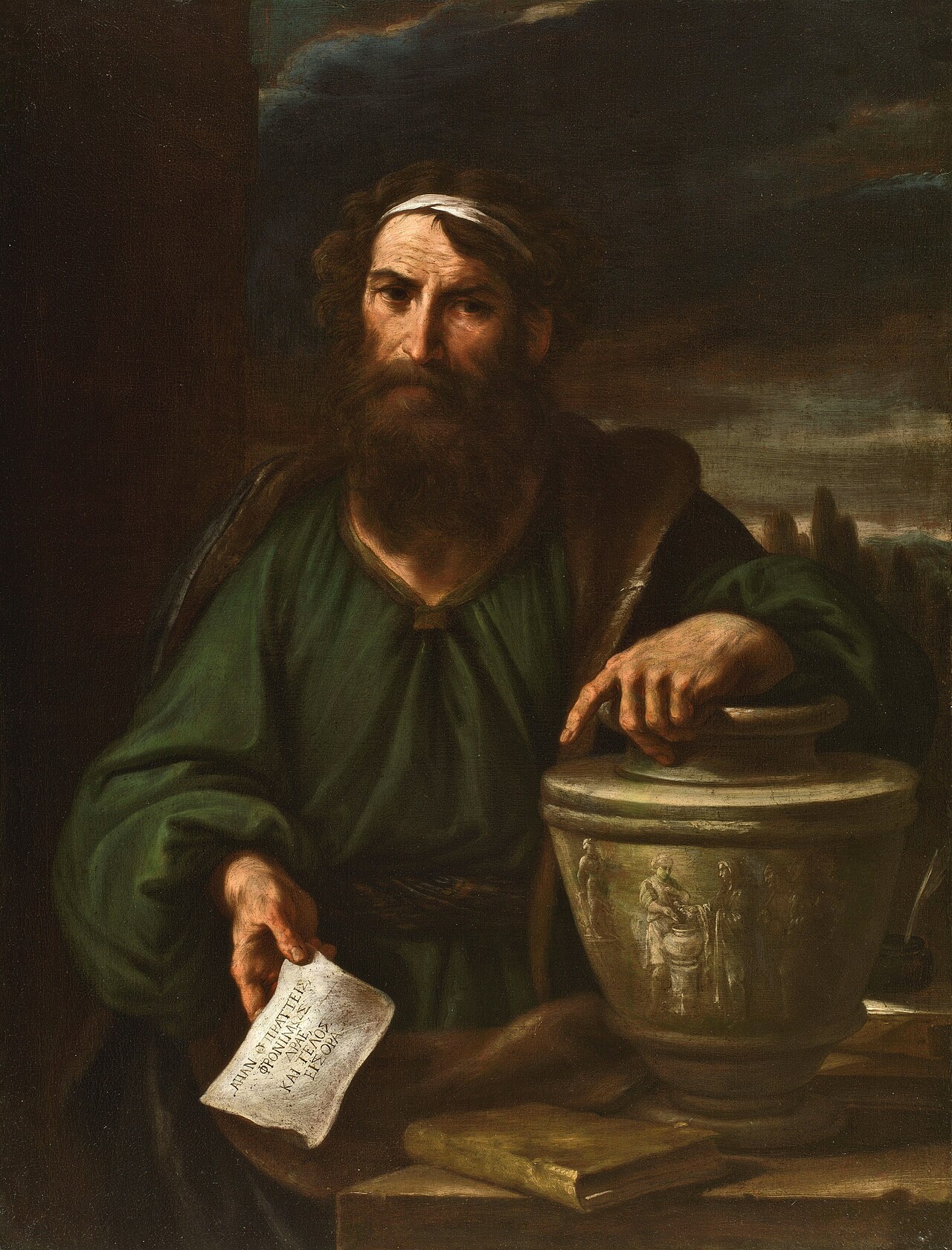
The Philosopher Epicurus
Agostino Scilla · c. 1670-1680
An imagined oil portrait of Epicurus holding a card about acting wisely, painted centuries after his death.
An imagined 17th-century portrait of Epicurus, created long after his lifetime to depict the philosopher as later ages pictured him.
About this source
What it is
This is an oil painting by Agostino Scilla, made about 1670–1680. It shows a bearded man identified as Epicurus, resting a hand on a carved urn and holding a scroll, with a closed book nearby. It is held in a private collection.
Why it matters
No real portrait of Epicurus from his own lifetime survives, so painters centuries later imagined how he might have looked. This picture shows how later European artists and thinkers pictured ancient philosophers, often adding objects like books and scrolls to suggest wisdom. The card Epicurus holds carries an inscription urging careful, thoughtful action, reflecting how his ideas were understood (or reinterpreted) long after his death.
Look closer
- What objects has the artist included, and what do they suggest about Epicurus's character?
- Since no real likeness of Epicurus survived, what choices did the artist have to make?
- Why might later artists want to imagine and paint ancient philosophers?
This painting is part of the curated material that grounds the AI version of Epicurus on Humy.ai — when students ask about related events, the AI can quote it and cite it.
More Epicurus sources
Browse all 84 →Primary source
Letter to Menoeceus
Epicurus · 4th-3rd century BCE
Primary source
Letter to Herodotus
Epicurus · 4th-3rd century BCE
Secondary source
Lives of the Eminent Philosophers, Book X
Diogenes Laërtius · 3rd century CE
 Book
Secondary source
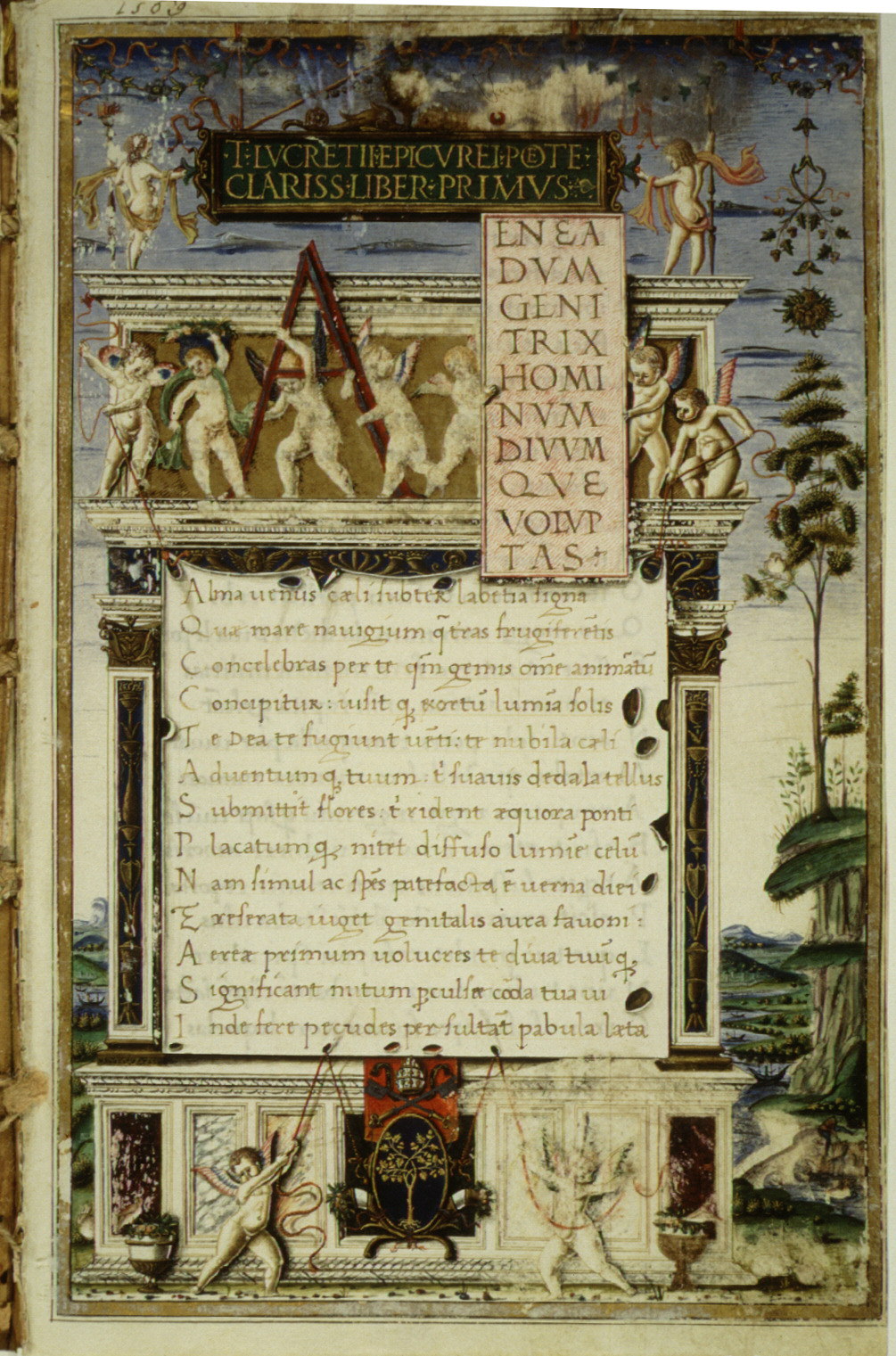
De rerum natura
Lucretius · c. 100 BC
Free account
Read every Epicurus source
Sign up free →
Ready when you are
Start chatting with Epicurus now.
20 messages free · No credit card · Available in 50+ languages.