


Secondary sourcePainting
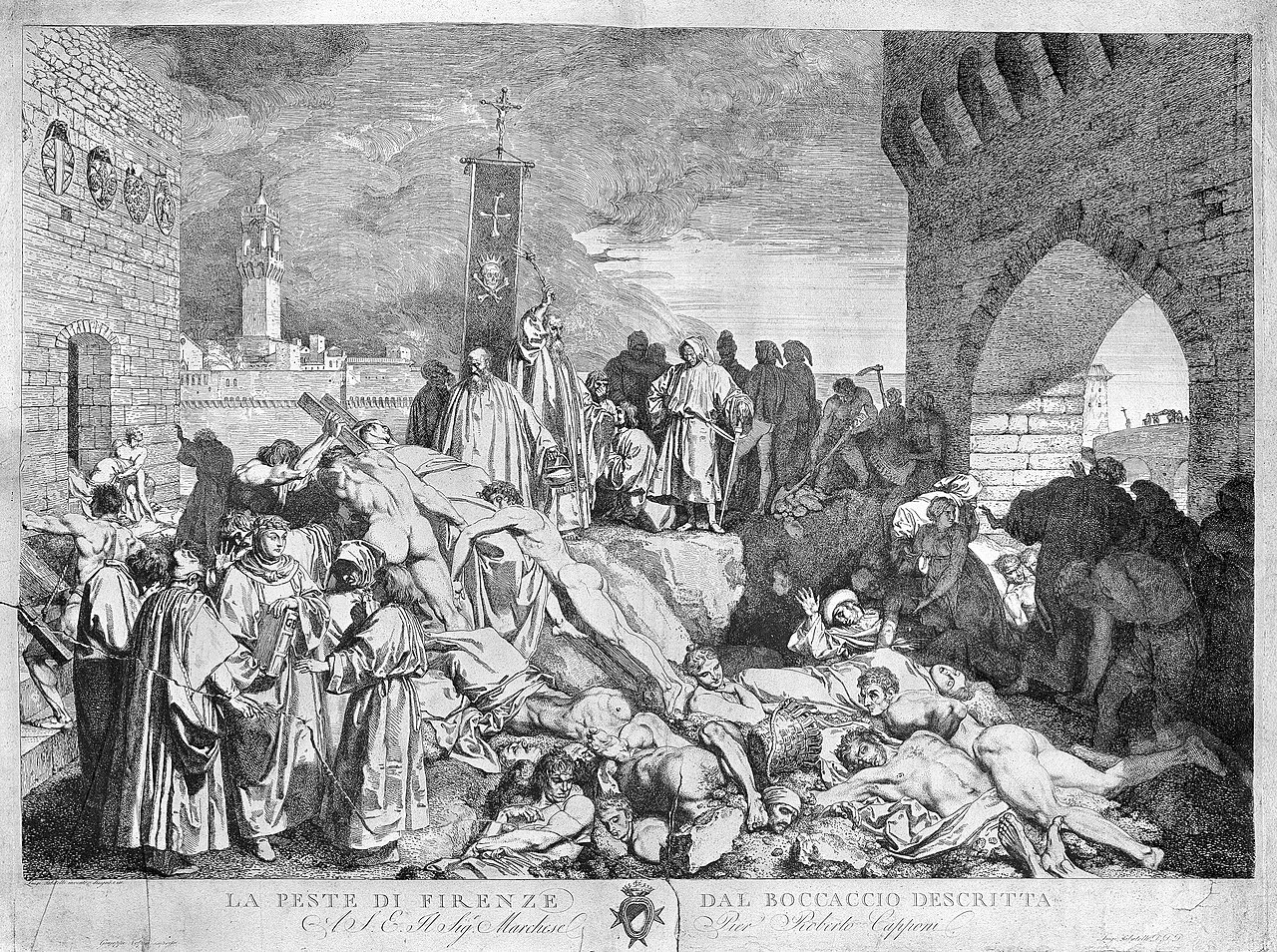
The Plague of Florence in 1348
Luigi Sabatelli
An etching by Luigi Sabatelli illustrating Boccaccio's account of the 1348 plague in Florence, showing bodies in a city square.
This etching depicts the Black Death's devastation in Florence as described by Boccaccio, a contemporary witness.
About this source
What it is
This is an etching made by the artist Luigi Sabatelli, based on Giovanni Boccaccio's description of the plague that struck Florence in 1348 in his book the Decameron. It shows a city square filled with the dead and dying, monks in procession, and gravediggers at work.
Why it matters
The image was made long after the Black Death itself, but it helps later generations picture the disaster described by Boccaccio, who lived through the plague and wrote one of the most famous accounts of it. It shows how artists used eyewitness-style writing to imagine and recreate historic suffering.
Look closer
- What details in the etching suggest fear, grief, or religious response to the plague?
- Why might an artist centuries later choose to illustrate Boccaccio's words rather than invent a new scene?
- What does the image leave out about daily life during the plague?
This painting is part of the curated material that grounds the AI version of The Black Death on Humy.ai — when students ask about related events, the AI can quote it and cite it.
More The Black Death sources
Meet the AI The Black Death →Secondary source
The Decameron
Giovanni Boccaccio · 1351
Primary source
Statute of Labourers 1351
1351
 Painting
Primary source
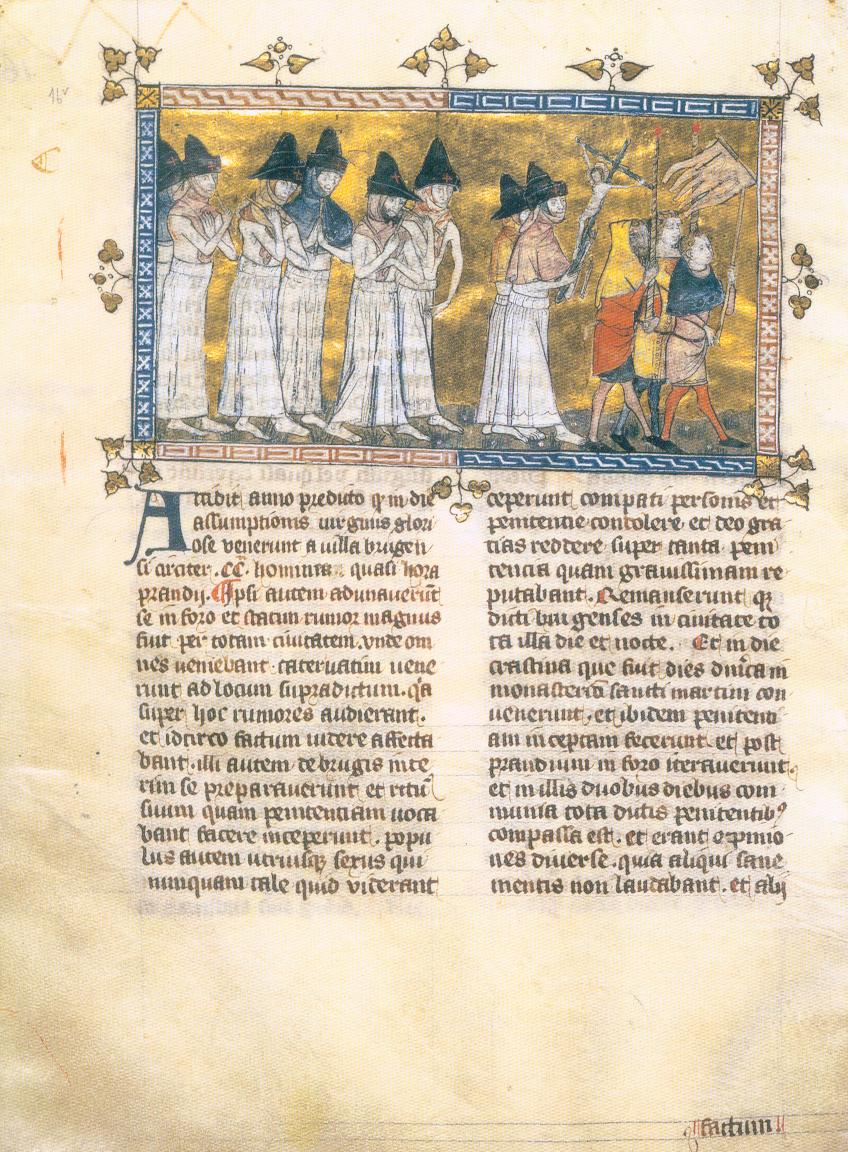
Depiction of the Flagellant Processions
Pierart dou Tielt · c. 1350
 Painting
Primary source
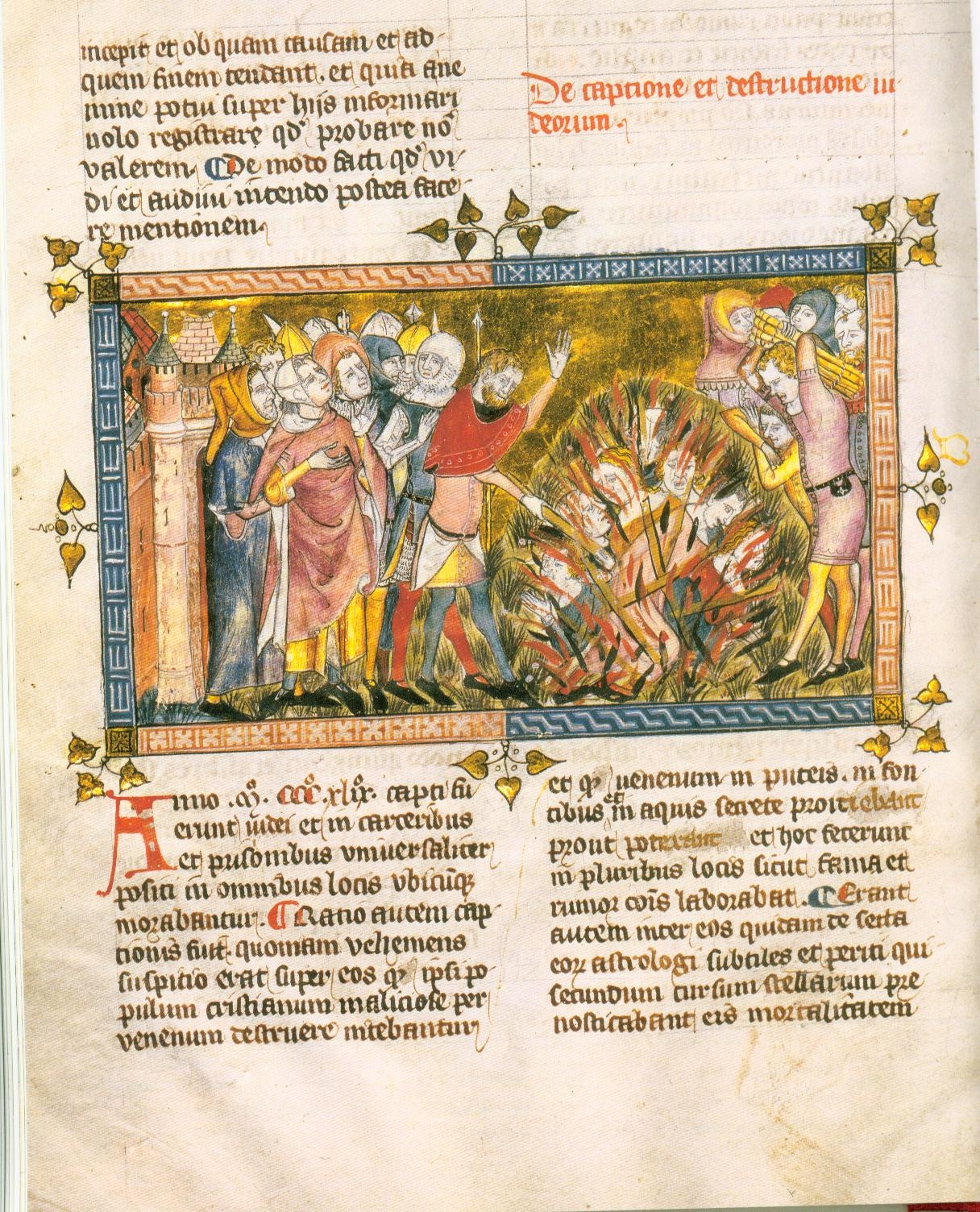
Execution of Jews
c. 1350
 Book
Primary source
The Annals of Ireland by Friar John Clyn
John Clyn · 1348-1349
Ready when you are
Start chatting with The Black Death now.
20 messages free · No credit card · Available in 50+ languages.