


Secondary sourceArtifactbetween 1700 and 1799
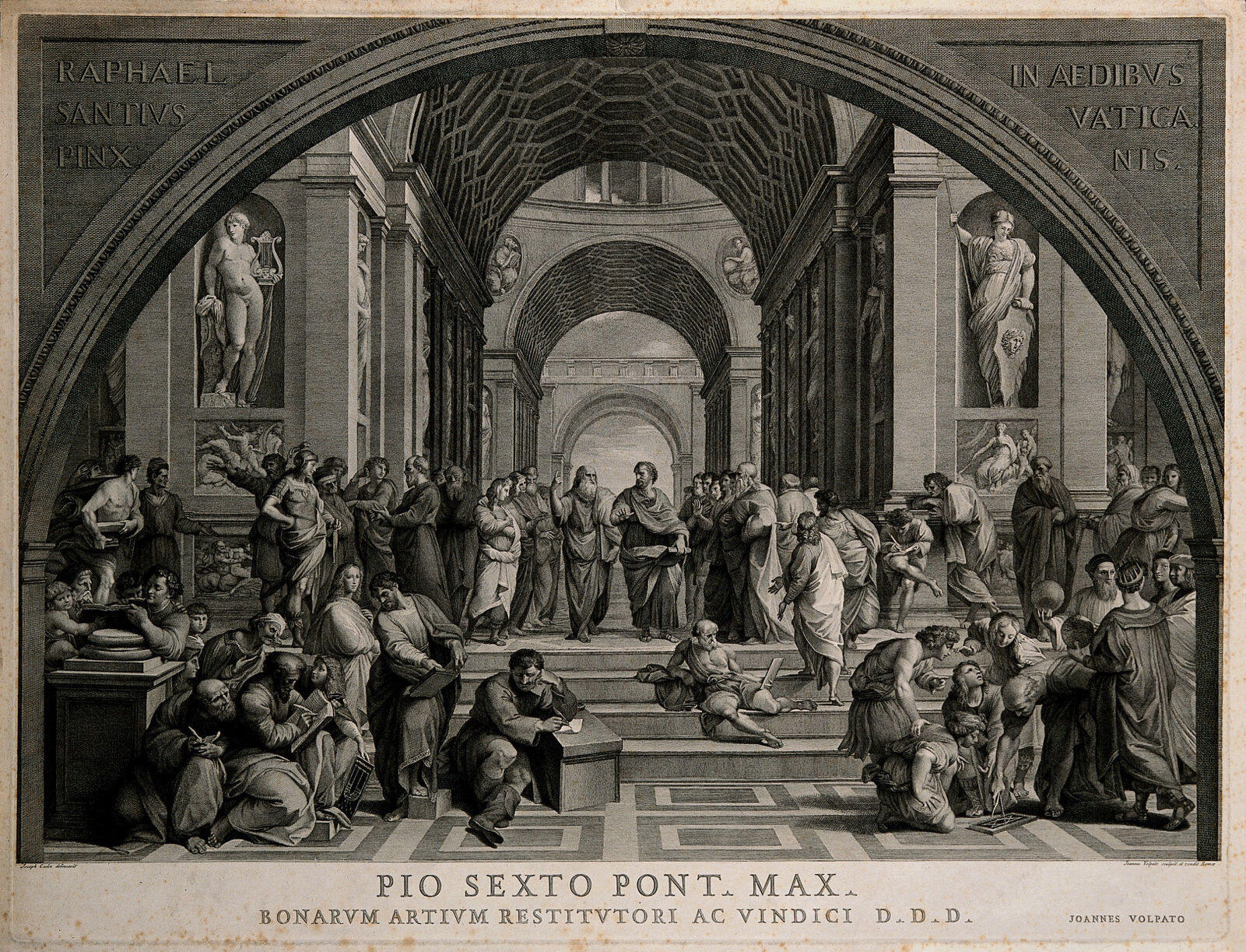
The School of Athens (engraving by G. Volpato after Cades)
G. Volpato · between 1700 and 1799
An eighteenth-century engraving of Raphael's School of Athens, showing robed philosophers and students in a vaulted hall. The curator's note lists Pythagoras among them.
Shows Pythagoras as one of the philosophers in an eighteenth-century print after Raphael's School of Athens.
About this source
What it is
This is an eighteenth-century engraving after Raphael's painting The School of Athens, made by G. Volpato after a design by G. Cades. It shows a barrel-vaulted hall with many robed philosophers and students gathered on steps, and statues in niches. The inscription 'Pio Sexto Pont. Max.' appears below, and the print is signed 'Joannes Volpato'. The curator's note says Pythagoras is among the philosophers. The print is held by the Wellcome Collection in London.
Why it matters
Prints like this one were a way to copy famous paintings, so Raphael's crowd of thinkers could reach many more viewers than the original fresco. The inscription names a pope, showing how such images were tied to church patronage. Pythagoras appears here only as one figure in a crowd, placed there by artists long after his lifetime.
Look closer
- How does the print differ from the painting it copies, and what might be lost in the copy?
- What does the pope's name in the inscription suggest about who commissioned or valued this image?
- Who is missing from this crowd, and what does that show about whose ideas were remembered?
This artifact is part of the curated material that grounds the AI version of Pythagoras on Humy.ai — when students ask about related events, the AI can quote it and cite it.
More Pythagoras sources
Meet the AI Pythagoras → Book
Secondary source
Lives and Opinions of Eminent Philosophers, Book V (Life of Aristotle)
Diogenes Laërtius · c. 3rd century CE
 Book
Secondary source
Histories
Herodotus · c. 440 BCE
 Painting
Secondary source
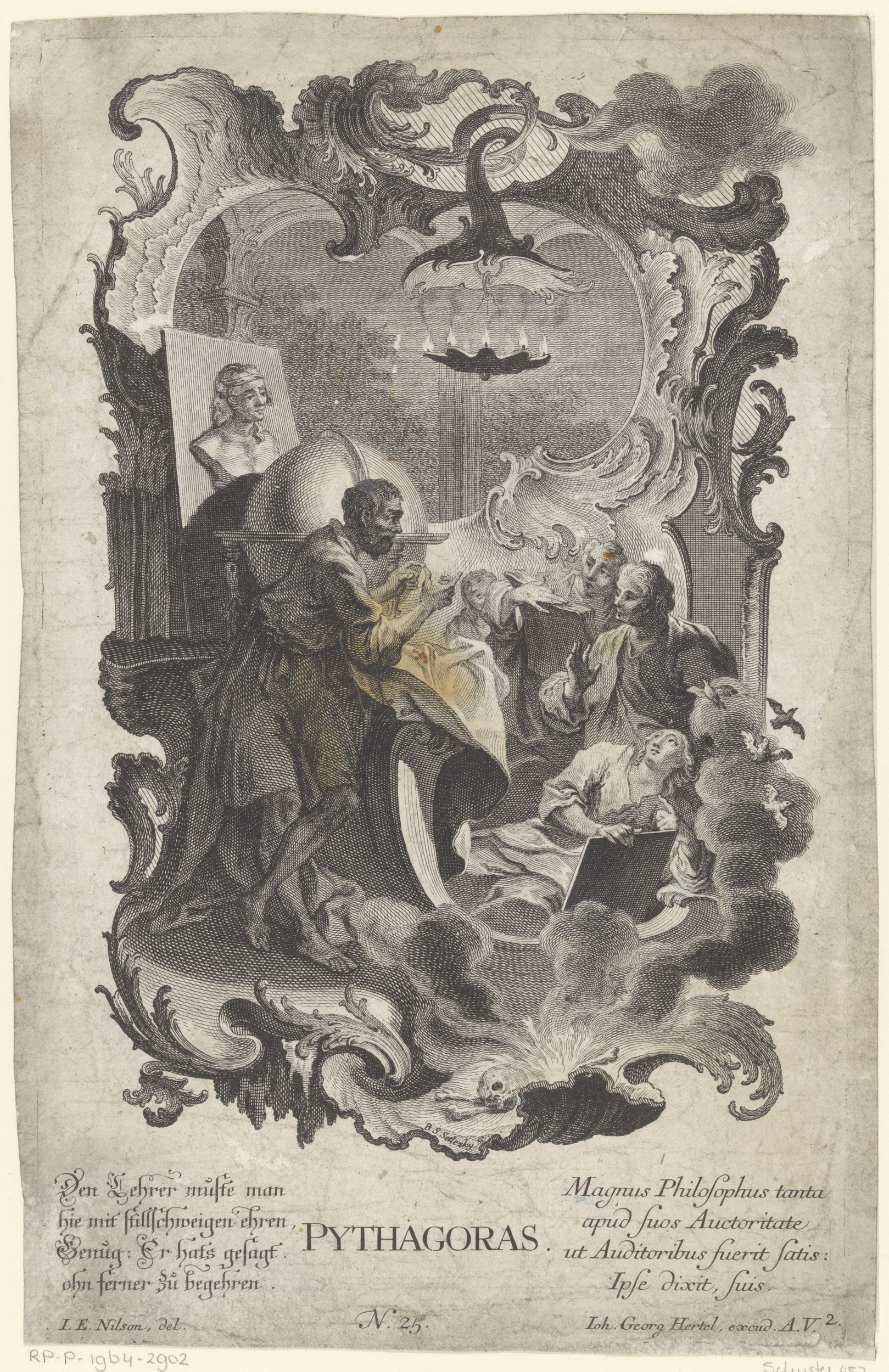
Pythagoras Leaning on a Globe with Four Listeners
 Book
Secondary source
Metaphysics
Aristotle · c. 400 BCE
 Painting
Secondary source
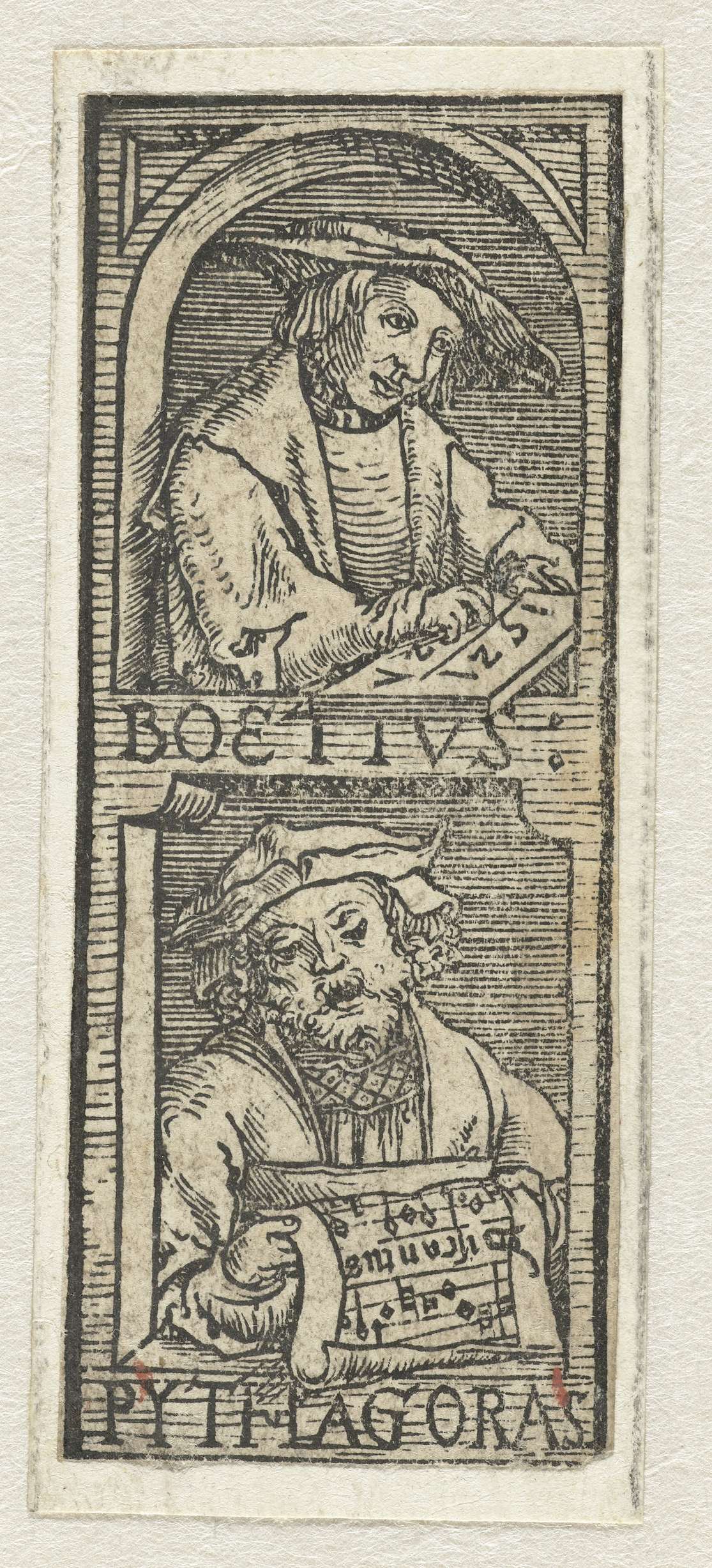
Boethius and Pythagoras
1521
Ready when you are
Start chatting with Pythagoras now.
20 messages free · No credit card · Available in 50+ languages.