


Primary sourcePainting1797-1799
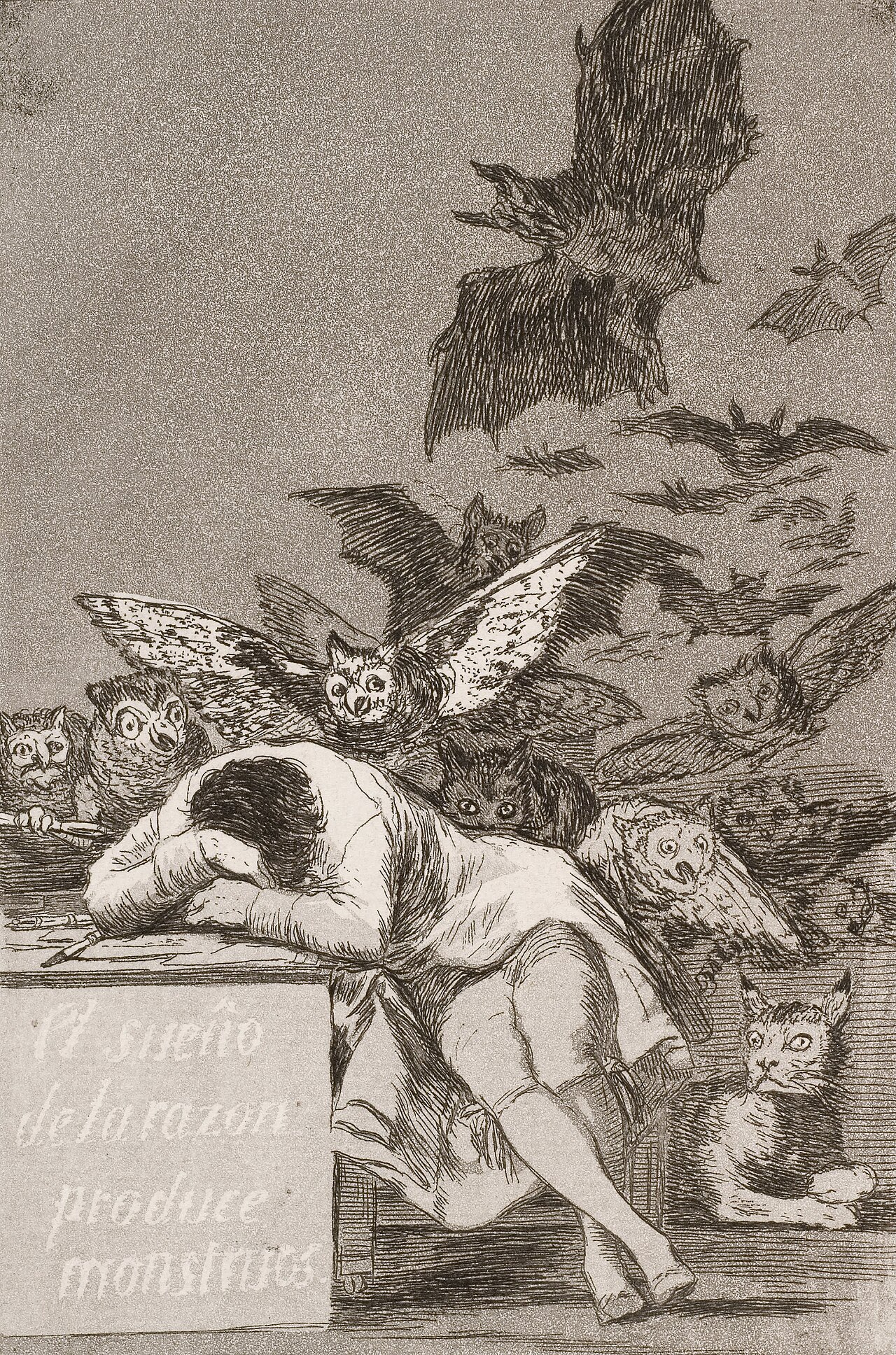
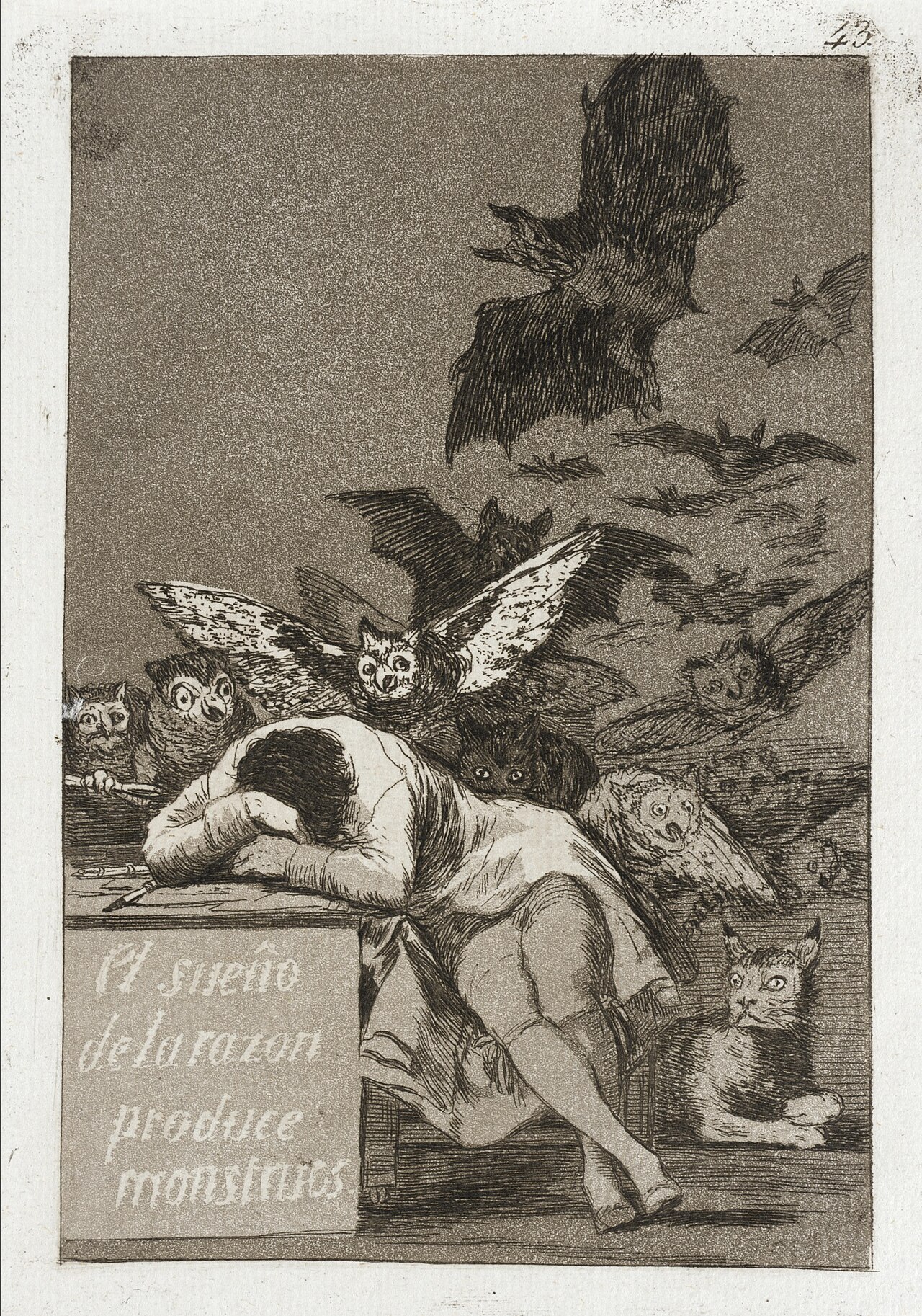
The Sleep of Reason Produces Monsters
Francisco Goya · 1797-1799
Goya's emblematic etching of a sleeping man swarmed by owls and bats, the best-known print from his Caprichos series.
This print is widely read as Goya's self-portrait and personal manifesto of his Enlightenment beliefs.
About this source
What it is
An aquatint by Francisco Goya, made between 1797 and 1799, the 43rd of 80 prints in his series Los Caprichos. It is held by the Biblioteca Nacional de España. It shows a man asleep at his desk, surrounded by owls, bats and other creatures.
Why it matters
Many see the sleeping figure as Goya himself, and the print as his personal statement on the Enlightenment: without reason, imagination can breed corruption and folly. Goya added a caption suggesting imagination and reason should work together, not that one should dominate. The image became an icon of the whole Caprichos series and of Goya's wider satirical critique of Spanish society.
Look closer
- What do the owls and bats seem to represent, based on the creatures in Spanish folk tradition?
- Why might Goya have chosen to depict himself asleep rather than awake and working?
- How does Goya's caption change or complicate the image's simple meaning?
This painting is part of the curated material that grounds the AI version of Francisco Goya on Humy.ai — when students ask about related events, the AI can quote it and cite it.
More Francisco Goya sources
Meet the AI Francisco Goya →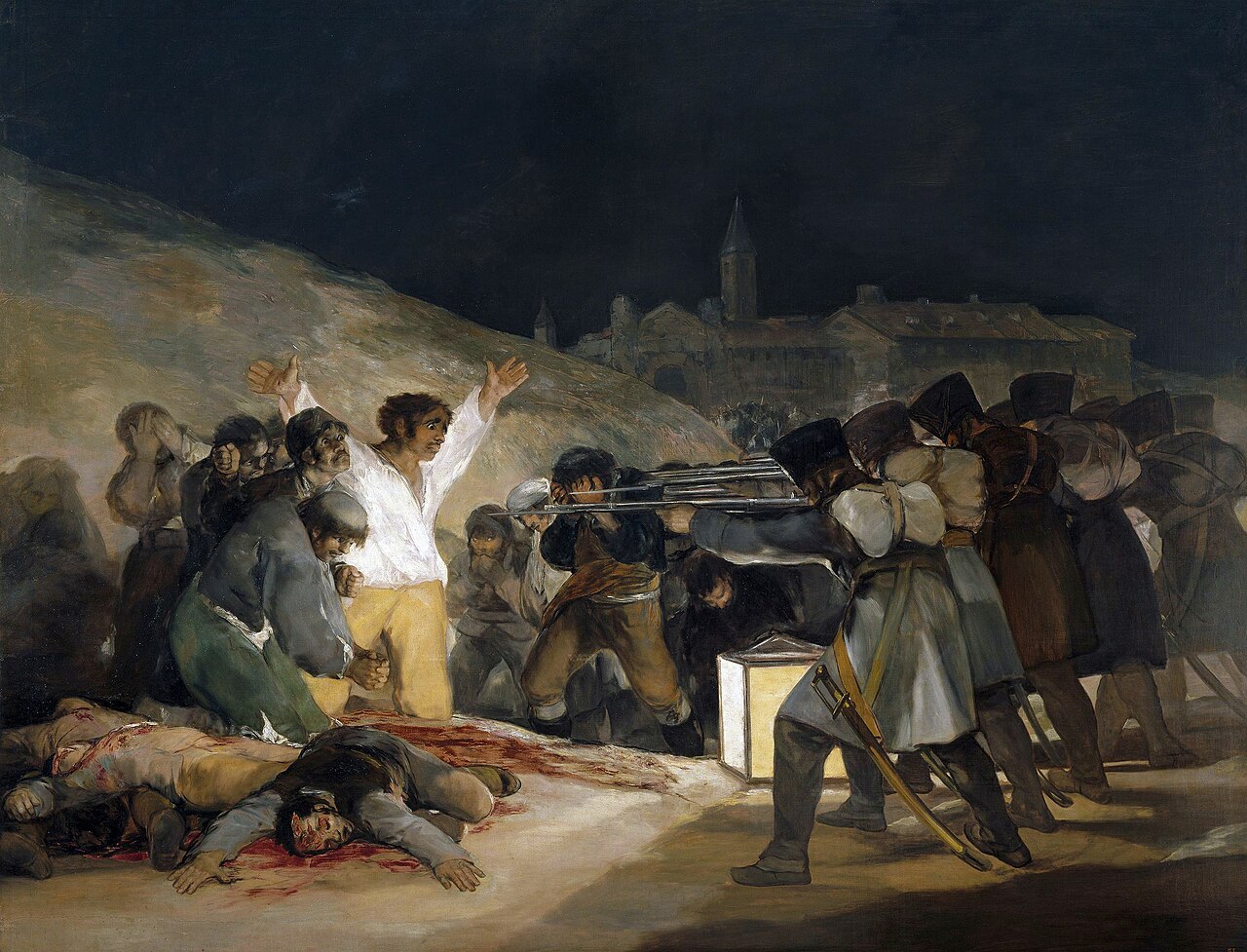 Painting
Secondary source
The Third of May 1808
Francisco Goya · 1814
 Painting
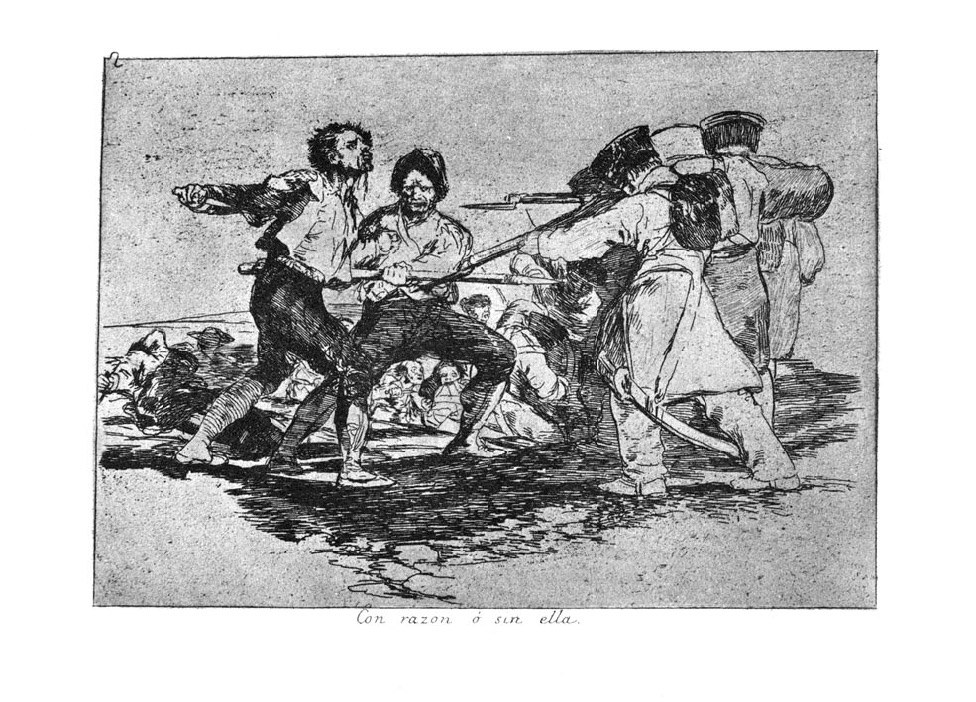
Primary source
The Disasters of War
Francisco Goya · 1810-1820
 Painting
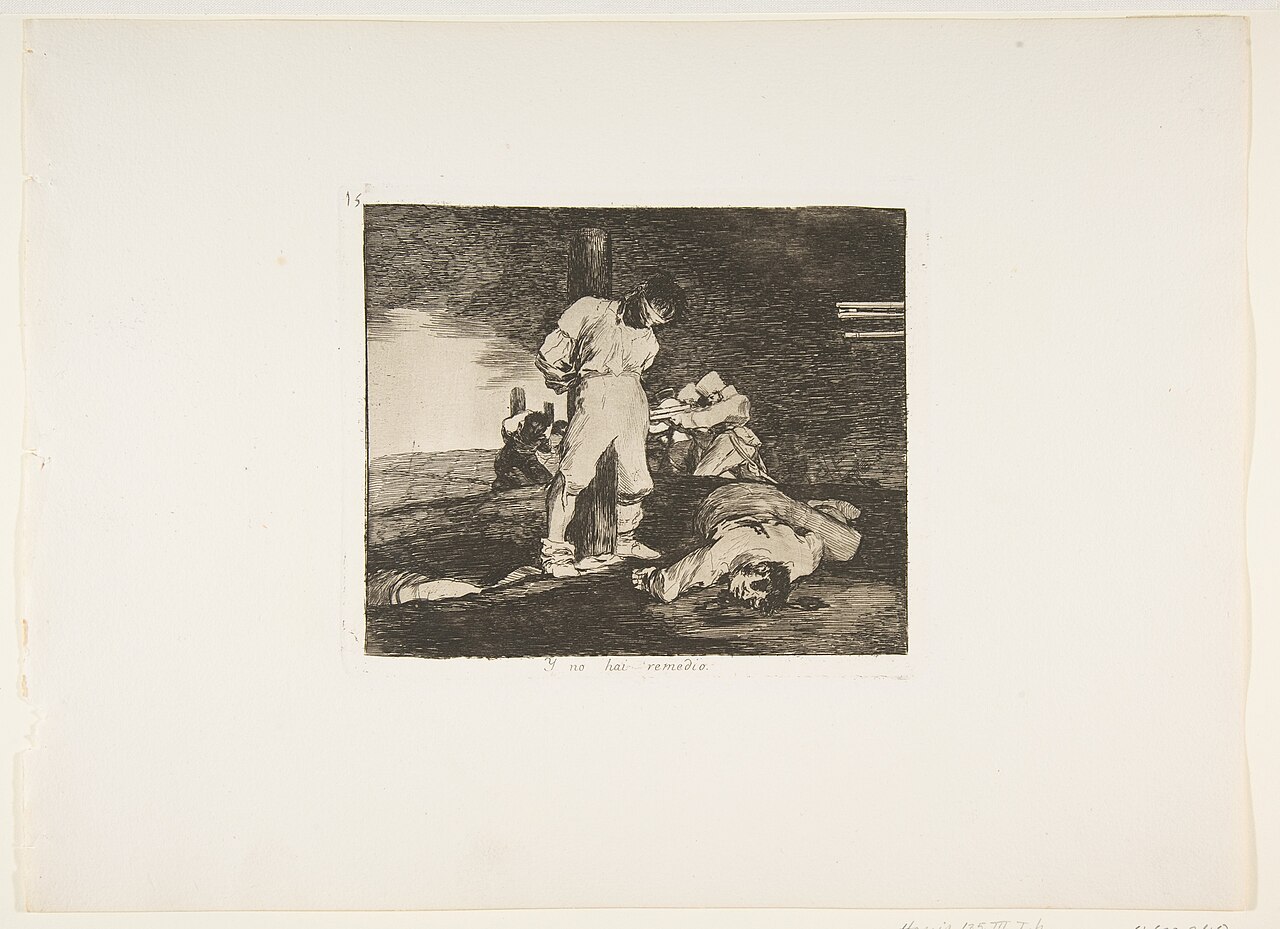
Primary source
Y no hai remedio
Francisco de Goya · c. 1810-1814 (published 1863)
 Painting
Primary source
Caprichos
Francisco Goya · 1799 (created 1797-1798)
 Painting
Primary source
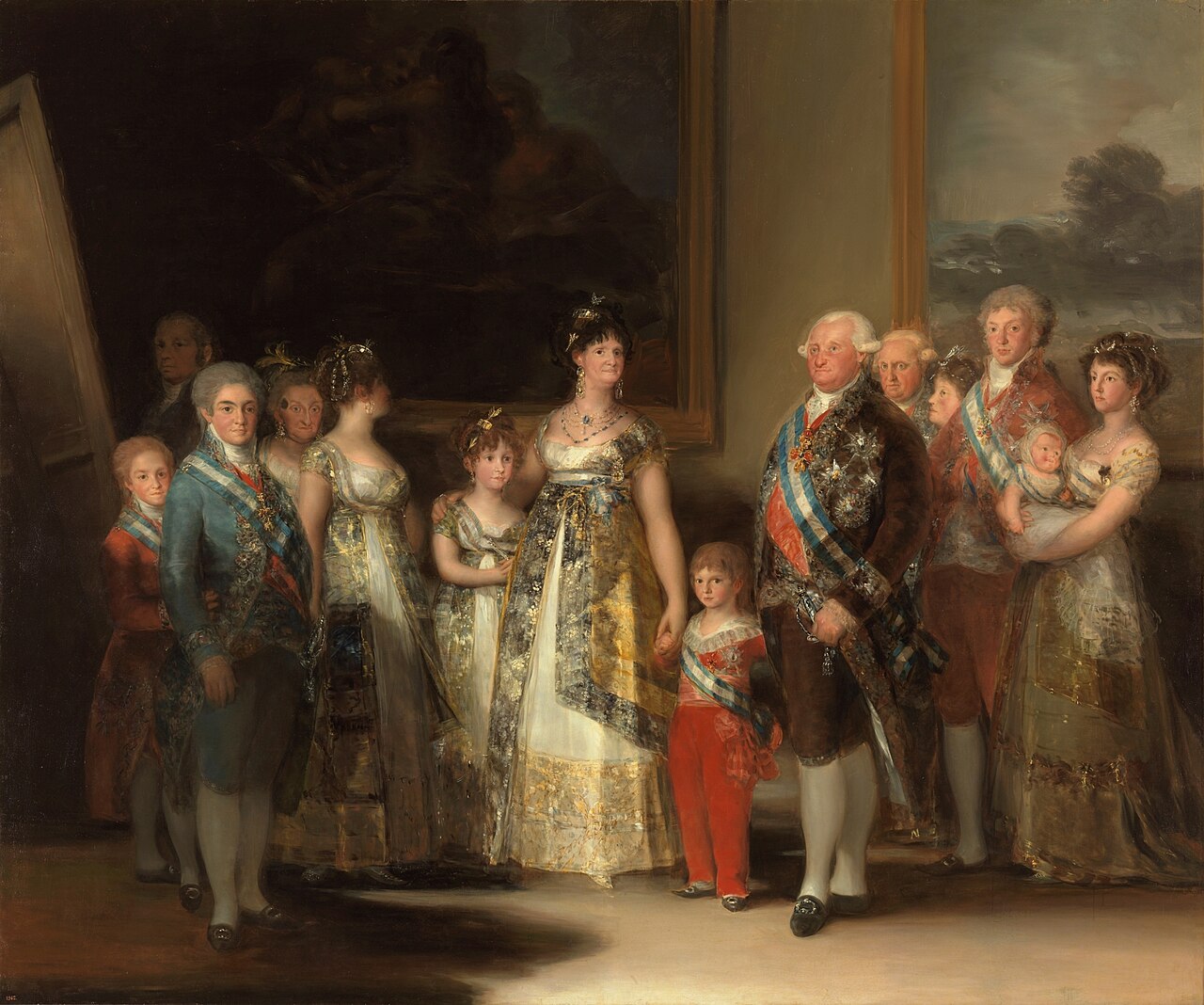
Charles IV of Spain and His Family
Francisco Goya · 1800-1801
Ready when you are
Start chatting with Francisco Goya now.
20 messages free · No credit card · Available in 50+ languages.