


Secondary sourceBookc. 1100
The Song of Roland
Turold · c. 1100
An 11th-century French epic poem that turns a defeat of Charlemagne's rearguard into legend, showing how medieval Europe remembered him.
This epic poem transformed events during Charlemagne's reign into crusading legend, shaping his later medieval image.
About this source
What it is
The Song of Roland is an Old French epic poem, the oldest major work of French literature, written centuries after the events it describes. It tells of Roland, a warrior serving Charlemagne, and his death fighting at Roncevaux Pass. It may have been composed by a poet named Turold, and survives mainly in a manuscript now at the Bodleian Library in Oxford.
Why it matters
The real battle, recorded by Charlemagne's biographer Einhard, was a raid by Basques, not the grand fight against Muslim armies shown in the poem. By the 11th century, Charlemagne's Frankish wars had been reshaped into a crusading legend, showing how his memory was used to inspire later holy wars. The poem later became celebrated as France's national epic.
Why it matters
Look closer
- Why might storytellers change a small defeat into a heroic last stand?
- What does the poem leave out or change compared to the historical record?
- Why would medieval audiences want stories about Charlemagne fighting for Christianity?
This book is part of the curated material that grounds the AI version of Charlemagne on Humy.ai — when students ask about related events, the AI can quote it and cite it.
More Charlemagne sources
Meet the AI Charlemagne → Book
Secondary source
Vita Karoli Magni
Einhard · c. 817-833
 Document
Primary source
Royal Frankish Annals
741-829, this manuscript c. 900
Primary source
De litteris colendis
Charlemagne · late 780s-800s
 Document
Primary source
Admonitio generalis
Charlemagne · 23 March 789
 Document
Primary source
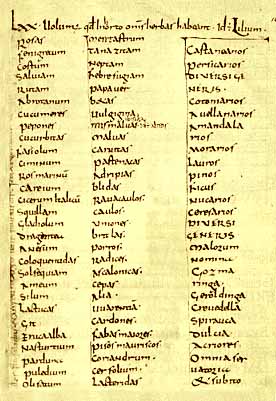
Capitulare de villis
c. 771-800
Ready when you are
Start chatting with Charlemagne now.
20 messages free · No credit card · Available in 50+ languages.