


Primary sourceArtifact1701-1708
Throne of the Great Mogul Aureng-Zeb
Johann Melchior Dinglinger · 1701-1708
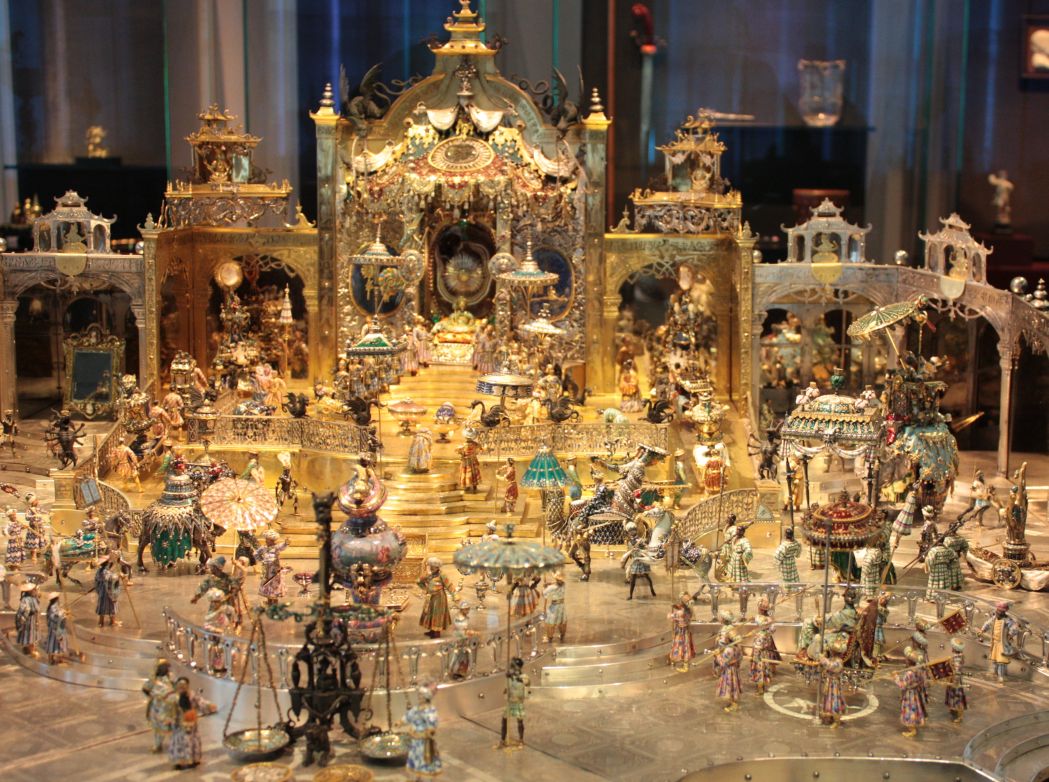
A gold, jewelled miniature court scene made by Johann Melchior Dinglinger in 1701 to 1708, showing a throne with elephants, a fountain and tiny enamelled figures.
Shows a European goldsmith's version of Aurangzeb's throne, made during his lifetime and linked to his name in its title.
About this source
What it is
This is a gilded and jewelled miniature court scene under an ornate golden canopy. Many tiny enamelled figures, elephants, a fountain and a jewelled throne are displayed in a museum case. The work is credited to Johann Melchior Dinglinger and dated 1701 to 1708. Its title names the Great Mogul Aureng-Zeb, the name by which Aurangzeb was known in Europe. The image in the source is a photograph of the piece.
Why it matters
The piece was made in Europe, by a goldsmith, during Aurangzeb's lifetime. It shows how a European court imagined the Mughal ruler and his court through luxury objects. It connects Aurangzeb with Dinglinger, the goldsmith who made it.
Look closer
- What details would a viewer use to decide which parts of the scene are about power?
- Why might a European goldsmith have chosen to show a distant ruler in such a small, precious form?
- What does this object leave out about the real life of the Mughal court?
This artifact is part of the curated material that grounds the AI version of Aurangzeb on Humy.ai — when students ask about related events, the AI can quote it and cite it.
More Aurangzeb sources
Meet the AI Aurangzeb →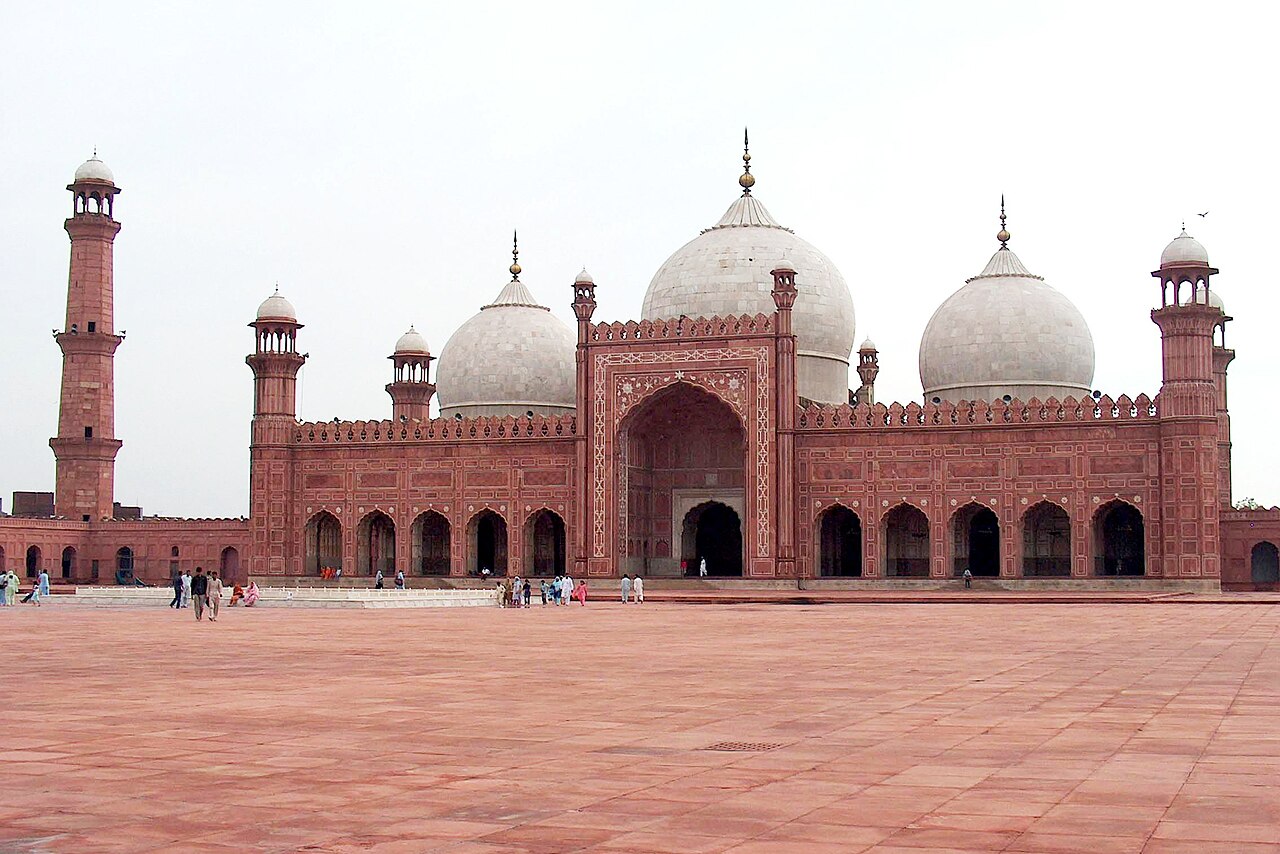 Artifact
Primary source
Badshahi Mosque
1671–1673
 Document
Primary source
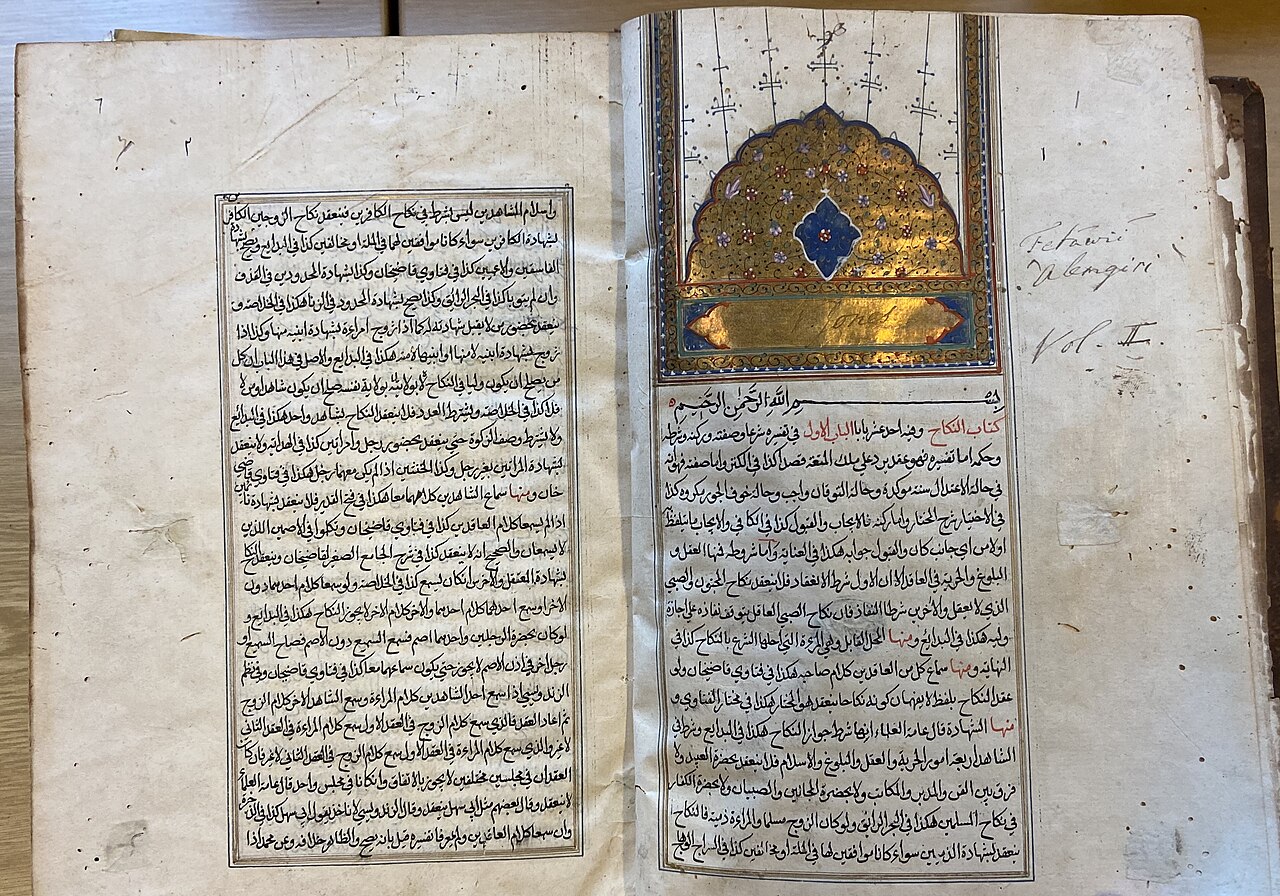
Fatawa-i Alamgiri Manuscript
17th century (this copy later recopied)
 Book
Secondary source
Maasir-i-Alamgiri
Saqi Musta'id Khan · c. 1710 (this copy 1763-1764)
Primary source
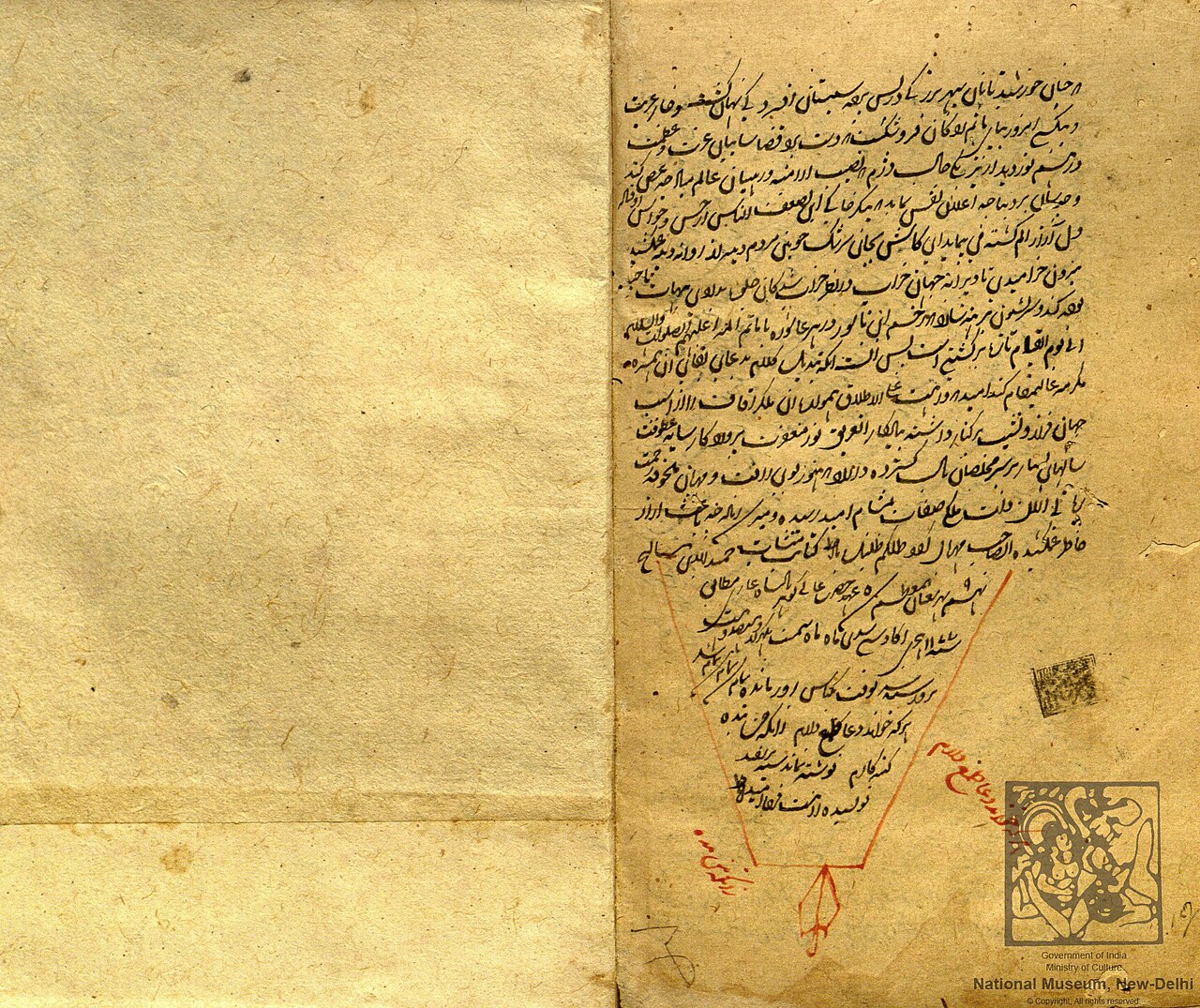
Ruka'at-i-Alamgiri
Aurangzeb · 17th century
 Letter
Primary source
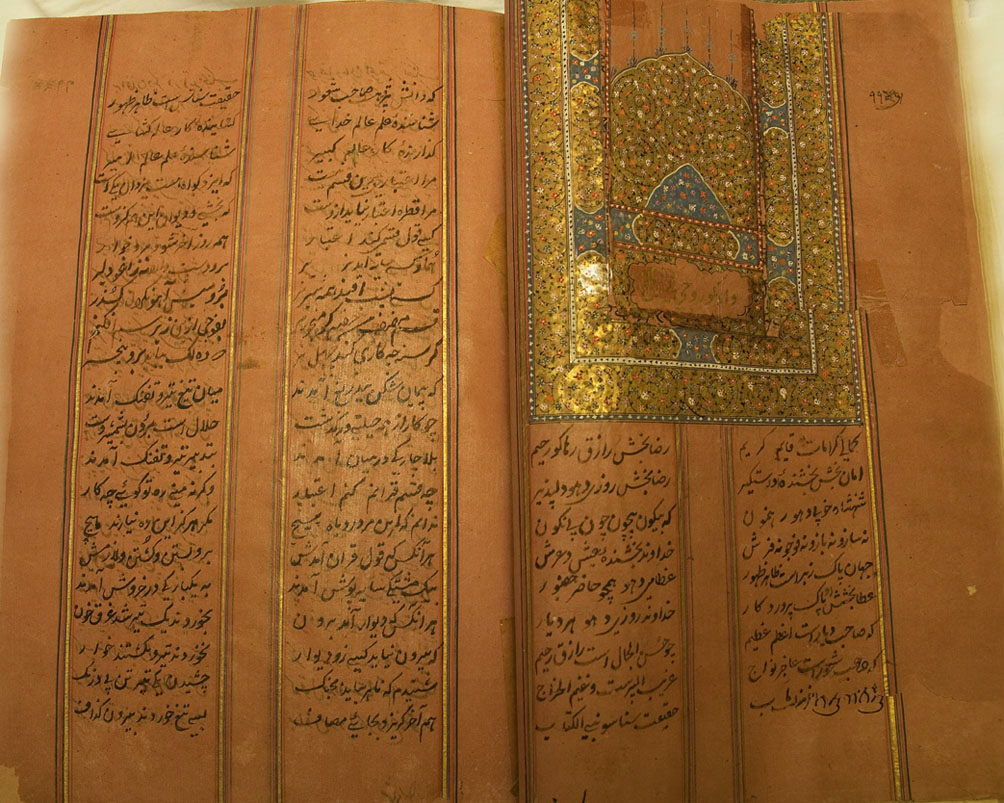
Zafarnamah
Guru Gobind Singh · 1705
Ready when you are
Start chatting with Aurangzeb now.
20 messages free · No credit card · Available in 50+ languages.