


Secondary sourceSculpturec. 1330s
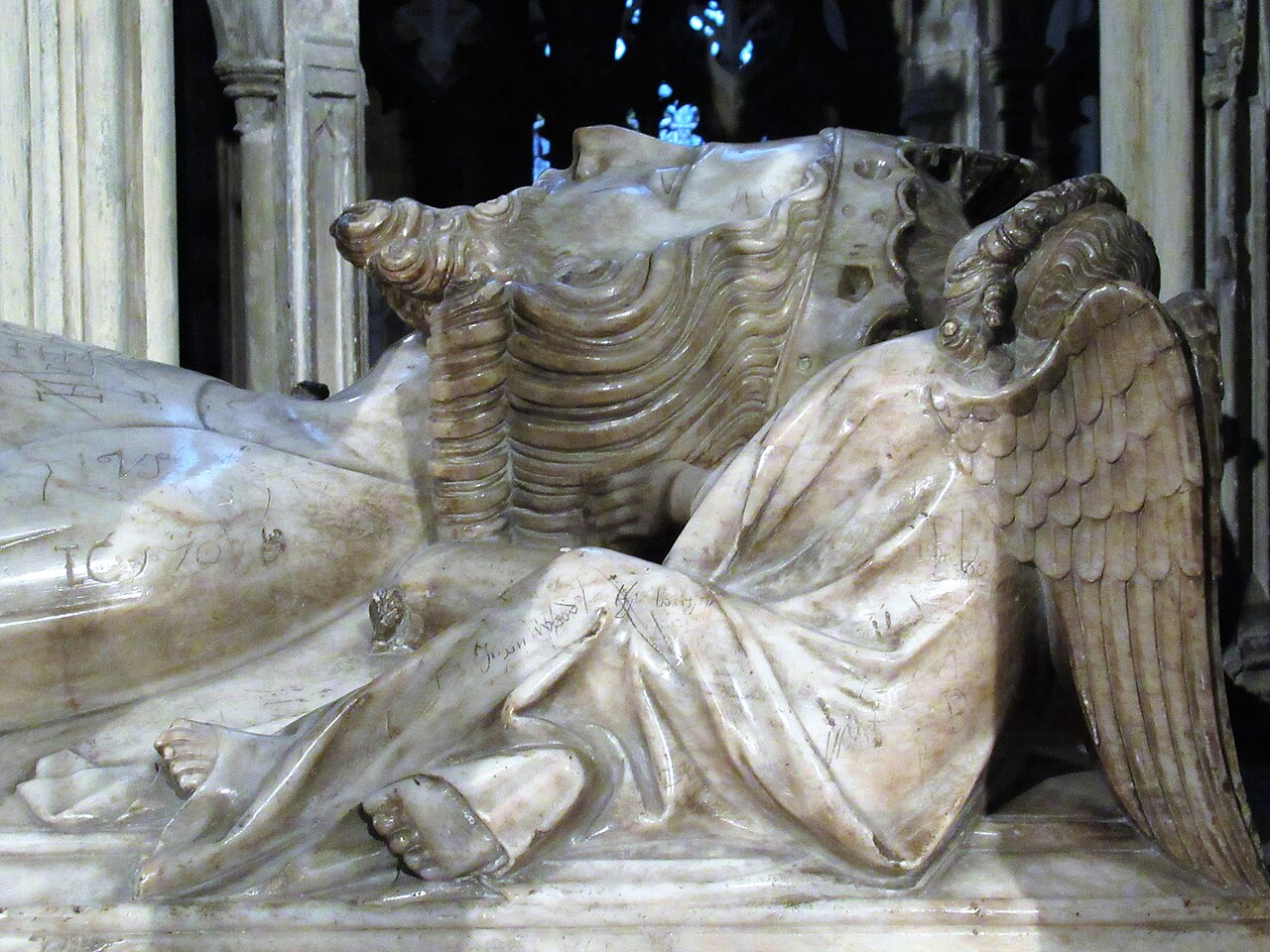
Tomb of Edward II, Gloucester Cathedral
Unknown royal workshop · c. 1330s
The alabaster tomb Edward III raised for his deposed father, which helped turn Edward II into a cult figure and restore the dynasty's reputation.
Edward III commissioned this tomb for his deposed father, using it to rehabilitate his father's memory and his own dynasty.
Free Humy account · No credit card · 120,912 sources to read
About this source
What it is
This alabaster tomb effigy, made around the 1330s by an unknown royal workshop, marks the burial of the deposed King Edward II. It stands in Gloucester Cathedral, where it has survived centuries including wartime protection with sandbags.
Why it matters
Edward III commissioned this magnificent tomb for his father, who had been deposed and died under suspicious circumstances. The lavish monument helped turn Edward II into an object of popular devotion and showed Edward III publicly rehabilitating his father's memory and his own dynasty's standing.
It shows how medieval kings used grand funerary art to shape political memory.
Look closer
- Why might a son build such an elaborate tomb for a father who had been removed from power?
- What do the carved details, like the angel figure, tell us about the skill and purpose of the workshop?
- What does this tomb suggest about how Edward III wanted his family's history to be remembered?
This sculpture is part of the curated material that grounds the AI version of Edward III on Humy.ai — when students ask about related events, the AI can quote it and cite it.
More Edward III sources
Browse all 93 →
Ready when you are
Start chatting with Edward III now.
20 messages free · No credit card · Available in 50+ languages.