


Secondary sourcePainting1853
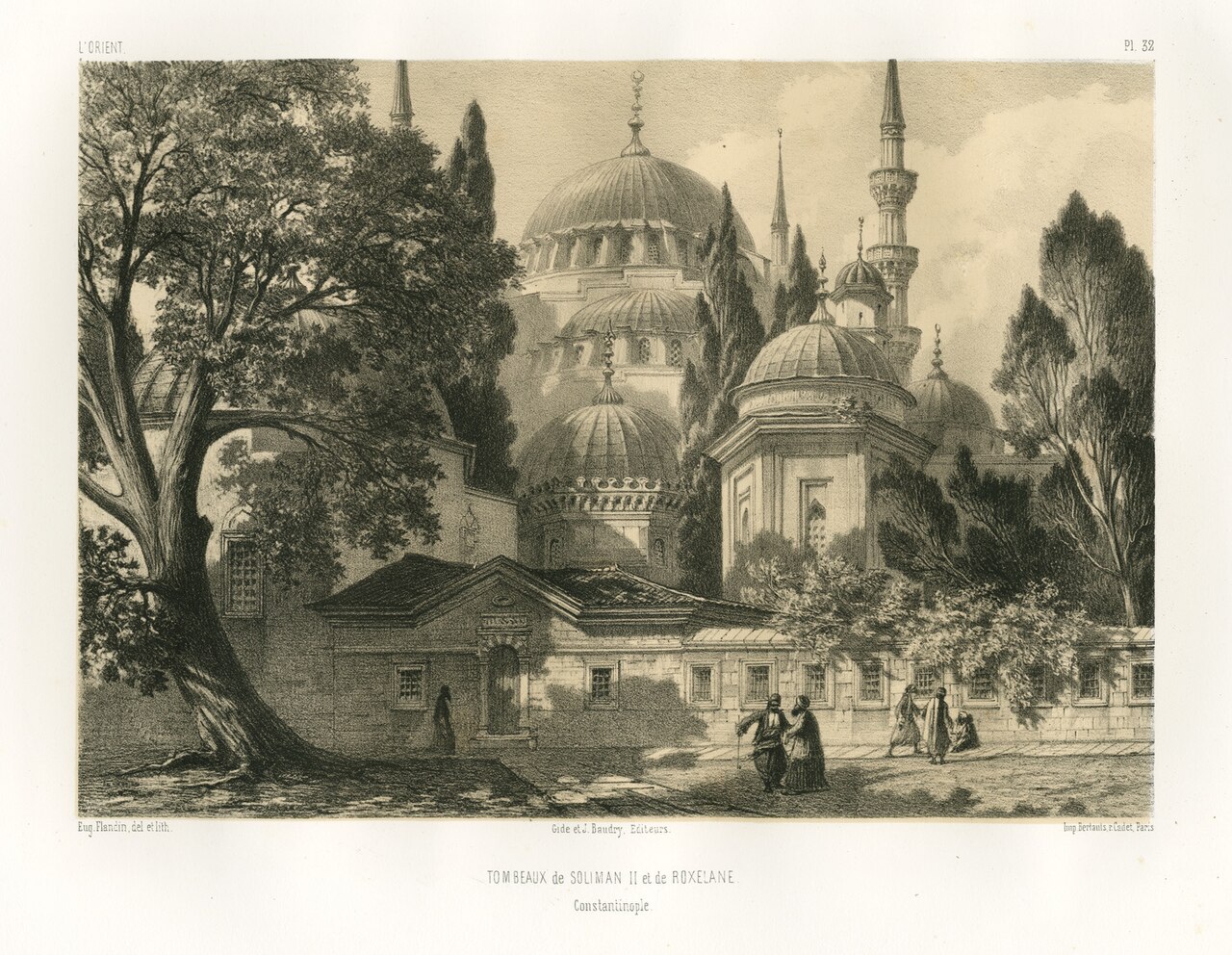
Tombs of Suleiman II and Roxelane
Eugène Flandin · 1853
An 1853 engraving showing the domed mausoleums of Suleiman the Magnificent and Hürrem Sultan (known in the West as Roxelane) in Constantinople.
Depicts the mausoleum where Hürrem Sultan is buried, created centuries after her death as a later artistic record.
About this source
What it is
This is a sepia lithograph made by the French artist Eugène Flandin and published in his book L'Orient in Paris in 1853. It shows the domed mausoleums and mosque where Suleiman the Magnificent and his wife Hürrem Sultan are buried in Constantinople (Istanbul).
Why it matters
The engraving was made centuries after Hürrem's death, so it is a secondary source showing how 19th-century European travelers and artists depicted Ottoman monuments. It reflects European fascination with the Ottoman Empire rather than being direct evidence from Hürrem's own time.
Look closer
- Why might a French artist travel to draw Ottoman tombs in the 1800s?
- What does the image choose to show, and what might it leave out about the people buried there?
- How does this differ from a photograph taken at the actual site today?
This painting is part of the curated material that grounds the AI version of Hurrem Sultan on Humy.ai — when students ask about related events, the AI can quote it and cite it.
More Hurrem Sultan sources
Browse all 57 →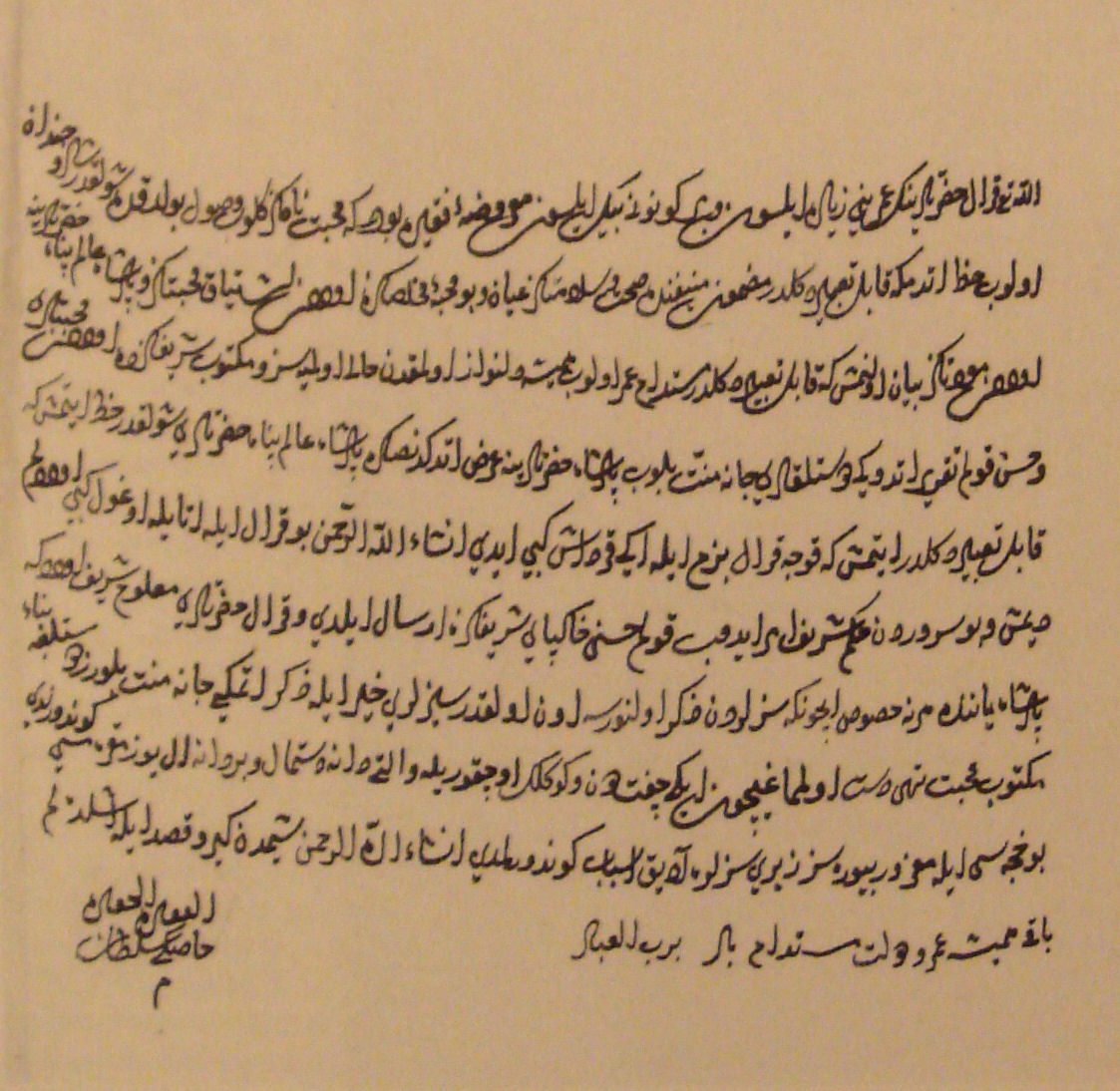 Letter
Primary source
Letter of Roxelane to Sigismund Augustus
Hürrem Sultan · 1549
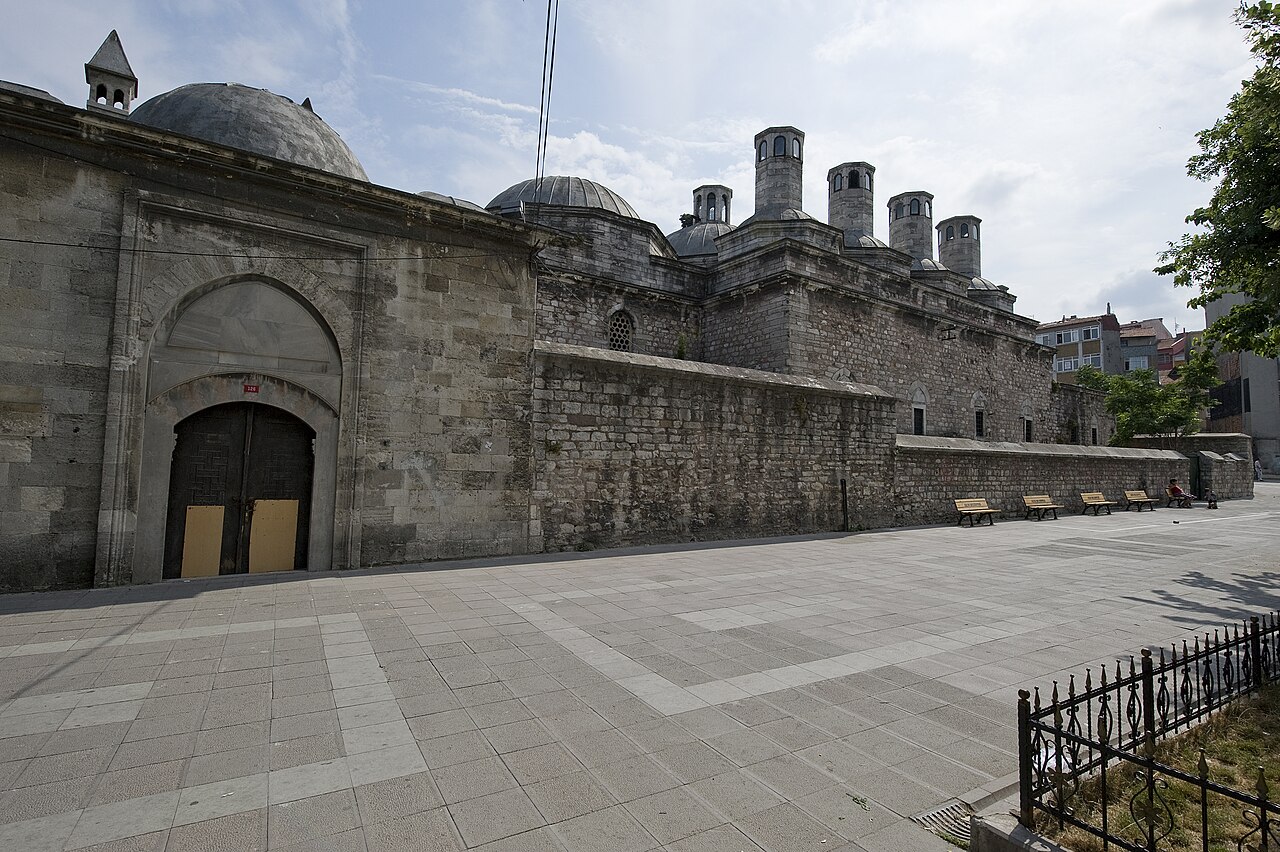 Artifact
Primary source
Haseki Sultan Mosque
Mimar Sinan · 1538
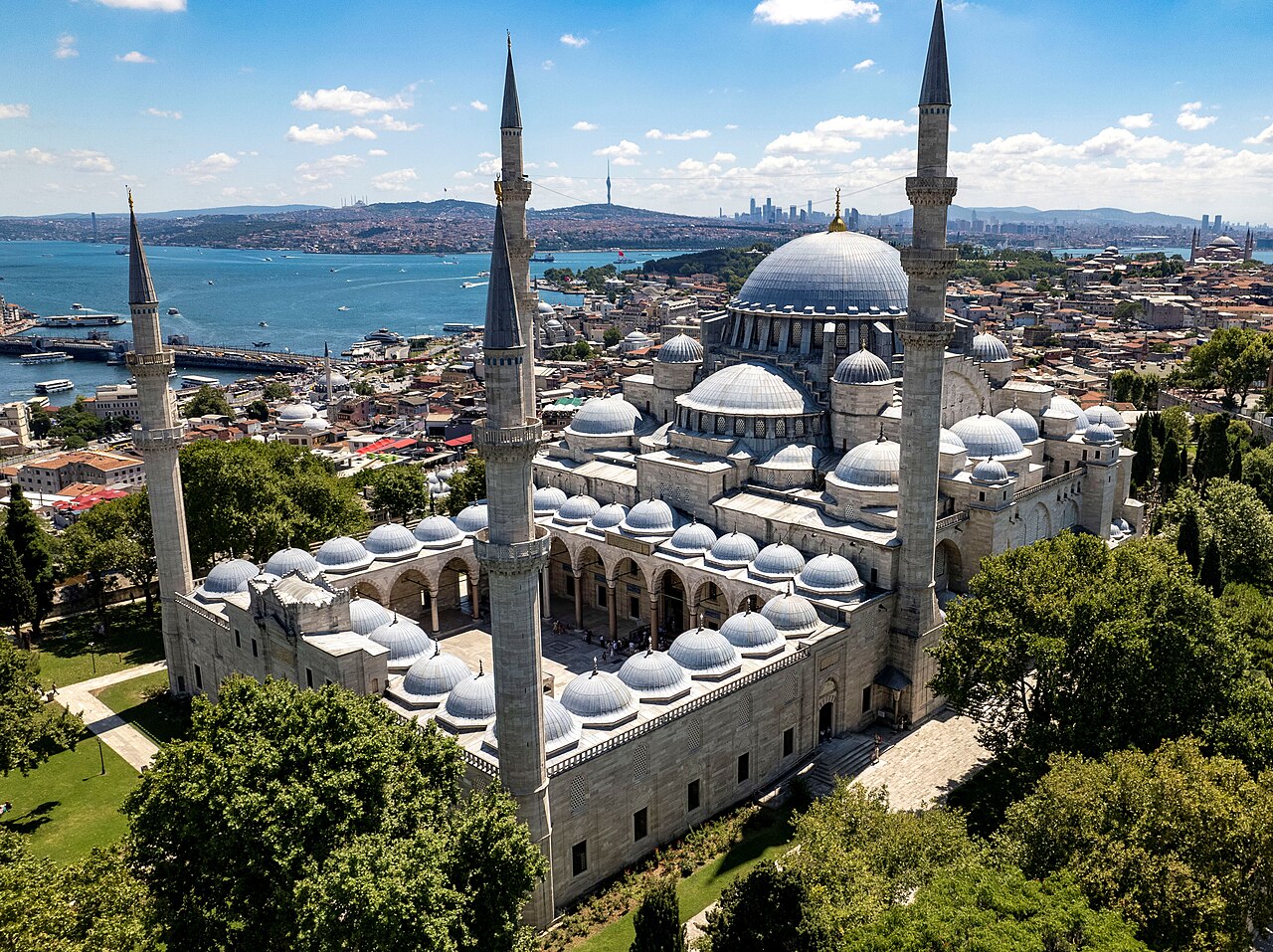 Artifact
Primary source
Süleymaniye Mosque
Mimar Sinan · 1550-1557
 Artifact
Primary source
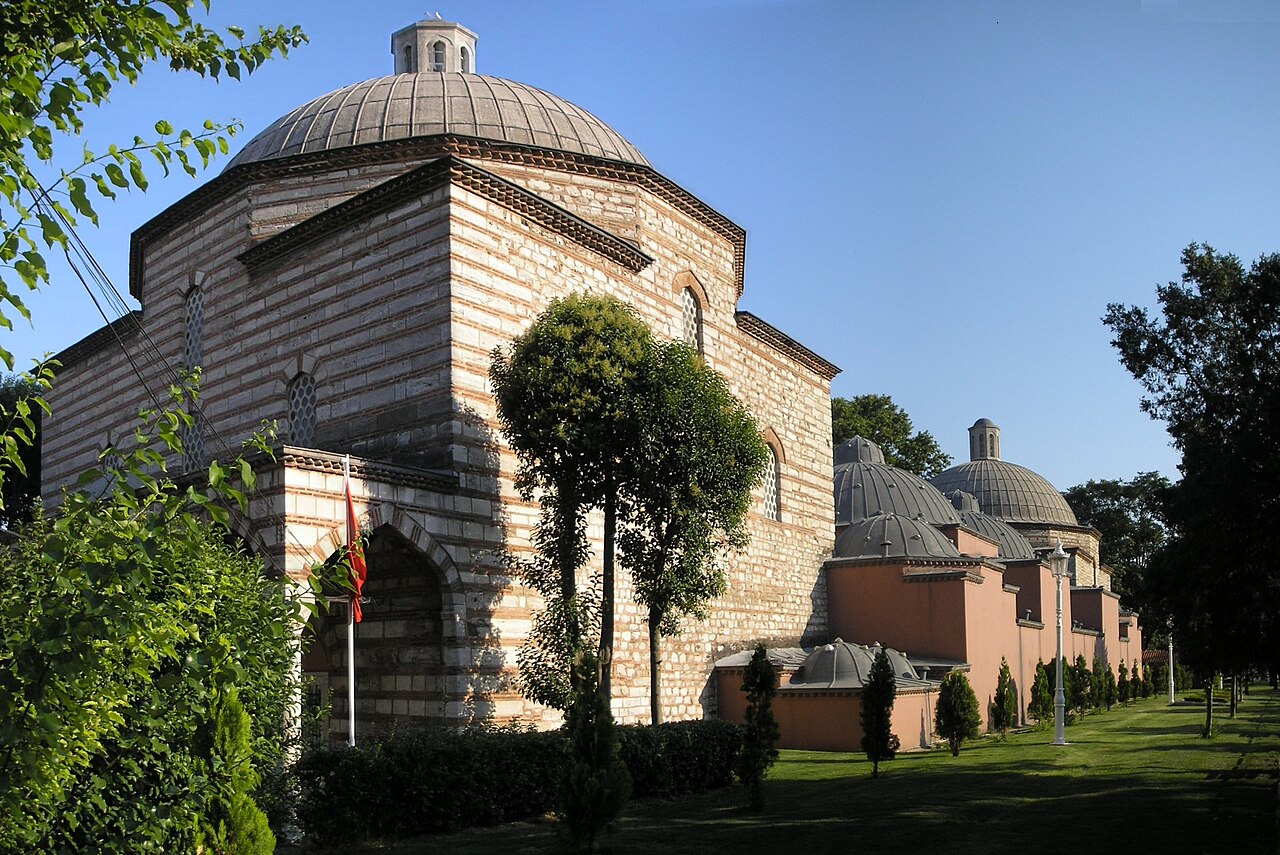
Haseki Hürrem Sultan Hamamı
Mimar Sinan · 1556
Free account
Read every Hurrem Sultan source
Sign up free →
Ready when you are
Start chatting with Hurrem Sultan now.
20 messages free · No credit card · Available in 50+ languages.