


Secondary sourceBookc. 1380
Trierer Äsop (illustrated fables manuscript)
c. 1380
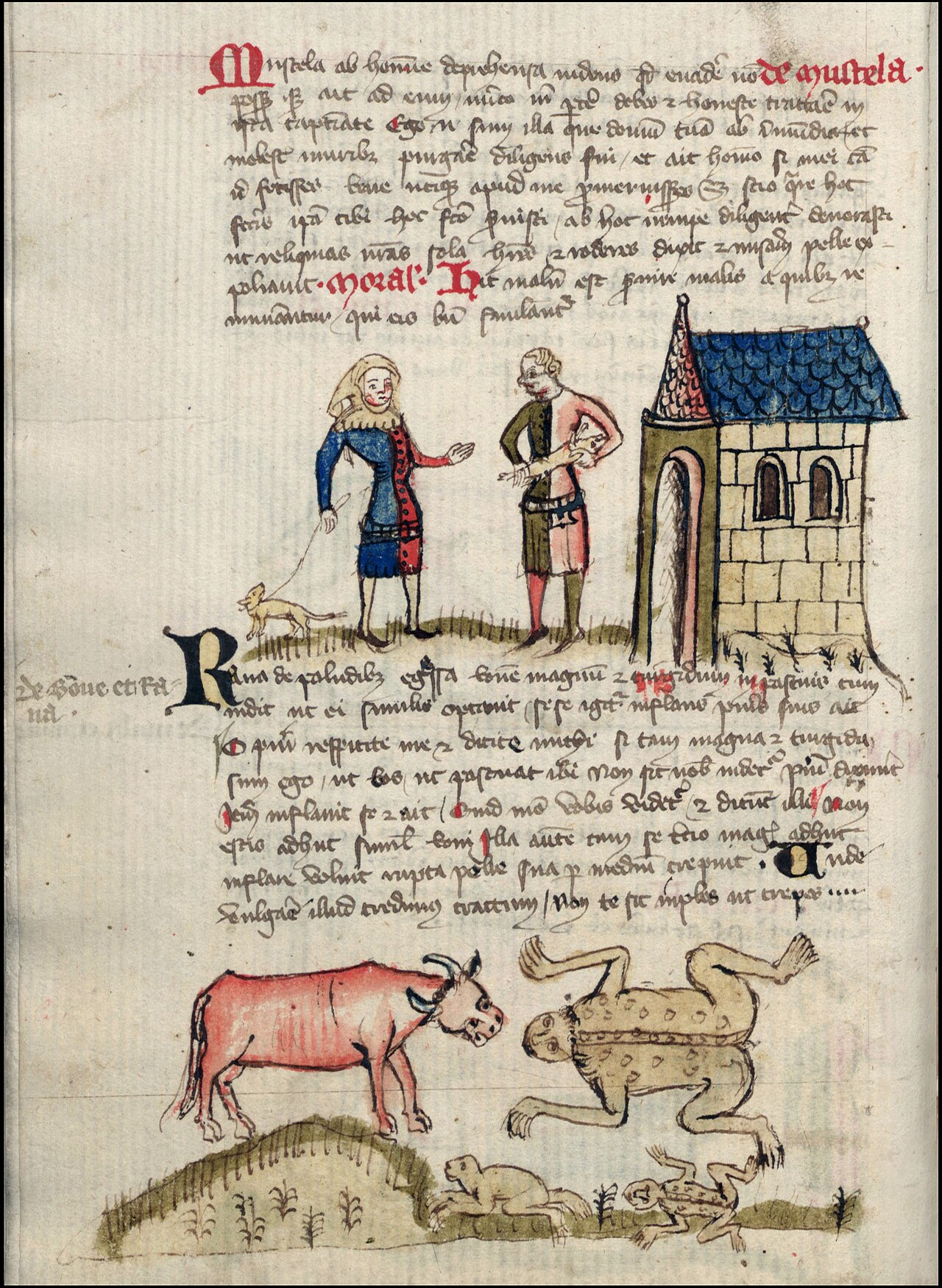
An illustrated manuscript from about 1380 with fables of Aesop and Avianus, probably used in a school at the Trier abbey of St. Matthias.
A medieval copy of Aesop's fables, showing how the fables were adapted and taught centuries after the figure's death.
About this source
What it is
This is an illustrated medieval manuscript from about 1380, known as the Trierer Äsop. It contains illustrated versions of the fables of Aesop and Avianus, each in medieval adaptations, with short explanations. The Stadtbibliothek Trier's description, written in German, says the text and pictures point to use in a school, and that the codex was probably used in teaching at the Trier abbey of St. Matthias, where it may also have been made.
The page shows red and black Latin text in columns and painted miniatures. One picture shows a man in blue and red robes with a dog on a leash talking to a man in pink and green beside a stone building with a blue roof. Another shows a pink cow facing a large spotted frog that is puffed up, with two small frogs in the foreground.
Why it matters
The library description says this manuscript comes from a period of strong transmission of Aesop's fables. It also shows how pagan literature was adapted for Christian use, which helps explain how ancient fables kept being taught in the Middle Ages.
Look closer
- What is happening in each picture, and how does the text relate to what you see?
- Why might a monastery school have wanted illustrated fables for teaching?
- What does this page not show about the students who used it or how it was read aloud?
This book is part of the curated material that grounds the AI version of Aesop on Humy.ai — when students ask about related events, the AI can quote it and cite it.
More Aesop sources
Browse all 96 →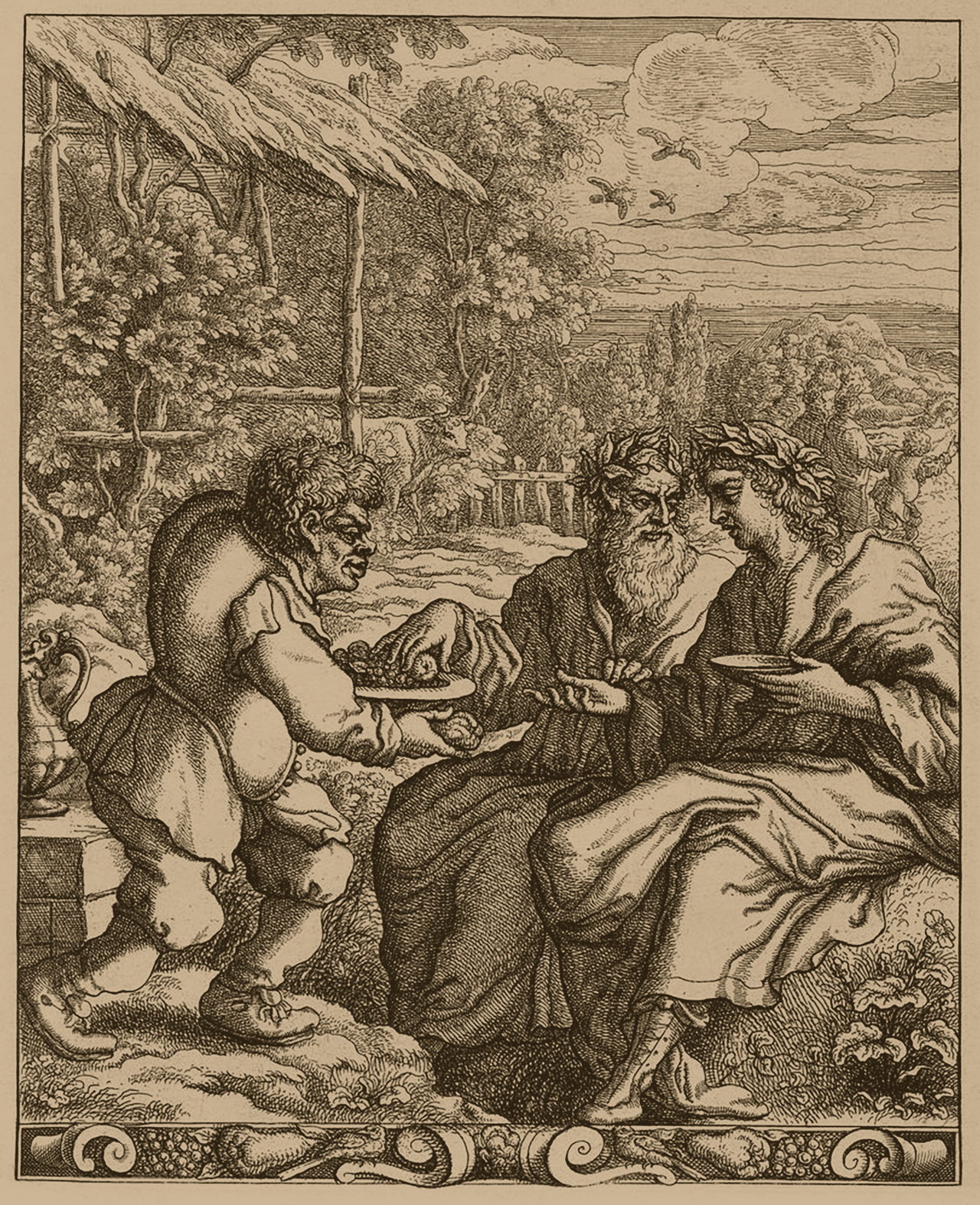 Book
Secondary source
Aesop's Fables
Aesop (attributed) · compiled from the 3rd century BCE onward
 Artifact
Secondary source
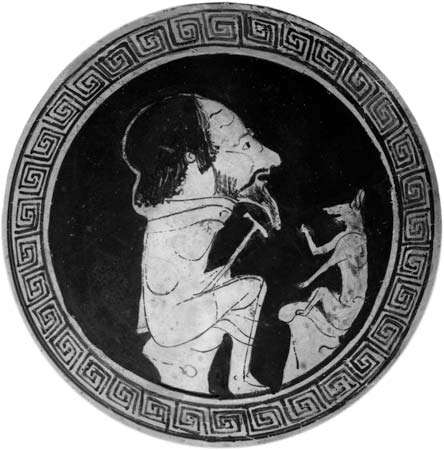
Aesop and the Fox (Red-Figure Kylix)
Unknown Greek artist · c. 450 BCE
 Book
Secondary source
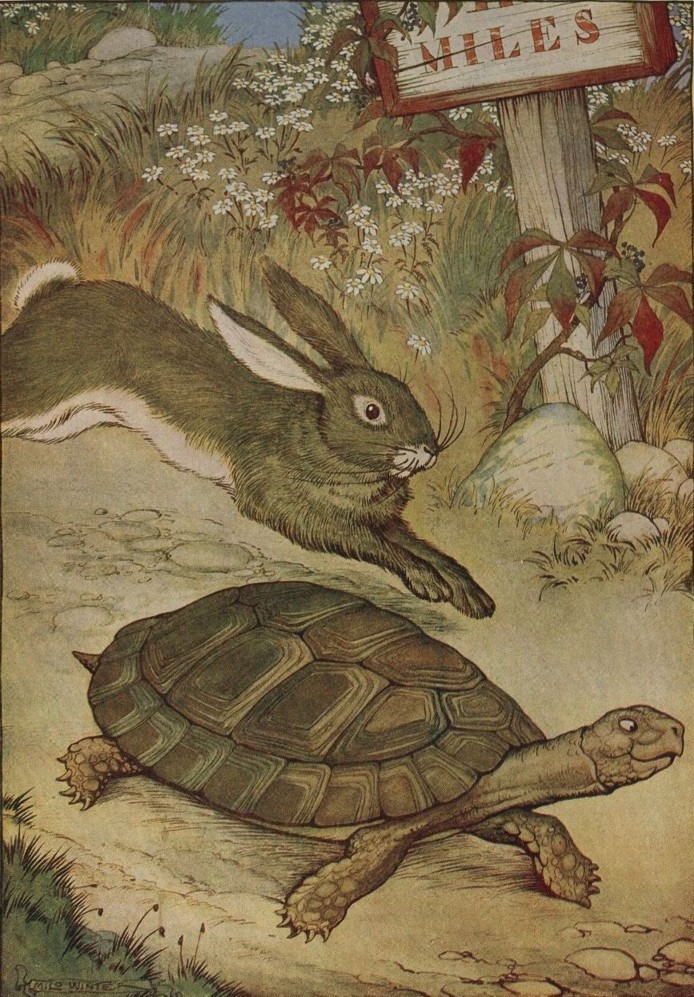
The Tortoise and the Hare
Aesop (attributed) · ancient Greek origin, no early Latin version; printed from 16th century
 Book
Secondary source
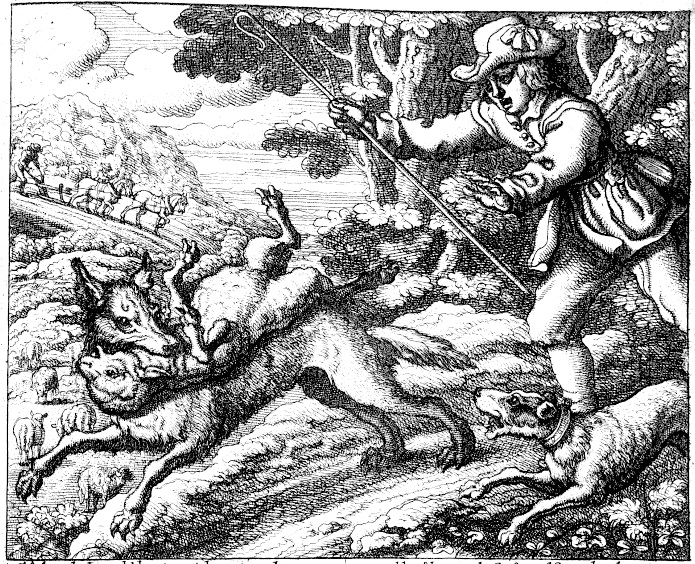
The Boy Who Cried Wolf
Aesop (attributed) · ancient Greek origin; translated into Latin in the 15th century
Free account
Browse every Aesop source
Sign up free →
Ready when you are
Start chatting with Aesop now.
20 messages free · No credit card · Available in 50+ languages.