


Primary sourceDocumentc. 1555-1560
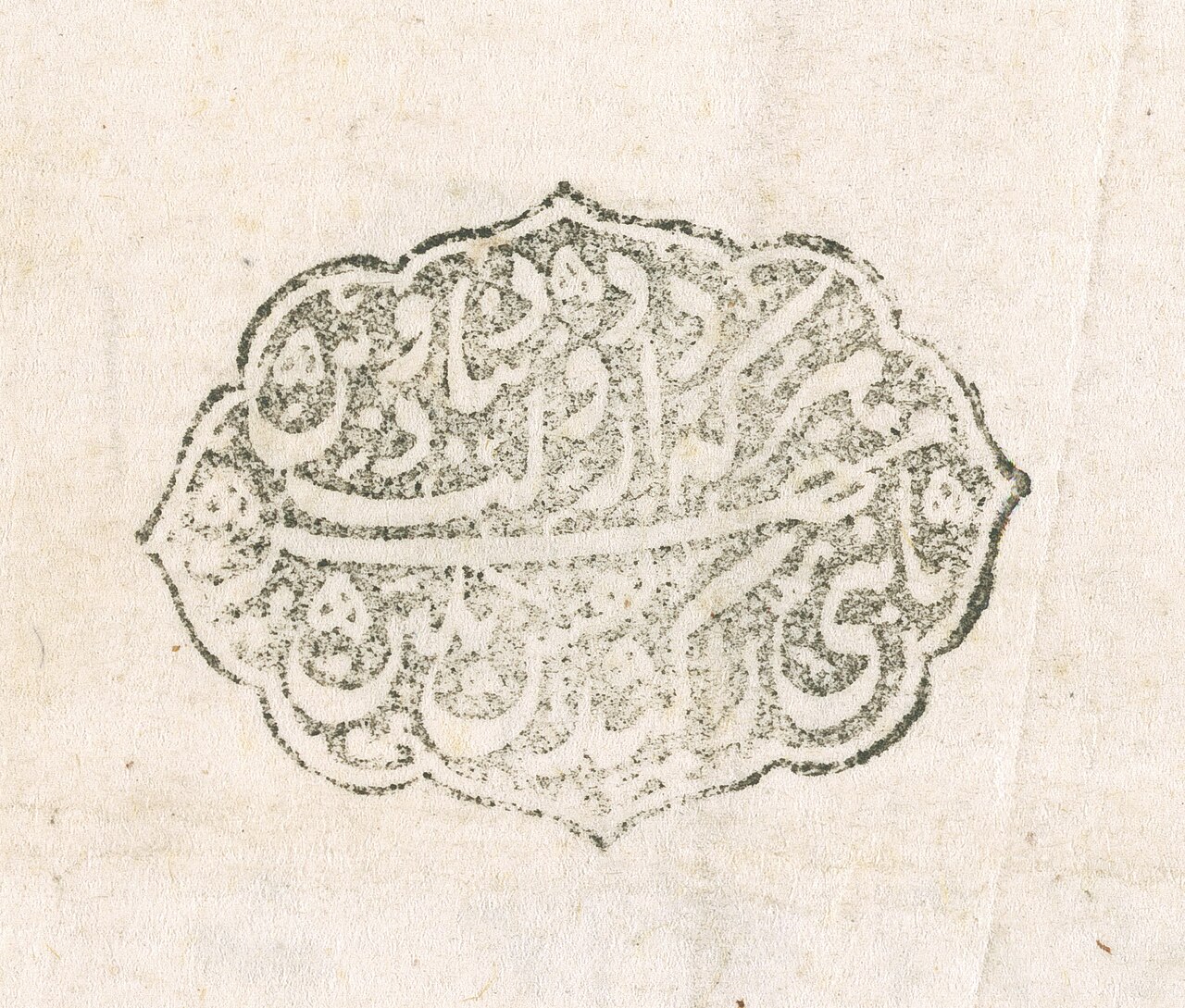
Tughra of Sultan Suleiman the Magnificent
c. 1555-1560
An ornate calligraphic insignia of Sultan Suleiman I, made during the lifetime of his wife Hürrem Sultan.
This imperial insignia of Suleiman I was made during Hürrem Sultan's lifetime, showing the court world she lived in.
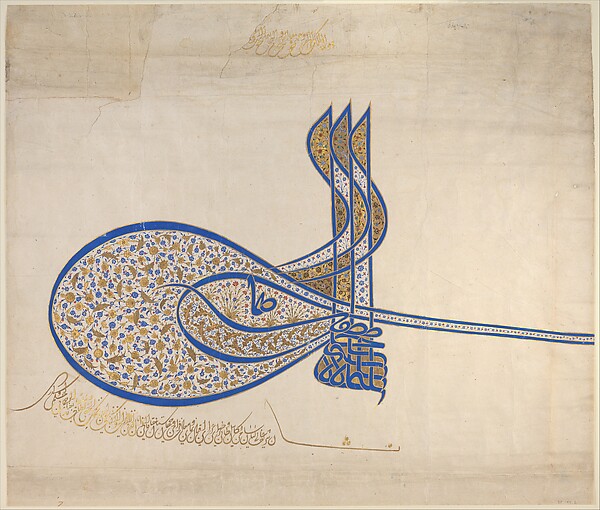
About this source
What it is
This is a tughra, the official calligraphic monogram used by an Ottoman sultan to mark his authority. It is drawn in ink, opaque watercolor, and gold on paper, made around 1555–60 for Sultan Süleyman the Magnificent. It is now held at The Metropolitan Museum of Art.
Why it matters
A tughra appeared on official documents to show the sultan's seal of power. This example dates from the era of Süleyman's rule, when his wife Hürrem Sultan was an influential figure at court. It shows the visual language of Ottoman imperial authority that surrounded her life, even though she does not appear in it herself.
Look closer
- What do the gold and blue colors suggest about the importance of this object?
- Why might a ruler need a special symbol like this instead of just a signature?
- What does this insignia tell us about the court Hürrem lived in, even without showing her?
This document is part of the curated material that grounds the AI version of Hurrem Sultan, Osman I and Orhan on Humy.ai — when students ask about related events, the AI can quote it and cite it.
More Hurrem Sultan sources
Browse all 57 →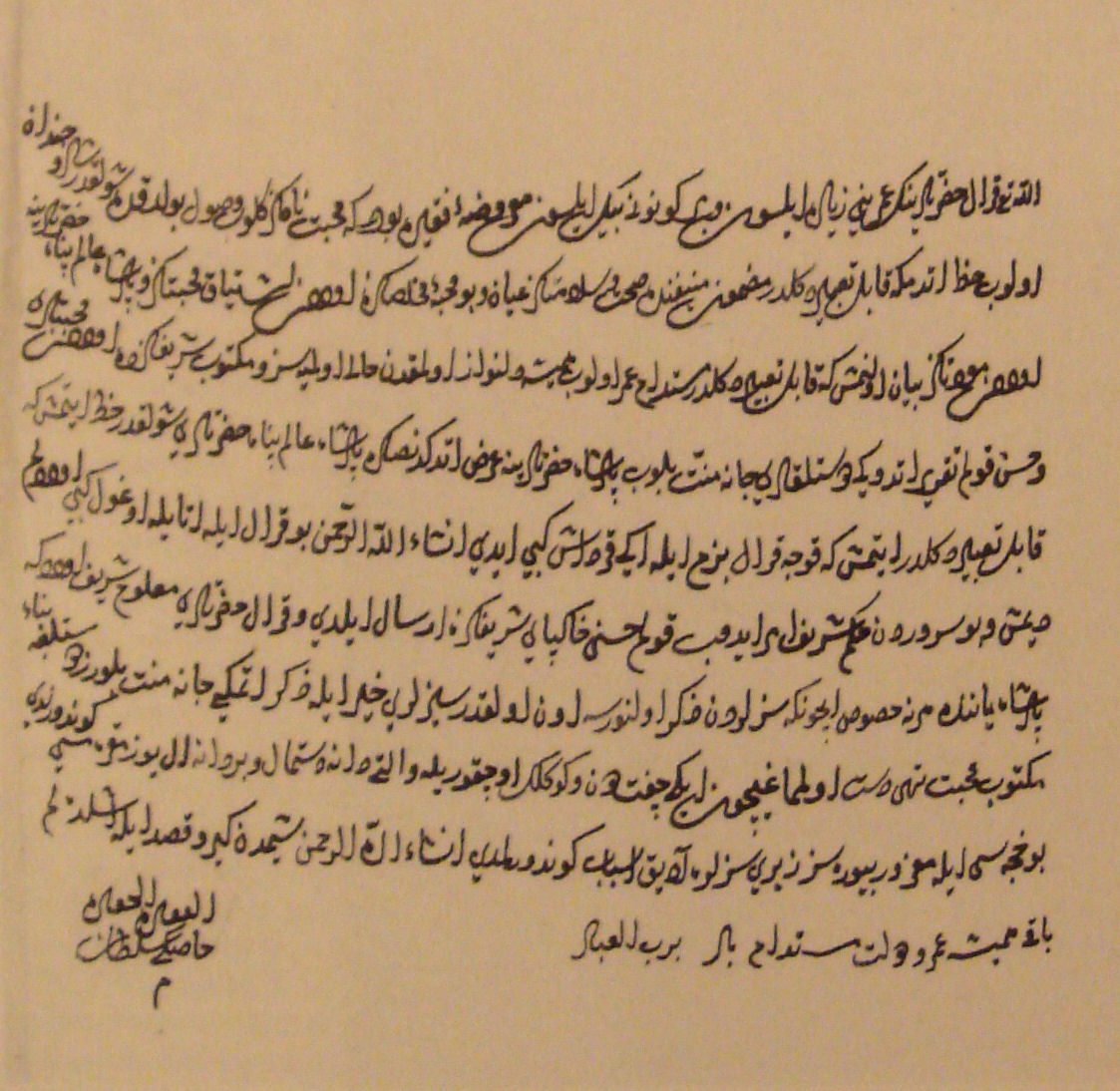 Letter
Primary source
Letter of Roxelane to Sigismund Augustus
Hürrem Sultan · 1549
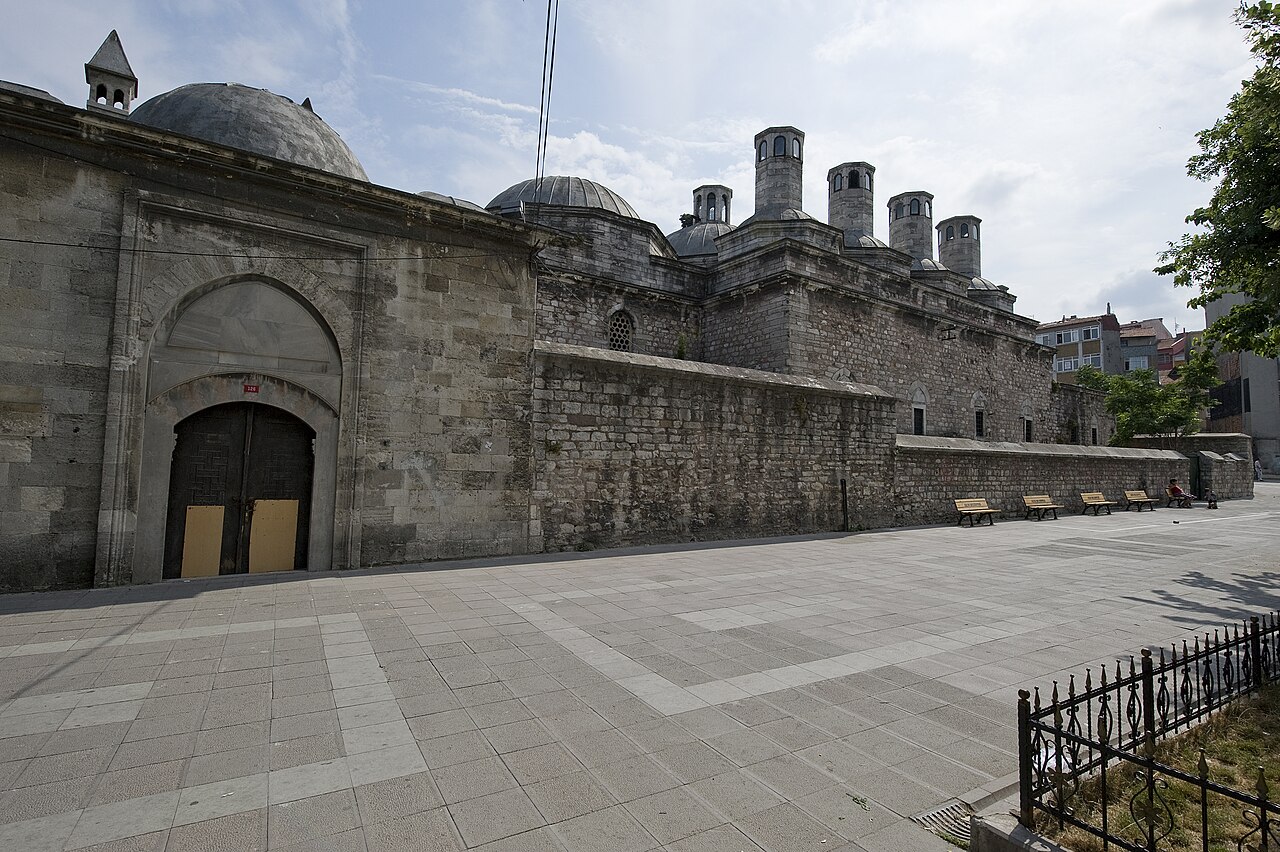 Artifact
Primary source
Haseki Sultan Mosque
Mimar Sinan · 1538
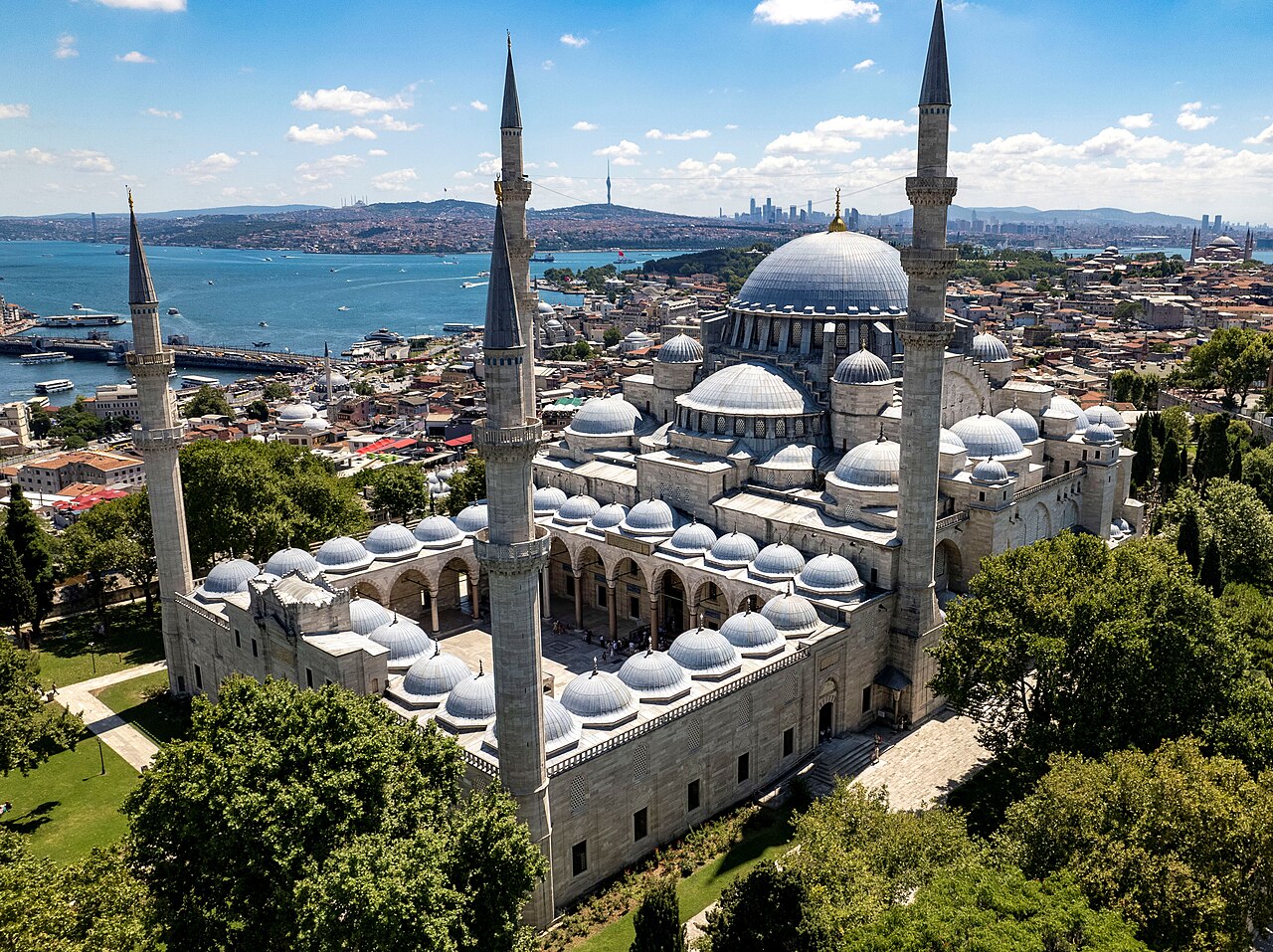 Artifact
Primary source
Süleymaniye Mosque
Mimar Sinan · 1550-1557
 Artifact
Primary source
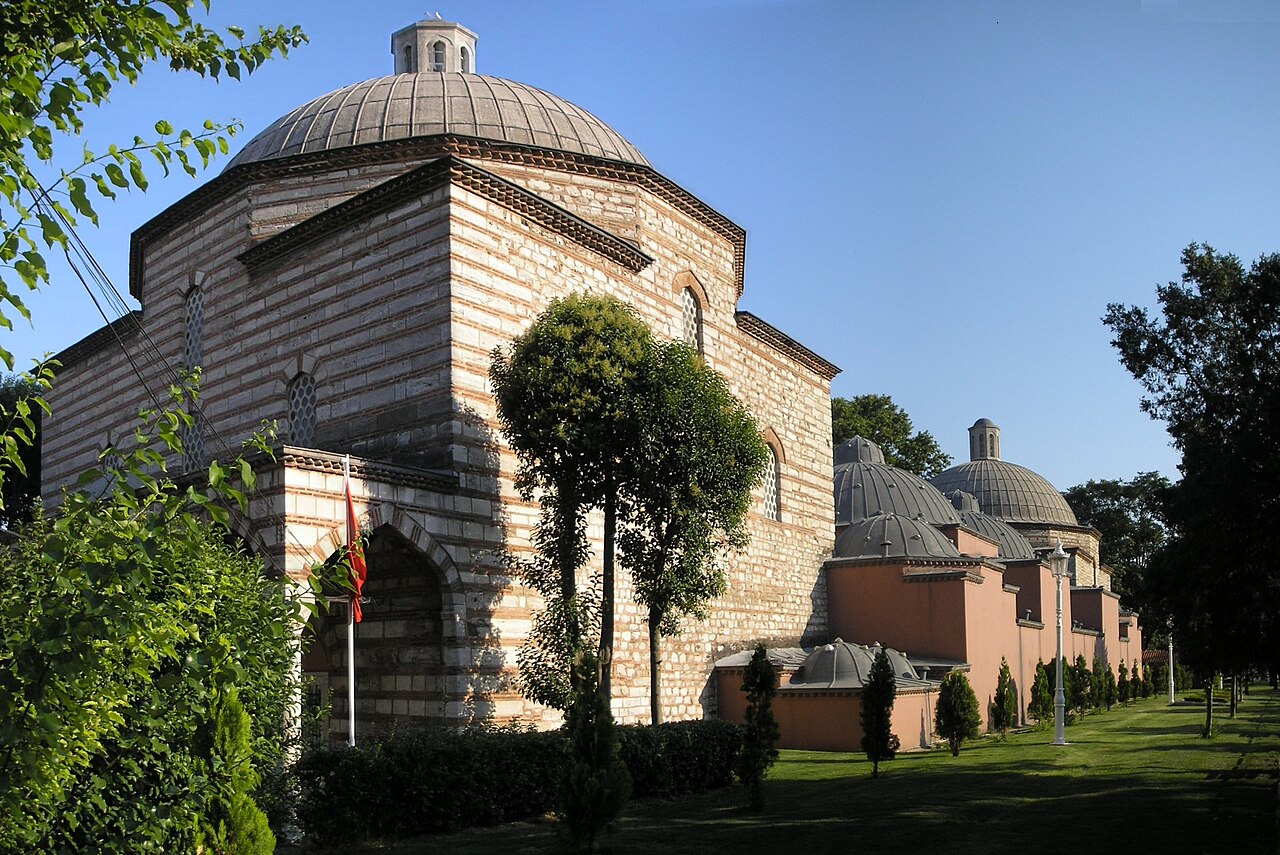
Haseki Hürrem Sultan Hamamı
Mimar Sinan · 1556
Free account
Read every Hurrem Sultan source
Sign up free →
Ready when you are
Start chatting with Hurrem Sultan now.
20 messages free · No credit card · Available in 50+ languages.