


Secondary sourcePainting19th century
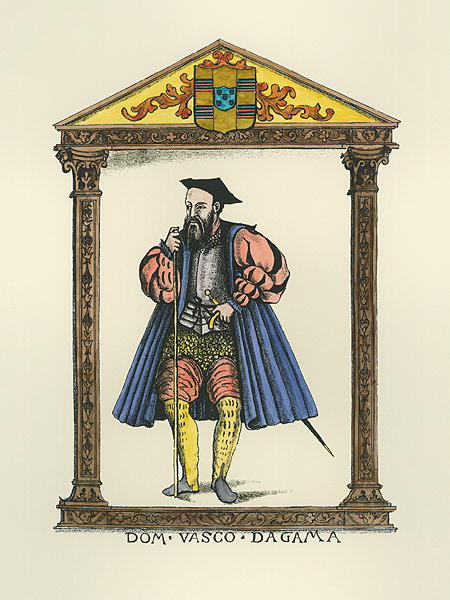
Vasco da Gama portrait, English School, 19th century
19th century
A coloured engraving from the 19th century showing an imagined portrait of Vasco da Gama, made centuries after his death.
Shows how Gama was imagined in the 1800s, centuries after his death, presented as a noble explorer in an ornate frame.
About this source
What it is
This is a coloured engraving from the 19th century, made by an artist of the English School whose name is not recorded. It shows a bearded man in a black cap, blue cape, red sleeves and yellow stockings, holding a staff and a sword. He stands inside an ornate architectural frame with a coat of arms at the top. The caption reads DOM. VASCO DAGAMA.
Why it matters
This image is imagined rather than drawn from life, because it was made centuries after Gama died in 1524. It is useful for showing how Gama was later pictured in the 1800s. The colourful costume and heraldic frame present him as a noble explorer, which reveals what European audiences of that century wanted to see in a national hero from the age of exploration.
Look closer
- What clothing, objects and symbols does the artist use to show Gama's status?
- Why might a 19th-century artist choose a coat of arms and an ornate frame?
- What does this portrait leave out about Gama's real appearance and his actual voyages?
This painting is part of the curated material that grounds the AI version of Vasco da Gama on Humy.ai — when students ask about related events, the AI can quote it and cite it.
More Vasco da Gama sources
Meet the AI Vasco da Gama →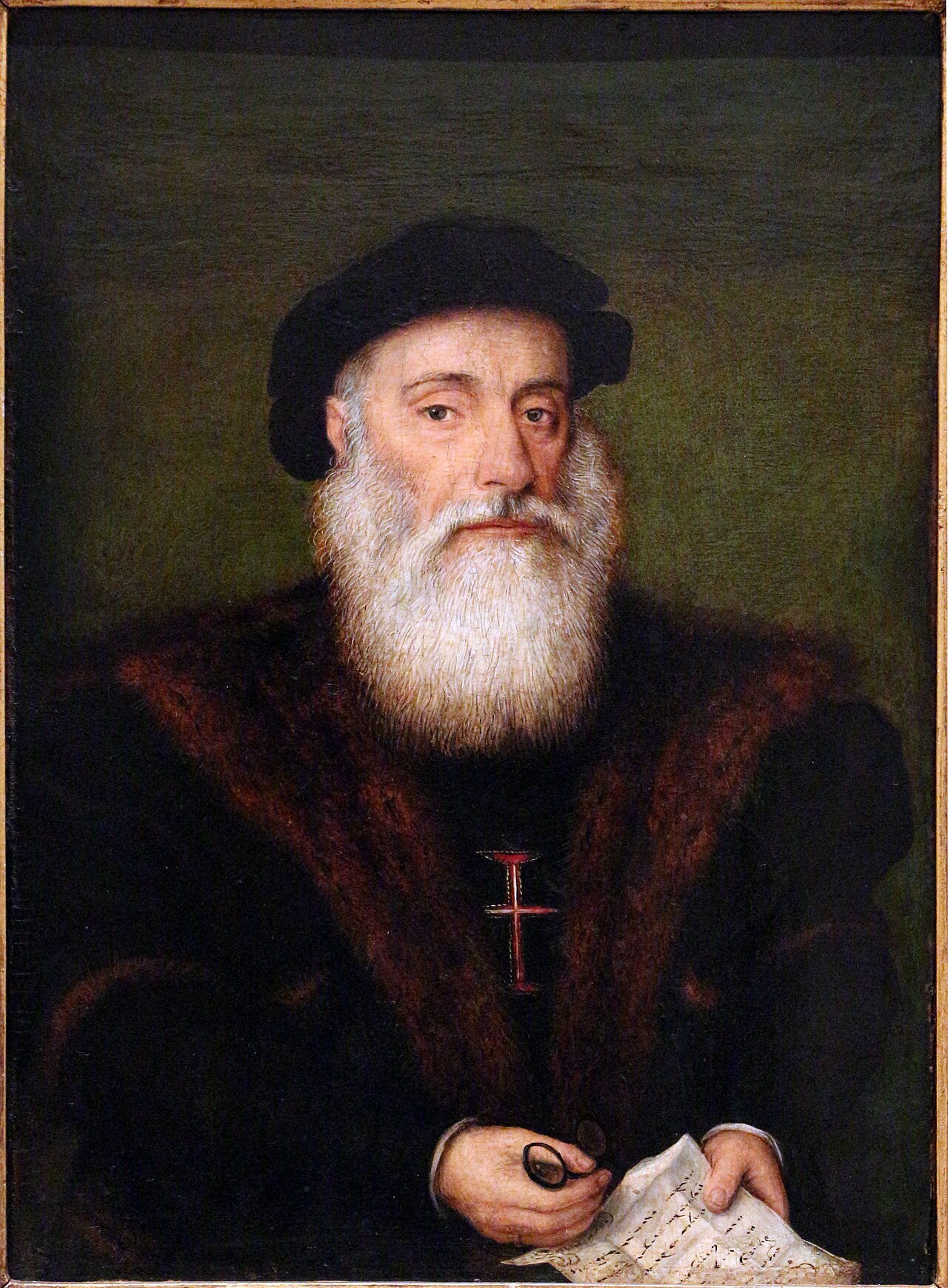 Painting
Secondary source
Portrait of Vasco da Gama
Anonymous · c. 1525
 Painting
Secondary source
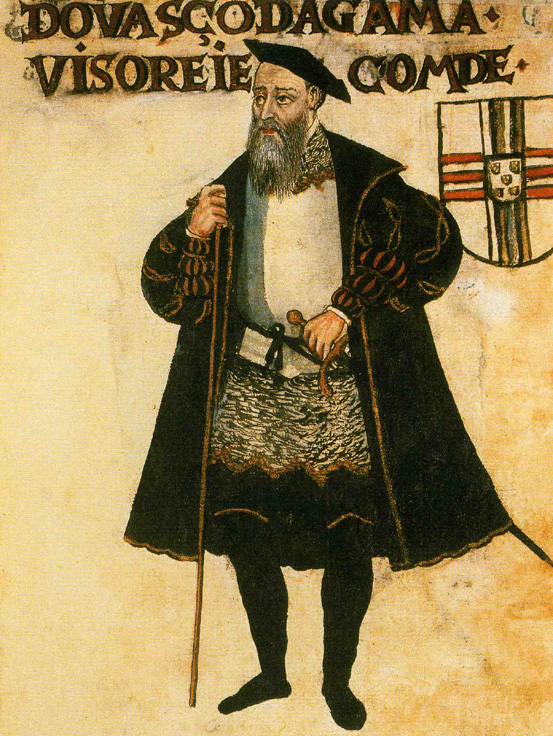
Vasco da Gama, Livro de Lisuarte de Abreu
Livro de Lisuarte de Abreu (compiler unknown) · c. 1565
 Document
Secondary source
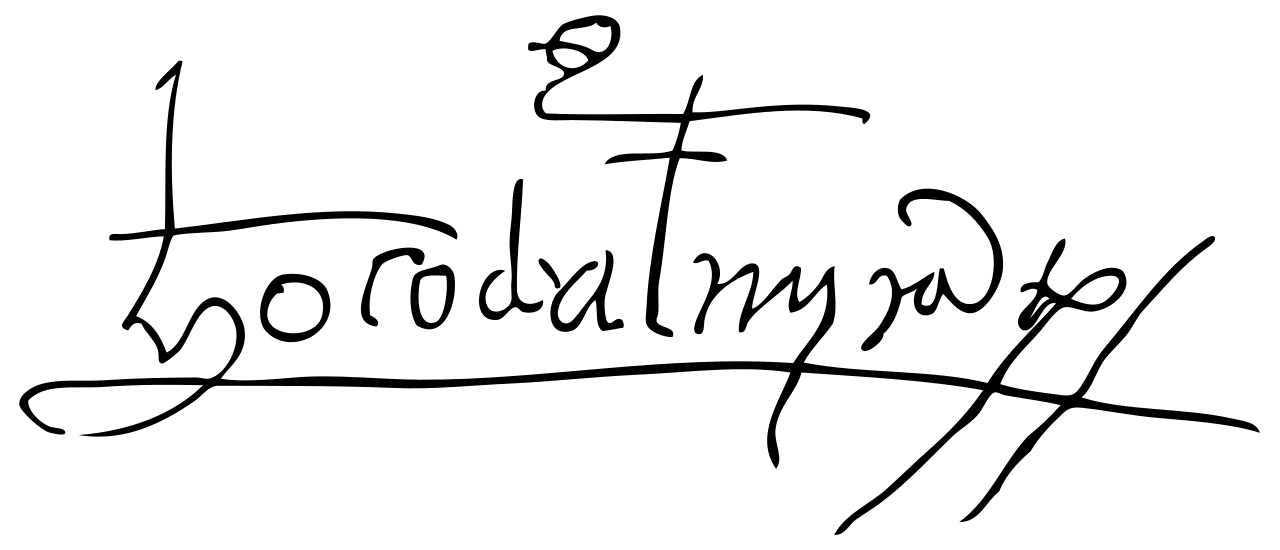
Signature of Vasco da Gama
Vasco da Gama
 Artifact
Primary source
Vasco da Gama Pillar
1498 or 1499
 Document
Primary source
Cantino Planisphere
Anonymous Portuguese cartographer · 1502
Ready when you are
Start chatting with Vasco da Gama now.
20 messages free · No credit card · Available in 50+ languages.