


Primary sourceArtifact294
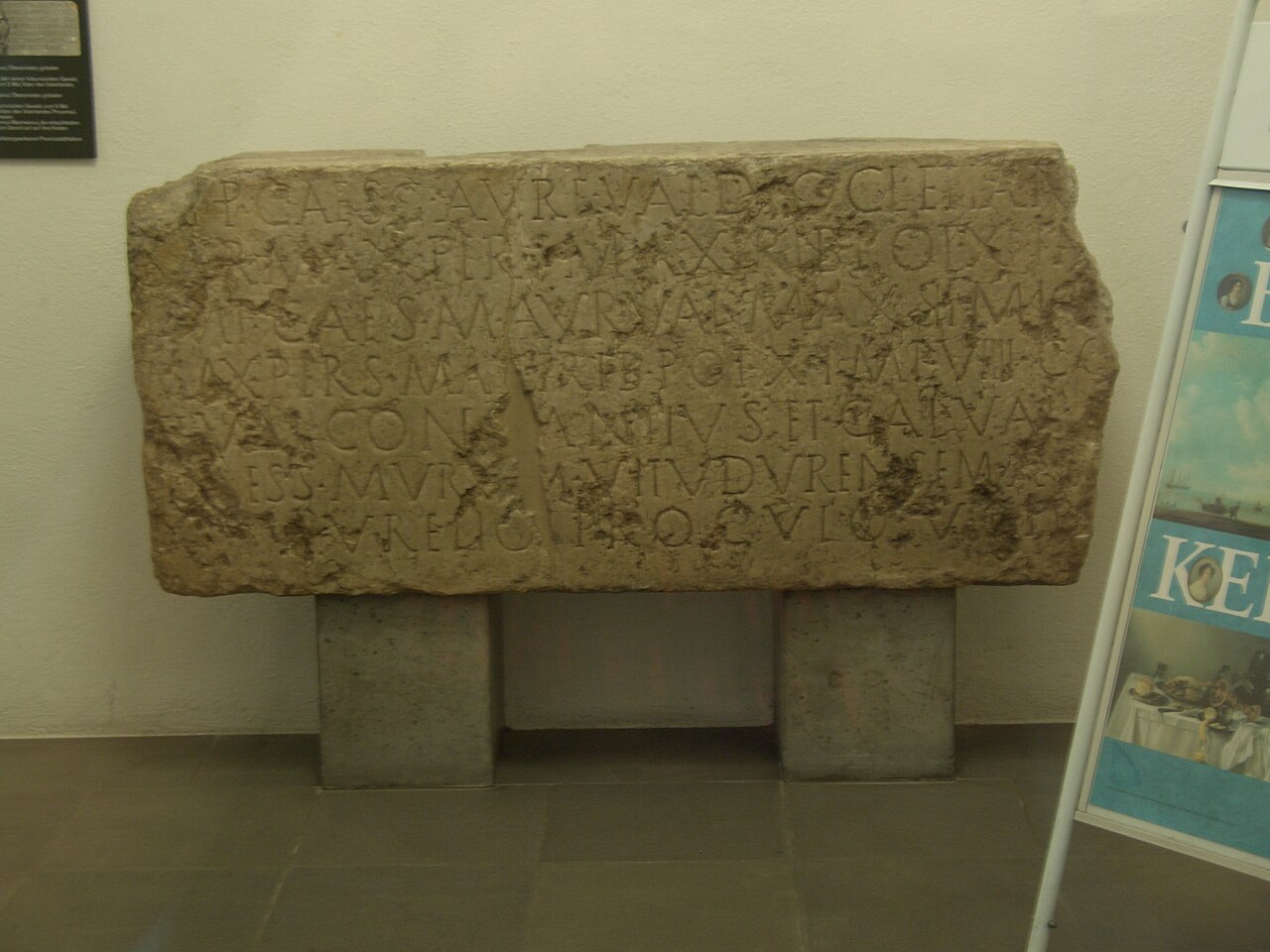
Vitudurum Inscription Tablet
294
A stone inscription from 294, a fragment of a larger tablet from the Roman fort of Vitudurum. It names Diocletian among the rulers who had the fort's wall built, which connects it directly to his reign.
The tablet names Diocletian as one of the rulers who had the fort wall at Vitudurum built, placing him in a shared imperial government.
About this source
What it is
This is a stone inscription tablet, about 1.63 by 0.74 metres, dated to 294. It is a fragment of a larger tablet from the Roman fort of Vitudurum, today Oberwinterthur. Its Latin text names Gaius Aurelius Valerius Diocletianus, Marcus Aurelius Valerius Maximianus, Constantius and Galerius, and records that these rulers had the wall of Vitudurum built at their own expense, under the provincial governor Aurelius Proculus. In the early Middle Ages the stone was taken to Konstanz and set into the wall of the St Mauritius rotunda at the cathedral. Since 1965 the original has been in the town hall of Winterthur, and the rotunda holds only a copy.
Why it matters
Inscriptions like this were carved to be read in public. This one shows Diocletian ruling together with other emperors and Caesars during the tetrarchy, the period when several rulers shared power. It also shows how frontier forts were repaired through imperial money and the work of provincial officials. The stone's later move from fort to cathedral to town hall shows how old Roman objects were reused and valued over many centuries.
Look closer
- Which rulers are named, and why might the text list so many titles?
- Who paid for the wall, and whose names are left out of the text?
- How did the stone's journey from Vitudurum to Konstanz and Winterthur change how people see it?
This artifact is part of the curated material that grounds the AI version of Diocletian on Humy.ai — when students ask about related events, the AI can quote it and cite it.
More Diocletian sources
Browse all 92 →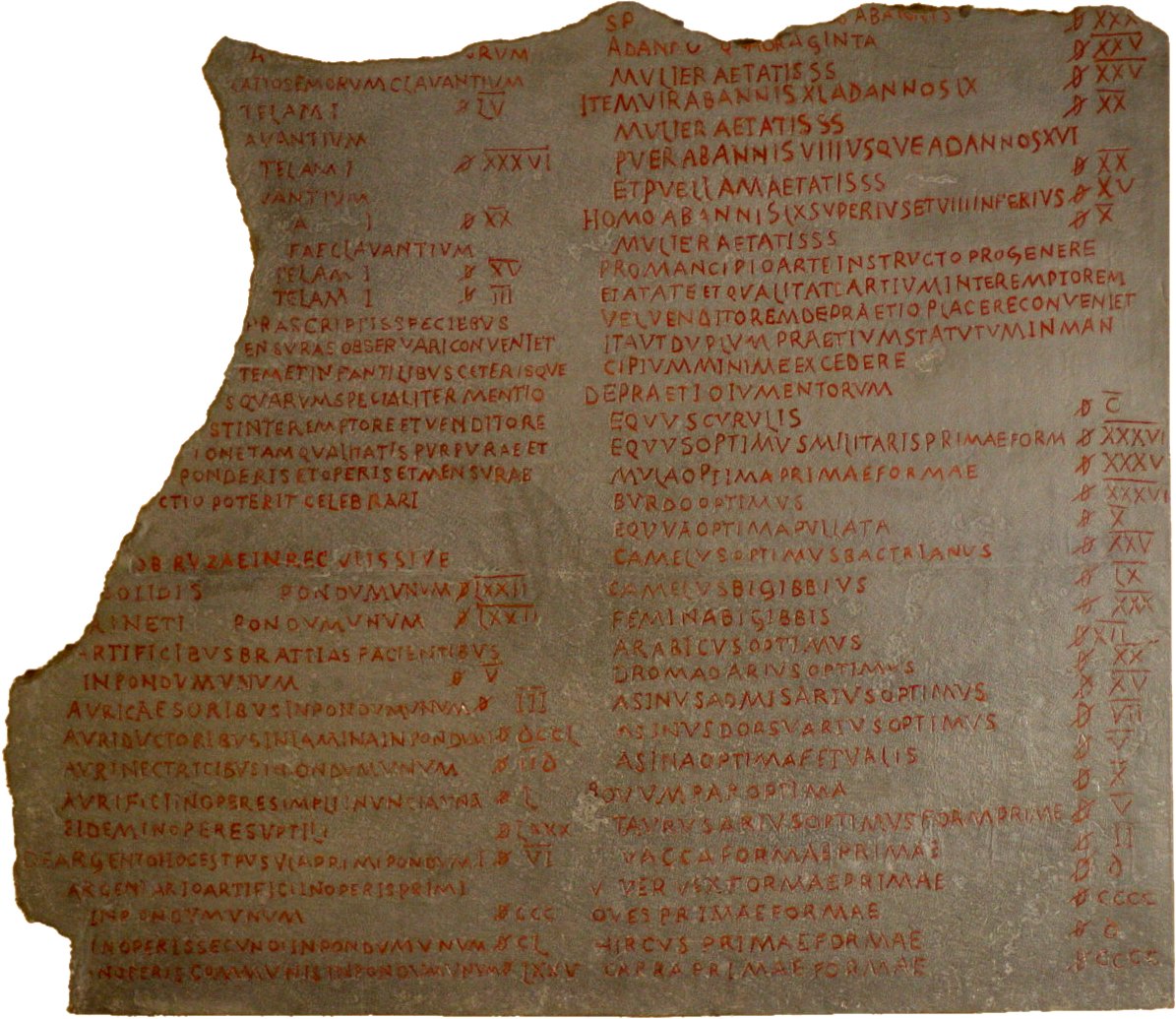 Document
Primary source
Edict on Maximum Prices
Diocletian · 301
 Artifact
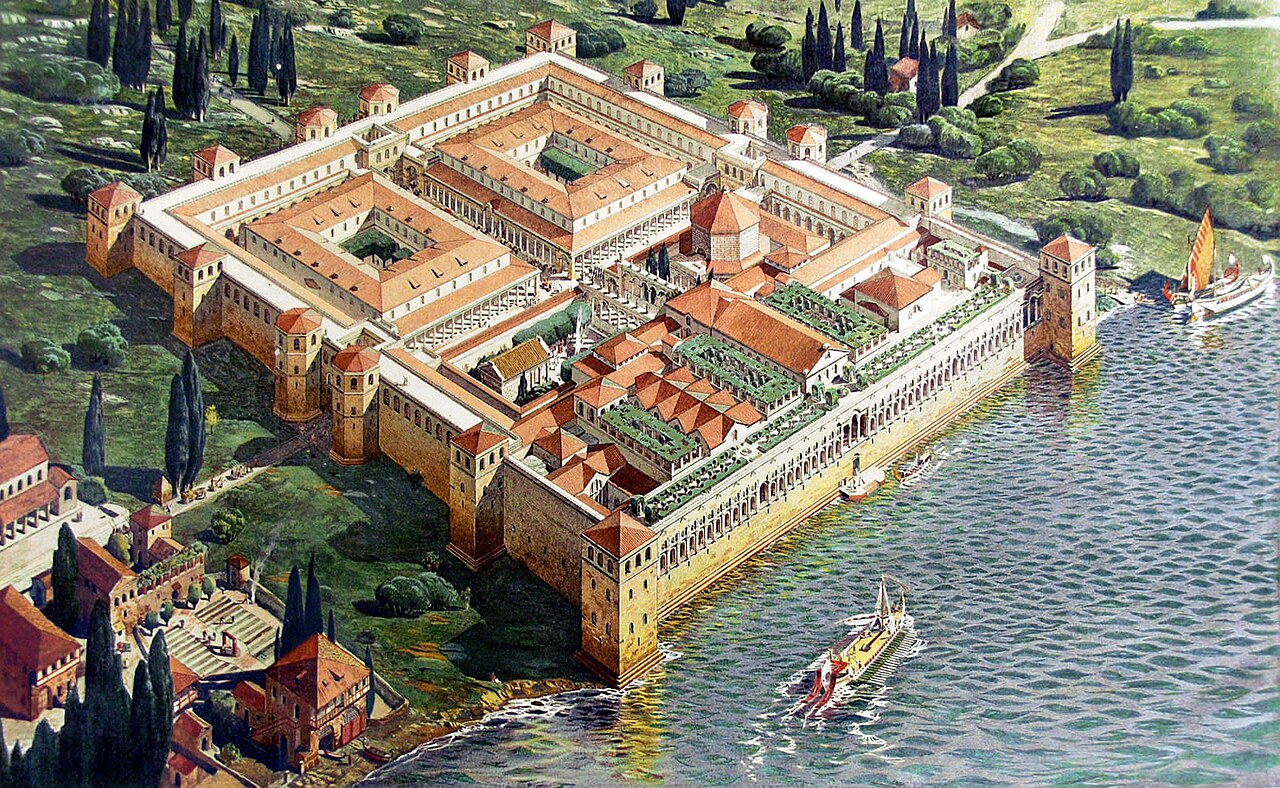
Primary source
Diocletian's Palace
293
 Book
Secondary source
De mortibus persecutorum
Lactantius · after 316
 Sculpture
Primary source
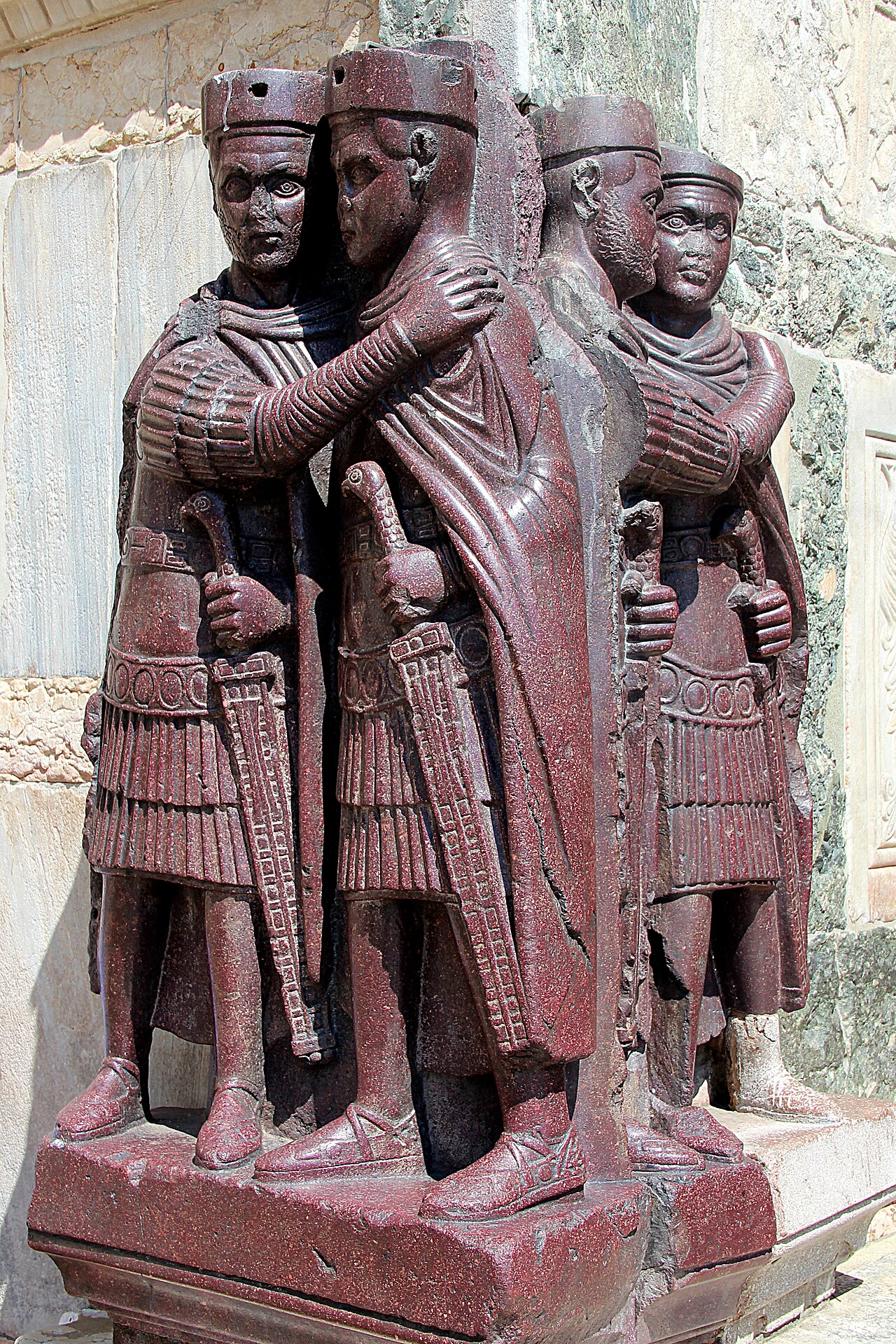
Portrait of the Four Tetrarchs
c. 300 CE
Free account
Read every Diocletian source
Sign up free →
Ready when you are
Start chatting with Diocletian now.
20 messages free · No credit card · Available in 50+ languages.