


Secondary sourcePaintingbetween 1650 and 1674
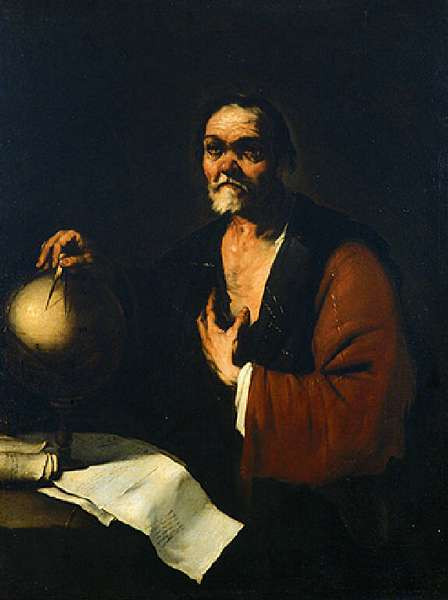
Weeping Heraclitus
Luca Giordano · between 1650 and 1674
A Baroque painting by Luca Giordano, dated about 1650 to 1674, shows an elderly, downcast Heraclitus with his hand on his chest. It follows the traditional weeping-philosopher image.
Shows Heraclitus pictured as a grieving scholar in Baroque art, long after his own lifetime.
About this source
What it is
This is a Baroque painting by Luca Giordano, dated between about 1650 and 1674. It shows an elderly bearded man with a furrowed brow and downcast eyes, wearing a dark cloak over a red sleeve. He rests one hand on his chest and touches a globe with a compass at left. Papers and a book lie on a table below against a dark background.
Why it matters
Heraclitus, a Greek philosopher who lived about 535 to 470 BCE, was remembered in later art as the weeping philosopher. Giordano was an Italian painter of the Baroque period, and his version shows how this image was passed on and repeated across Europe. The painting reflects the ideas of its own time about grief, learning and the study of the world.
Look closer
- Which objects on the table and globe suggest learning, and what do they tell you about the man?
- Why would a painter in Italy choose to show a philosopher in sorrow?
- What does the painting leave out about what Heraclitus actually wrote or taught?
This painting is part of the curated material that grounds the AI version of Heraclitus on Humy.ai — when students ask about related events, the AI can quote it and cite it.
More Heraclitus sources
Browse all 88 →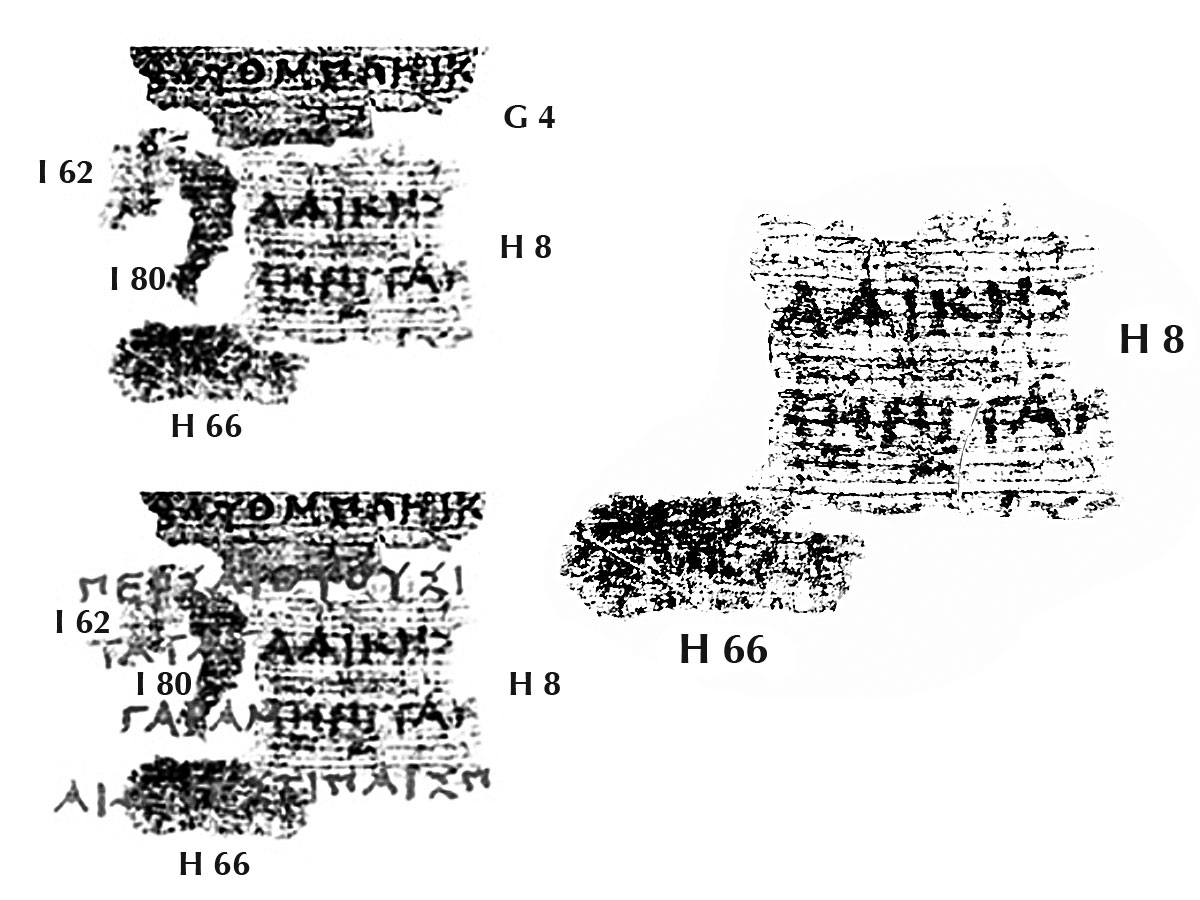 Document
Primary source
Derveni Papyrus, Column IV
Unknown author · 4th century BC
 Book
Secondary source
Lives and Opinions of Eminent Philosophers, Book V (Life of Aristotle)
Diogenes Laërtius · c. 3rd century CE
Primary source
Cratylus
Plato
 Book
Secondary source
Metaphysics
Aristotle · c. 400 BCE
Free account
Read every Heraclitus source
Sign up free →
Ready when you are
Start chatting with Heraclitus now.
20 messages free · No credit card · Available in 50+ languages.