


Secondary sourcePhotographc. 1560
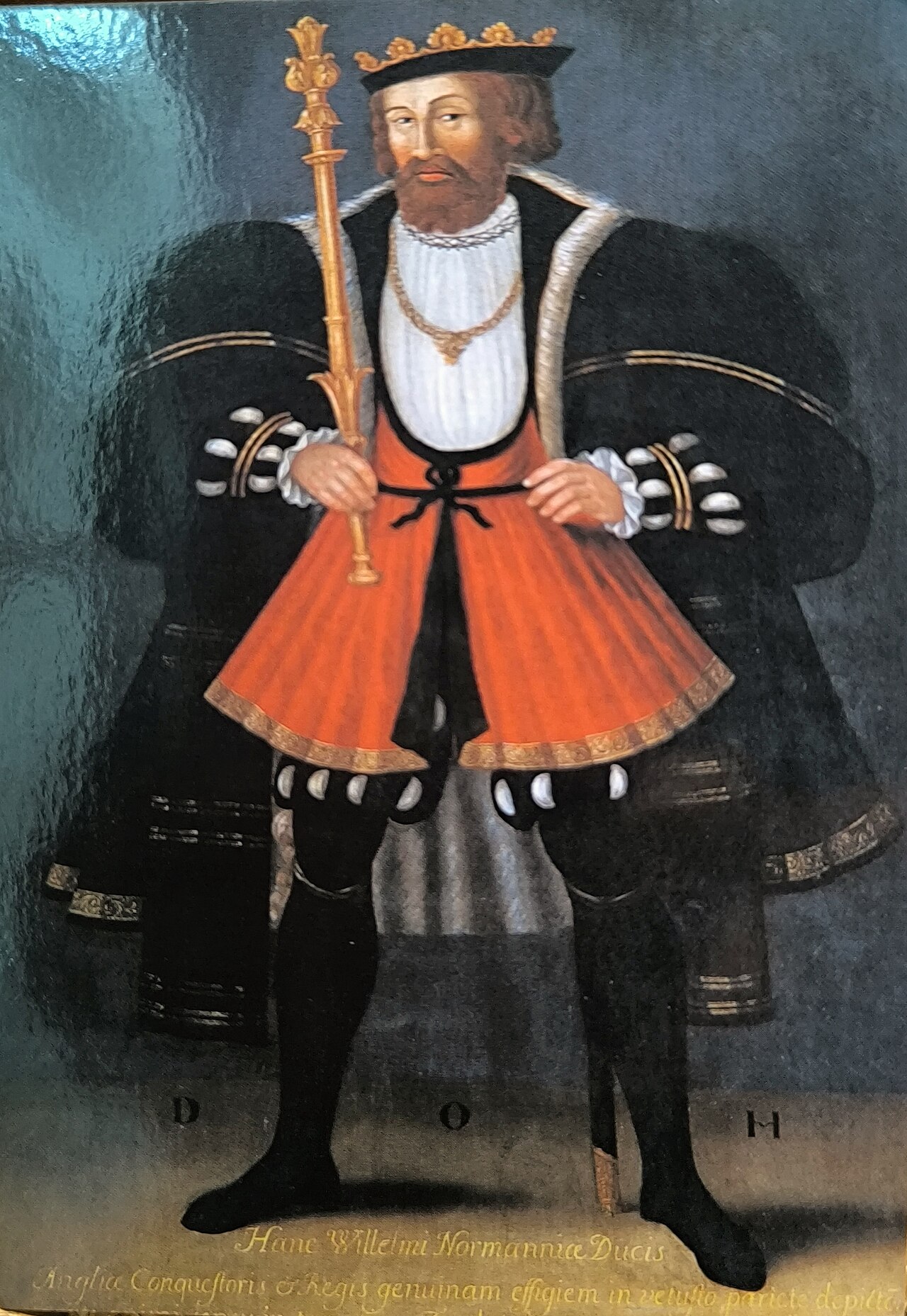
William the Conqueror portrait in a French church sacristy
c. 1560
A photograph of a sixteenth-century painting of William in a French church sacristy. It shows a crowned king holding a gold sceptre and is a later imagined likeness.
Shows how William was pictured centuries after his reign, in a later portrait kept in a French church.
About this source
What it is
This is a photograph of a painting of a bearded man wearing a black crown trimmed with gold, a black robe with white fur-like trim, and a red pleated garment. He holds a gold sceptre. A Latin inscription runs along the bottom edge. The catalogue dates the painting to about 1560 and places it in a church sacristy in France. The photograph itself was uploaded in 2025 and is not the painting.
Why it matters
This painting is a later image of William, made more than four centuries after his death in 1087. It shows how the Norman king was pictured for a French audience in the sixteenth century. Religious buildings often kept such portraits, which tells us that William was remembered in church settings as well as in royal ones.
Look closer
- What do the crown, robe and sceptre tell you about how William is presented?
- Why might a painting of an English king be kept in a French church?
- What can we not learn about William from a portrait painted so long after his lifetime?
This photograph is part of the curated material that grounds the AI version of William the Conqueror on Humy.ai — when students ask about related events, the AI can quote it and cite it.
More William the Conqueror sources
Browse all 95 →



Ready when you are
Start chatting with William the Conqueror now.
20 messages free · No credit card · Available in 50+ languages.