


Primary sourceArtifact1628
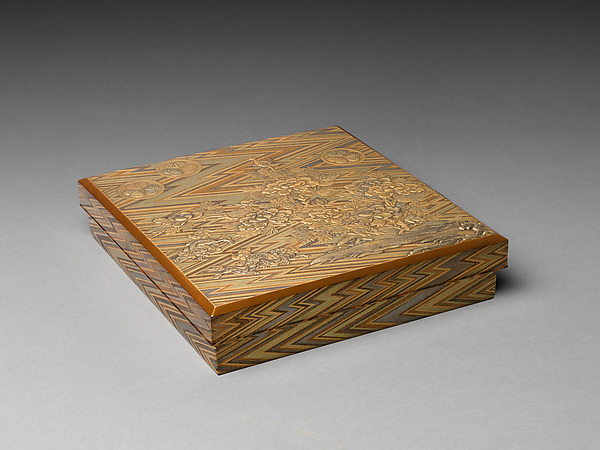
Writing Box with Tokugawa Family Crest
Kōami Chōjū · 1628
A lacquered writing box bearing the Tokugawa family crest, made in 1628 during Iemitsu's shogunate.
This lacquer box bears the Tokugawa crest and dates from the reign of Iemitsu, reflecting his era's court culture.
About this source
What it is
This is a lacquered wooden writing box (suzuribako) made in 1628 by the lacquer artist Kōami Chōjū. It is decorated with gold and silver designs of peonies and Chinese lions over a patterned ground, and carries the crest of the Tokugawa family. It is now held by The Metropolitan Museum of Art.
Why it matters
This box dates from the reign of Tokugawa Iemitsu, the third Tokugawa shogun. Objects like this, marked with the family crest, show how the Tokugawa clan displayed its authority through fine craftsmanship, even on everyday items used by elite households and officials.
Look closer
- What does the quality of the decoration tell you about who owned or used this box?
- Why might a ruling family want its crest on everyday objects?
- What skills would a lacquer artist need to create this kind of design?
This artifact is part of the curated material that grounds the AI version of Tokugawa Iemitsu on Humy.ai — when students ask about related events, the AI can quote it and cite it.
More Tokugawa Iemitsu sources
Browse all 71 →
Ready when you are
Start chatting with Tokugawa Iemitsu now.
20 messages free · No credit card · Available in 50+ languages.