


Secondary sourcePainting1 March 1818
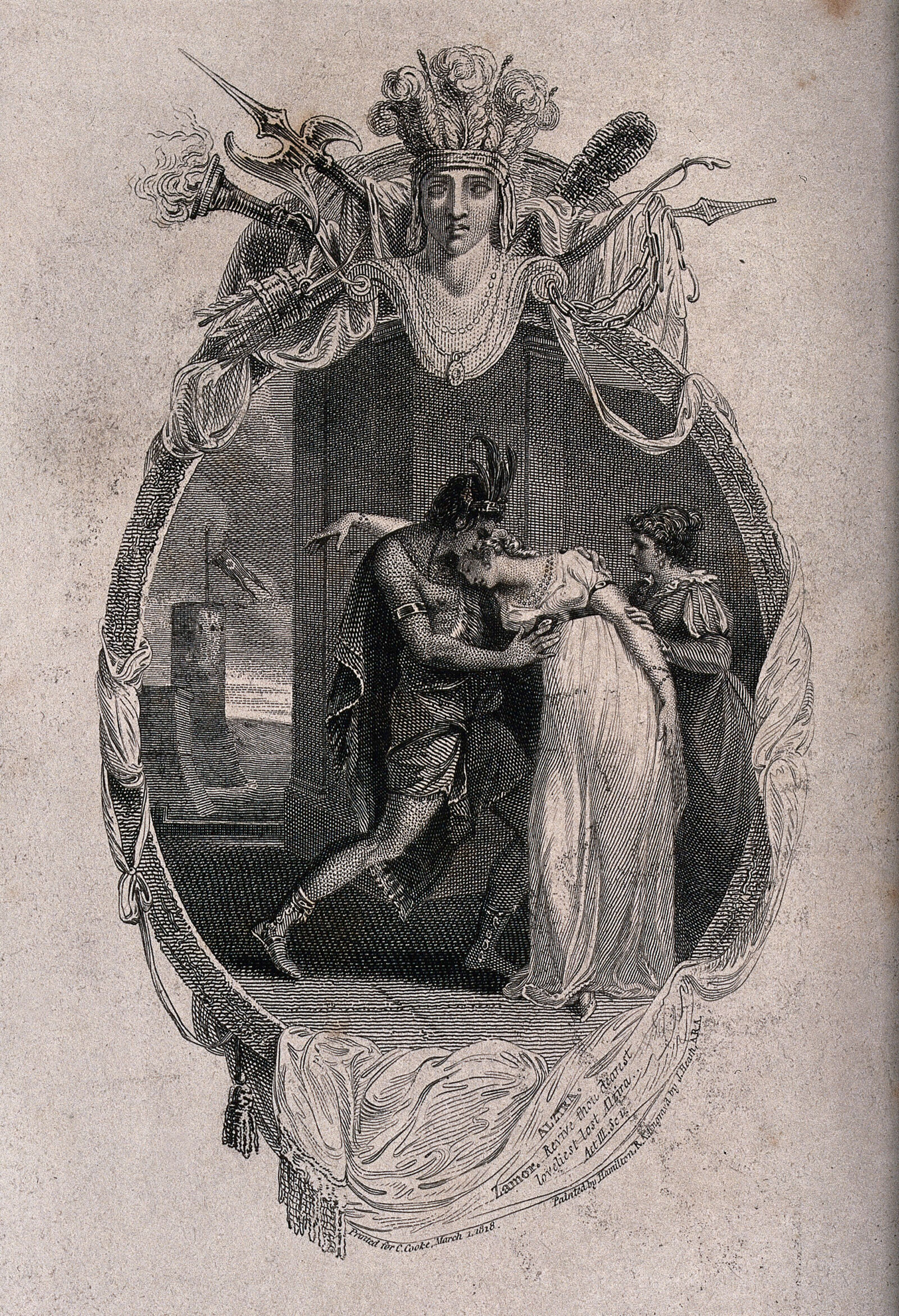
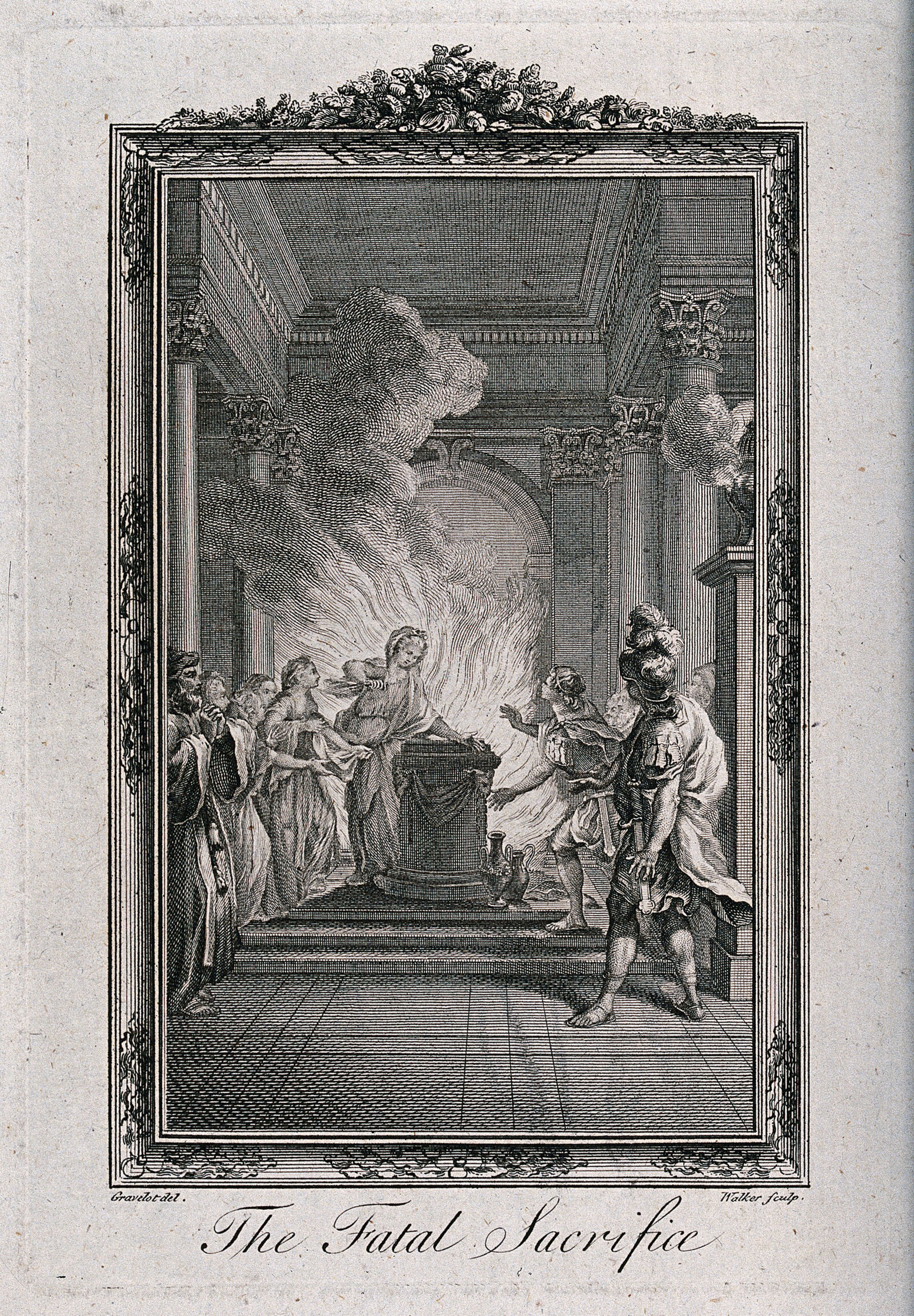
A Woman Faints, from Voltaire's Alzira
William Hamilton · 1 March 1818
An engraving illustrating a scene from Voltaire's tragedy Alzira, set in Peru during the Spanish conquest.
This engraving illustrates a scene from Voltaire's play Alzira, reflecting its lasting popularity in translation.
About this source
What it is
This engraving by J. Heath, after a painting by William Hamilton, illustrates a scene from Voltaire's play Alzira, translated by Aaron Hill. It shows a woman fainting, supported by two men, with imagery referring to Peru and the conquistadors. It was printed in 1818 and is held by the Wellcome Collection in London.
Why it matters
Alzira was one of Voltaire's tragedies set during the Spanish conquest of Peru, exploring themes of colonialism and cultural conflict. This later engraving, made decades after Voltaire's death, shows how his plays continued to be performed, translated, and illustrated well into the 19th century, reflecting their lasting popularity across Europe.
Look closer
- What do the Peruvian and conquistador motifs at the top of the image suggest about the play's themes?
- Why might this scene of fainting have been chosen as a dramatic highlight to illustrate?
- What does the inscription and names (painter, engraver, printer) tell you about how this image was made and sold?
This painting is part of the curated material that grounds the AI version of Voltaire on Humy.ai — when students ask about related events, the AI can quote it and cite it.
More Voltaire sources
Meet the AI Voltaire →
Ready when you are
Start chatting with Voltaire now.
20 messages free · No credit card · Available in 50+ languages.