


Primary sourceArtifact
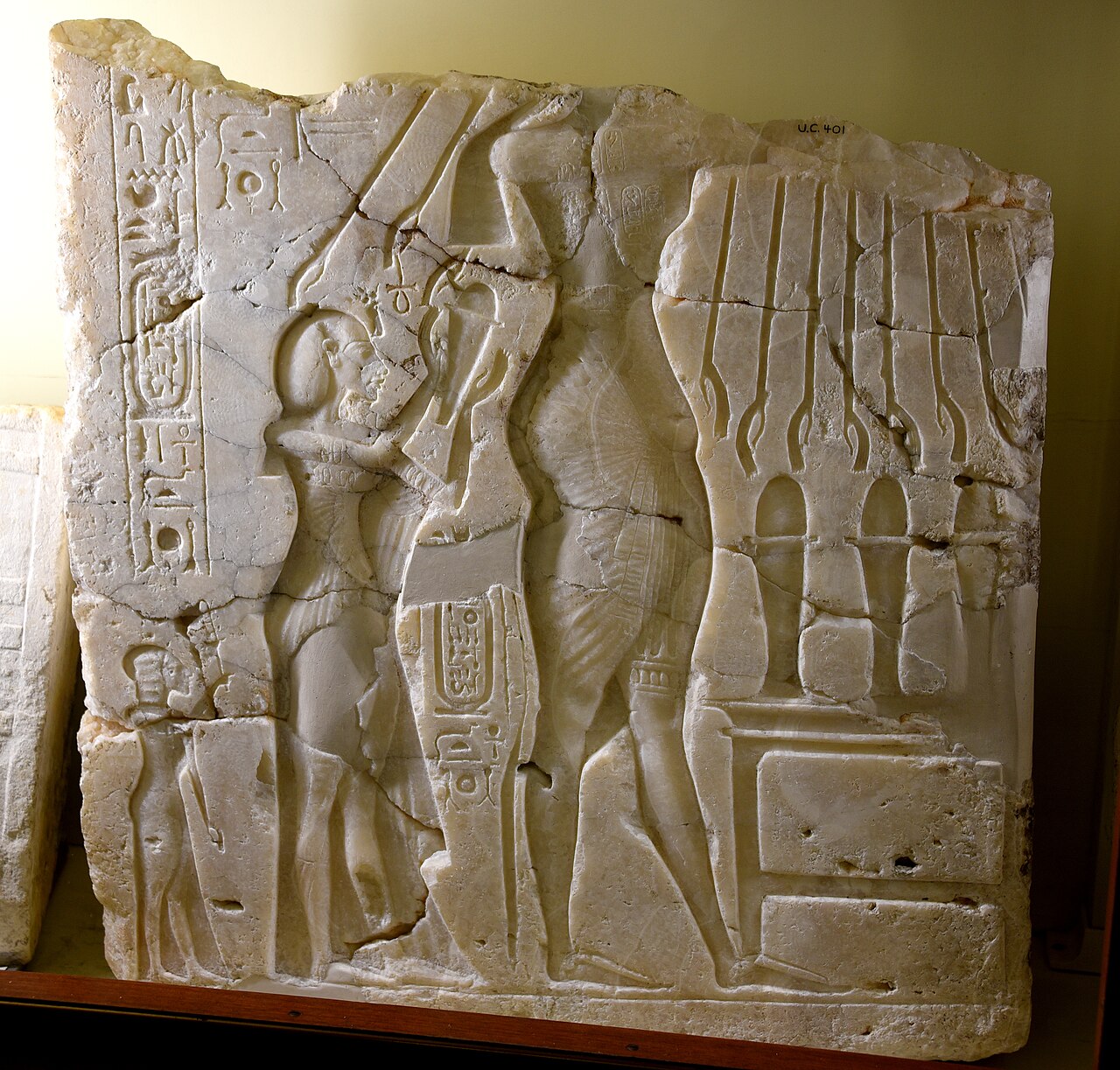
Alabaster Relief of Akhenaten, Nefertiti, and Meritaten
A sunken relief from Amarna showing Nefertiti with her daughter Meritaten, a possible rival candidate as female pharaoh.
Nefertiti appears here with her daughter Meritaten, highlighting her family's prominence in Amarna art.
About this source
What it is
This alabaster sunken relief from Amarna, Egypt, dates to the 18th Dynasty and shows Akhenaten (his head now lost), Nefertiti, and their eldest daughter Meritaten. Early cartouches of the god Aten appear on the king's arm and chest. It is held by the Petrie Museum of Egyptian Archaeology, London.
Why it matters
The relief shows the royal family together, highlighting both Nefertiti's prominent place beside Akhenaten and the role of their daughter Meritaten, who some scholars propose may later have ruled as a female pharaoh. It gives insight into Amarna-era family imagery and succession questions.
Look closer
- What does the missing head of Akhenaten tell us about how artifacts survive over time?
- Why might Meritaten be shown alongside her parents in official art?
- What do the cartouches on the king's body suggest about how religious symbols were used?
This artifact is part of the curated material that grounds the AI version of Queen Nefereti on Humy.ai — when students ask about related events, the AI can quote it and cite it.
More Queen Nefereti sources
Meet the AI Queen Nefereti →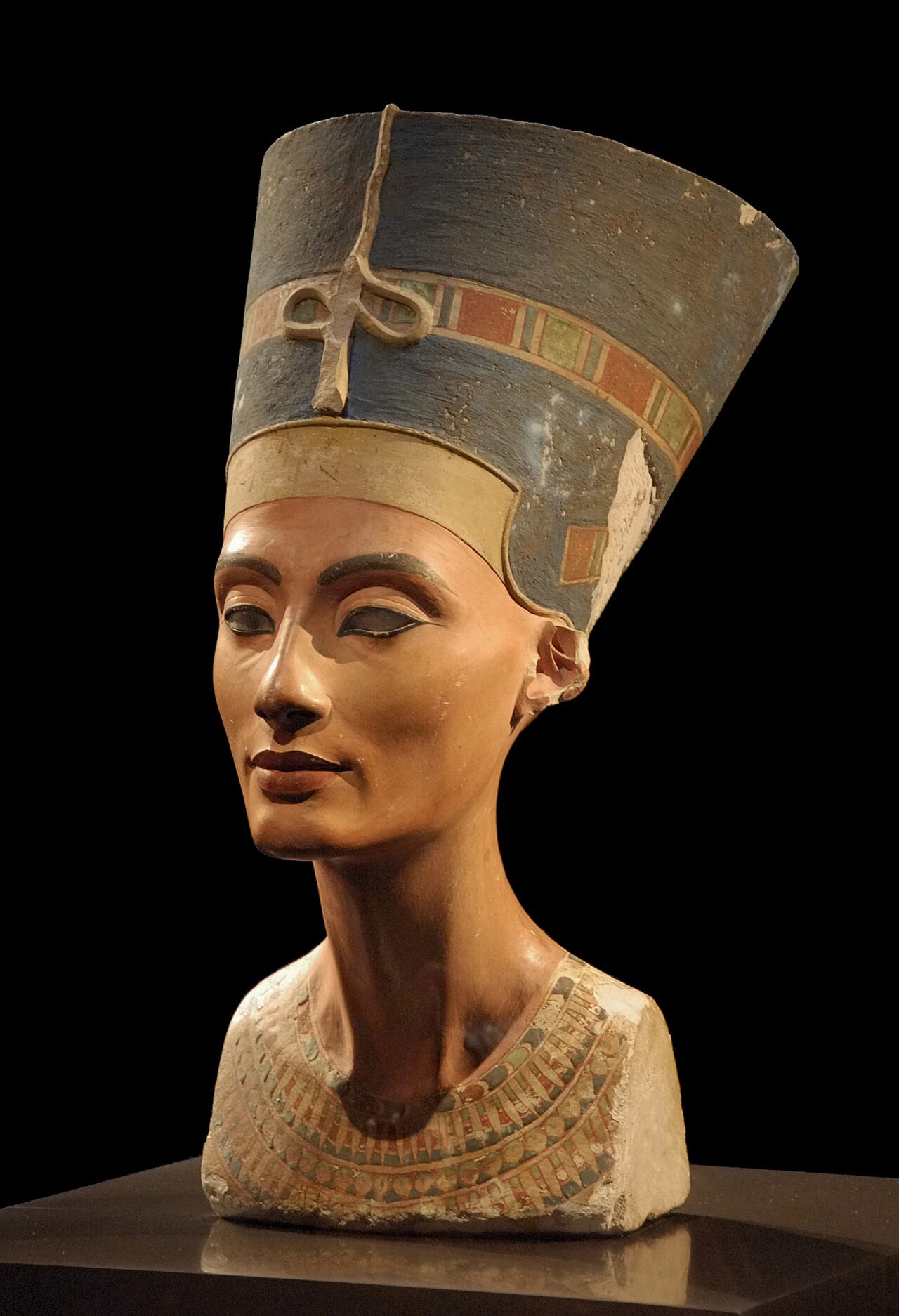 Sculpture
Primary source
Bust of Queen Nefertiti
Thutmose · c. 1345 BC
 Sculpture
Primary source
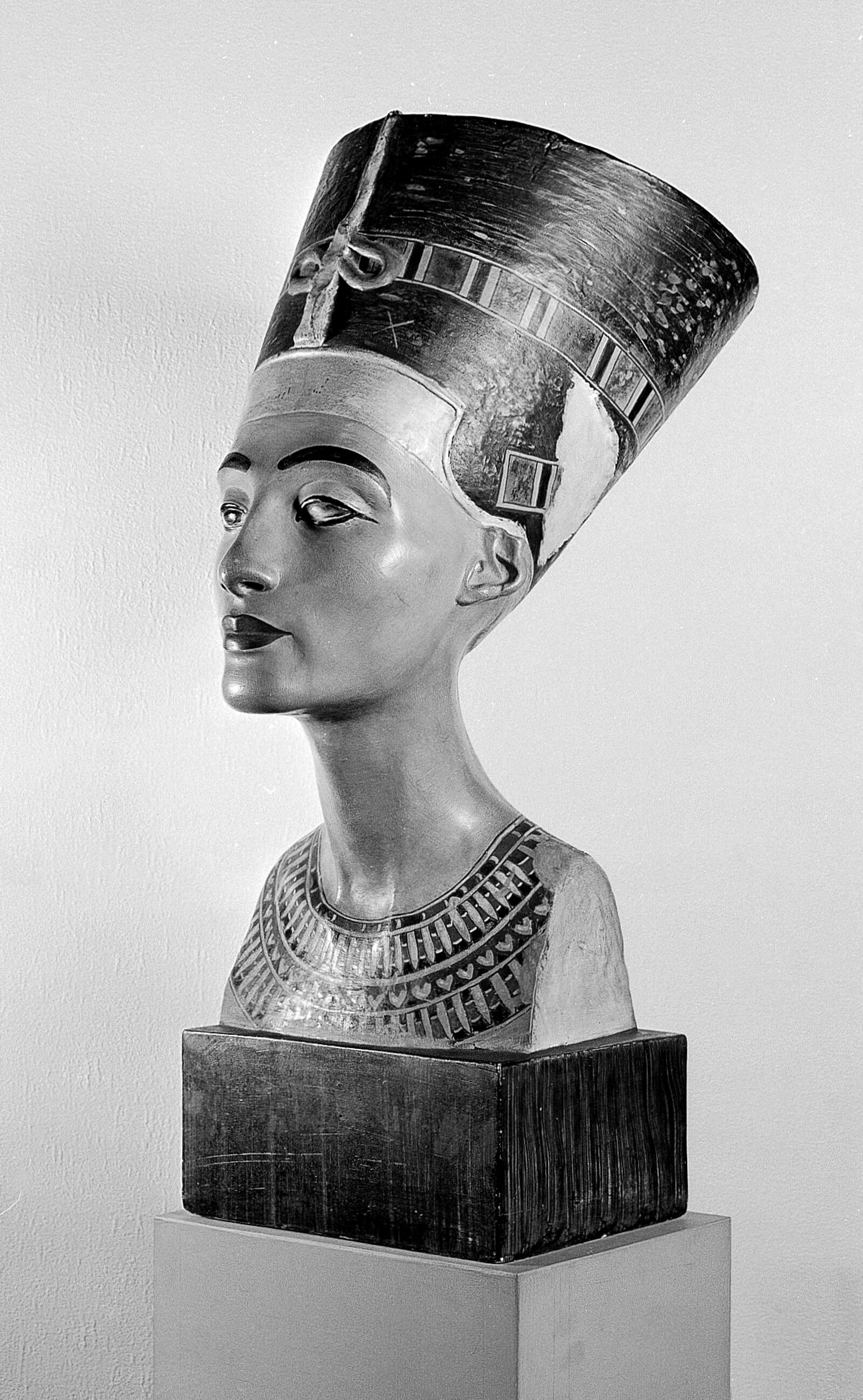
Figure of Nefertiti
 Sculpture
Primary source
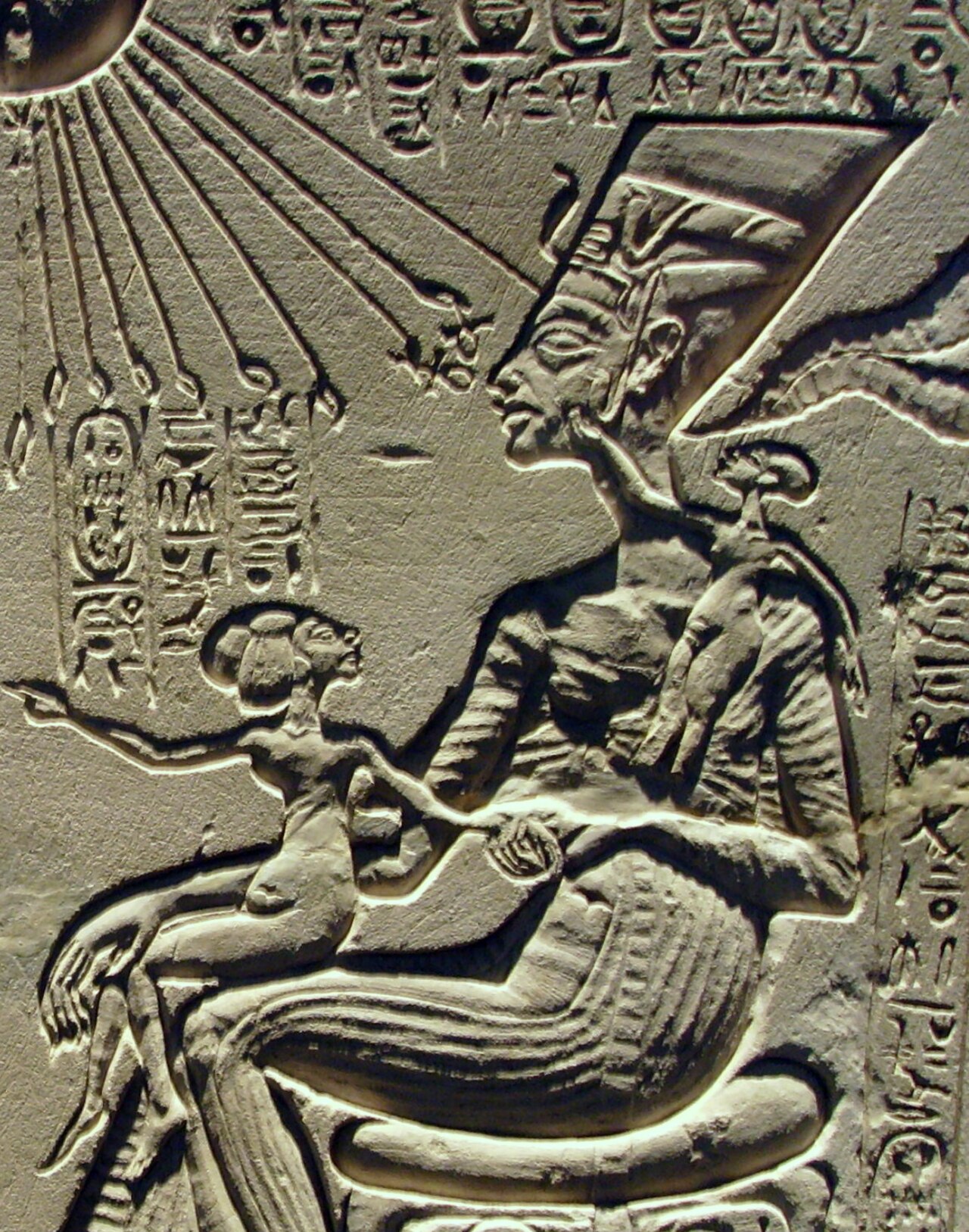
Akhenaten and His Family
c. 1352 BC
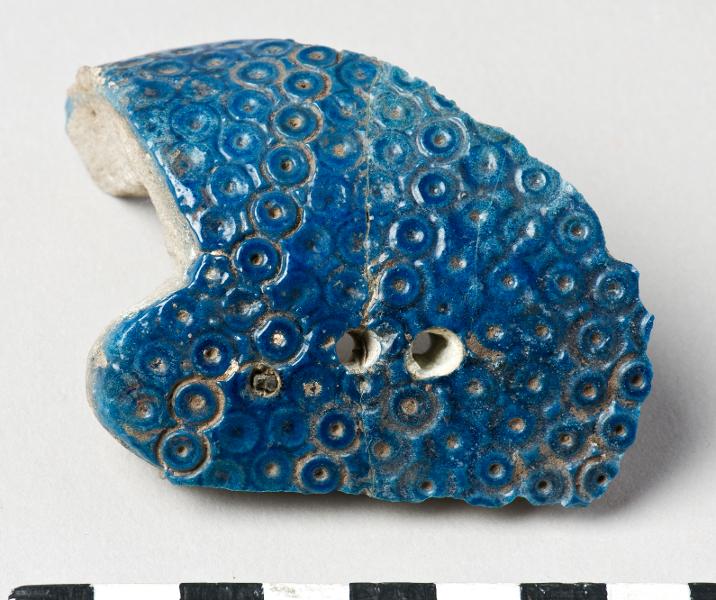 Sculpture
Primary source
Relief Fragment Showing the Blue Crown of Nefertiti
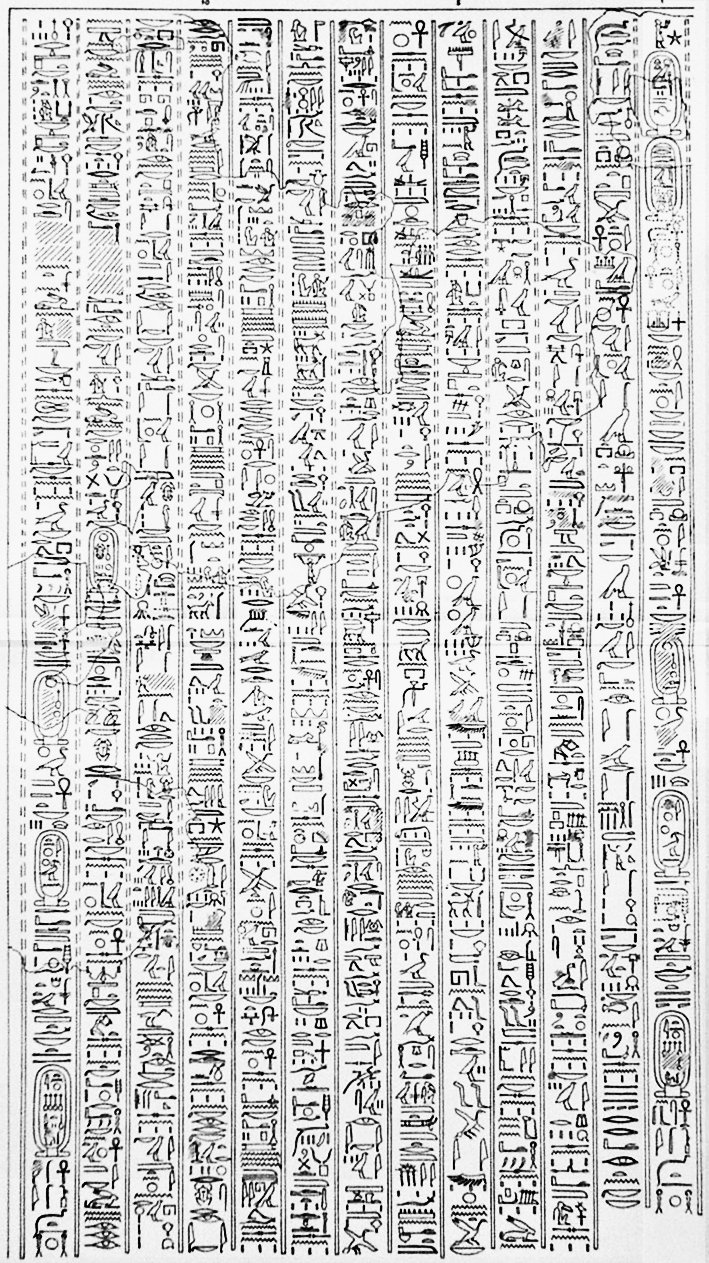 Document
Primary source
Great Hymn to the Aten
Akhenaten · c. 1350 BC
Ready when you are
Start chatting with Queen Nefereti now.
20 messages free · No credit card · Available in 50+ languages.