


Primary sourceSculpturec. 1345 BC
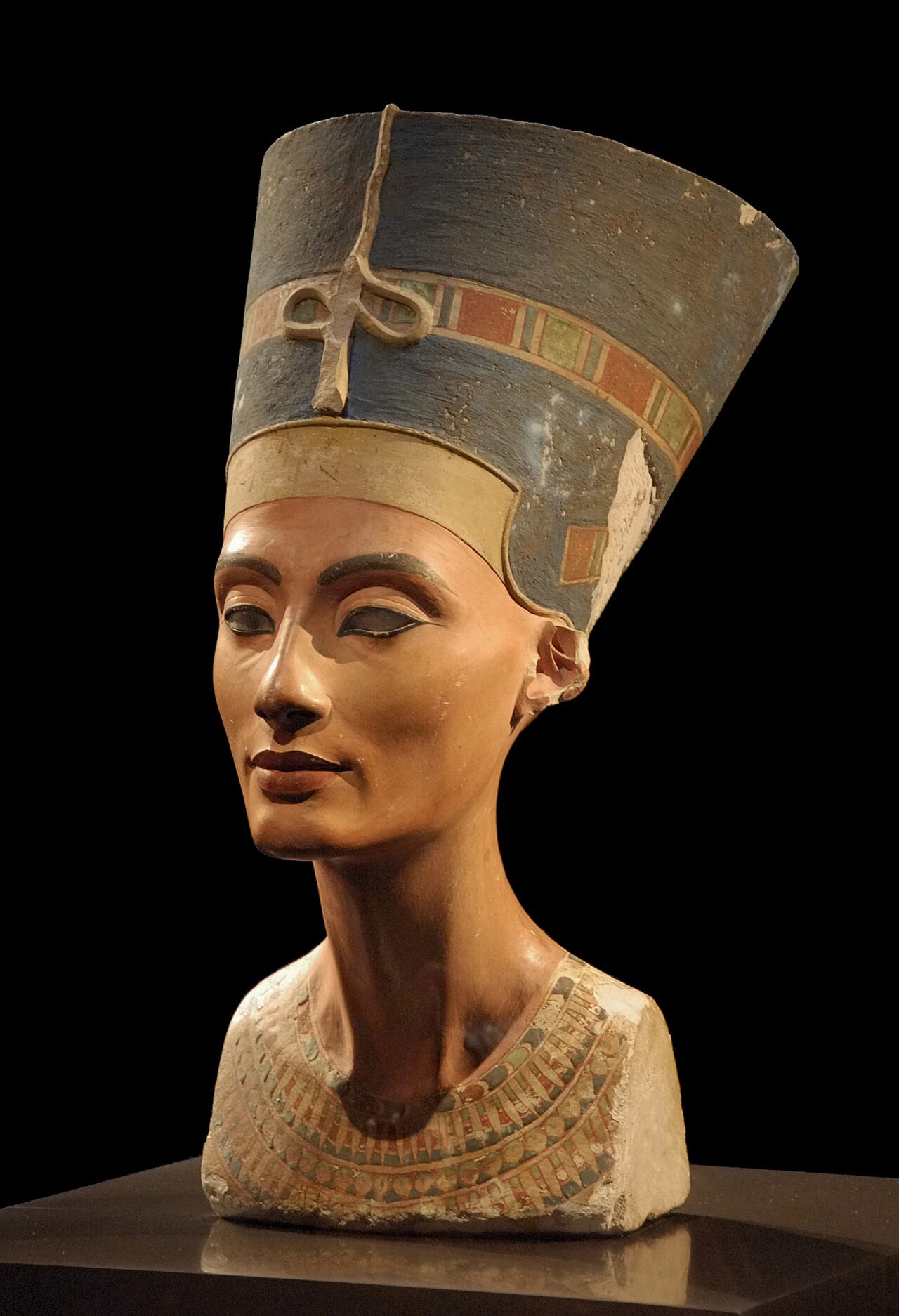
Bust of Queen Nefertiti
Thutmose · c. 1345 BC
A painted limestone bust of Nefertiti made in the workshop of the sculptor Thutmose, now one of the most famous images of the ancient world.
This workshop bust fixed the lasting image of Nefertiti as Great Royal Wife and became an icon of ancient beauty.
About this source
What it is
This painted limestone bust shows Queen Nefertiti wearing her flat-topped blue crown. It was made around 1345 BC in the workshop of the sculptor Thutmose at Amarna, Egypt, where it was found in 1912 by a German archaeological team led by Ludwig Borchardt. It is now held at the Neues Museum in Berlin.
Why it matters
The bust fixed the image of Nefertiti, Great Royal Wife of Pharaoh Akhenaten, as an icon of royal beauty, and its careful symmetry shows the idealised style of Amarna-period art. It is also at the centre of a long dispute between Egypt and Germany over its removal, raising questions about museums, colonialism and who owns the past.
Look closer
- What does the crown and the painted detail tell you about how royalty wanted to be seen?
- Why might a workshop model like this differ from a finished royal portrait?
- Why do you think Egypt and Germany still disagree about where this bust should be?
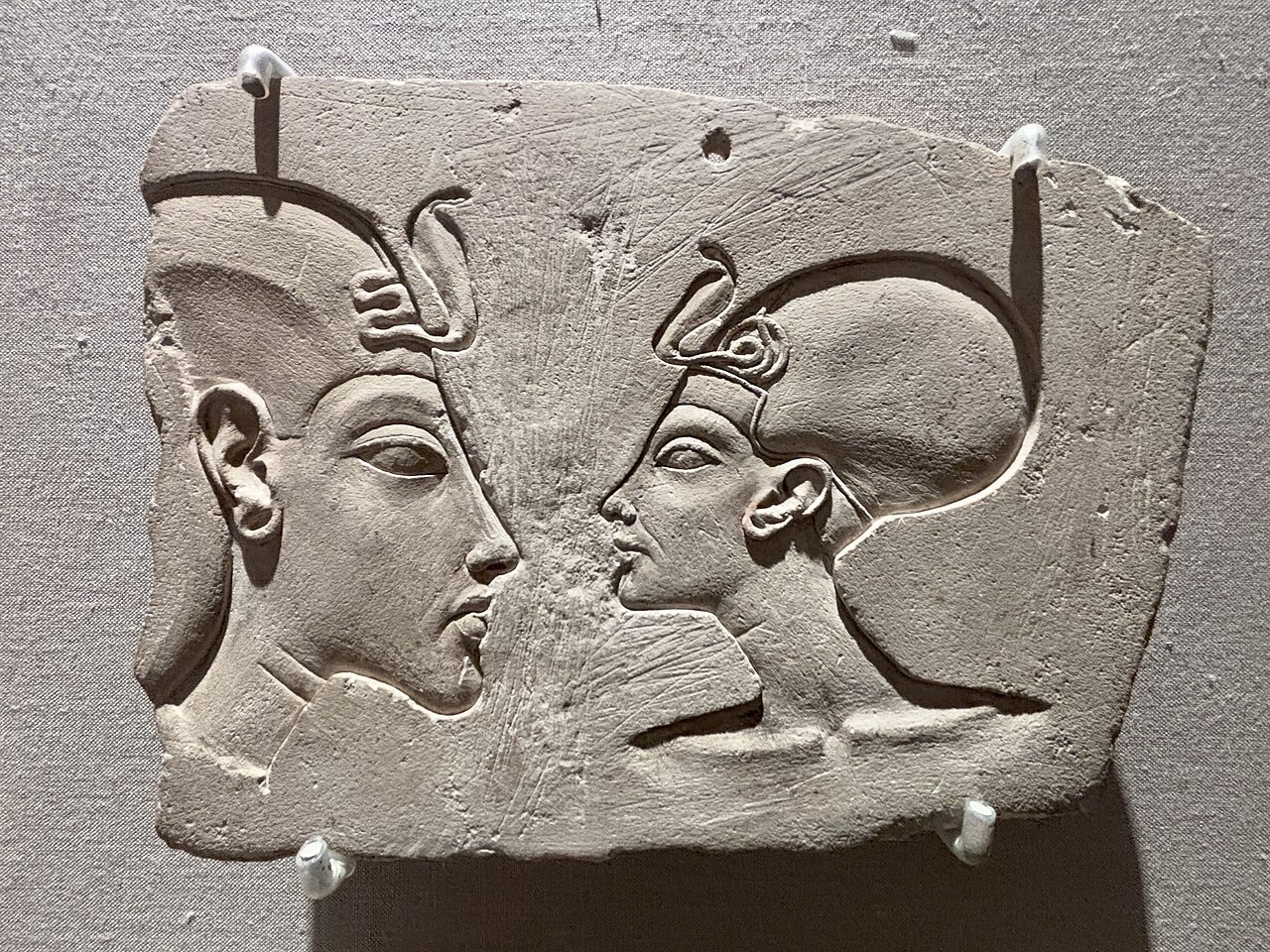
This sculpture is part of the curated material that grounds the AI version of Queen Nefereti on Humy.ai — when students ask about related events, the AI can quote it and cite it.
More Queen Nefereti sources
Meet the AI Queen Nefereti →
Ready when you are
Start chatting with Queen Nefereti now.
20 messages free · No credit card · Available in 50+ languages.