


Primary sourceSculpturec. 1400 BCE
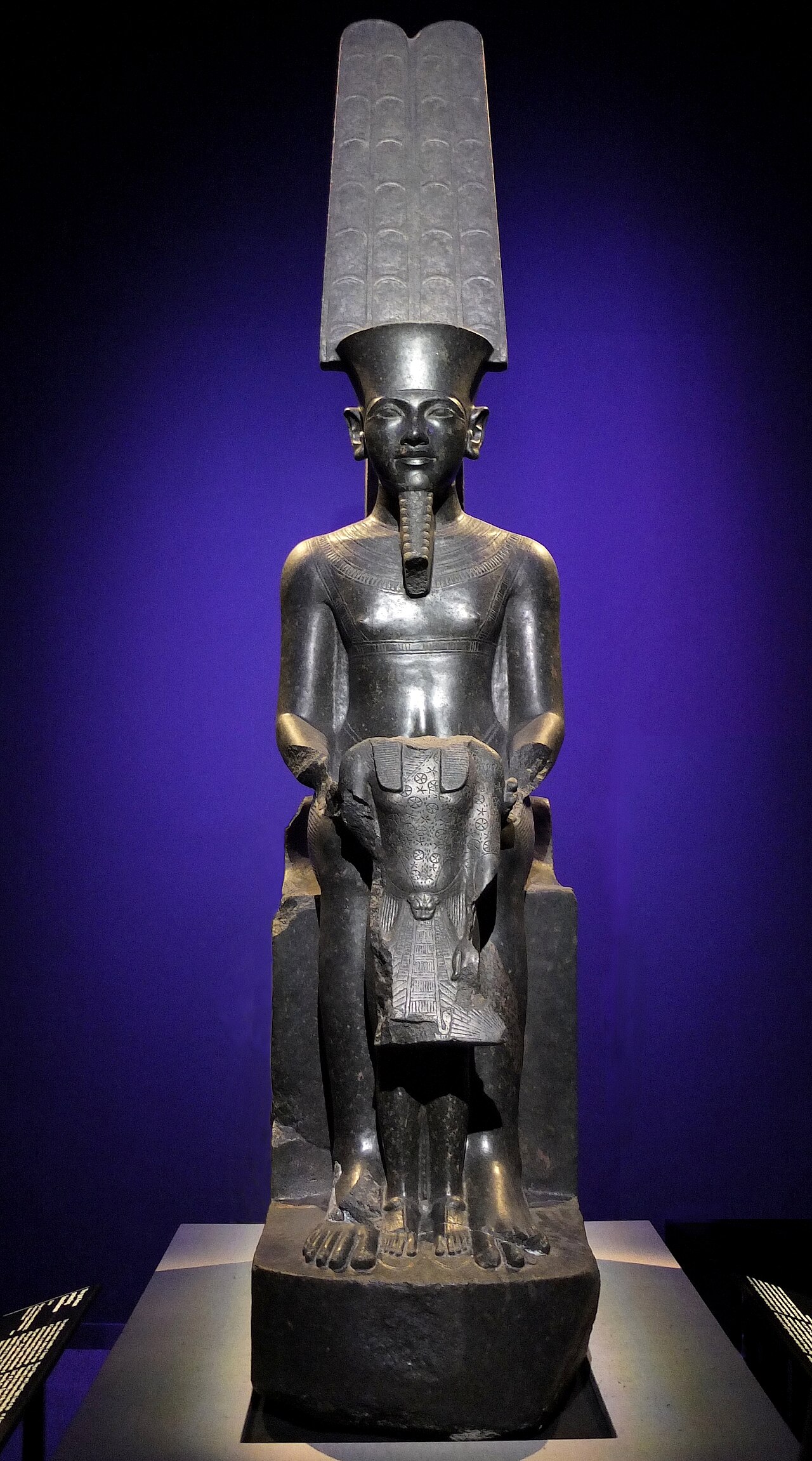
Amun Protecting Tutankhamun
c. 1400 BCE
A statue of the god Amun sheltering a small figure of Tutankhamun, later damaged by successors seeking to erase his memory.
The statue shows Amun protecting Tutankhamun, symbolizing his restoration of the god's worship after the Amarna period.
About this source
What it is
This stone statue, held by the Louvre's Department of Egyptian Antiquities, shows the god Amun seated and wearing a tall feathered crown, with a small standing figure of Tutankhamun in front of him. It dates from around the 14th century BCE.
Why it matters
The statue represents Tutankhamun's restoration of traditional religion after the Amarna period, when his father Akhenaten had promoted the god Aten instead of Amun. Later rulers broke the arms of Amun and damaged the head and arms of the king, because they associated Tutankhamun with the heretical Amarna period despite his efforts to restore Amun worship.
Look closer
- Why do you think later Egyptians damaged this statue instead of destroying it completely?
- What does the pose of Amun protecting the smaller king suggest about their relationship?
- How might this object help historians understand religious conflict in ancient Egypt?
This sculpture is part of the curated material that grounds the AI version of Tutankhamun on Humy.ai — when students ask about related events, the AI can quote it and cite it.
More Tutankhamun sources
Meet the AI Tutankhamun →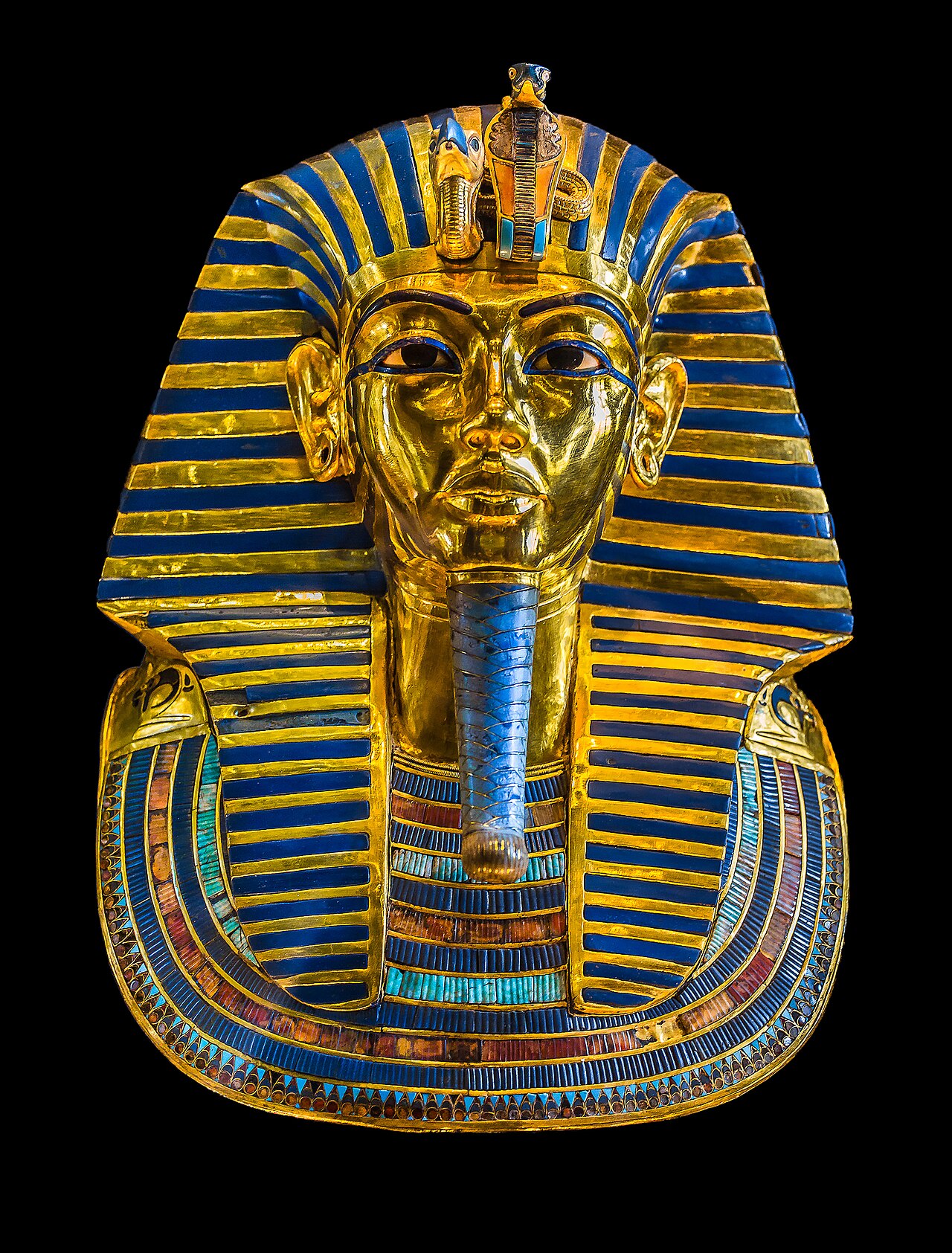 Artifact
Primary source
Mask of Tutankhamun
c. 1333 BCE
 Photograph
Primary source
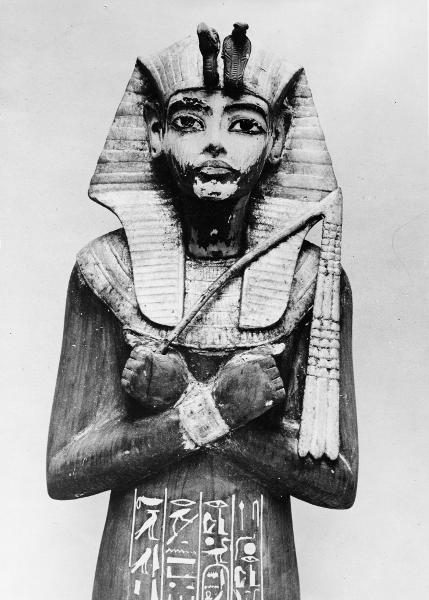
Photograph of Tutankhamun's Shawabti Figure
Harry Burton · 1920s
 Artifact
Primary source
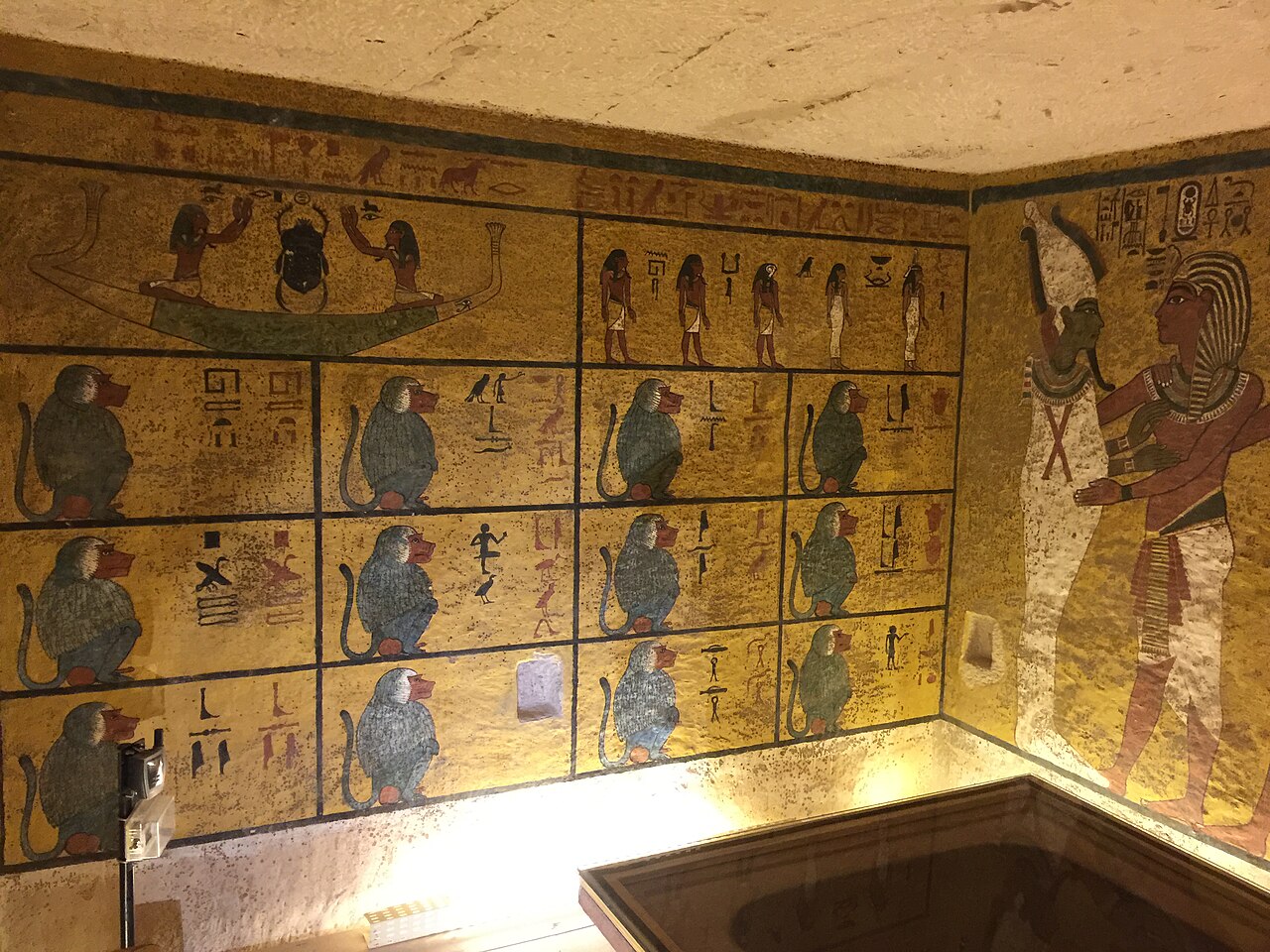
Tomb of Tutankhamun
14th century BCE
 Photograph
Primary source
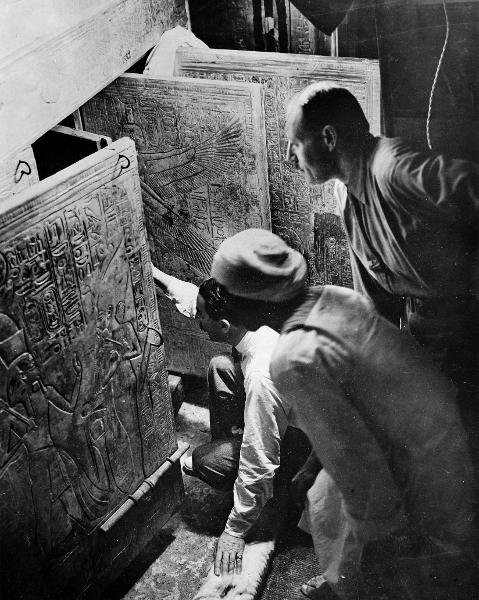
Opening the Doors of the Fourth Shrine in Tutankhamun's Tomb
Harry Burton · 1920s
 Document
Primary source
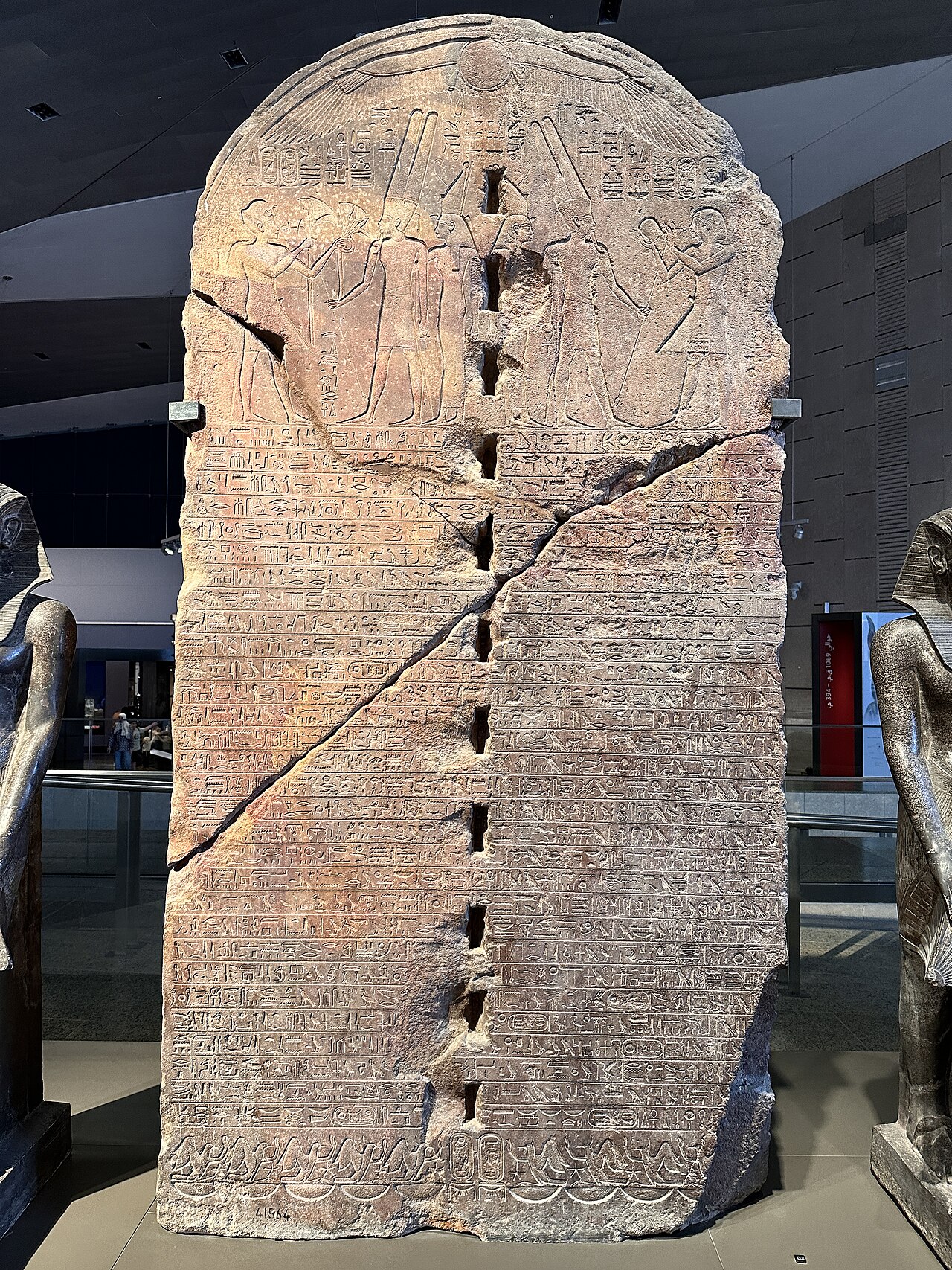
Restoration Stela
Tutankhamun · c. 1326 BCE
Ready when you are
Start chatting with Tutankhamun now.
20 messages free · No credit card · Available in 50+ languages.