


Secondary sourcePainting
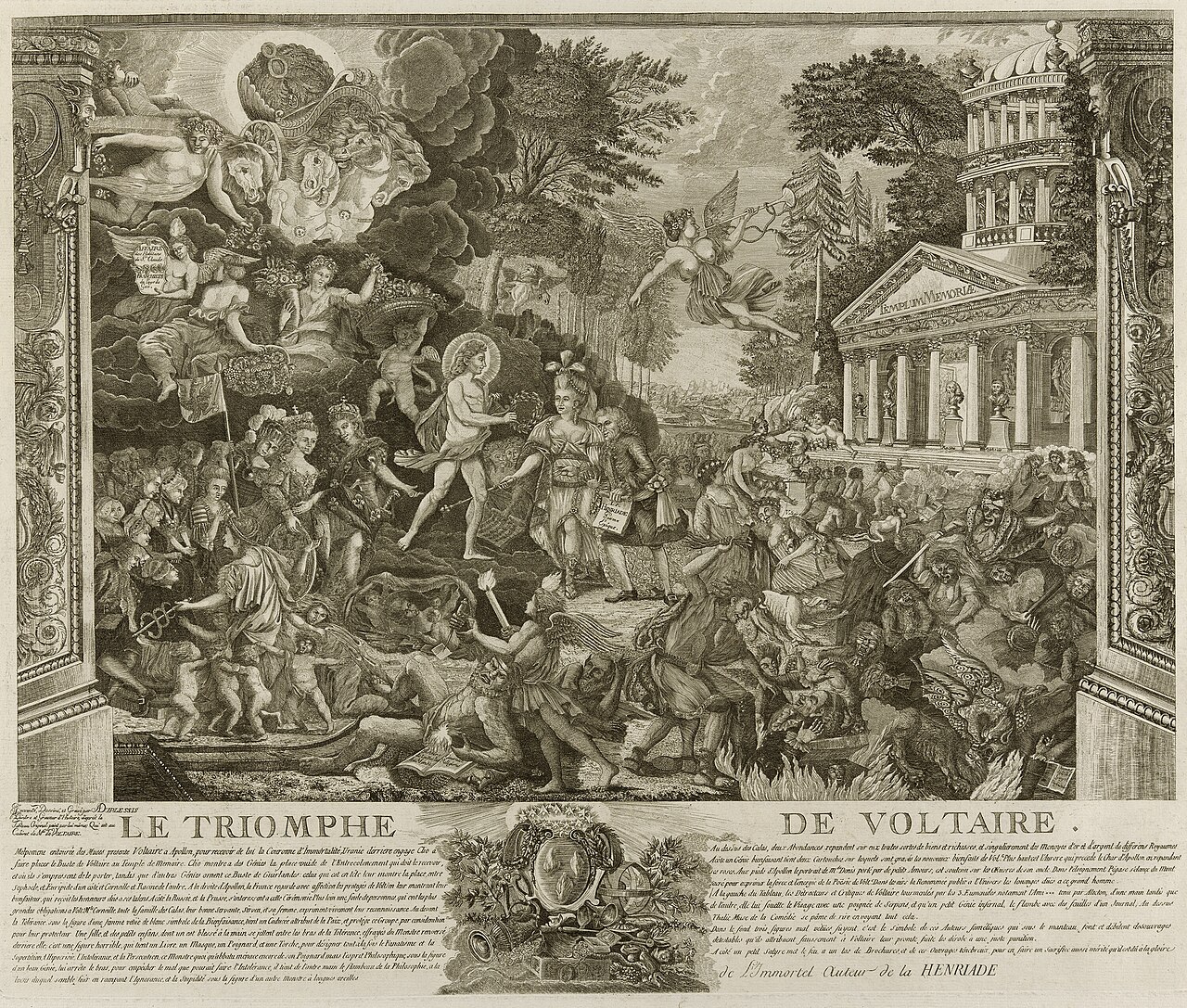
Apotheose de Voltaire
Alexandre Duplessis
An engraving showing Voltaire's posthumous 'apotheosis', celebrating him as a near-sacred figure of Enlightenment memory.
This posthumous allegory shows how Voltaire was celebrated and mythologised after his death.
About this source
What it is
This engraving, based on a painting by Alexandre Duplessis, shows an allegorical scene of Voltaire's 'triumph' or apotheosis. The original painting is kept at the Château de Voltaire at Ferney, and this print is held by the Art Institute of Chicago.
Why it matters
After Voltaire's death, he became a symbol of the Enlightenment and, especially around the time of the French Revolution, was celebrated almost as a secular saint of reason. Images like this, showing him crowned and led toward a 'Temple of Memory', reveal how later generations shaped his legacy for their own political purposes.
Look closer
- What symbols in the image (the crown, the temple, the procession) suggest honour and memory?
- Why might people want to create such an idealised image of a writer after his death?
- What does this image tell us about Voltaire's reputation, rather than about his actual life?
This painting is part of the curated material that grounds the AI version of Voltaire on Humy.ai — when students ask about related events, the AI can quote it and cite it.
More Voltaire sources
Meet the AI Voltaire →
Ready when you are
Start chatting with Voltaire now.
20 messages free · No credit card · Available in 50+ languages.