


Primary sourceSculpturec. 51–30 BCE
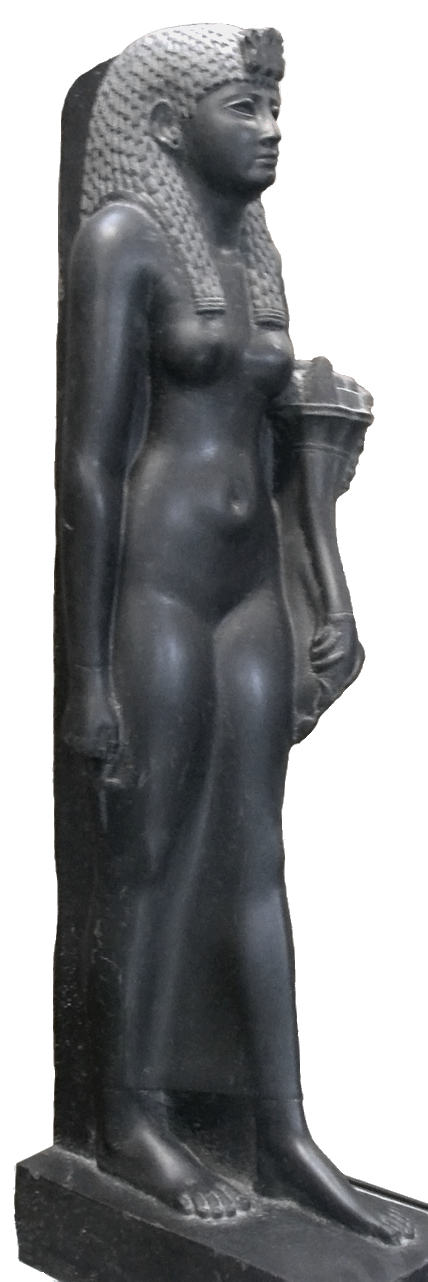
Black Basalt Statue of Cleopatra VII
Egyptian workshop · c. 51–30 BCE
A large Egyptian-style statue thought to show Cleopatra as a goddess-queen, holding a cornucopia and wearing three cobras.
A statue possibly representing Cleopatra in traditional Egyptian goddess-queen style, debated by scholars.
About this source
What it is
This is a Ptolemaic black basalt statue about 104 centimeters tall, made by an Egyptian workshop sometime between 51 and 30 BCE. It is held in the Hermitage Museum in Saint Petersburg.
Why it matters
The statue was long thought to show an earlier queen, Arsinoe II, but its three cobra headdress and double cornucopia match features linked to Cleopatra on coins, leading some scholars to connect it to her. It was chosen to show how Cleopatra could be presented in native Egyptian sculptural tradition as a goddess-queen. One scholar has argued such idealized Egyptian portraits do not show her real facial features.
Look closer
- Why might historians disagree about who this statue actually shows?
- What clues besides the face might help identify a statue like this?
- If this is an idealized image, what might it NOT tell us about Cleopatra?
This sculpture is part of the curated material that grounds the AI version of Cleopatra on Humy.ai — when students ask about related events, the AI can quote it and cite it.
More Cleopatra sources
Meet the AI Cleopatra →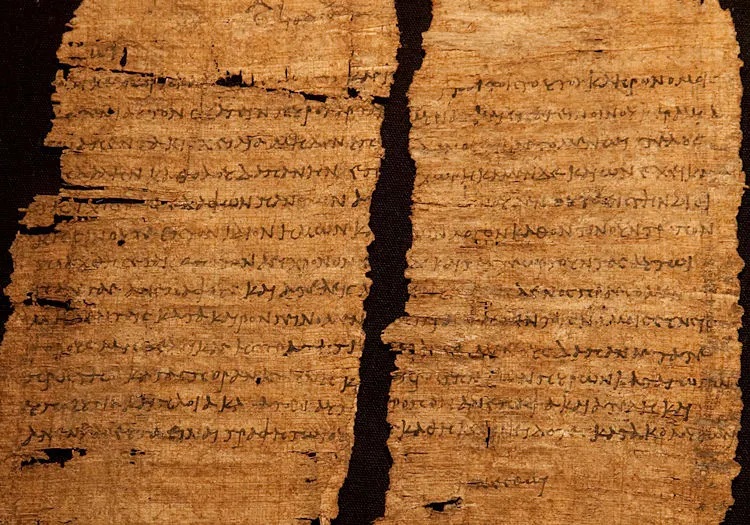 Document
Primary source
Papyrus with Signature of Cleopatra VII
Ptolemaic scribe; possibly countersigned by Cleopatra VII · February 33 BCE
 Painting
Secondary source
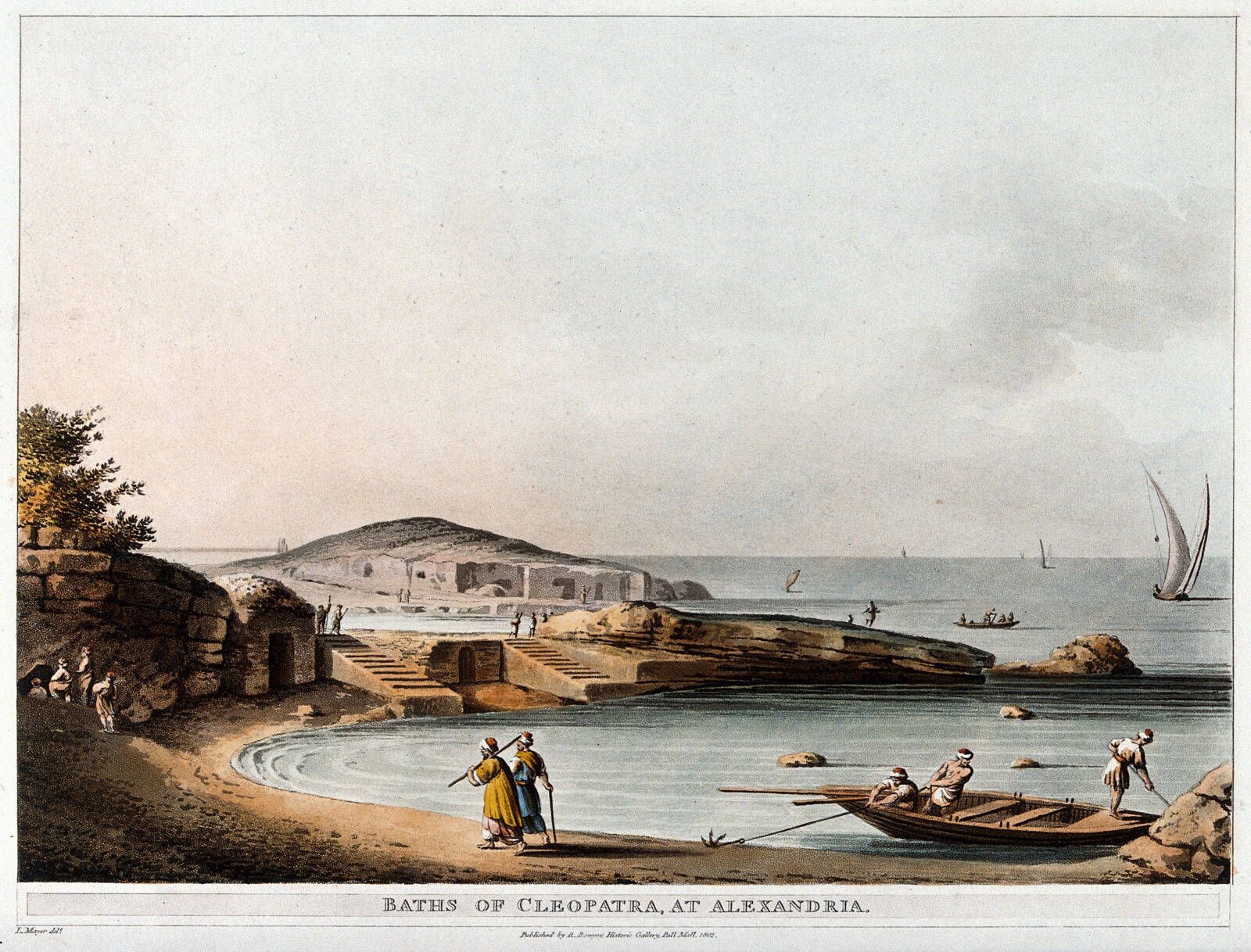
Baths of Cleopatra, at Alexandria
Luigi Mayer · 1802
 Sculpture
Secondary source
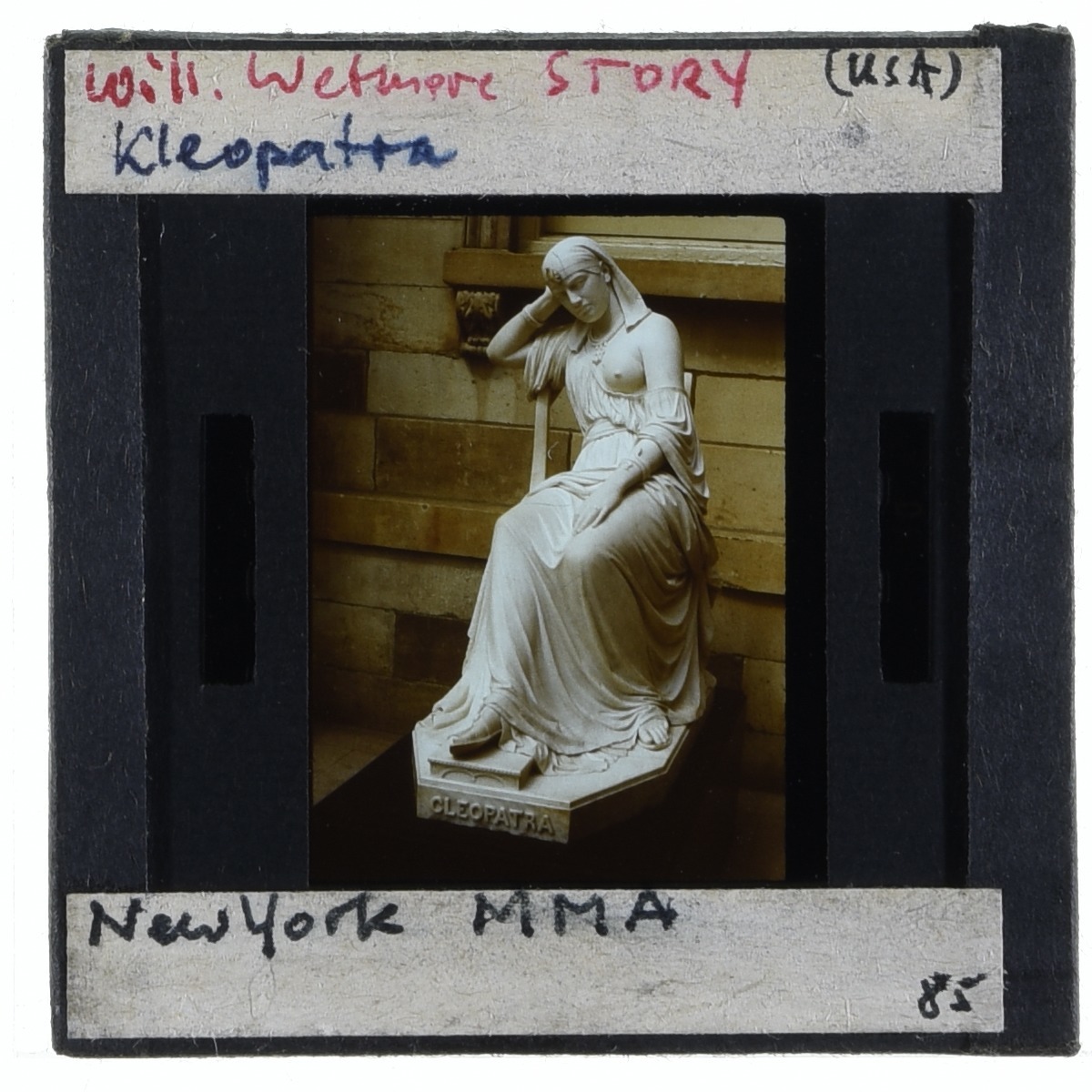
Cleopatra
William Wetmore Story
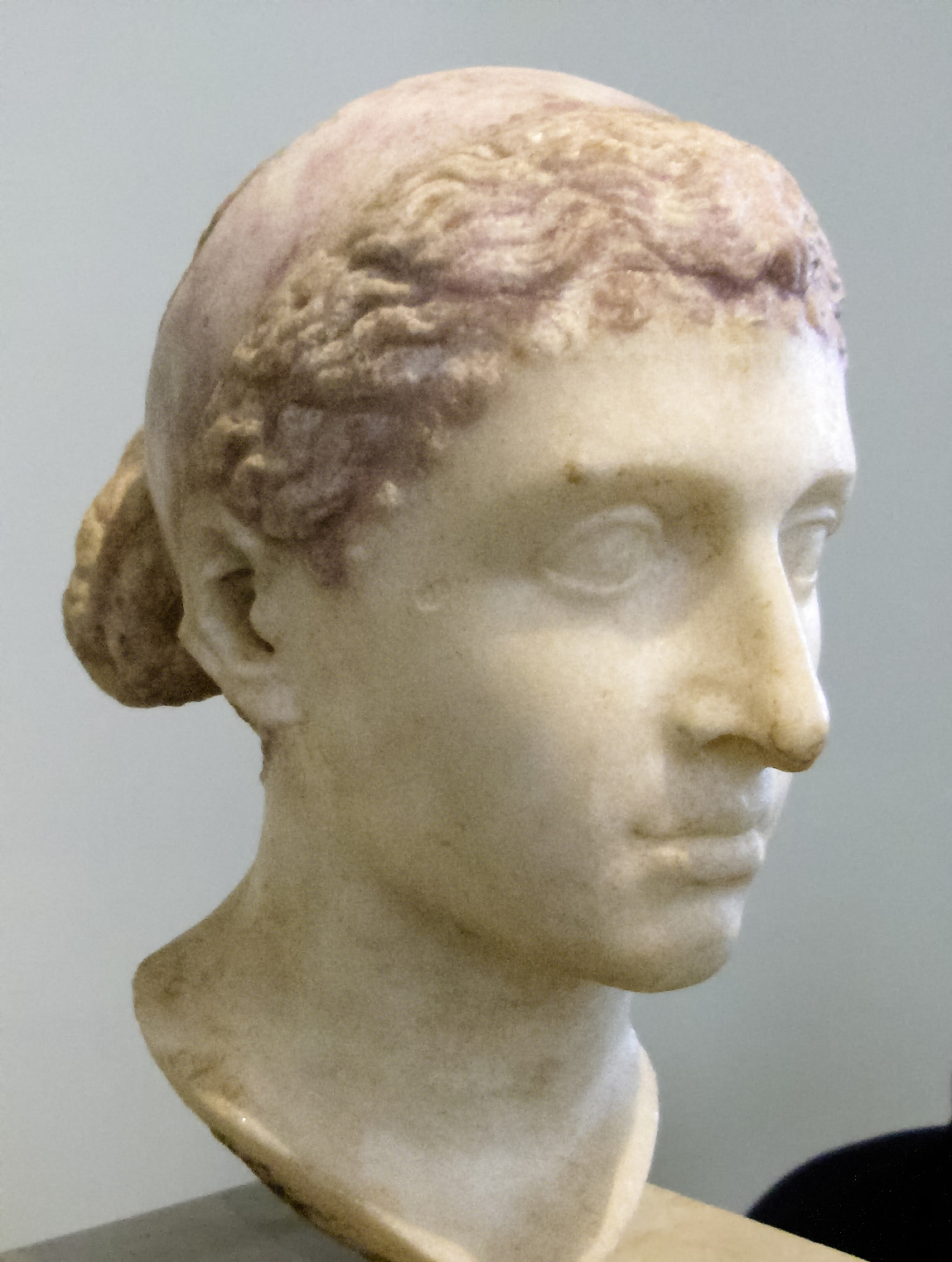 Sculpture
Primary source
Portrait of Cleopatra (Berlin Bust)
c. 40-30 BCE
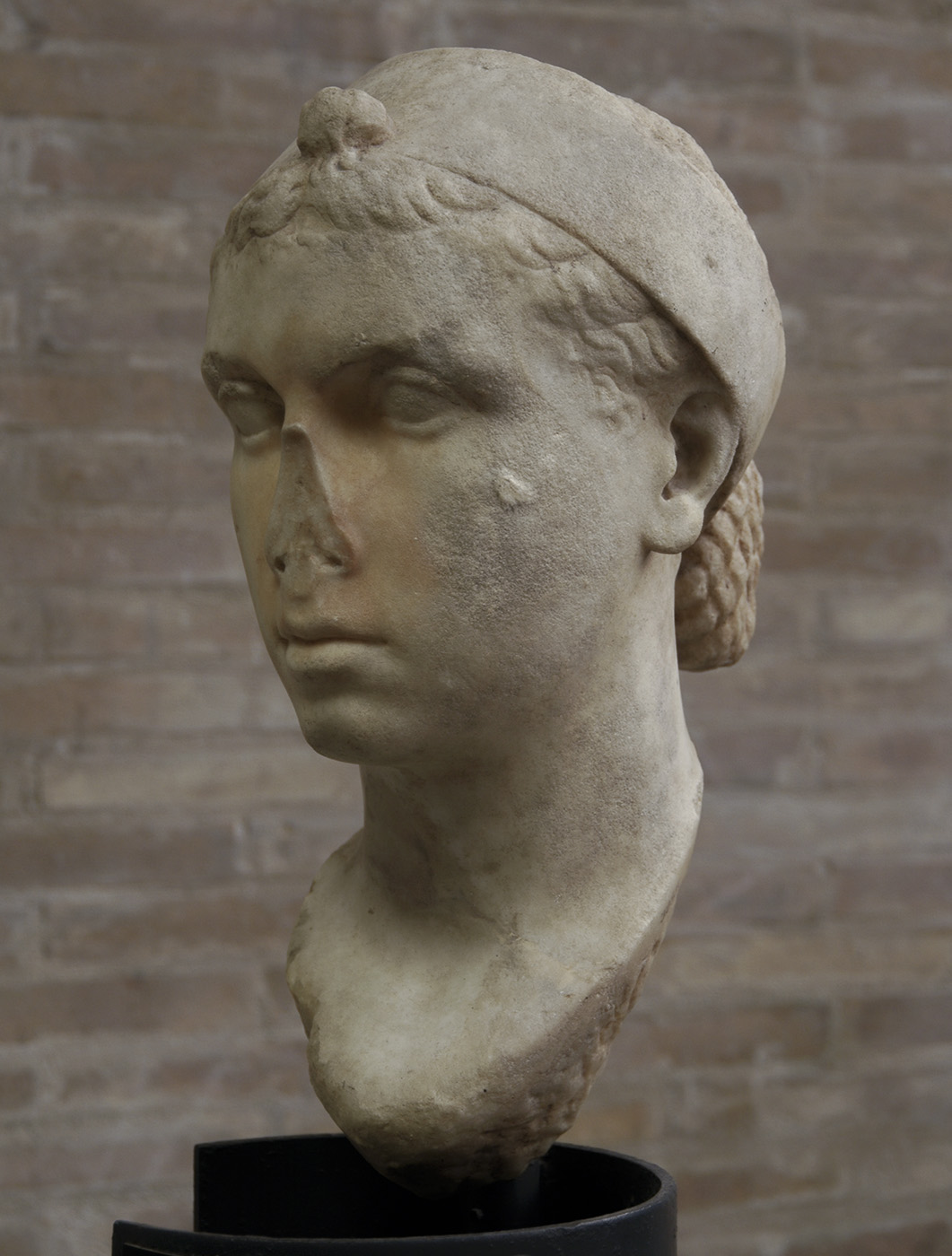 Sculpture
Primary source
Head-Portrait of Cleopatra VII (Vatican Bust)
c. 40-30 BCE
Ready when you are
Start chatting with Cleopatra now.
20 messages free · No credit card · Available in 50+ languages.