


Secondary sourcePainting1887
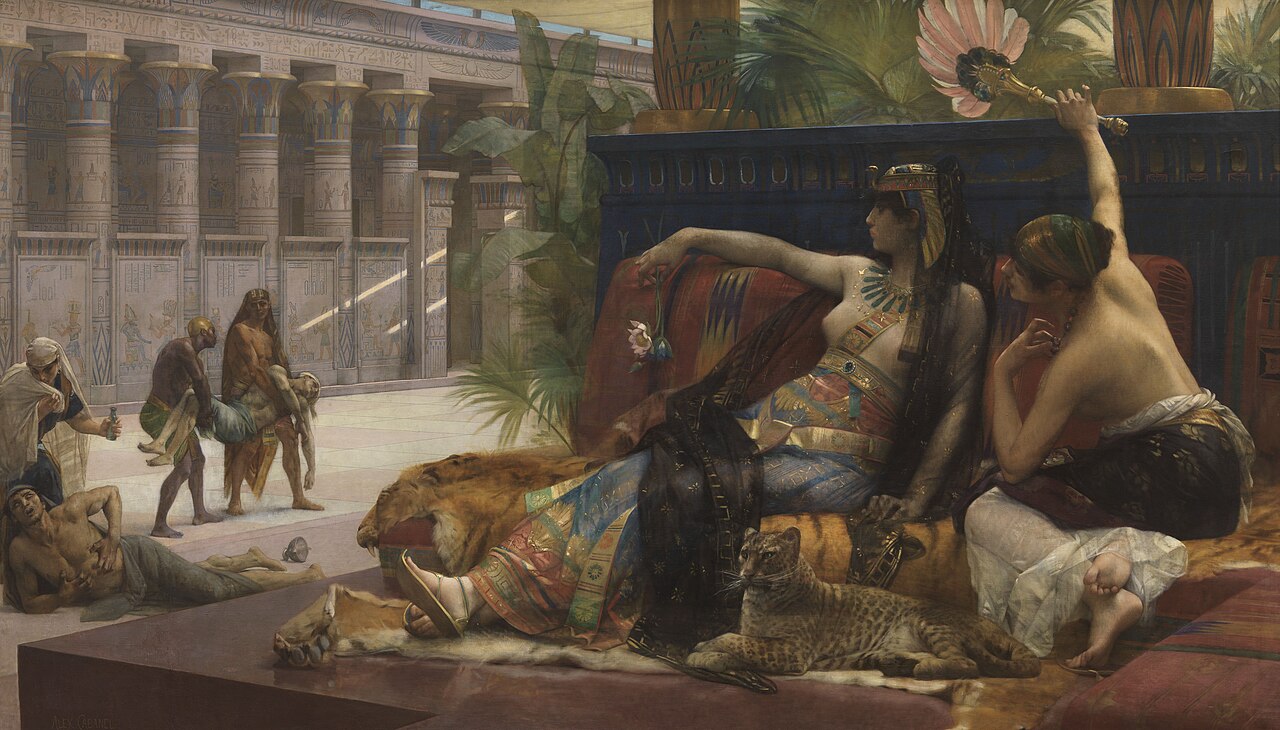
Cleopatra Testing Poisons on Condemned Prisoners
Alexandre Cabanel · 1887
An 1887 Orientalist painting by Alexandre Cabanel showing Cleopatra watching prisoners die from poisons she is testing, based on an episode in Plutarch.
This painting reflects how 19th-century Orientalist art reimagined Cleopatra as a cruel, exotic femme fatale.
About this source
What it is
This 1887 painting by French artist Alexandre Cabanel is held by the Royal Museum of Fine Arts Antwerp. It shows Cleopatra reclining while watching condemned prisoners suffer the effects of poisons, a scene drawn from Plutarch's biography of Mark Antony.
Why it matters
The painting is a famous example of 19th-century Orientalism, a style in which European artists imagined the ancient Middle East and Egypt as exotic and often cruel or sensual. It shows how Cleopatra was reimagined centuries later as a dangerous, cold femme fatale.
Look closer
- What details make this scene feel distant, 'exotic', or dramatic to a 19th-century viewer?
- How does Cleopatra's expression and pose compare with the suffering shown on the left side of the painting?
- Why might a 19th-century European audience have been drawn to this kind of image of Cleopatra?
This painting is part of the curated material that grounds the AI version of Cleopatra on Humy.ai — when students ask about related events, the AI can quote it and cite it.
More Cleopatra sources
Meet the AI Cleopatra →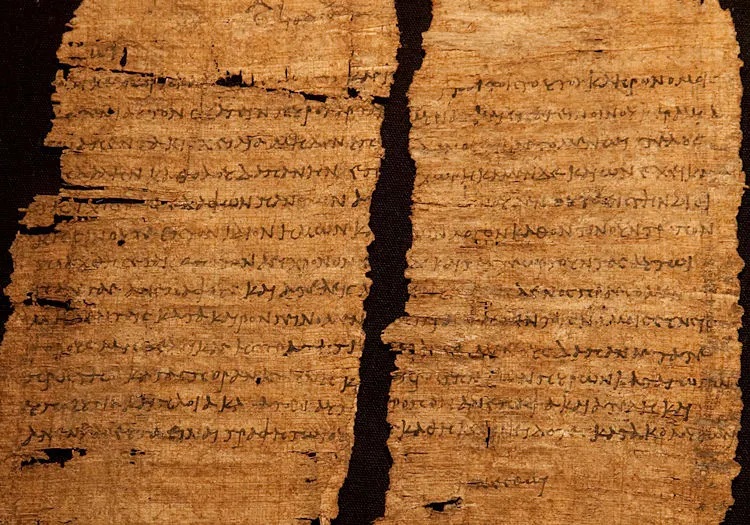 Document
Primary source
Papyrus with Signature of Cleopatra VII
Ptolemaic scribe; possibly countersigned by Cleopatra VII · February 33 BCE
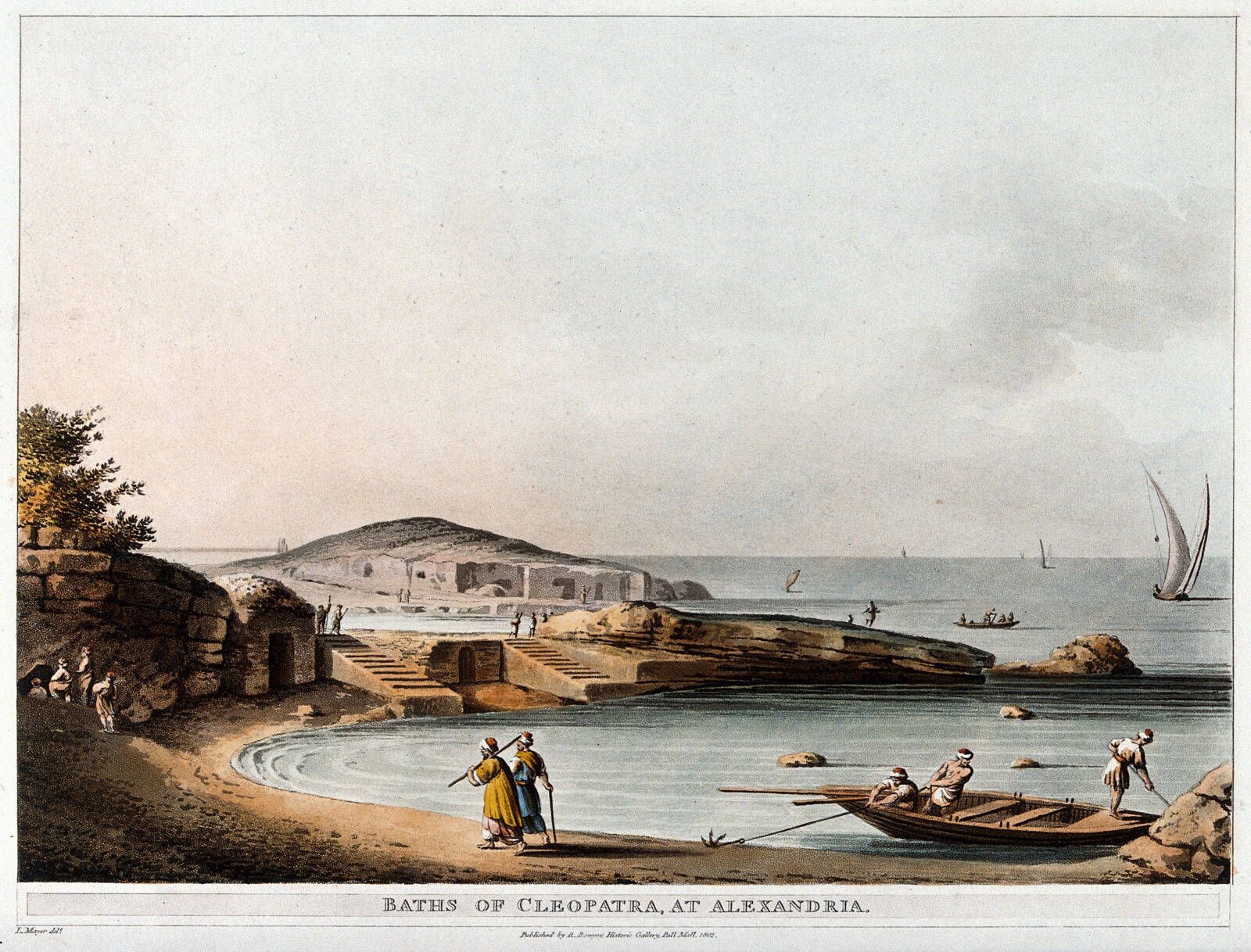 Painting
Secondary source
Baths of Cleopatra, at Alexandria
Luigi Mayer · 1802
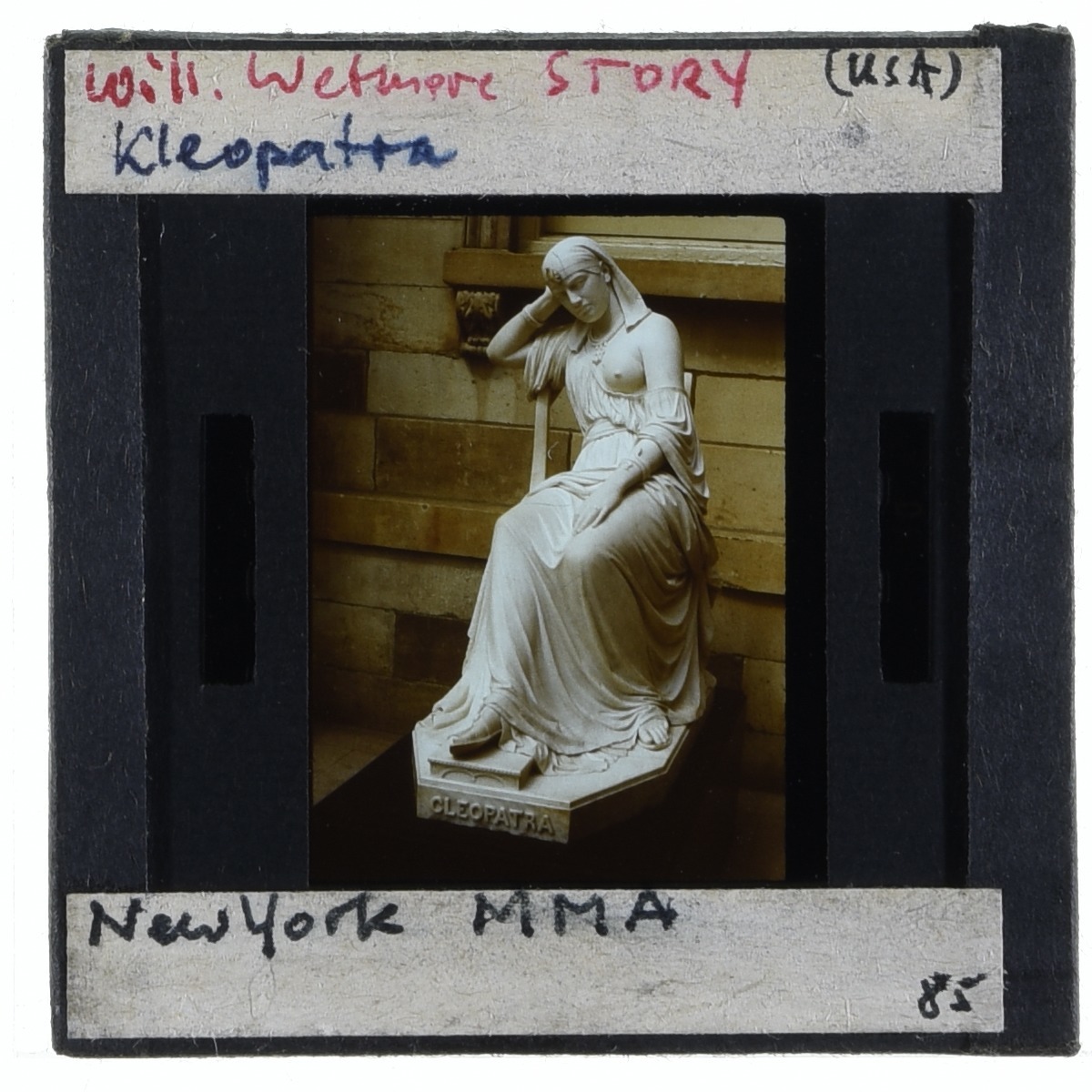 Sculpture
Secondary source
Cleopatra
William Wetmore Story
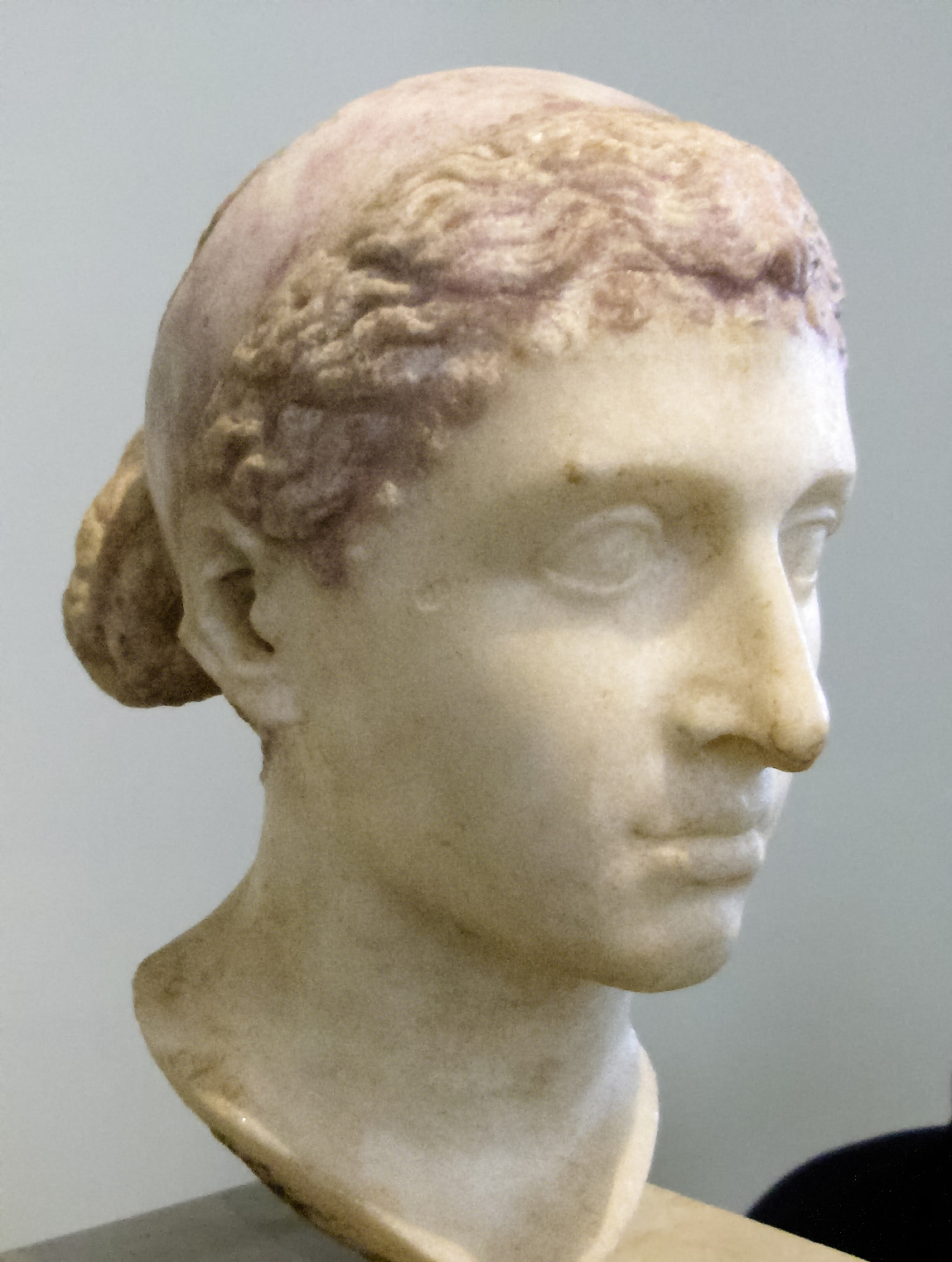 Sculpture
Primary source
Portrait of Cleopatra (Berlin Bust)
c. 40-30 BCE
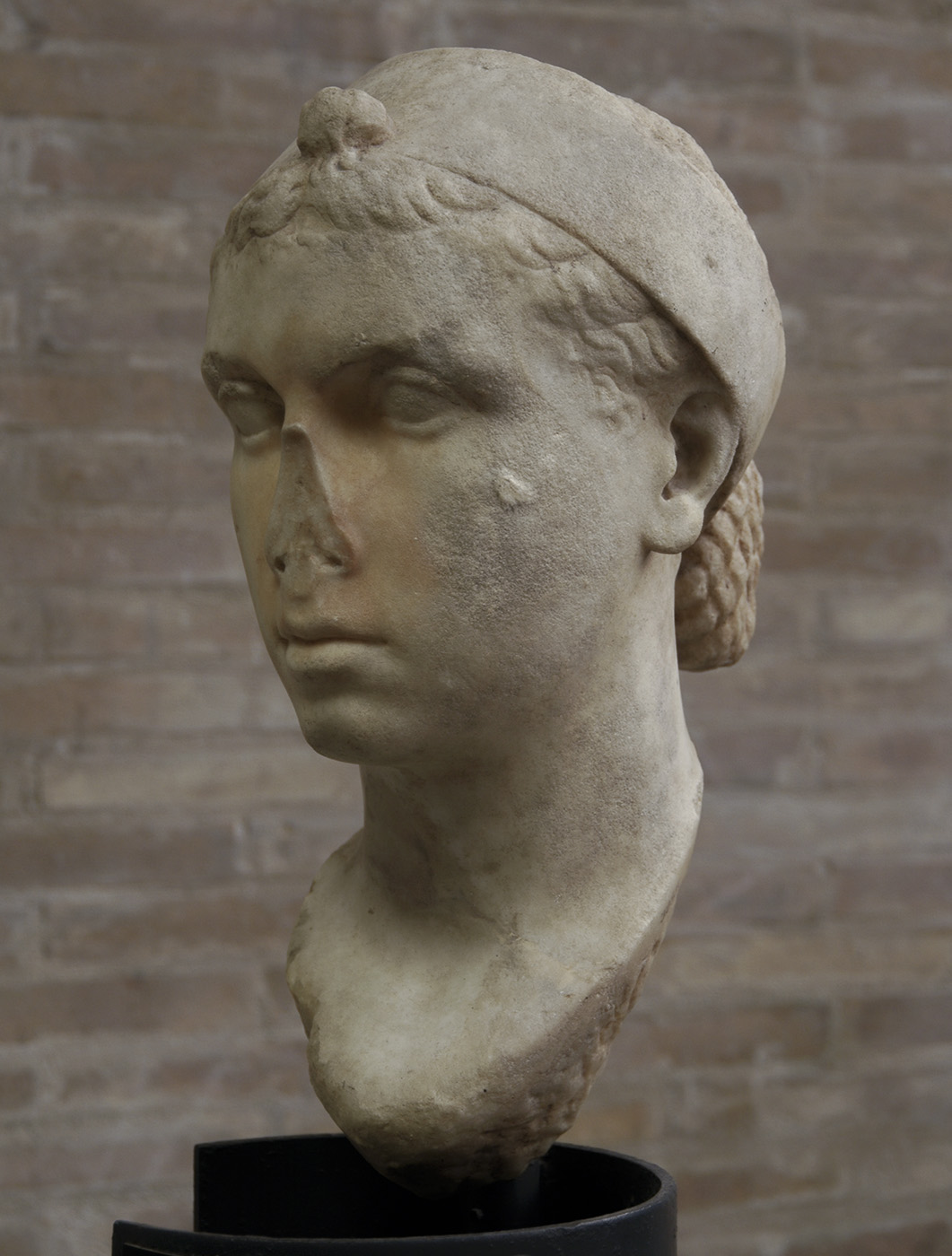 Sculpture
Primary source
Head-Portrait of Cleopatra VII (Vatican Bust)
c. 40-30 BCE
Ready when you are
Start chatting with Cleopatra now.
20 messages free · No credit card · Available in 50+ languages.