


Secondary sourcePainting19th century
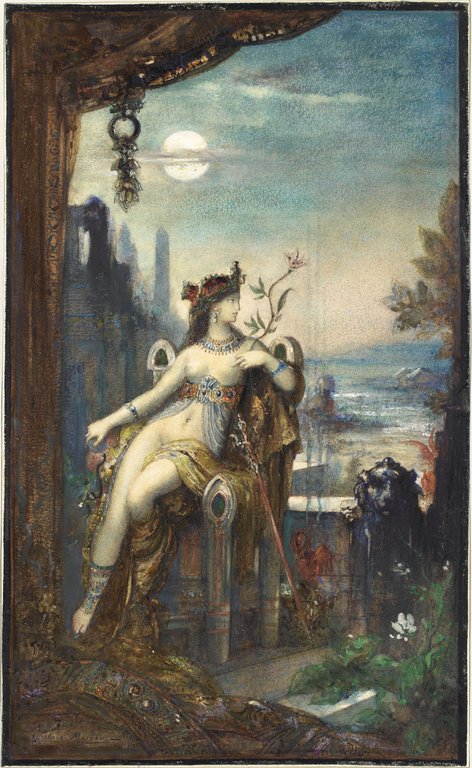
Cléopâtre seated on a high throne
Gustave Moreau · 19th century
A 19th-century watercolor-style drawing by Gustave Moreau imagining Cleopatra enthroned at night, part of the long tradition of artists reinventing her image.
An imagined later portrait of Cleopatra, showing how artists centuries after her death pictured the queen.
About this source
What it is
This is a drawing by the French artist Gustave Moreau, made in the nineteenth century. It shows a woman seated on a tall throne-like pedestal on a terrace at night, wearing jeweled headdress and jewelry, holding a flowering branch, with ruins and a moonlit sea in the background.
Why it matters
Moreau never knew Cleopatra; he lived about two thousand years after her. This drawing shows how nineteenth-century artists imagined the queen of Egypt as a symbol of exotic luxury and mystery, mixing fantasy with scraps of ancient history. It tells us more about European art of Moreau's time than about the real Cleopatra.
Look closer
- What details in the drawing seem based on history, and what seems invented?
- Why might an artist choose to show Cleopatra partly nude and alone at night?
- What mood does the setting create, and why?
This painting is part of the curated material that grounds the AI version of Cleopatra on Humy.ai — when students ask about related events, the AI can quote it and cite it.
More Cleopatra sources
Meet the AI Cleopatra →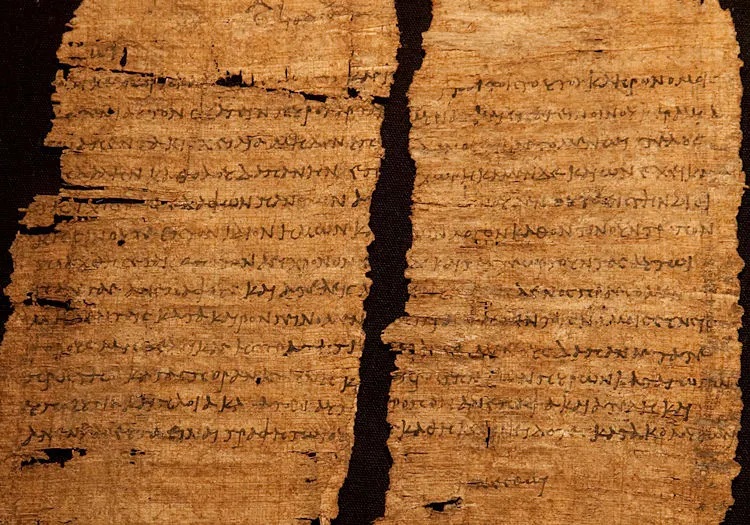 Document
Primary source
Papyrus with Signature of Cleopatra VII
Ptolemaic scribe; possibly countersigned by Cleopatra VII · February 33 BCE
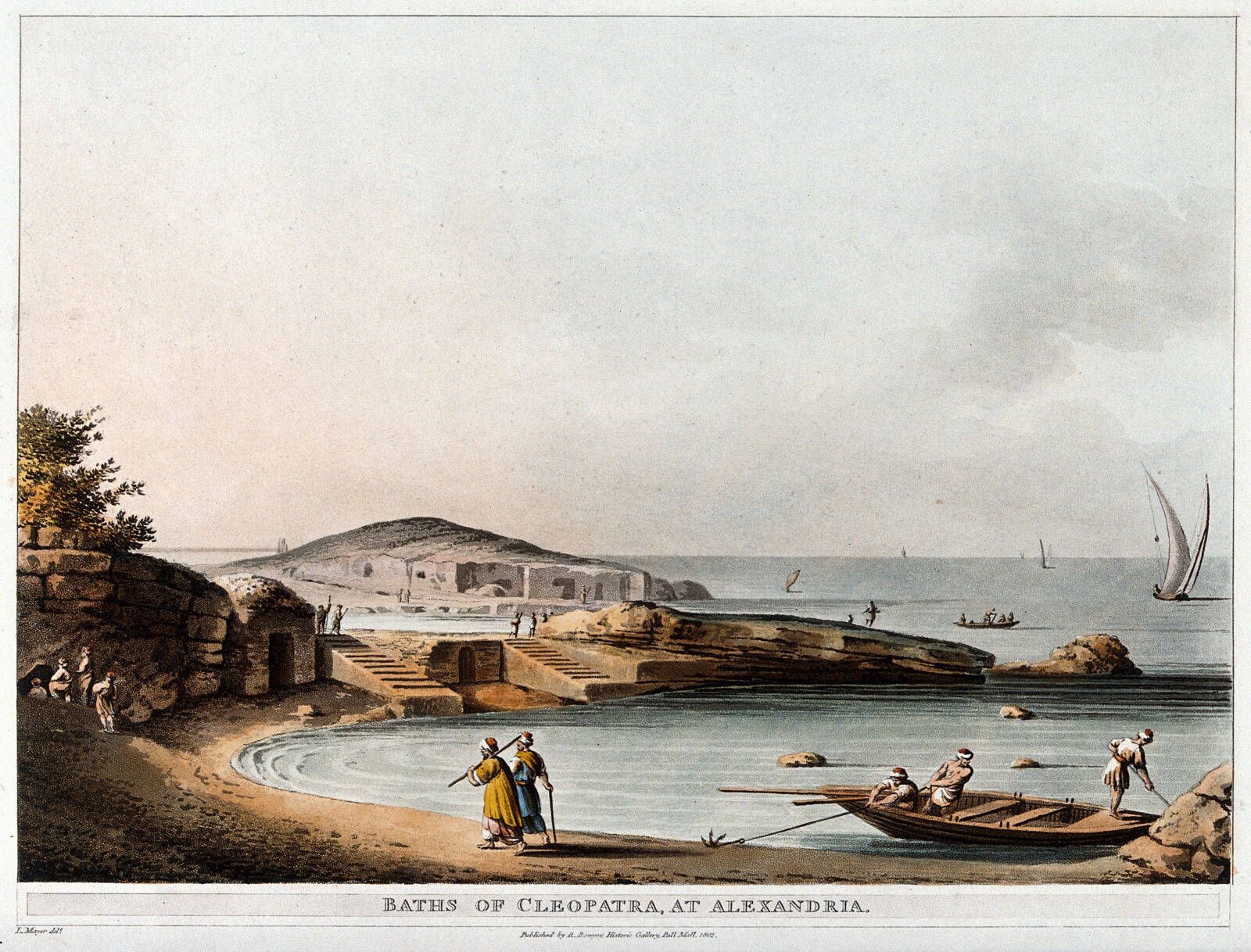 Painting
Secondary source
Baths of Cleopatra, at Alexandria
Luigi Mayer · 1802
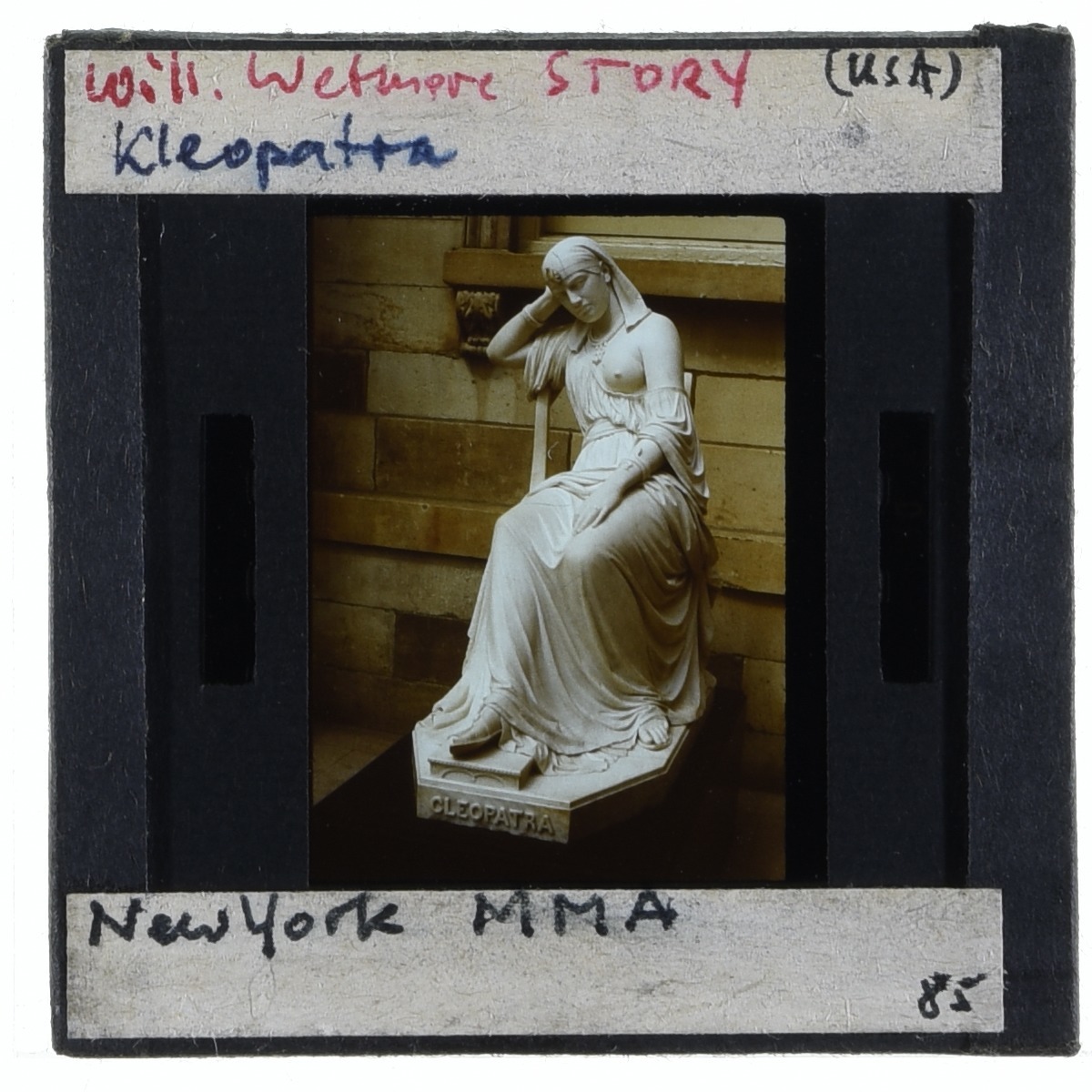 Sculpture
Secondary source
Cleopatra
William Wetmore Story
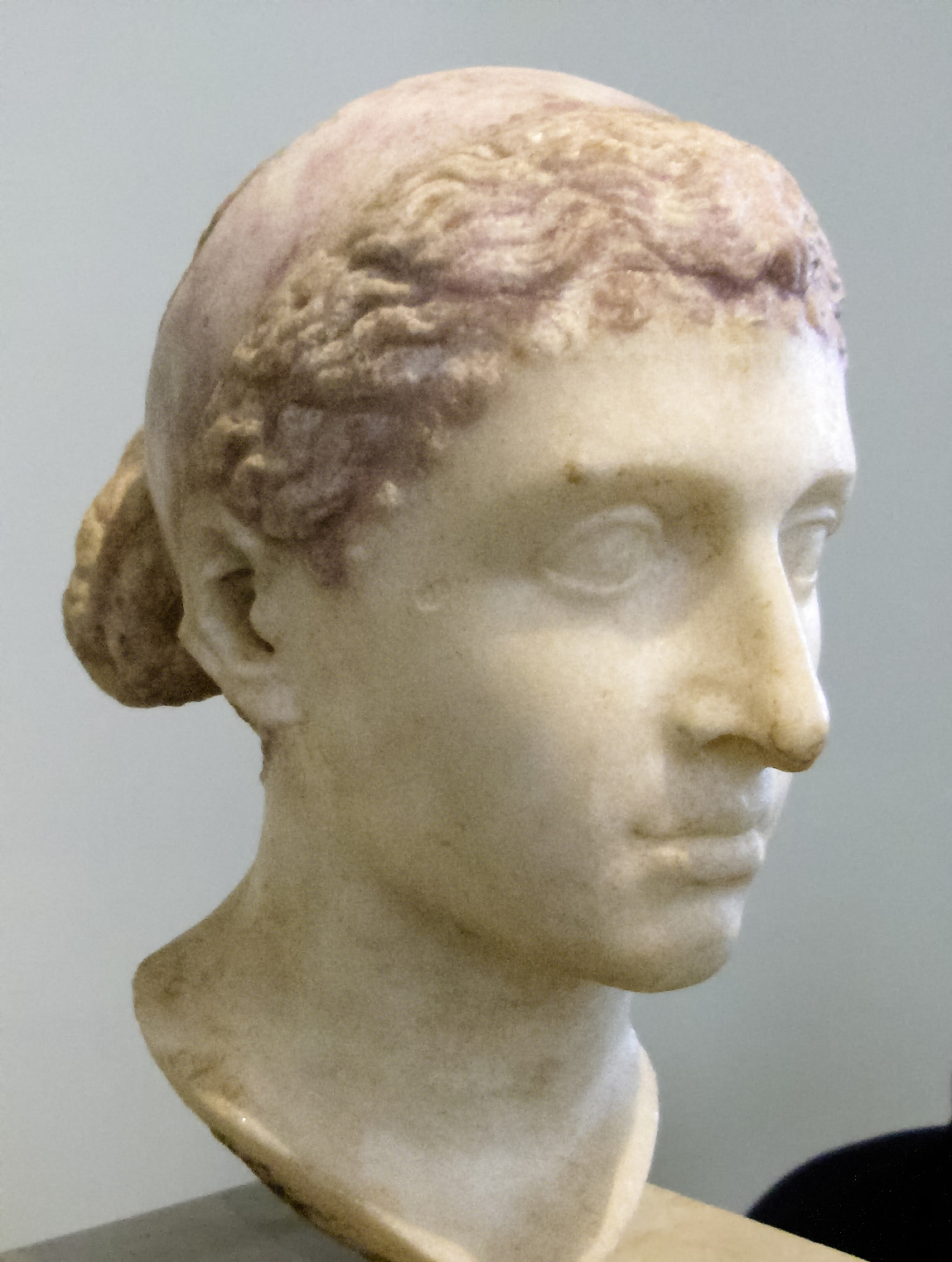 Sculpture
Primary source
Portrait of Cleopatra (Berlin Bust)
c. 40-30 BCE
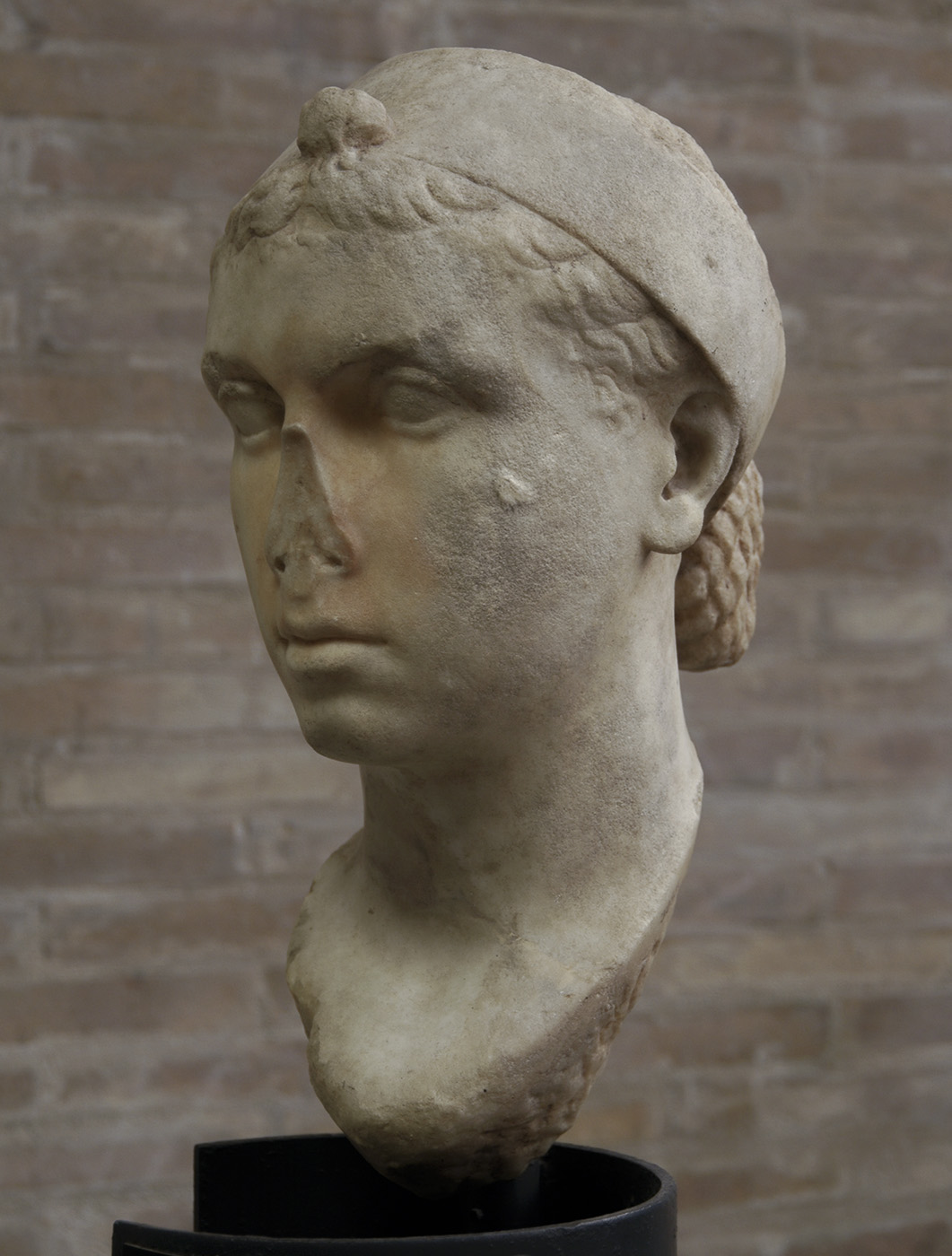 Sculpture
Primary source
Head-Portrait of Cleopatra VII (Vatican Bust)
c. 40-30 BCE
Ready when you are
Start chatting with Cleopatra now.
20 messages free · No credit card · Available in 50+ languages.