


Secondary sourceBookc. 850–900
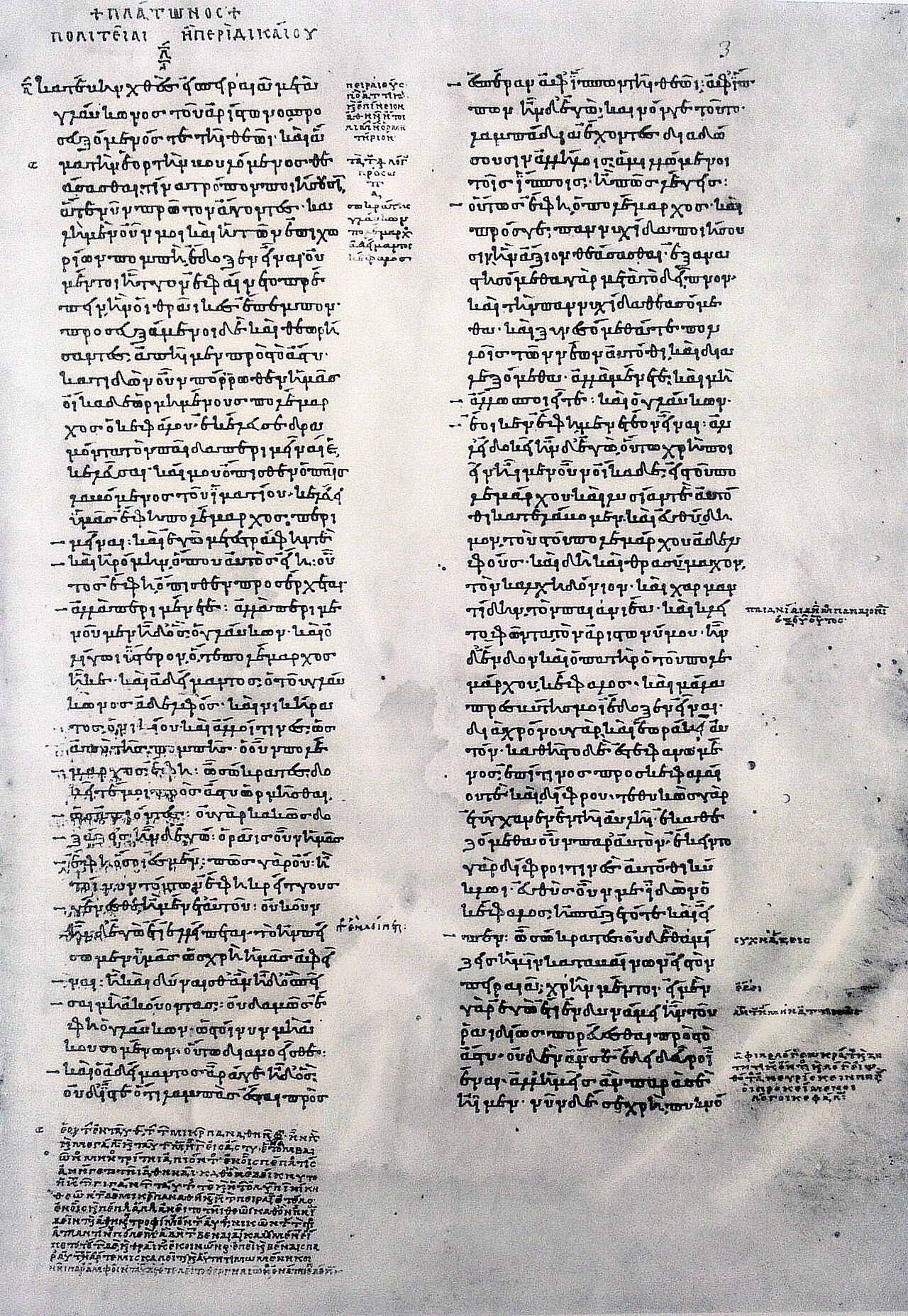
Codex Parisinus graecus 1807 (Paris A)
Byzantine scribes · c. 850–900
A 9th-century Byzantine manuscript that is the main surviving copy of Plato's Republic, Timaeus and Laws.
This manuscript preserves Plato's own words, copied centuries after his death, making it a vital link to his original texts.
About this source
What it is
This is a manuscript made by Byzantine scribes in Constantinople around the 9th century. Written in Greek minuscule script on parchment, it is held today at the Bibliothèque nationale de France.
It is one of the most important surviving copies of several of Plato's dialogues, including the Republic, Timaeus and Laws.
Why it matters
Plato wrote more than a thousand years before this manuscript was copied. Nothing written by Plato himself survives — everything we know of his words comes through copies like this one, made by scribes long after his death. This codex shows how fragile the survival of ancient philosophy was, depending on generations of careful copying.
Look closer
- What do the marginal notes suggest about how this manuscript was used or studied?
- Why might a text copied centuries after its author's death still count as our main source for his ideas?
- What does the survival of this one manuscript tell us about what has been lost?
This book is part of the curated material that grounds the AI version of Plato on Humy.ai — when students ask about related events, the AI can quote it and cite it.
More Plato sources
Meet the AI Plato →BookSecondary source
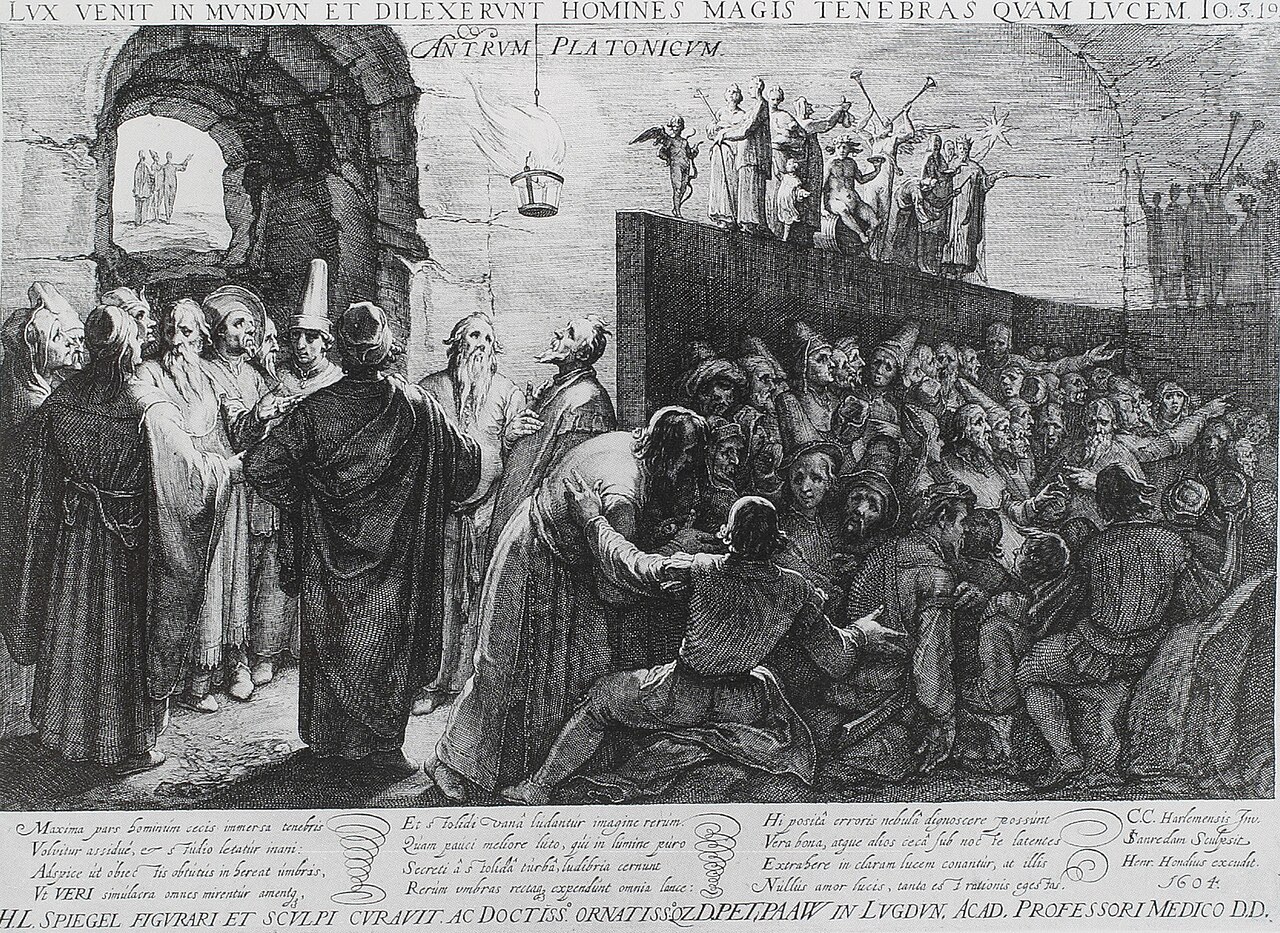
The Republic
Plato · c. 375 BC
 Book
Primary source
Allegory of the Cave
Plato · c. 400 BC
Secondary source
Apology
Plato · c. 395 BC
 Sculpture
Secondary source
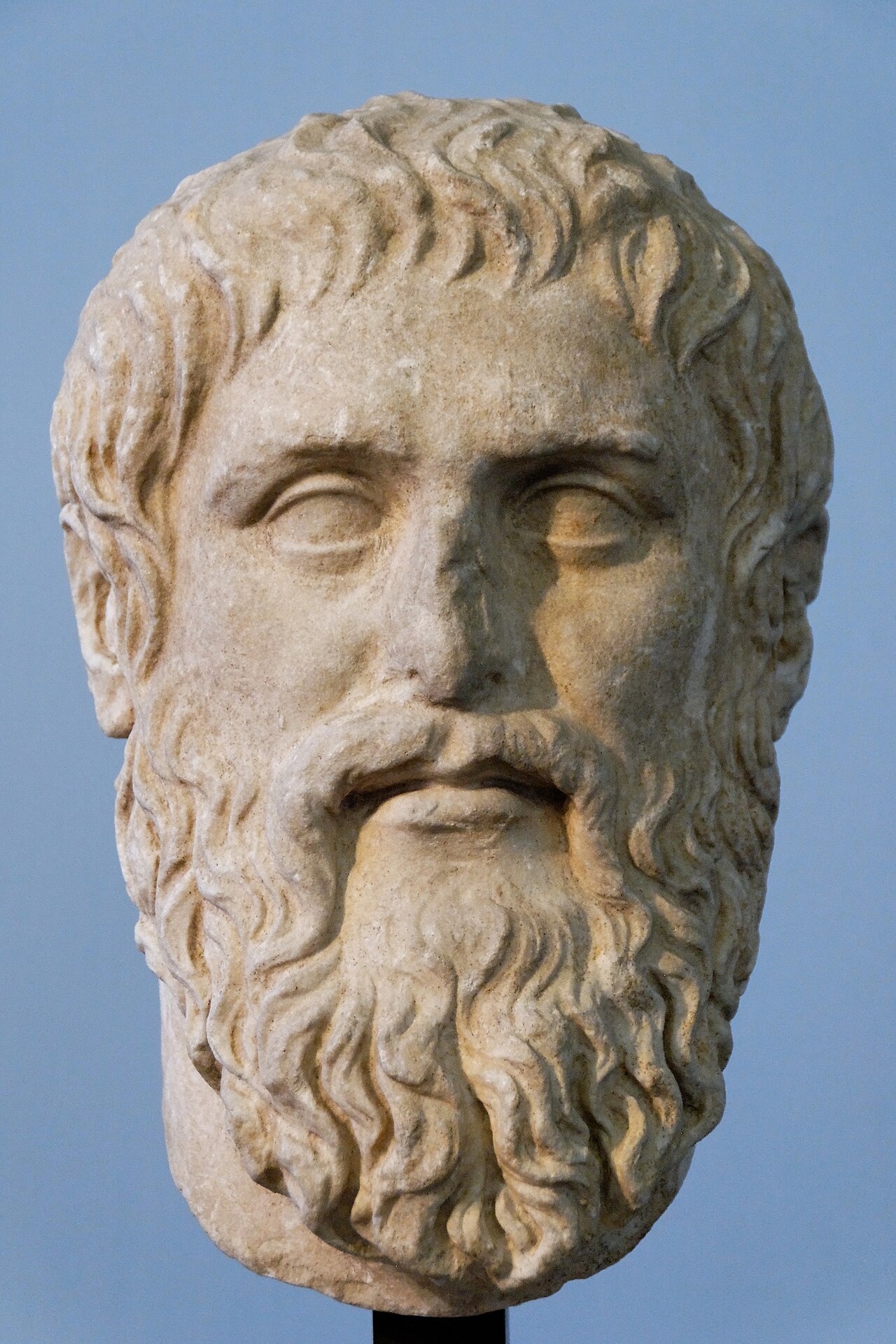
Portrait of Plato
Silanion (original type) · ca. 370 BC (original type); this copy Roman era
 Book
Secondary source
Phaedo
Plato · c. 360 BC
Ready when you are
Start chatting with Plato now.
20 messages free · No credit card · Available in 50+ languages.