


Primary sourceSculpturec. 1330 BCE
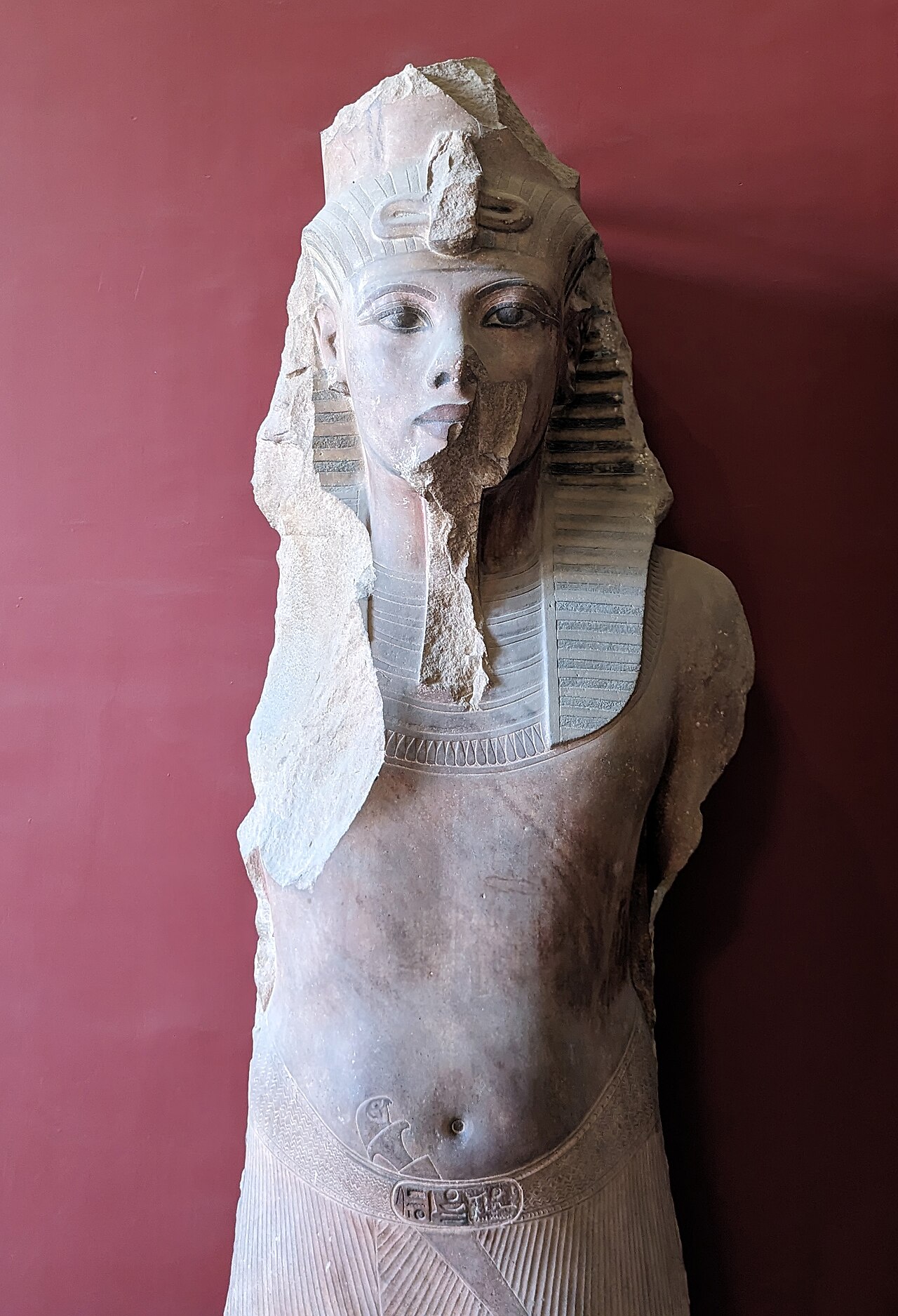
Colossal Statue of Tutankhamun
c. 1330 BCE
A monumental stone statue of Tutankhamun from his mortuary temple, later reinscribed for his successors.
This colossal statue depicts Tutankhamun himself, originally placed in his mortuary temple.
About this source
What it is
This colossal stone statue, held at the Grand Egyptian Museum, depicts Tutankhamun wearing a striped nemes headdress with a cobra at the brow, a broad collar, and a kilt bearing a cartouche. It dates from around 1330 BCE and originally stood in his mortuary temple.
Why it matters
Monumental statues like this projected the pharaoh's power and divine status. After Tutankhamun's death, some of his statues were reinscribed with the names of his successors, reflecting how later kings sometimes claimed earlier royal monuments as their own.
Look closer
- What details on the statue identify it as royal, such as the headdress or collar?
- Why is part of the statue broken, and what might that tell us about its history?
- What might it mean that later kings reused statues made for Tutankhamun?
This sculpture is part of the curated material that grounds the AI version of Tutankhamun on Humy.ai — when students ask about related events, the AI can quote it and cite it.
More Tutankhamun sources
Meet the AI Tutankhamun →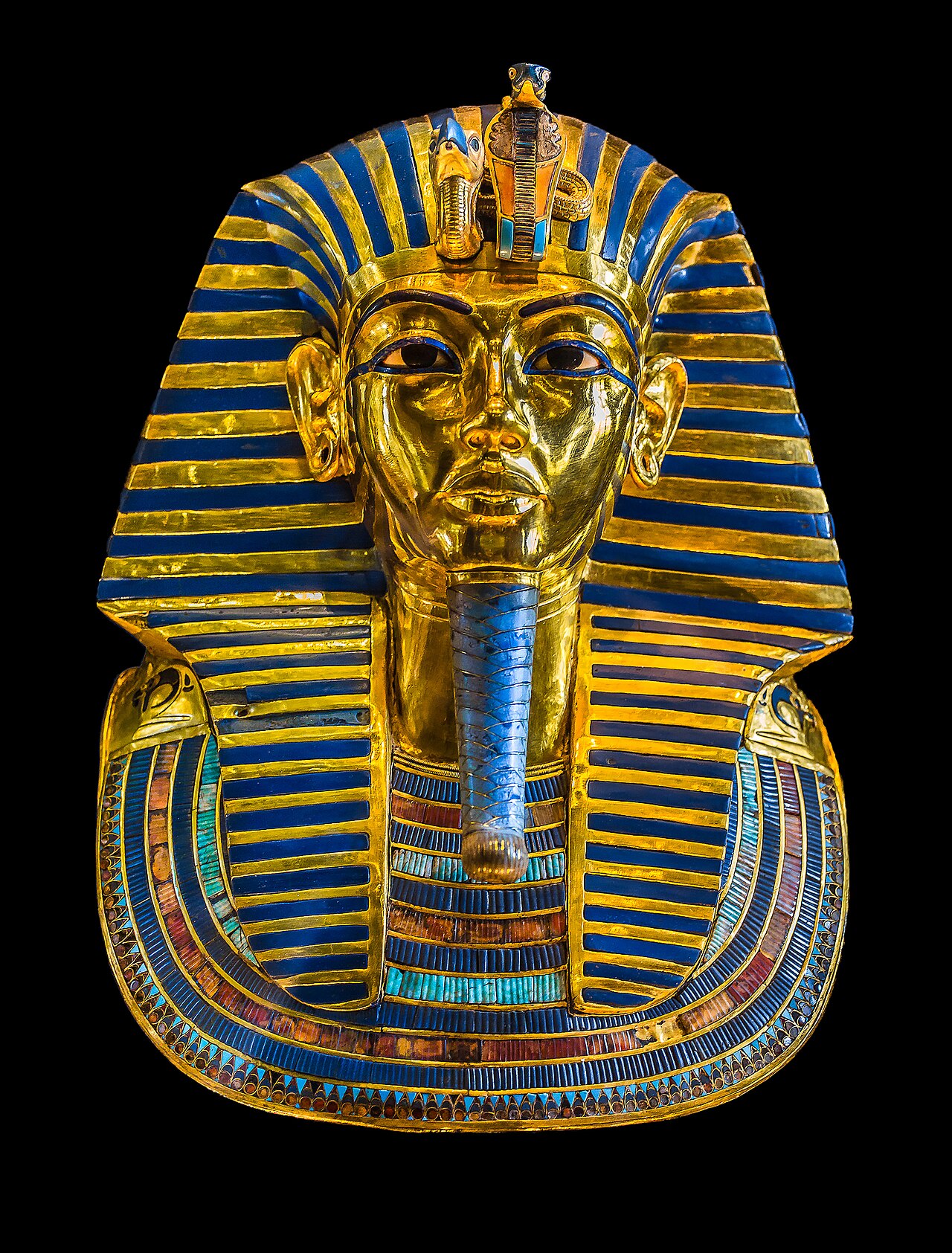 Artifact
Primary source
Mask of Tutankhamun
c. 1333 BCE
 Photograph
Primary source
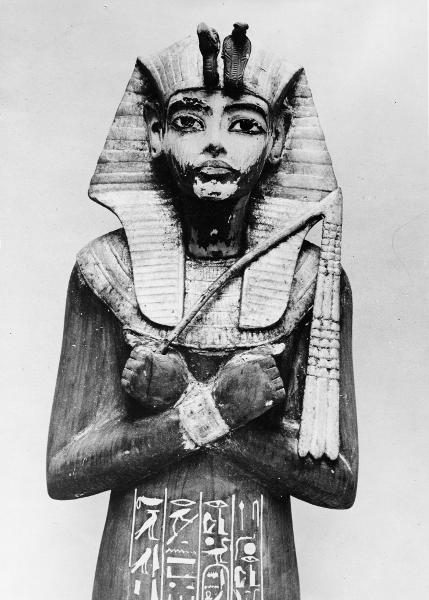
Photograph of Tutankhamun's Shawabti Figure
Harry Burton · 1920s
 Artifact
Primary source
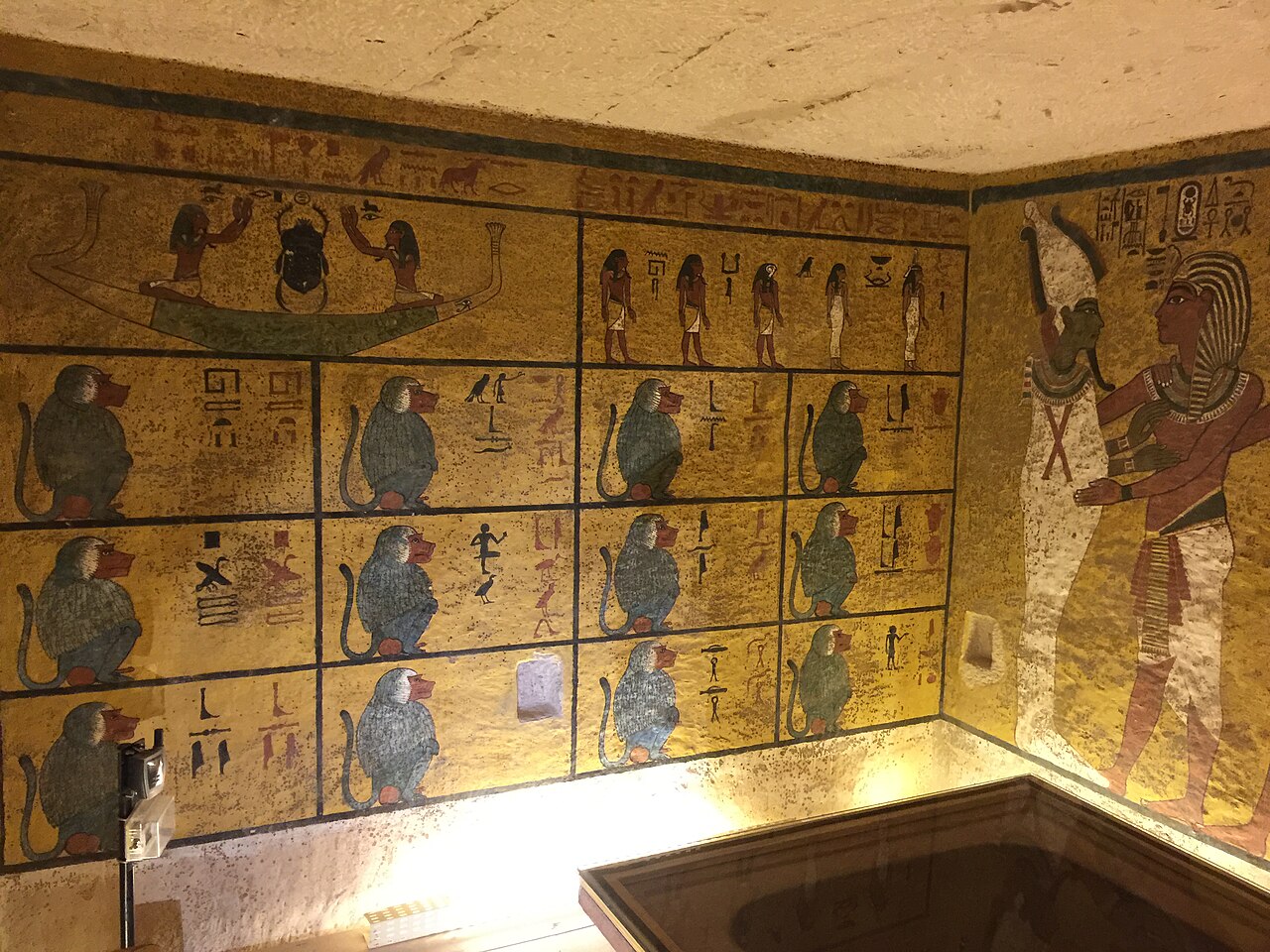
Tomb of Tutankhamun
14th century BCE
 Photograph
Primary source
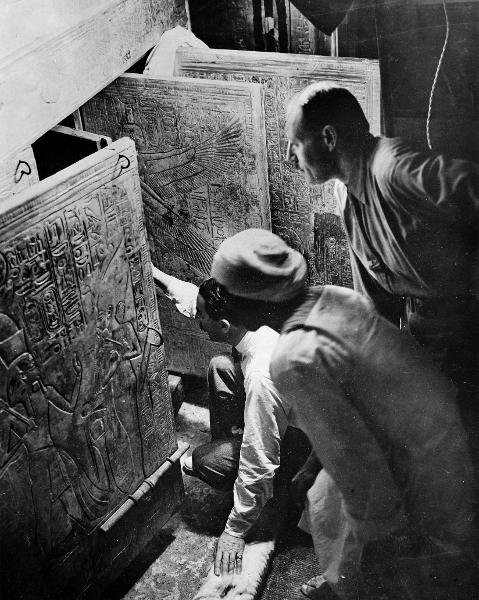
Opening the Doors of the Fourth Shrine in Tutankhamun's Tomb
Harry Burton · 1920s
 Document
Primary source
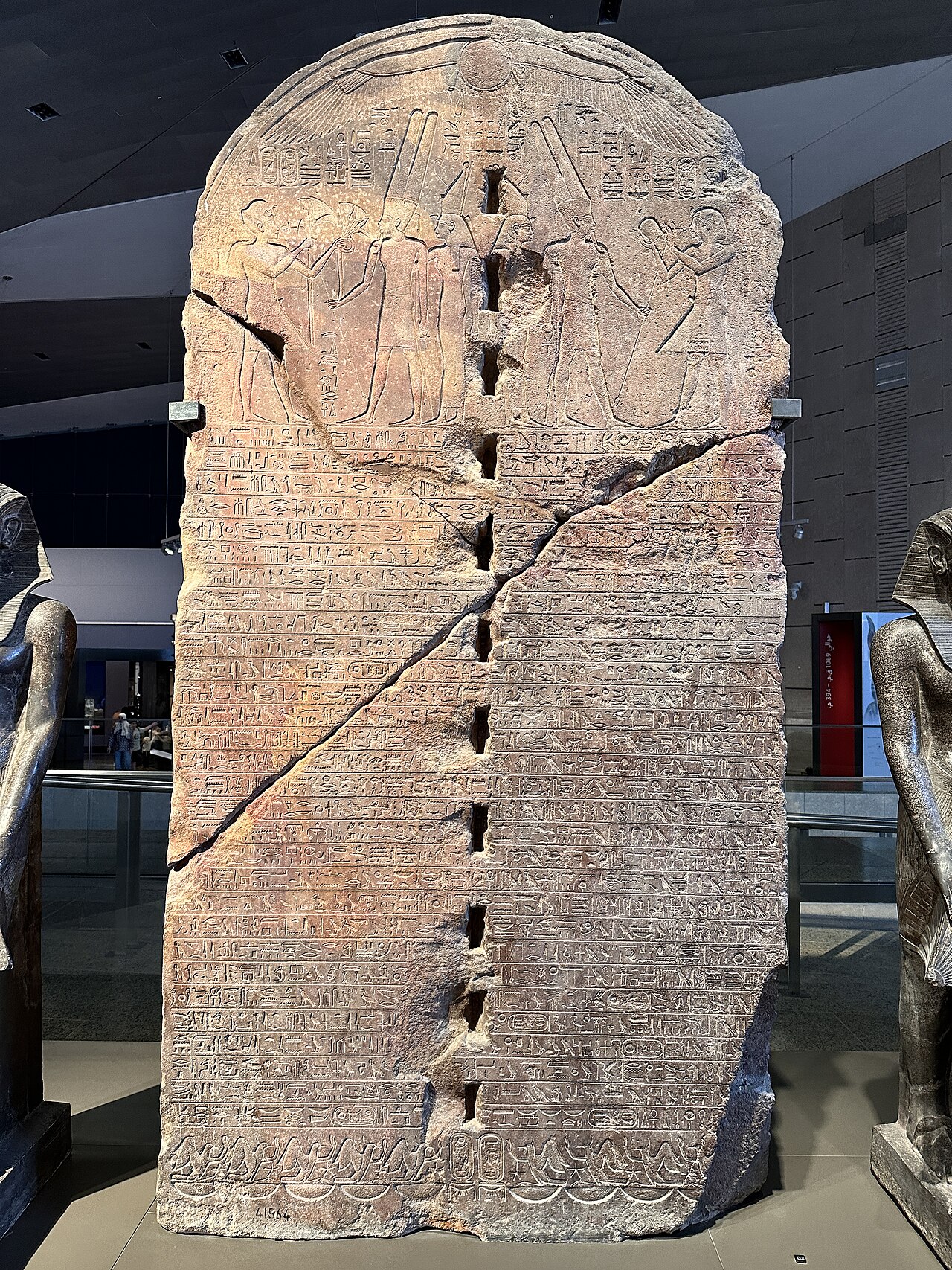
Restoration Stela
Tutankhamun · c. 1326 BCE
Ready when you are
Start chatting with Tutankhamun now.
20 messages free · No credit card · Available in 50+ languages.