


Secondary sourcePainting1529
Death of Cleopatra
Hans Sebald Beham · 1529
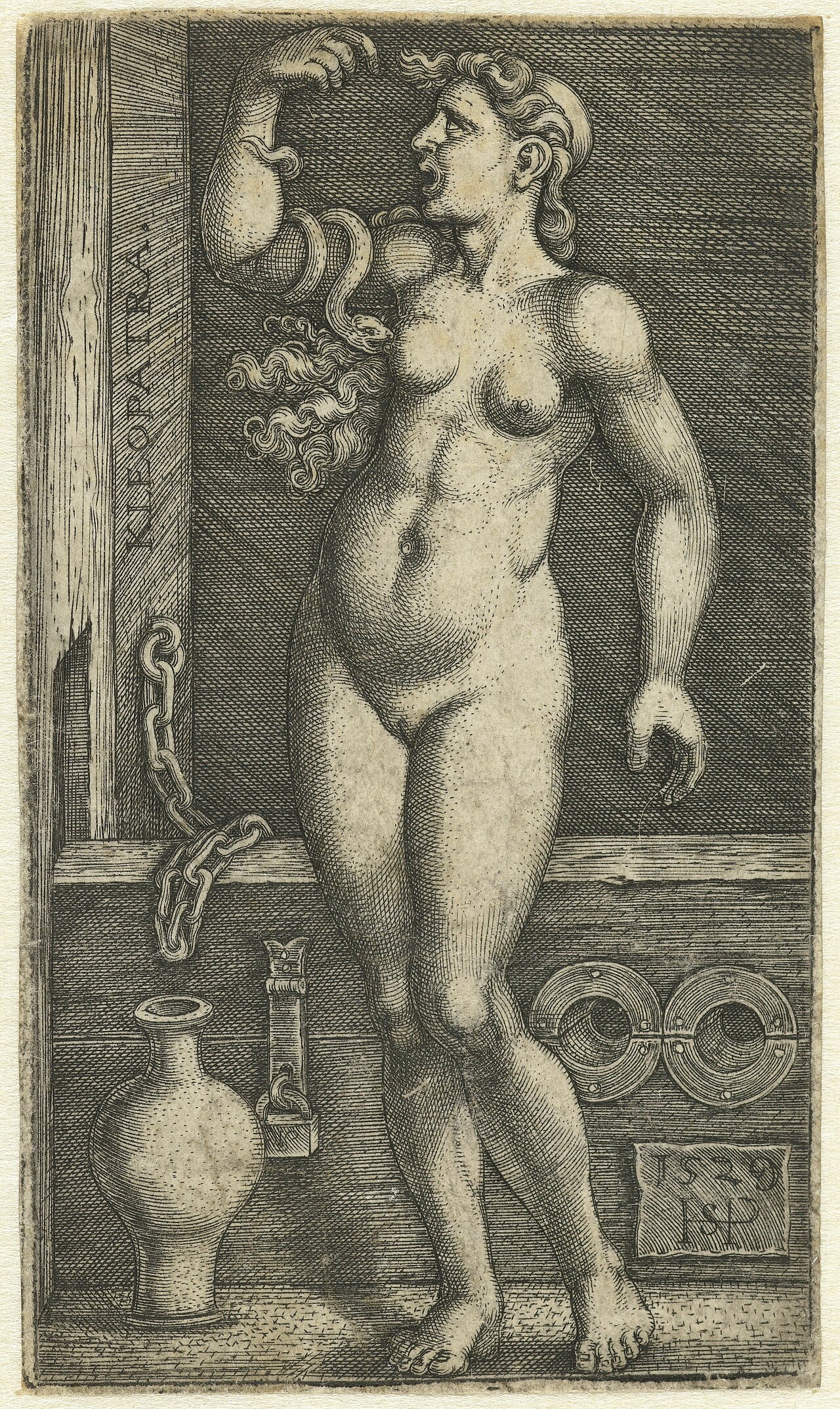
A 1529 engraving by Hans Sebald Beham imagining Cleopatra's suicide by snakebite, held by the Rijksmuseum.
This Renaissance print imagines the legendary moment of Cleopatra's death by snakebite.
About this source
What it is
This engraving was made in 1529 by the German artist Hans Sebald Beham. It is held today by the Rijksmuseum. According to the museum's own description, it shows Cleopatra standing in a prison cell with a suffering expression, committing suicide by letting a snake bite her breast.
Why it matters
Made about 1,500 years after Cleopatra's lifetime, this print is part of a long European tradition of imagining her final moments. It reveals more about Renaissance artists' fascination with dramatic, tragic female figures from antiquity than about the real historical event.
Look closer
- What details did the artist include to make the scene feel dramatic or tragic?
- Why might this subject have appealed to artists and collectors in 16th-century Germany?
- What can and can't a print made so long after the event tell us about what actually happened?
This painting is part of the curated material that grounds the AI version of Cleopatra on Humy.ai — when students ask about related events, the AI can quote it and cite it.
More Cleopatra sources
Meet the AI Cleopatra →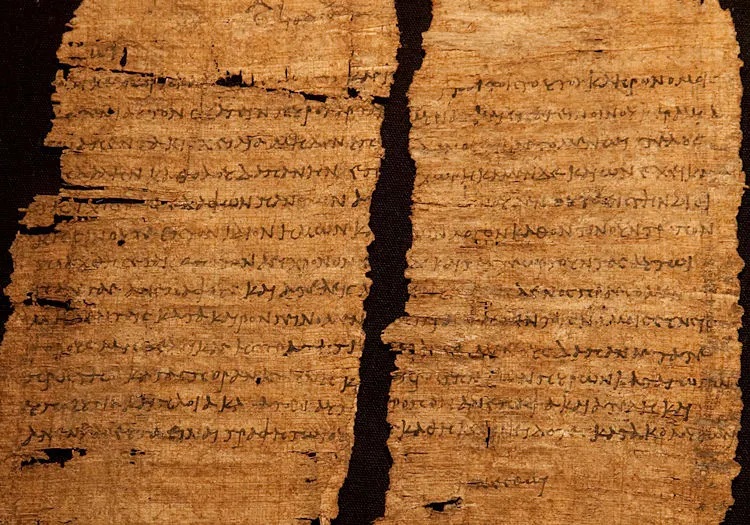 Document
Primary source
Papyrus with Signature of Cleopatra VII
Ptolemaic scribe; possibly countersigned by Cleopatra VII · February 33 BCE
 Painting
Secondary source
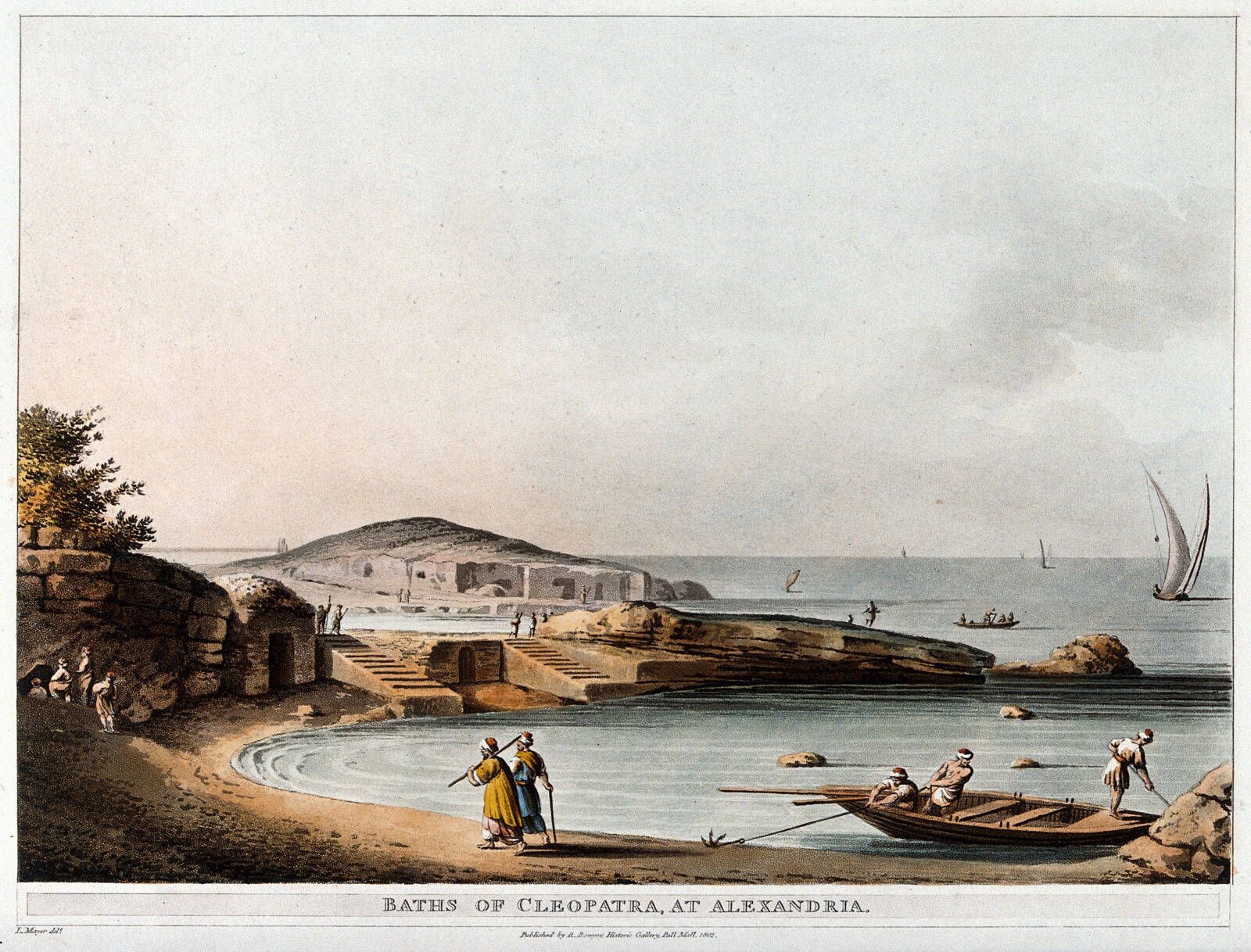
Baths of Cleopatra, at Alexandria
Luigi Mayer · 1802
 Sculpture
Secondary source
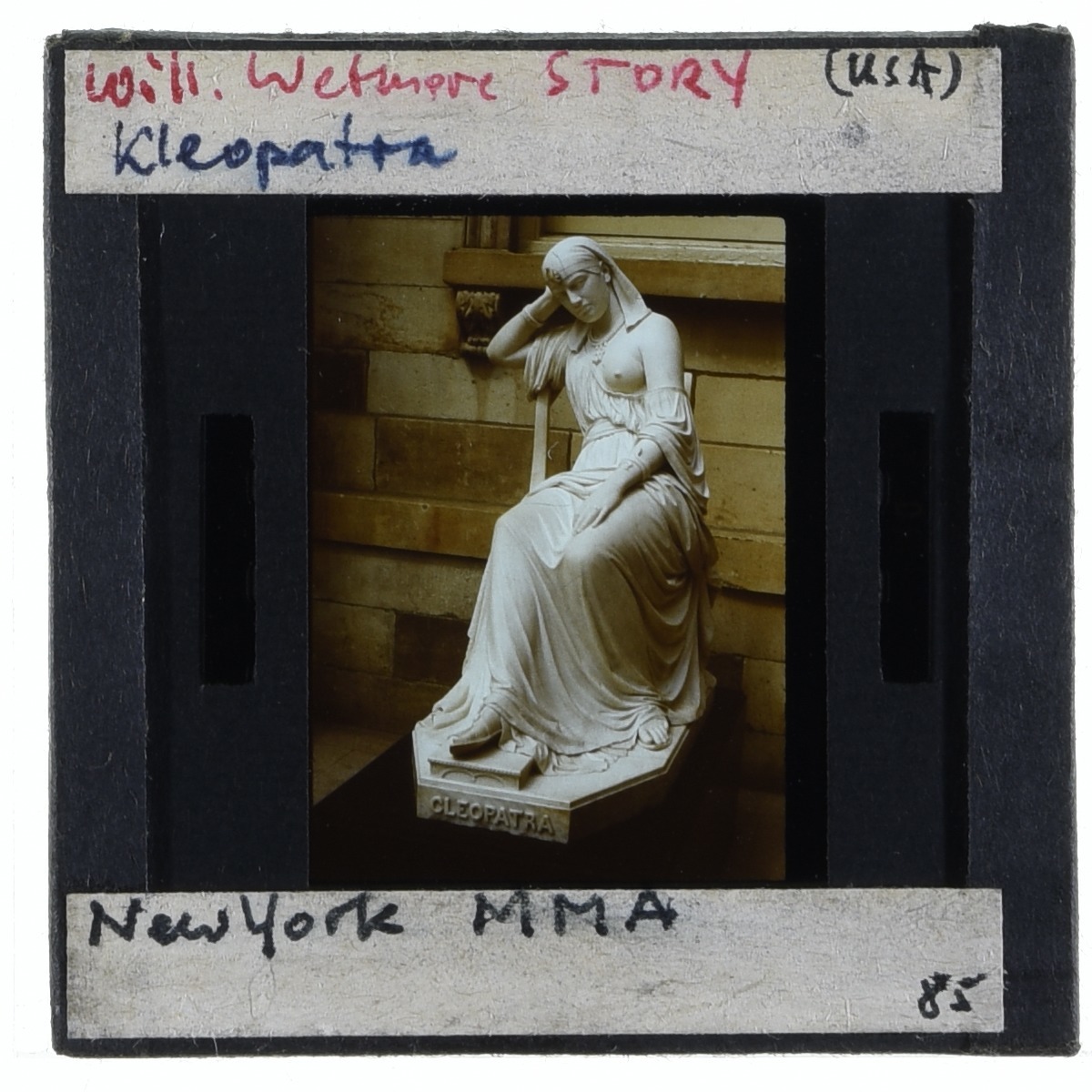
Cleopatra
William Wetmore Story
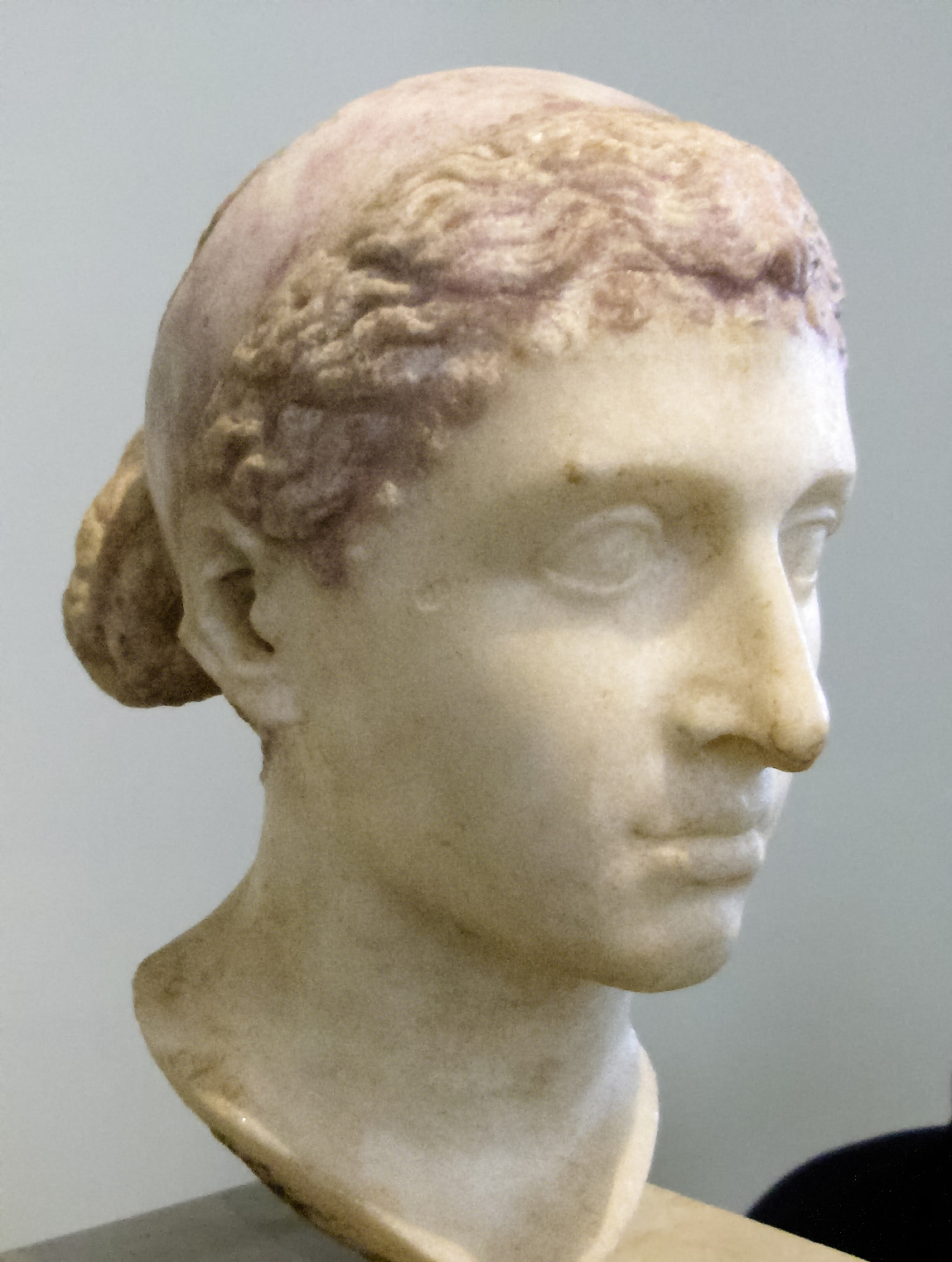 Sculpture
Primary source
Portrait of Cleopatra (Berlin Bust)
c. 40-30 BCE
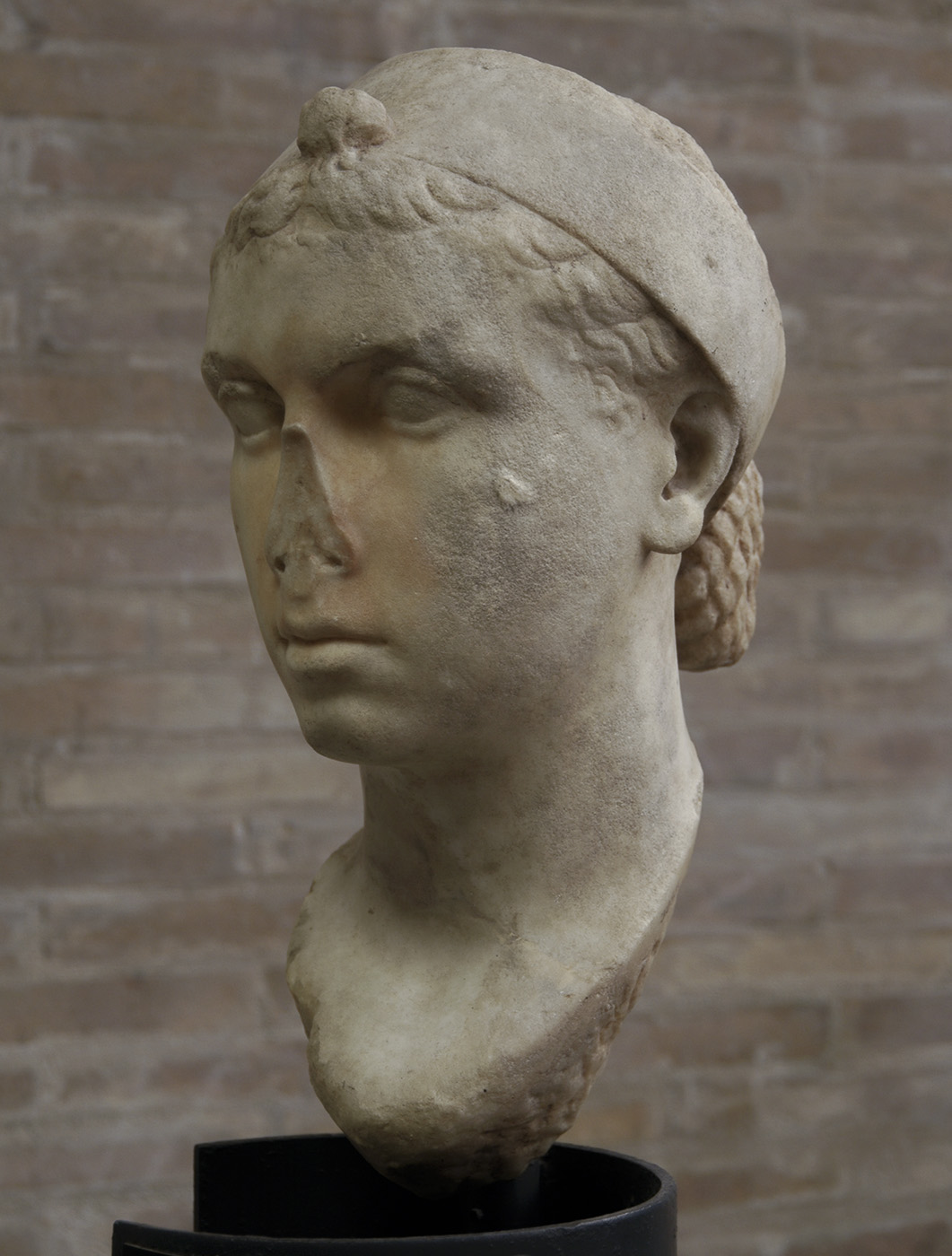 Sculpture
Primary source
Head-Portrait of Cleopatra VII (Vatican Bust)
c. 40-30 BCE
Ready when you are
Start chatting with Cleopatra now.
20 messages free · No credit card · Available in 50+ languages.