


Secondary sourcePainting
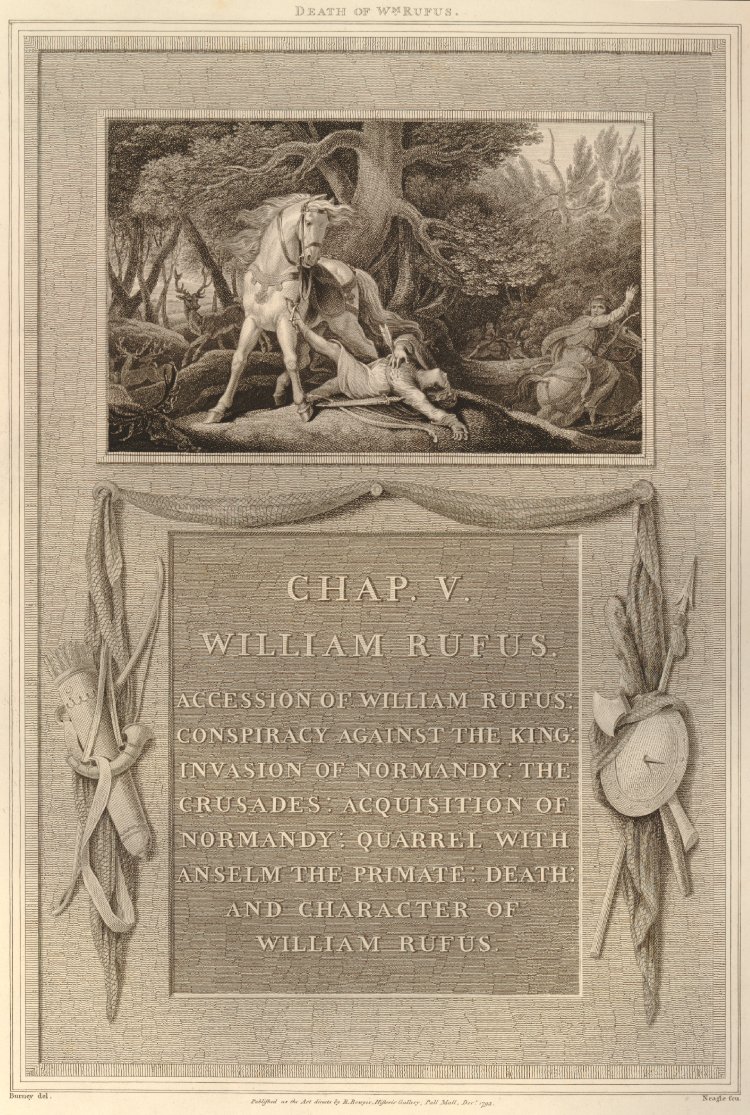
Death of William Rufus
James Neagle
An illustrated plate from Robert Bowyer's lavish edition of Hume's History of England, depicting the death of King William Rufus.
This plate illustrates Hume's History of England, showing the prestige and lasting influence of his historical writing.
About this source
What it is
This etching and engraving by James Neagle, published by Robert Bowyer, illustrates Chapter V of an illustrated edition of David Hume's History of England. It shows a dramatic forest scene with a fallen man and a riderless horse, depicting the death of King William Rufus.
Why it matters
Bowyer's edition was a lavish, expensively illustrated printing meant to celebrate Hume's history as Britain's standard national narrative. The image shows how later publishers used dramatic art to make Hume's history vivid and prestigious to wealthy readers.
Look closer
- Why do you think the publisher chose such a dramatic, violent scene to illustrate this chapter?
- What does the decorative framing and lettering tell you about who this edition was made for?
- How might an illustration shape a reader's feelings about historical events differently than text alone?
This painting is part of the curated material that grounds the AI version of David Hume on Humy.ai — when students ask about related events, the AI can quote it and cite it.
More David Hume sources
Meet the AI David Hume →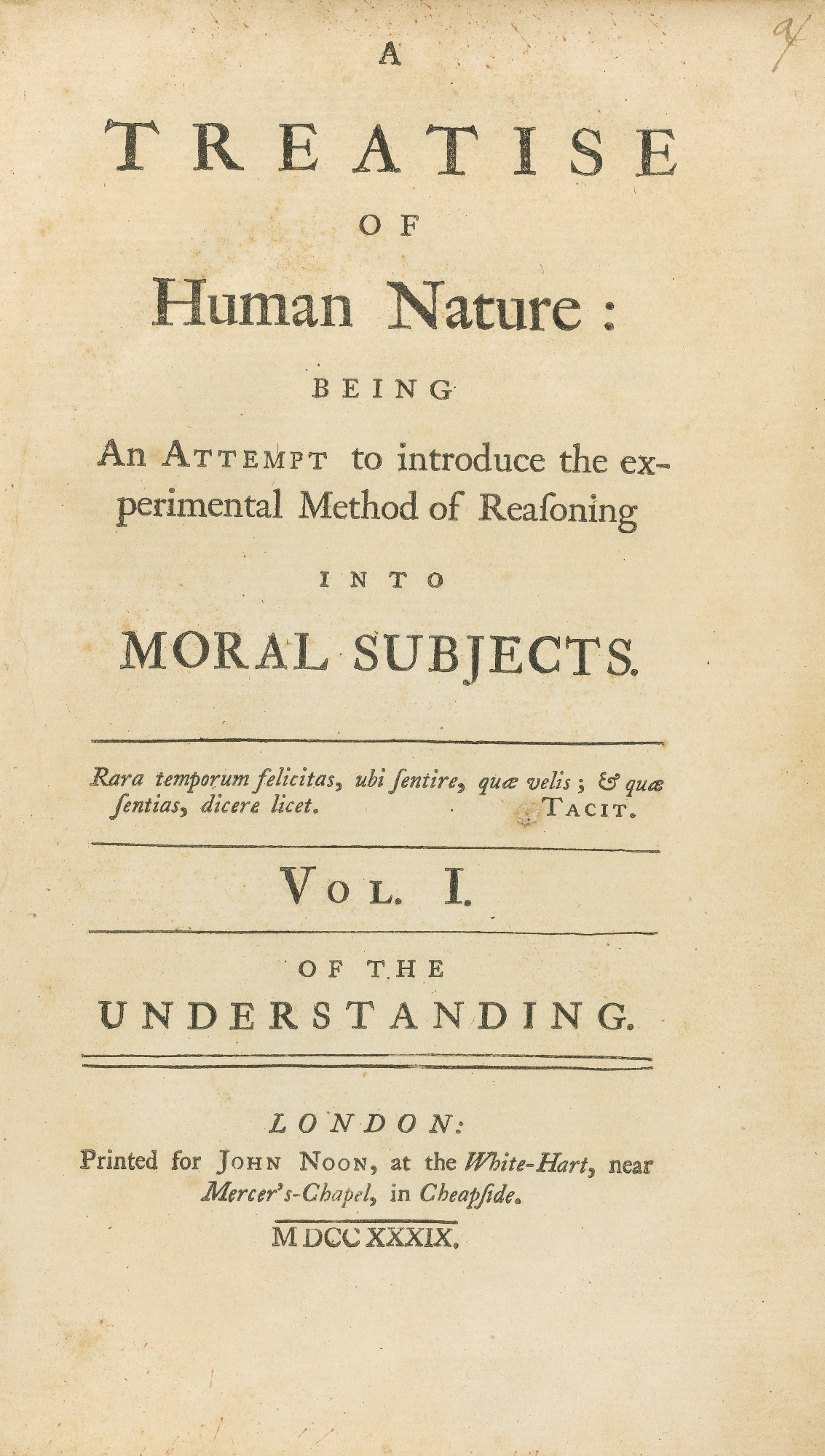 Book
Primary source
A Treatise of Human Nature
David Hume · 1739-1740
 Book
Primary source
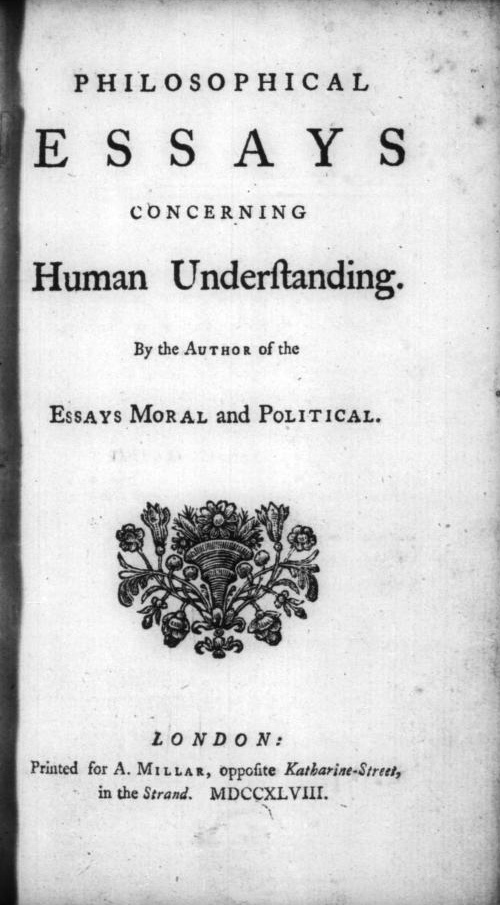
Philosophical Essays Concerning Human Understanding
David Hume · 1748
 Book
Primary source
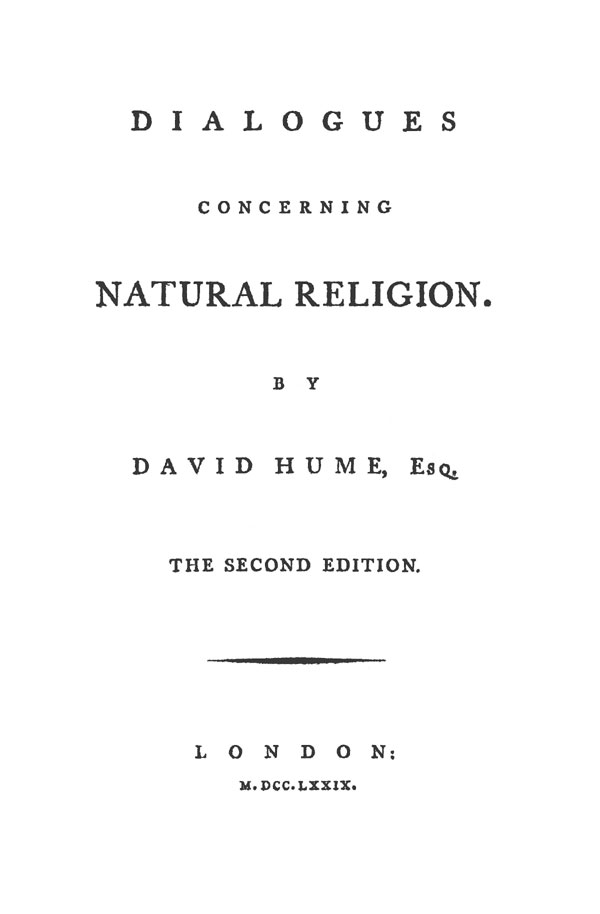
Dialogues Concerning Natural Religion
David Hume · 1779
Primary source
Of Miracles
David Hume · 1748
Primary source
An Enquiry Concerning the Principles of Morals
David Hume · 1751
Ready when you are
Start chatting with David Hume now.
20 messages free · No credit card · Available in 50+ languages.