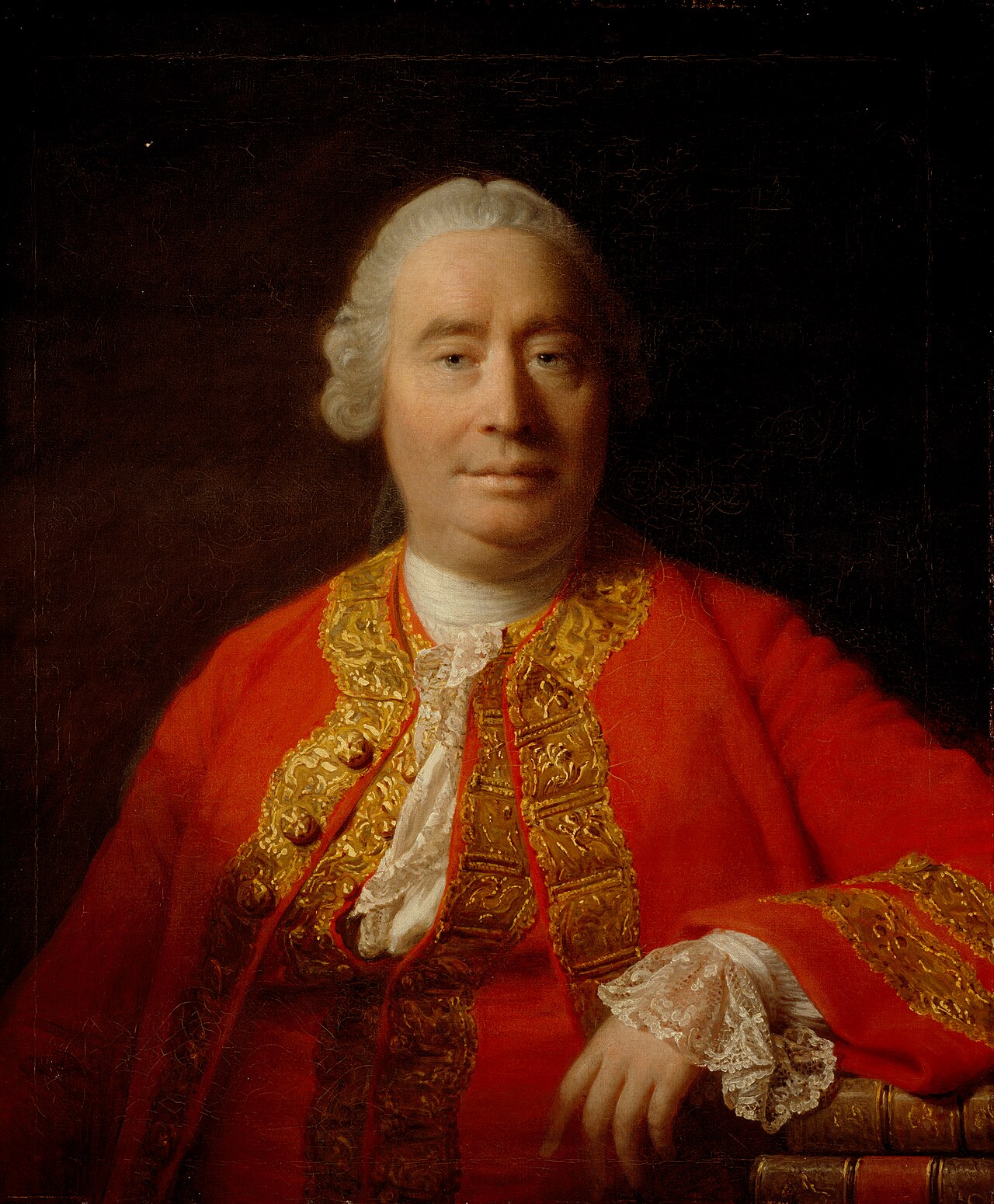
Portrait of David Hume

AI Historical Figure

David Hume

Scottish philosopher and historian of the 18th century.

Chat with David Hume via text or voice — in 42 languages, drawing on a curated biography and 92 historical sources. Available 24/7.

Start chatting with David Hume20 messages free · No credit card
Lived
1711–1776
From
United Kingdom
Known for
PhilosophyScholarship & social science
David Hume

David Hume

Online · responds in seconds

Hello — I'm David Hume. Scottish philosopher and historian of the 18th century. What would you like to ask me?

20 messages free · No credit card · Powered by Humy.ai

Live preview · Switch between 42 languages above · Send a message to continue in the app

Multilingual

Talk to David Hume in 42 languages

Ask David Hume questions in any language below, and the rest of Humy's app speaks it too. Pick yours to open the chat in that language.

Also in German (Austria), German (Switzerland), English (UK), English (Australia), English (Canada).

The sources behind this AI

92 sources · 44 books · 18 paintings · 14 photographs · 7 sculptures · 5 letters · 3 documents · 1 artifact

David Hume doesn’t improvise from thin air. The AI is grounded in 92 curated historical sources students can inspect. Open any of them to see what informs the conversation.

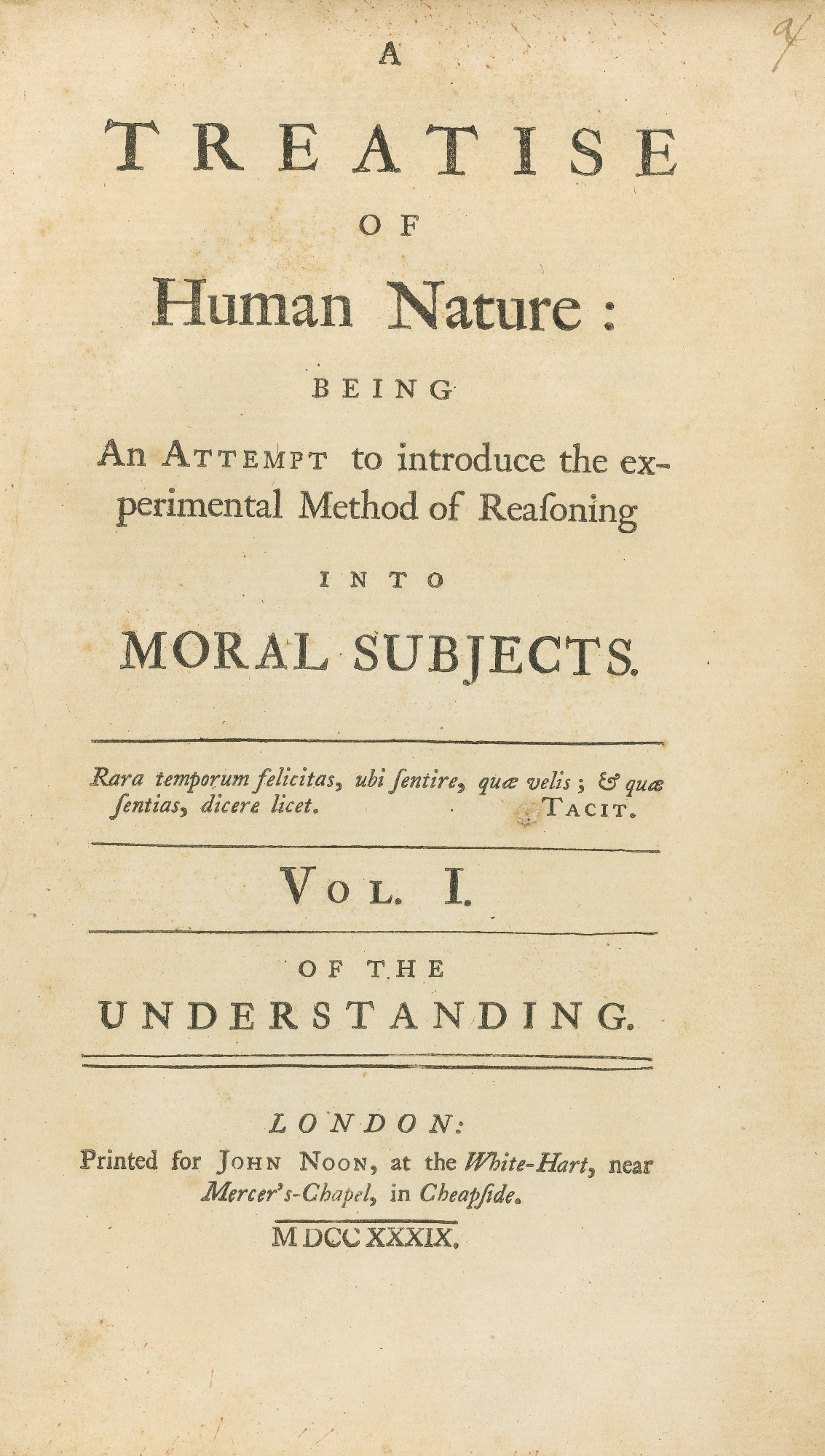
Title page of the 1739 first edition of A Treatise of Human Nature, Volume I, Of the Understanding, printed for John Noon in London. Yellowed paper with black serif print, a Latin epigraph from Tacitus, and a handwritten mark in the top right corner.Book

Primary source

A Treatise of Human Nature

David Hume · 1739-1740

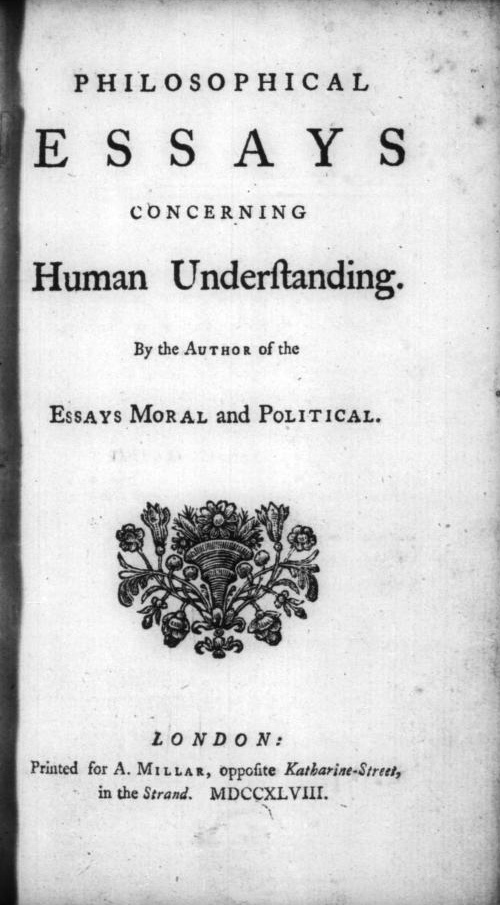
Title page of a book reading 'Philosophical Essays Concerning Human Understanding' by the author of 'Essays Moral and Political.' Below is an ornamental floral emblem and the imprint 'London: Printed for A. Millar, opposite Katharine-Street, in the Strand. MDCCXLVIII.'Book

Primary source

Philosophical Essays Concerning Human Understanding

David Hume · 1748

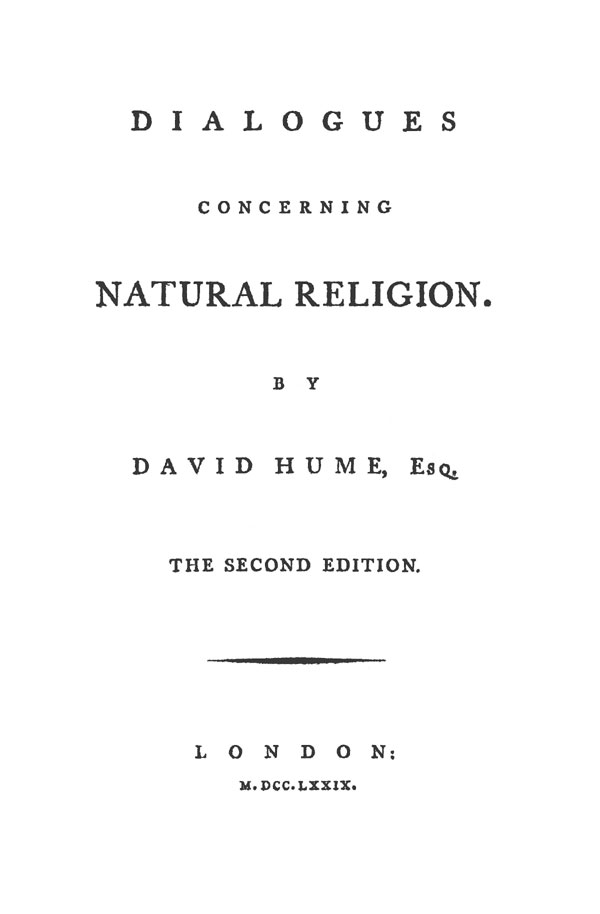
Title page of the 1779 London second edition of David Hume's Dialogues Concerning Natural Religion. Text reads: DIALOGUES CONCERNING NATURAL RELIGION, BY DAVID HUME, Esq., THE SECOND EDITION, a short horizontal rule, LONDON: MDCCLXXIX.Book

Primary source

Dialogues Concerning Natural Religion

David Hume · 1779

Book

Primary source

Of Miracles

David Hume · 1748

Book

Primary source

An Enquiry Concerning the Principles of Morals

David Hume · 1751

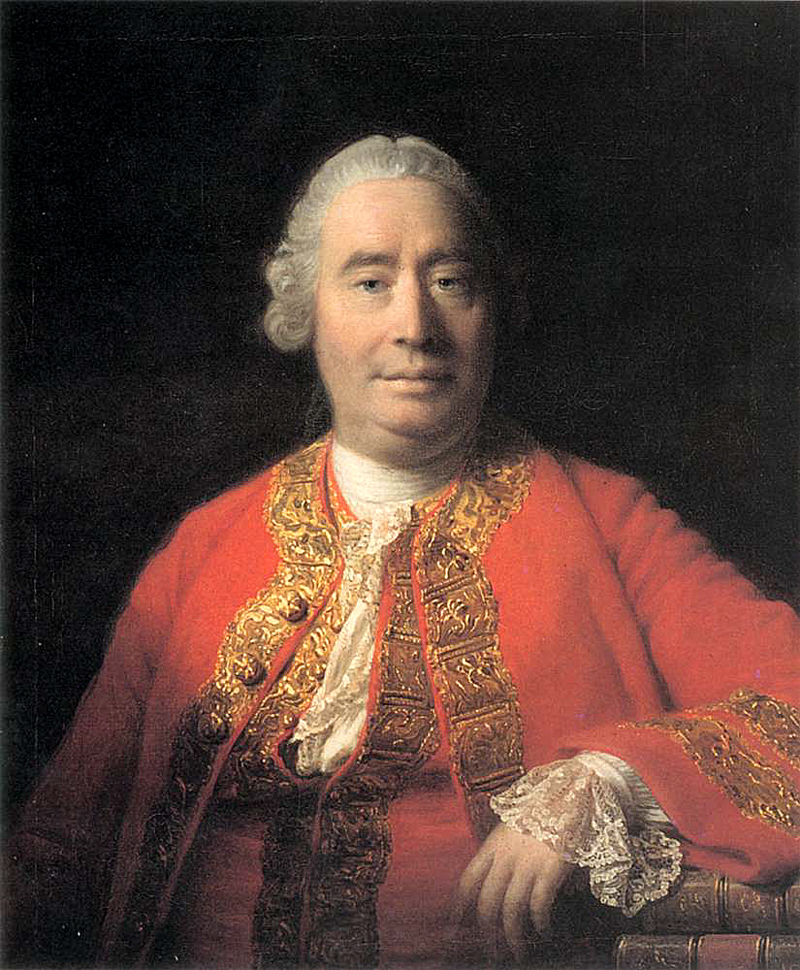
Oil portrait of a man with white powdered hair, wearing a red coat with ornate gold embroidered trim, white lace cravat and lace cuffs, resting his hand on a stack of leather-bound books against a dark background.Painting

Primary source

David Hume

Allan Ramsay · 1766

Book

Primary source

My Own Life

David Hume

Letter

Primary source

Letter from Adam Smith to William Strahan on the death of David Hume

Adam Smith · 9 November 1776

Book

Primary source

Essays, Moral and Political

David Hume · 1741

Book

Primary source

Political Discourses

David Hume · 1752

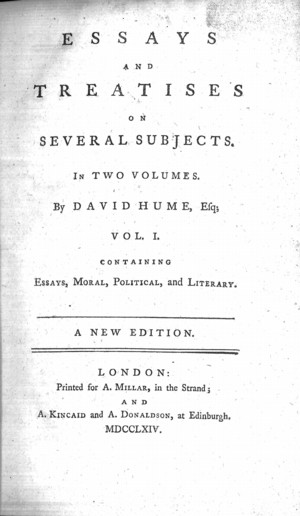
Title page of 'Essays and Treatises on Several Subjects' by David Hume, Esq., Vol. I, containing Essays, Moral, Political, and Literary. A New Edition. London: Printed for A. Millar, in the Strand; and A. Kincaid and A. Donaldson, at Edinburgh, MDCCLXIV.Book

Primary source

Of the Balance of Trade

David Hume · 1752

Book

Primary source

The Natural History of Religion

David Hume · 1755

Book

Primary source

Of the Standard of Taste

David Hume

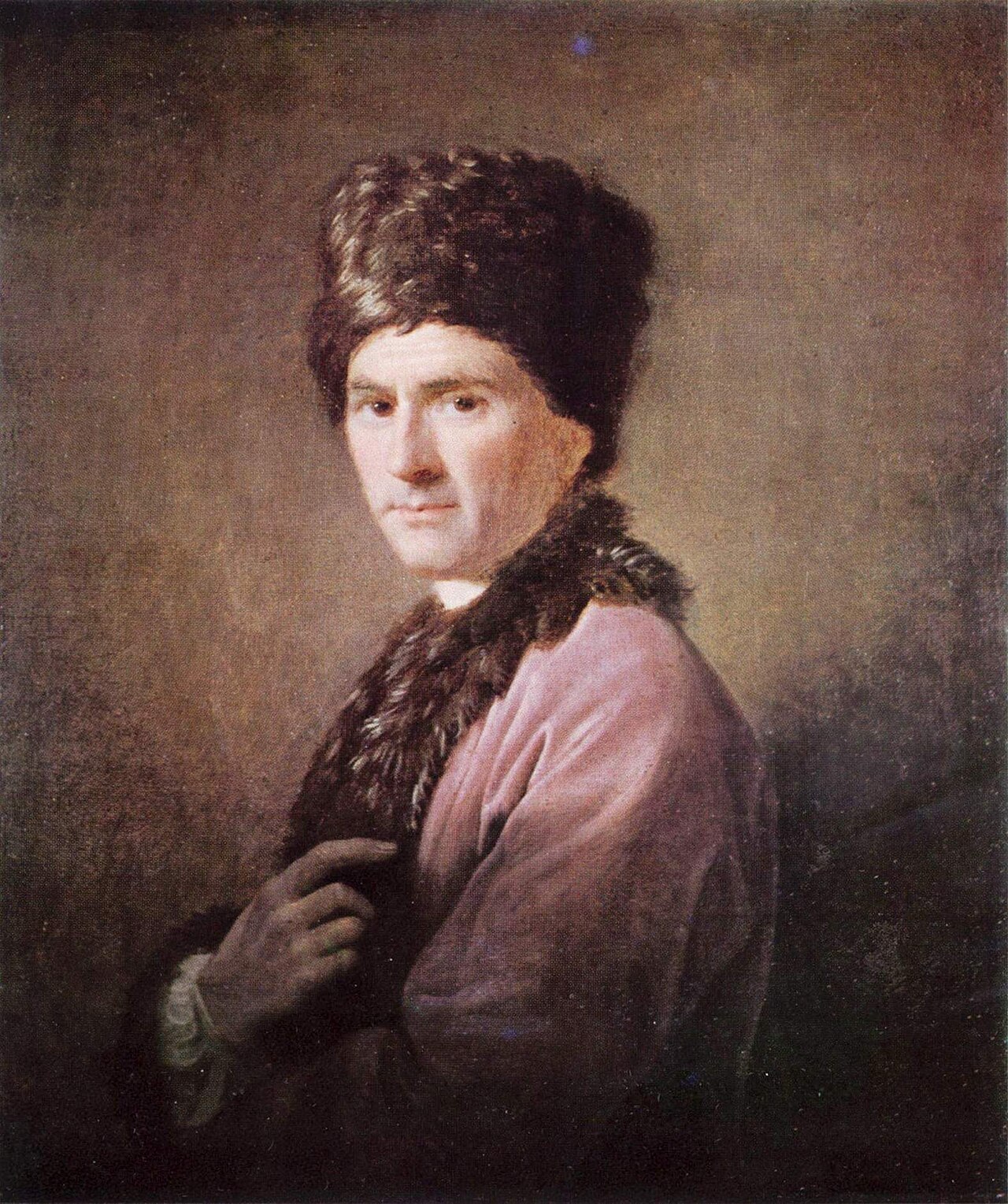
Painting of a man with a pale, lined face and dark eyes, wearing a tall dark fur hat and a pink robe trimmed with dark fur, one hand raised to the fur collar against a brownish background.Painting

Primary source

Portrait of Jean-Jacques Rousseau in Armenian Costume

Allan Ramsay · 1766

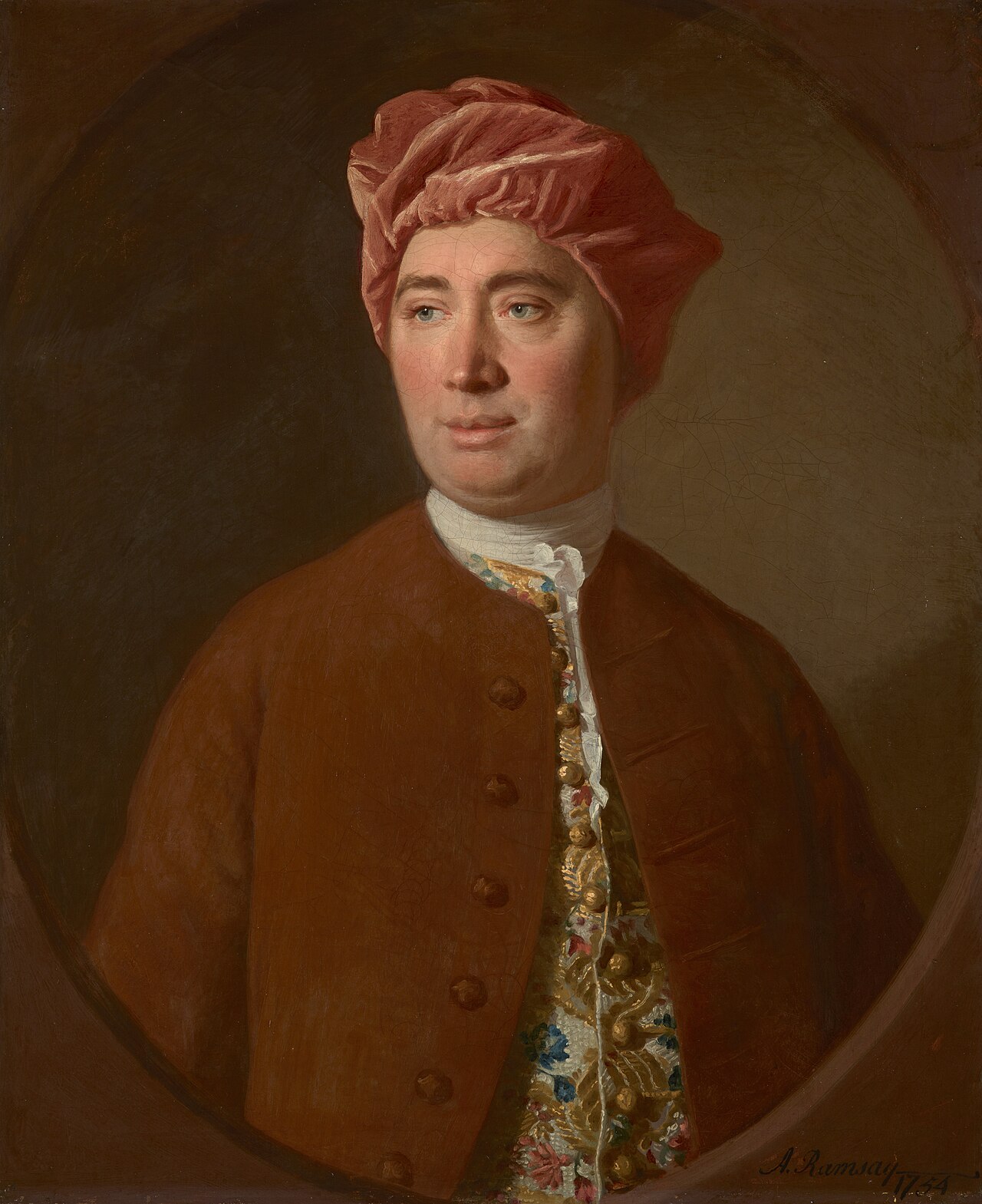
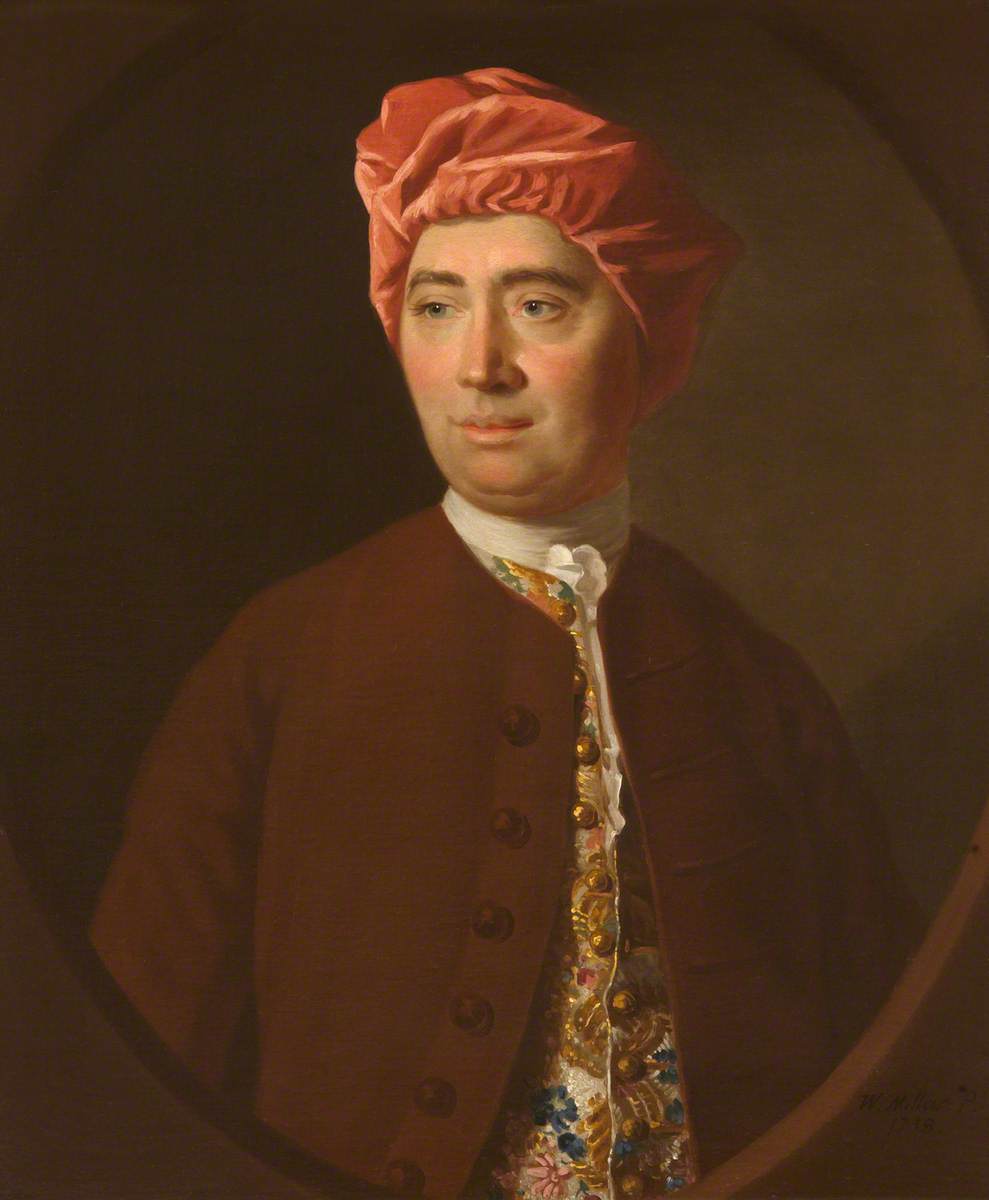
Oval-framed oil portrait of a man in a red turban-like cap, brown coat with buttons, and a patterned floral waistcoat over a white cravat, with a signature reading A. Ramsay and date 1754 at lower right.Painting

Primary source

David Hume, 1711-1776. Historian and philosopher

Allan Ramsay · 1754

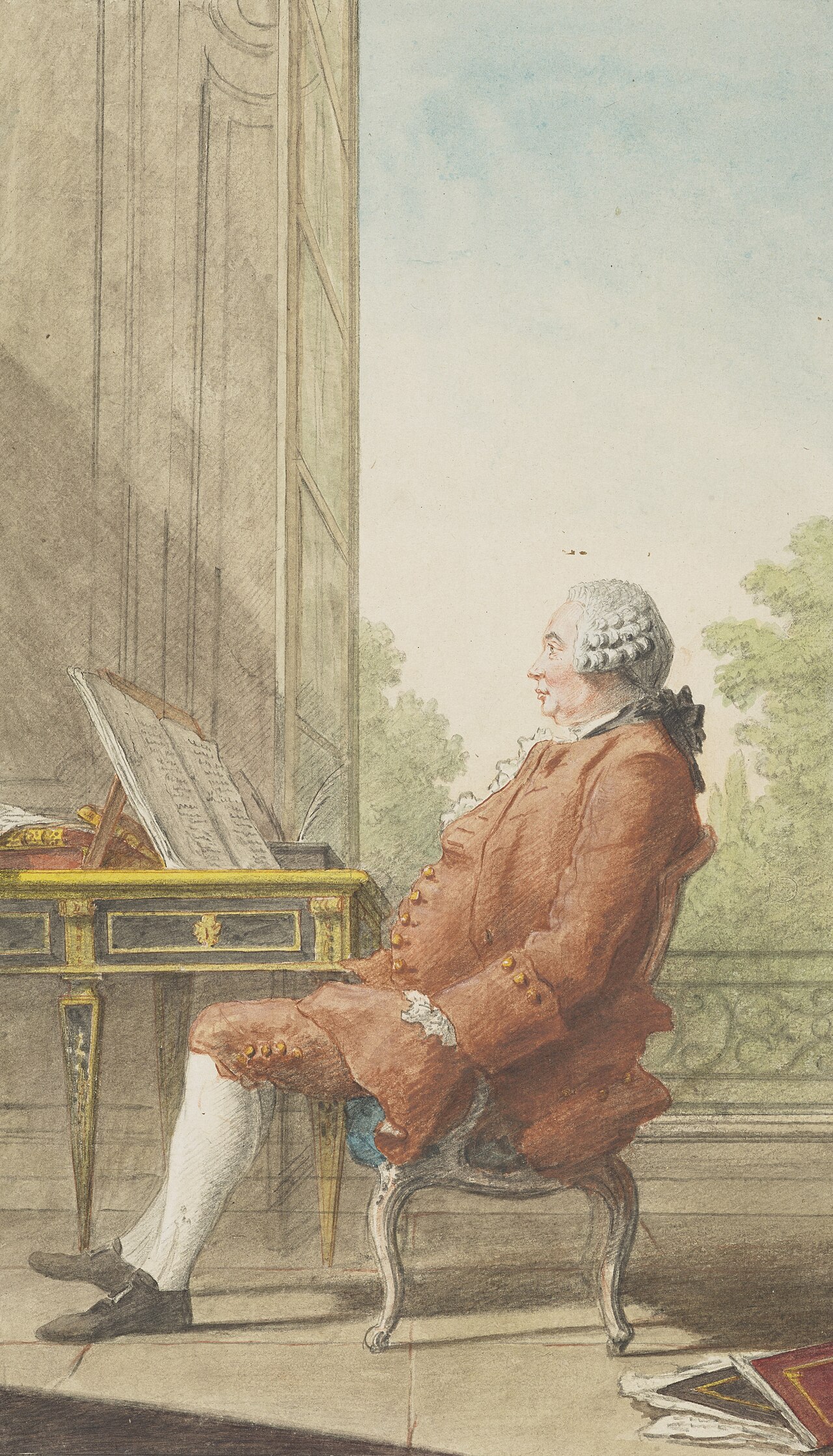
Pen and watercolor drawing of a seated man in a rust-orange coat with gold buttons, white lace cuffs and jabot, grey powdered wig with black ribbon, legs crossed, facing right beside a gilt writing desk with open sheet music. Trees and pale sky behind.Painting

Primary source

Portrait of David Hume by Carmontelle

Louis Carrogis Carmontelle · 1760s

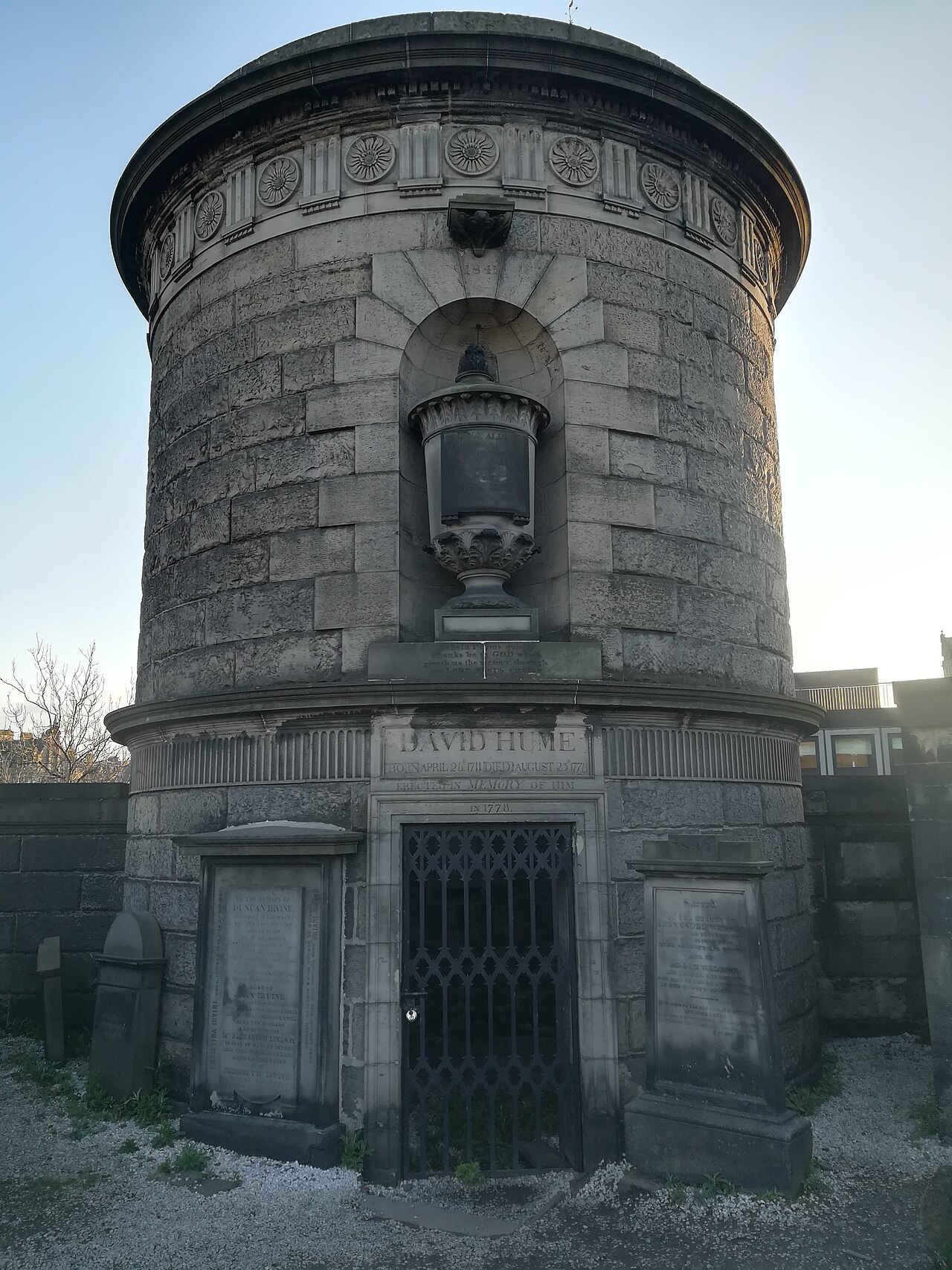
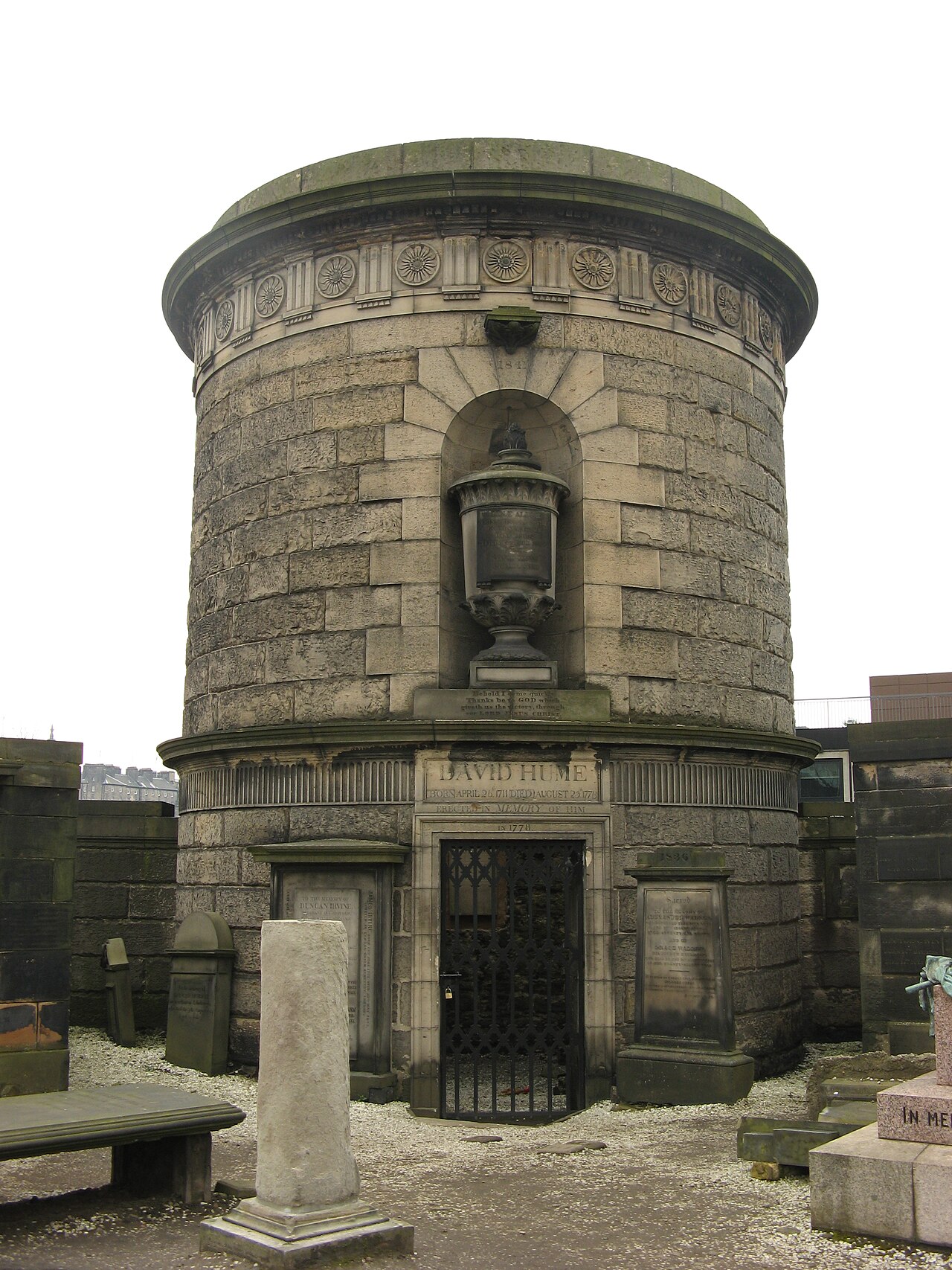
Photograph of a cylindrical stone mausoleum with a domed top and a classical frieze, set in a gravel-covered cemetery. A bronze urn sits in a central arched niche, and the lettering 'DAVID HUME' is carved above the iron-grilled door.Artifact

Secondary source

David Hume's Grave

Robert Adam

Book

Primary source

Of Superstition and Enthusiasm

David Hume · 1741

Book

Primary source

Essays, Moral, Political, and Literary

David Hume · 1758

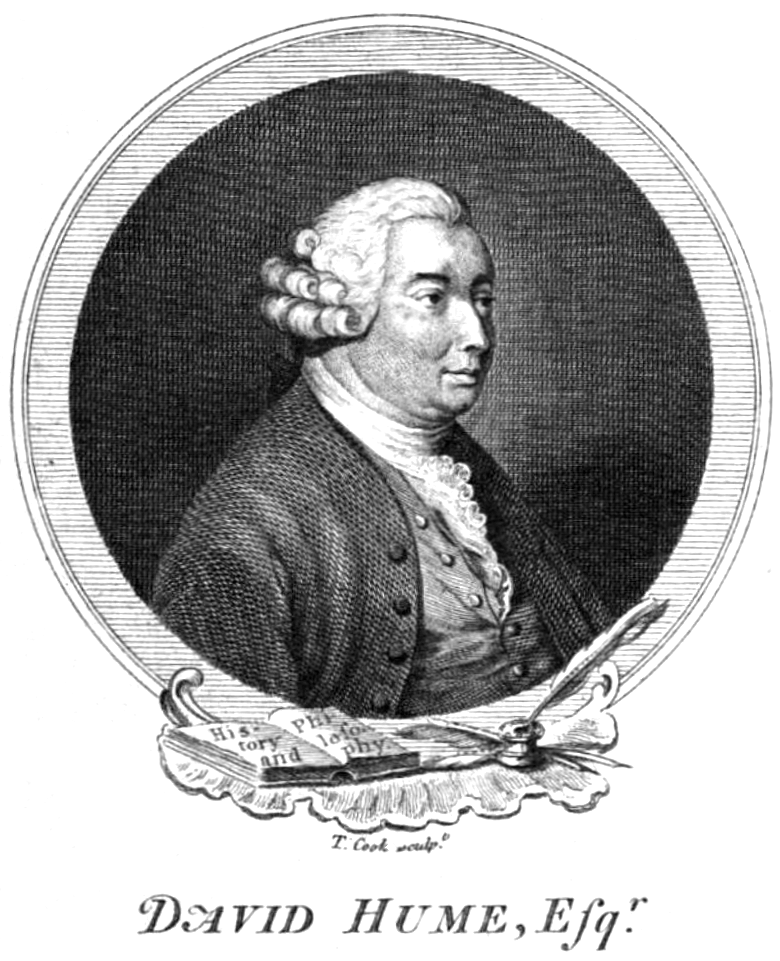
Engraved oval portrait of a man in a powdered wig and dark coat with a lace cravat, facing right, above an open book labeled 'History' and 'Philosophy' with a quill and inkwell. Caption below reads 'David Hume, Esq.' and 'T. Cook sculp.'Painting

Secondary source

Portrait of David Hume from The Life of David Hume

T. Cook · 1777

Title page of 'An Essay on the Nature and Immutability of Truth, in Opposition to Sophistry and Scepticism' by James Beattie, LL.D., Professor of Moral Philosophy and Logic in the Marischal College and University of Aberdeen. Printed text, small image, fourth edition, London.Book

Secondary source

An Essay on the Nature and Immutability of Truth

James Beattie · 1770

Front cover of a book bound in plain brown cloth, with a white library barcode label on the upper left reading 3 1761 04467 1113. No title or text is visible on the cover itself.Book

Secondary source

An Inquiry into the Human Mind on the Principles of Common Sense

Thomas Reid · 1764

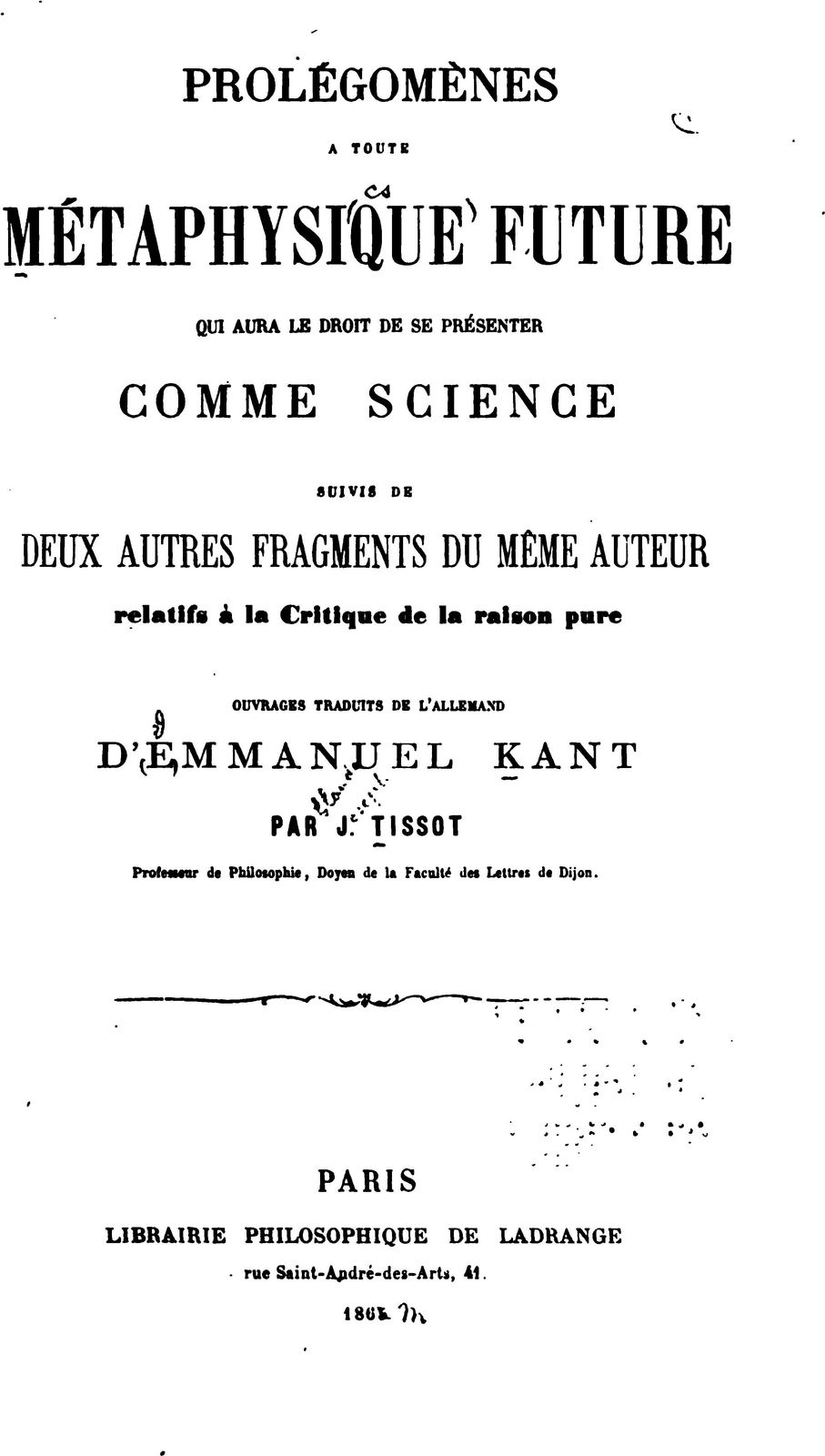
Title page of the French 1866 translation by J. Tissot: 'Prolégomènes à toute métaphysique future qui aura le droit de se présenter comme science', with Kant's name and publisher Librairie Philosophique de Ladrange, Paris.Book

Primary source

Prolegomena to Any Future Metaphysics

Immanuel Kant · 1783

Document

Primary source

Of the Liberty of the Press

David Hume · 1741

Oil portrait of a man in a red turban and brown coat with buttons, over a cream cravat and a floral embroidered waistcoat. He faces left against a dark background within an oval frame.Painting

Primary source

David Hume (1711–1776)

Allan Ramsay (style of) · 1758

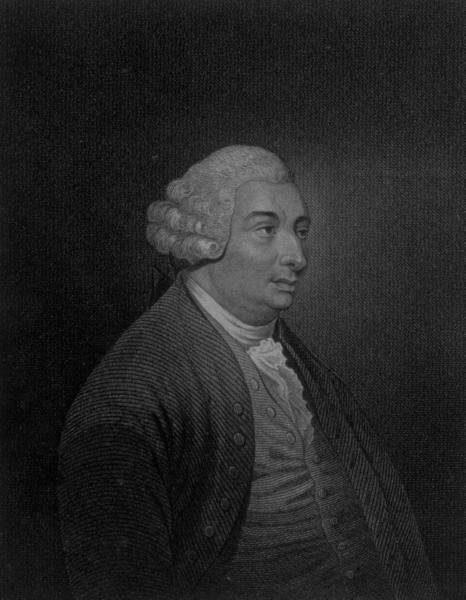
Black and white engraved portrait of a man in profile facing right, wearing a powdered wig with curls at the sides, a high white cravat, and a striped, buttoned coat. Dark shadowed background.Painting

Secondary source

Portrait of David Hume

Unknown · 1754

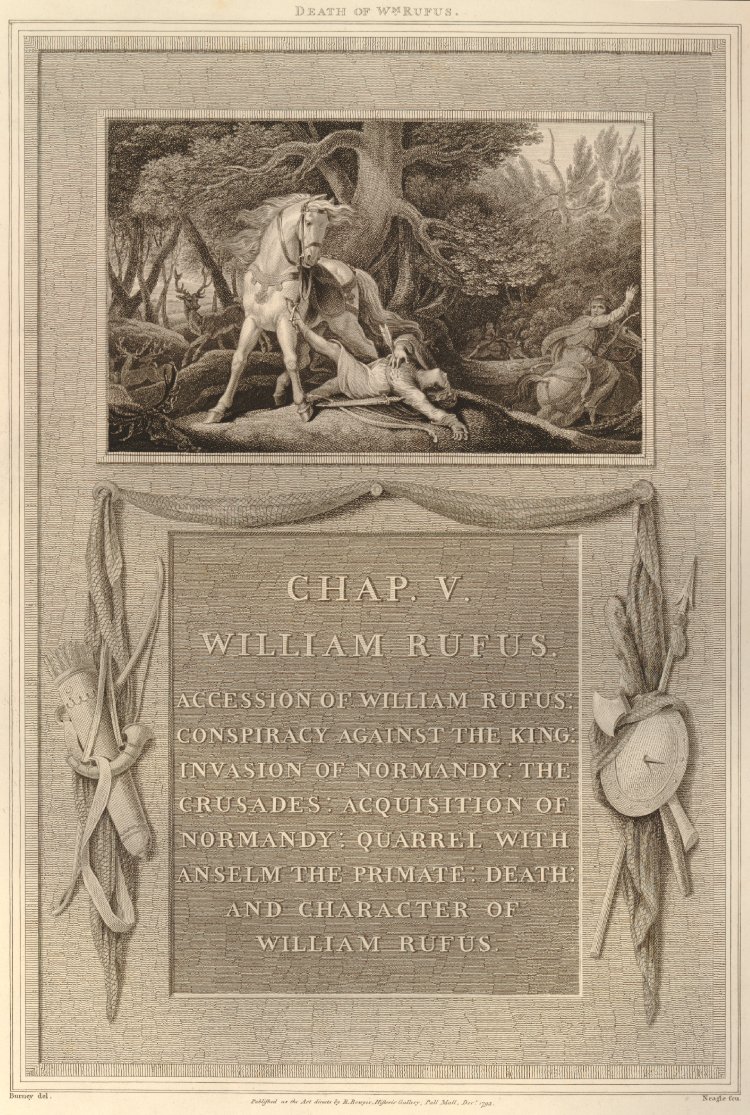
Engraved plate titled 'Death of Wm Rufus' with a framed scene in a forest: a riderless white horse rears beside a fallen man, and a figure on the right gestures among trees and a stag. Below is a text panel listing Chapter V, William Rufus, with topics such as accession, conspiracy, invasion of Normandy, and death. Decorative borders with a shield, arrows, and a spear frame the text.Painting

Secondary source

Death of William Rufus

James Neagle

Letters of David Hume to William StrahanLetter

Primary source

Letters of David Hume to William Strahan

David Hume · 1888 (letters written earlier, published in this edition)

Private Correspondence of David Hume with Distinguished PersonsLetter

Primary source

Private Correspondence of David Hume with Distinguished Persons

David Hume · 1820 (letters written 1761-1776)

The Philosophical Works of David HumeBook

Primary source

The Philosophical Works of David Hume

David Hume · 1826

An Enquiry Concerning Human Understanding, with a Letter from Adam SmithLetter

Primary source

An Enquiry Concerning Human Understanding, with a Letter from Adam Smith

David Hume · 1912 edition (letter originally 18th century)

The Central Problem of David Hume's PhilosophyBook

Secondary source

The Central Problem of David Hume's Philosophy

Christopher Verney Salmon · 1929

Letter

Primary source

A Kind of History of My Life

David Hume · 1734

Book

Primary source

Four Dissertations

David Hume · 1757

Book

Primary source

Of the Passions

David Hume

Document

Primary source

A Letter to Adam Smith on the Life, Death and Philosophy of David Hume

1777

Book

Secondary source

Hume

Thomas Henry Huxley · 1879

Hume, Blackwood's Philosophical ClassicsBook

Secondary source

Hume, Blackwood's Philosophical Classics

William Angus Knight · 1886

A Dissertation on MiraclesBook

Secondary source

A Dissertation on Miracles

George Campbell · 1839

An Essay upon the Relation of Cause and EffectBook

Secondary source

An Essay upon the Relation of Cause and Effect

Mary Shepherd · 1824

Book

Secondary source

La philosophie de David Hume

Gabriel Compayré · 1873

The Imagination in Spinoza and HumeBook

Secondary source

The Imagination in Spinoza and Hume

Willard Clark Gore · 1902

David Hume and His Influence on Philosophy and TheologyBook

Secondary source

David Hume and His Influence on Philosophy and Theology

James Orr · 1903

Book

Secondary source

Inquiry into the Relation of Cause and Effect

Thomas Brown · 1835

Book

Secondary source

Studies in the Philosophy of David Hume

Charles William Hendel · 1925

Book

Primary source

Of Tragedy

David Hume

Document

Primary source

Preface to The Life of David Hume, Esq.

1777

Book

Primary source

The History of England: The Early Britons to King John

David Hume · 18th century

Book

Primary source

An Enquiry Concerning Human Understanding (audio reading)

David Hume · 18th century

Book

Primary source

Dialogues Concerning Natural Religion (audio reading)

David Hume · 18th century

Book

Primary source

History of England (LibriVox audio reading of Volume 1A)

David Hume · 1754-1764

Book

Tertiary source

Hume, David (Dictionary of National Biography entry)

1885-1900

Book

Tertiary source

Hume, David (Encyclopaedia Britannica entry, 1911)

1911

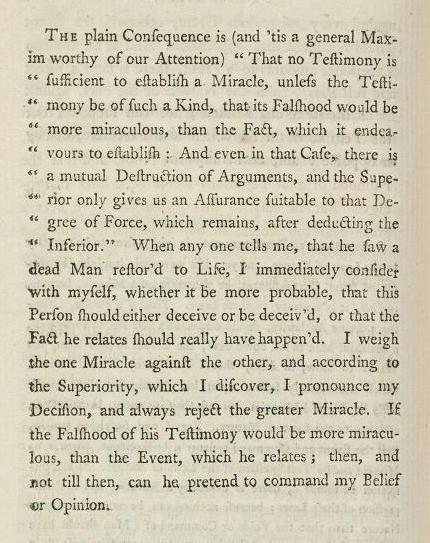
Scanned page of printed text in an 18th-century typeface, featuring Hume's argument on miracles: the plain consequence is that no testimony is sufficient to establish a miracle unless the testimony's falsehood would be more miraculous than the fact it endeavours to establish. The text continues, weighing one miracle against another and concluding that one should not believe a testimony of a dead man restored to life.Book

Primary source

Page from Hume's Enquiry (1748)

David Hume · 1748

Über das Verhältnis der Husserlschen Phänomenologie zu David Hume (dissertation by Friedrich Sauer)Book

Secondary source

Über das Verhältnis der Husserlschen Phänomenologie zu David Hume (dissertation by Friedrich Sauer)

Friedrich Sauer · 1930

Oil painting of a man with powdered grey hair in a red coat with ornate gold embroidered trim and white lace cravat and cuffs, resting his hand on a stack of books against a dark background.Painting

Primary source

Portrait of David Hume

Allan Ramsay · 1766

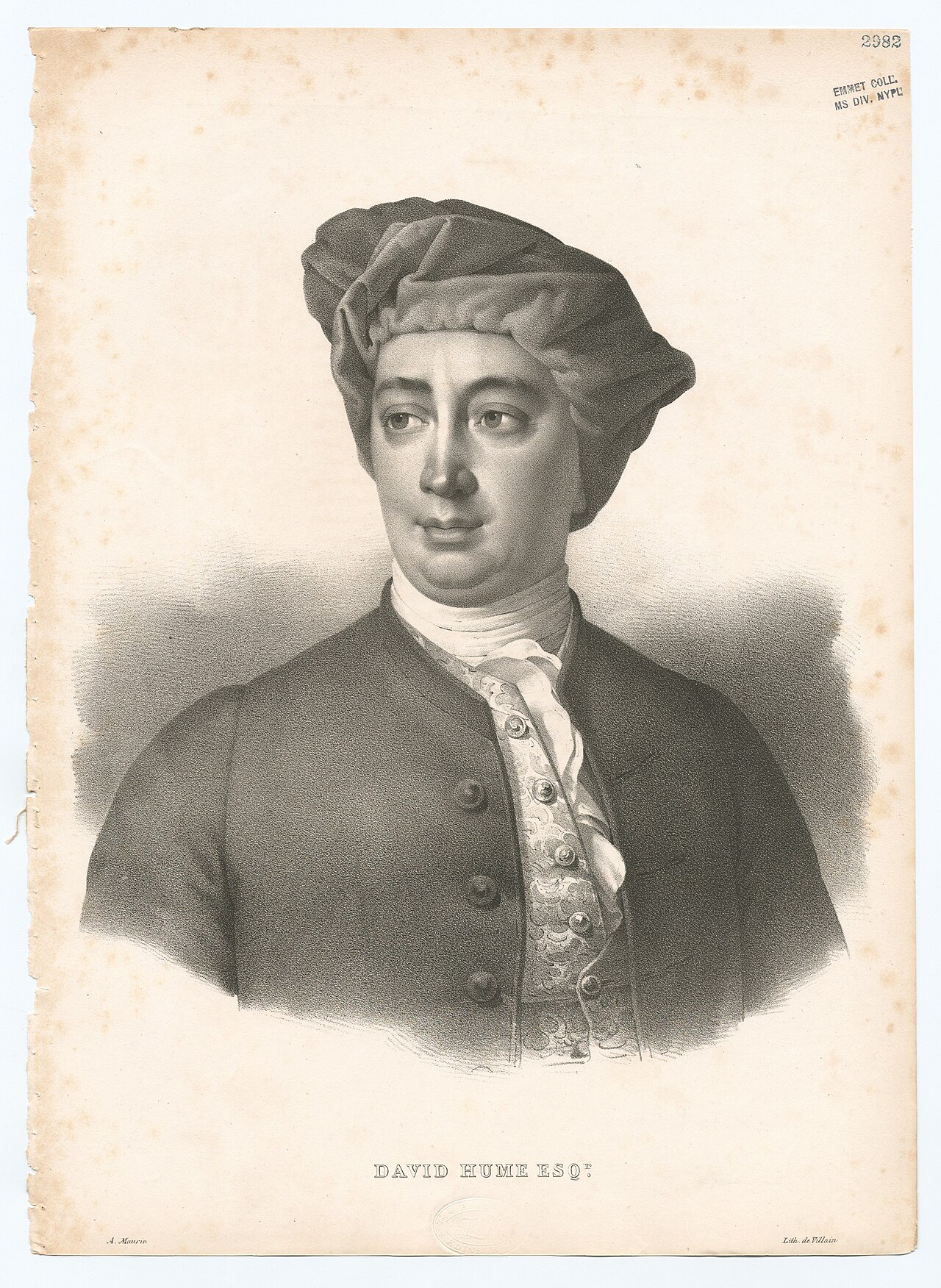
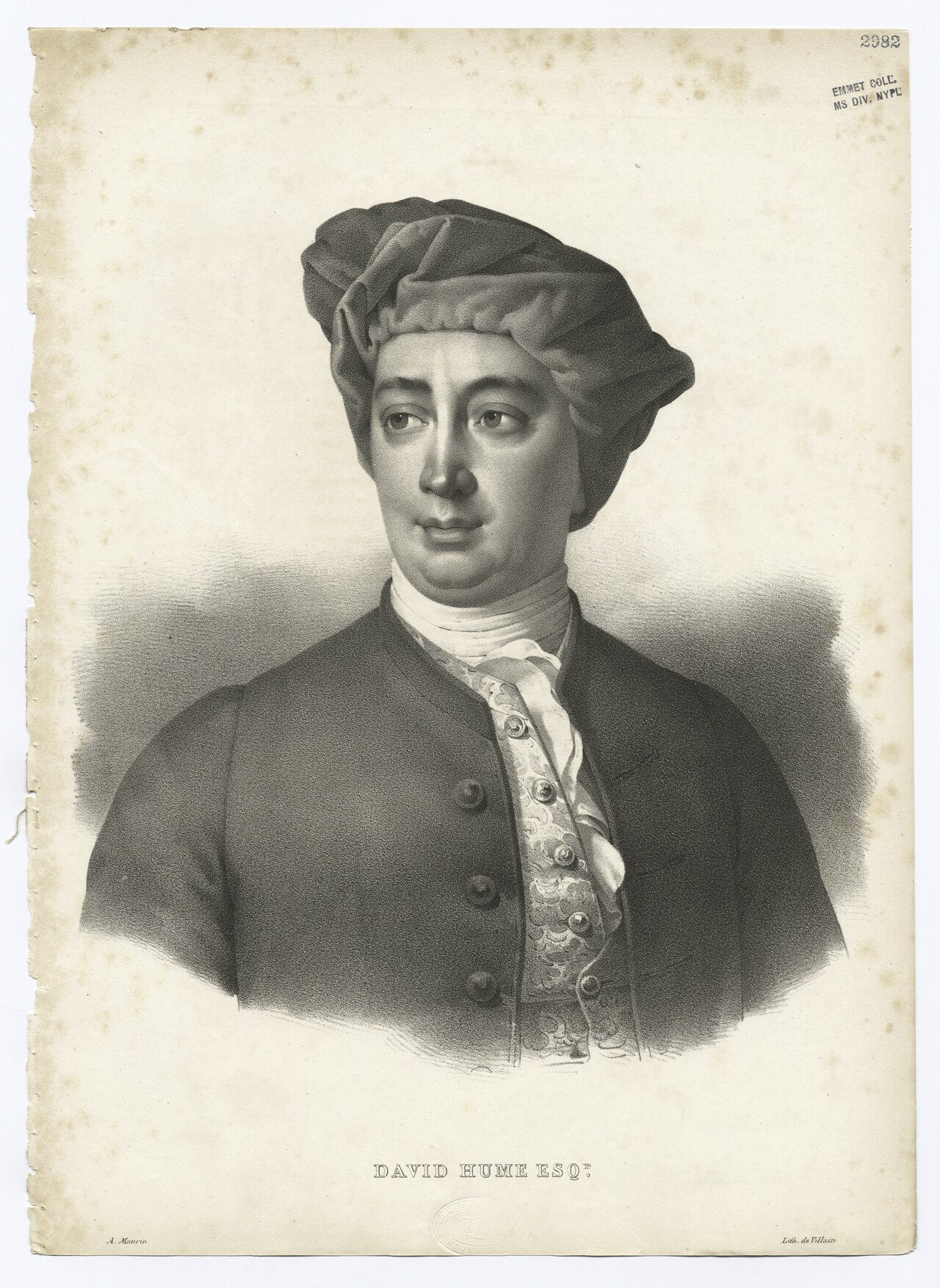
Lithograph portrait of a man in a fur-trimmed or soft turban-style cap, dark coat with buttons, patterned waistcoat and white cravat, shown in three-quarter view. Caption below reads 'DAVID HUME ESQR.' Aged paper with library stamps.Painting

Secondary source

David Hume Esqr

Antoine Maurin · 1820

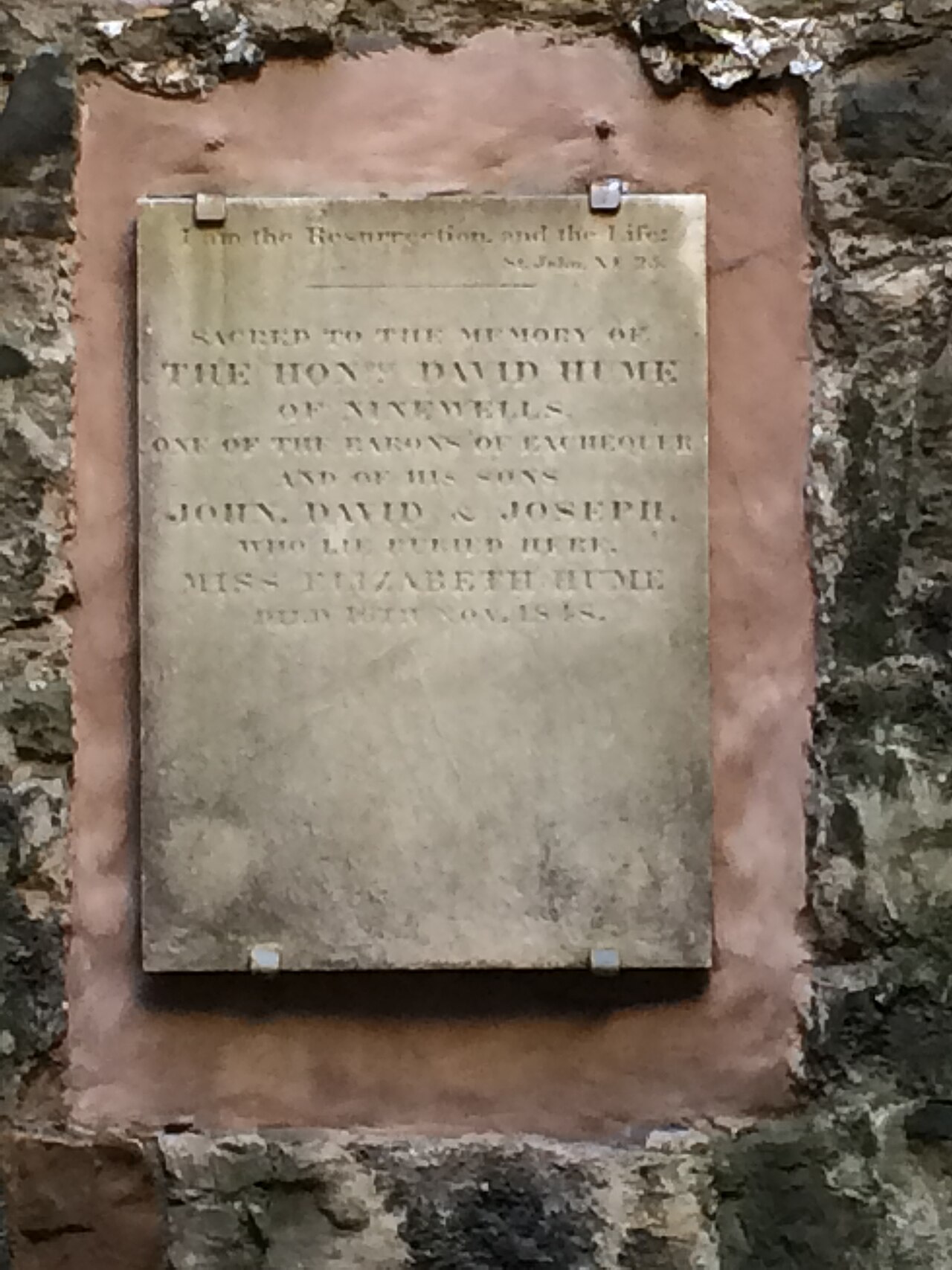
Photograph of a stone memorial plaque set in a reddish sandstone frame within a rough stone wall. Carved inscription reads: 'I am the Resurrection, and the Life. St John XI 25.' Below: 'Sacred to the memory of The Honble David Hume of Ninewells, one of the Barons of Exchequer and of his sons John, David & Joseph, who lie interred here. Miss Elizabeth Hume died 8th Nov 1848.' Four metal fixings are visible at the corners.Photograph

Secondary source

Memorial plaque inside David Hume's tomb, Edinburgh

TonyBallioni · 2015-09-29

Book

Primary source

Treatise of Human Nature, Book 1, Part 3

David Hume · 1888

Black and white lithographic print of a man in a close-fitting turban-style cap, dark coat with buttons, patterned waistcoat and white cravat, shown in three-quarter view looking to the side. Printed caption below reads 'DAVID HUME ESQR.' Library stamps appear in the top right corner.Painting

Secondary source

David Hume Esqr

Villain · 1820

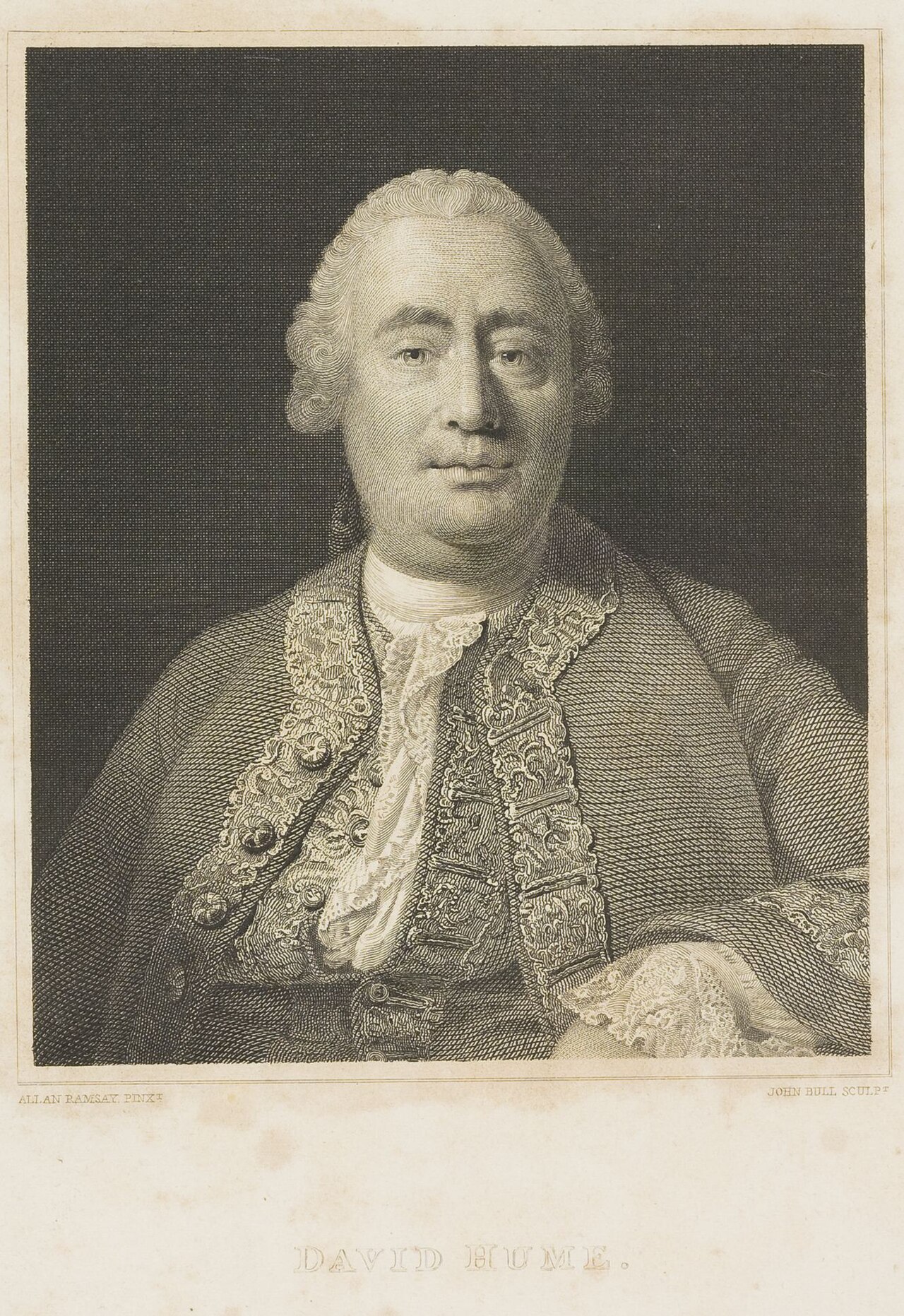
Engraved portrait of David Hume, a bust-length man in an embroidered coat with lace cravat and powdered hair, against a dark background. Signed 'Allan Ramsay pinx' and 'John Bull sculpt'. Caption below reads 'DAVID HUME.'Painting

Secondary source

David Hume engraving after Allan Ramsay portrait

John Bull

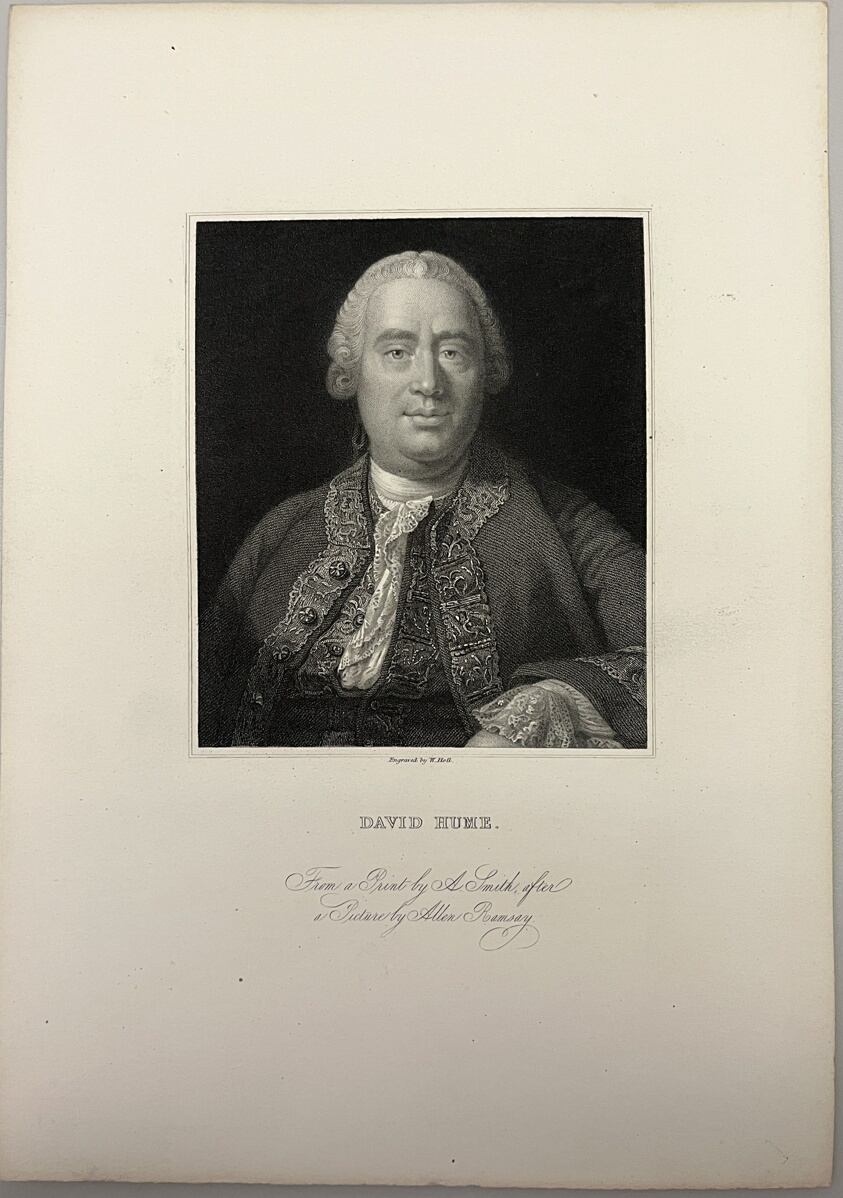
Engraved portrait print of David Hume, a man with a powdered wig in a lace-trimmed embroidered coat and cravat, against a dark background. Caption below reads 'David Hume' and 'From a Print by A. Smith, after a Picture by Allan Ramsay'. Engraved by W. Holl.Painting

Secondary source

David Hume, stipple engraving by William Holl after Anker Smith and Allan Ramsay

William Holl

Book

Tertiary source

Hume, David, entry in A Short Biographical Dictionary of English Literature (1910)

John William Cousin · 1910

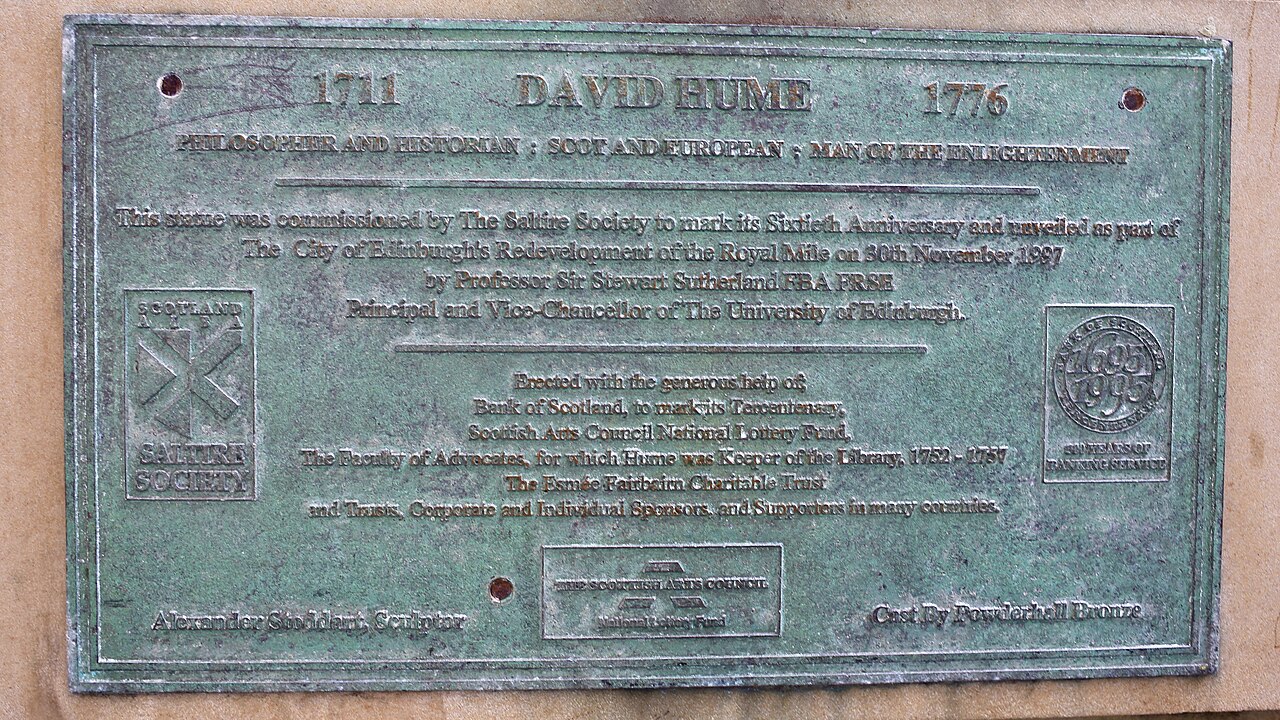
Bronze plaque on a stone wall reading 1711 DAVID HUME 1776, with text about philosopher and historian, Scot and European, man of the Enlightenment, commissioned by the Saltire Society and unveiled in 1987 on the Royal Mile in Edinburgh.Photograph

Secondary source

David Hume Memorial in Edinburgh plaque photo, 2018

Ogmios · 31 July 2018

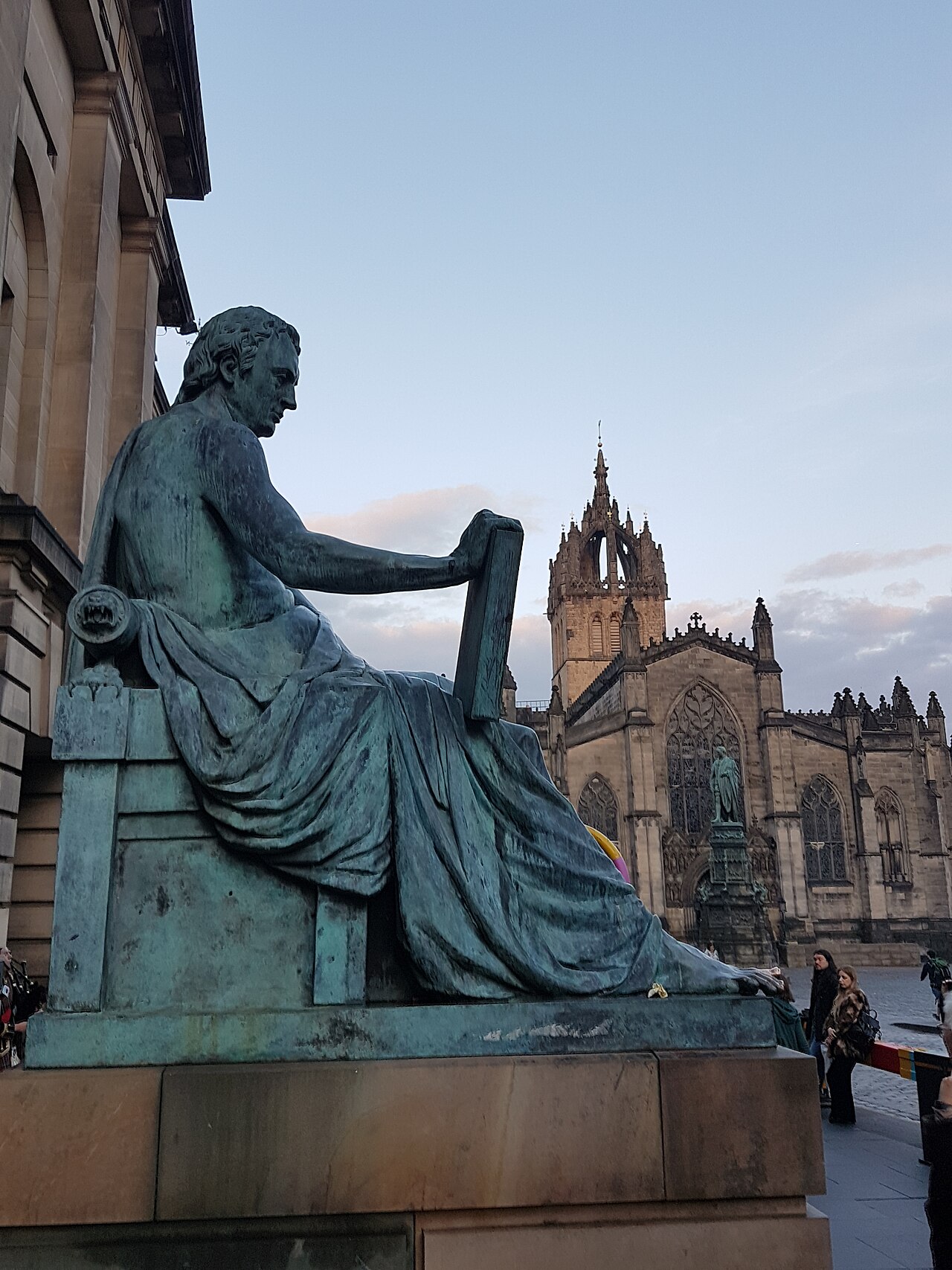
Bronze statue of a seated man in robes, reading a book on his lap, on a stone plinth beside a Gothic stone cathedral tower in Edinburgh. Pedestrians walk nearby at dusk.Photograph

Secondary source

David Hume statue on High Street, Edinburgh, 2017 photo

Stinglehammer · 25 September 2017

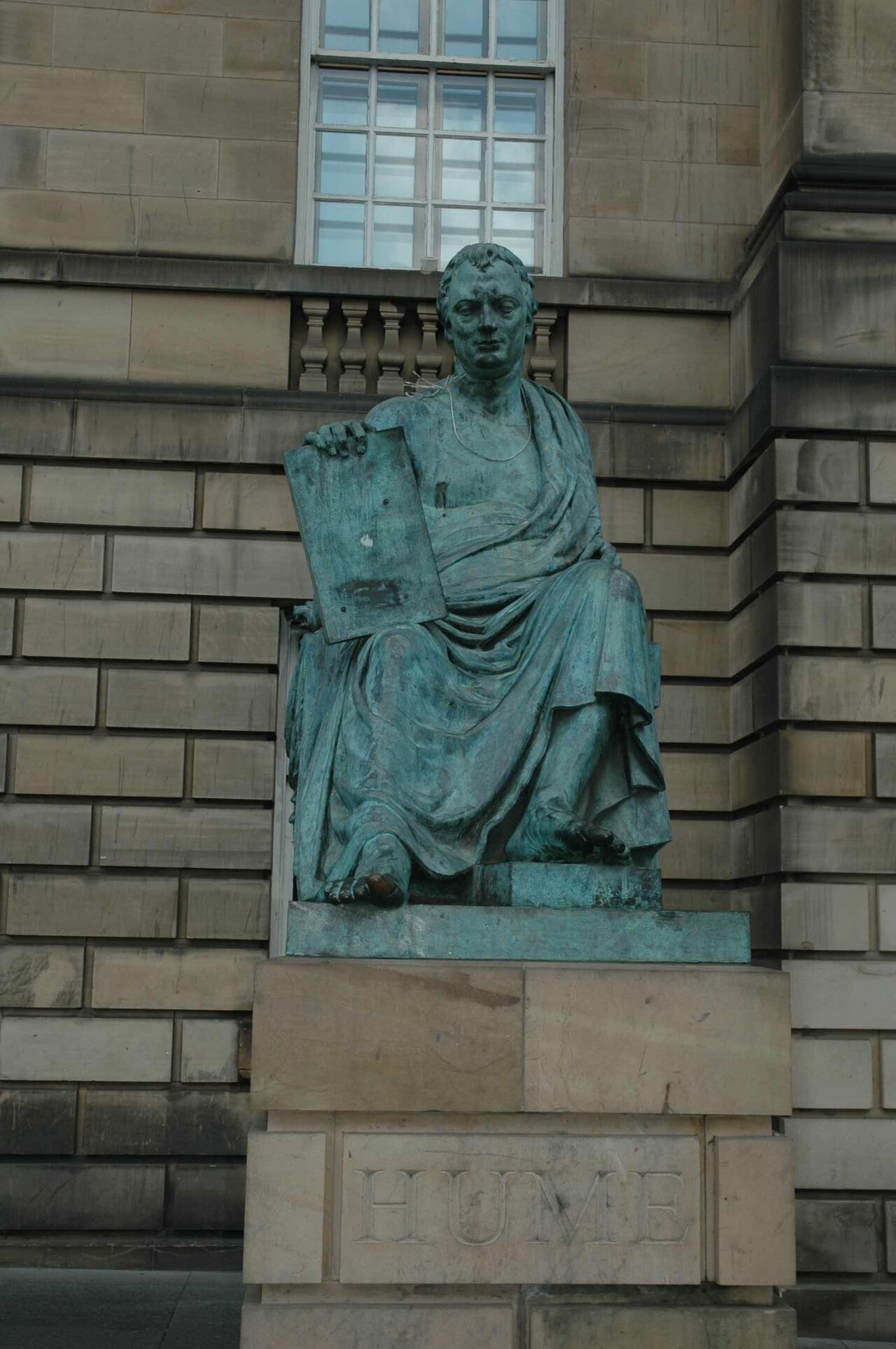
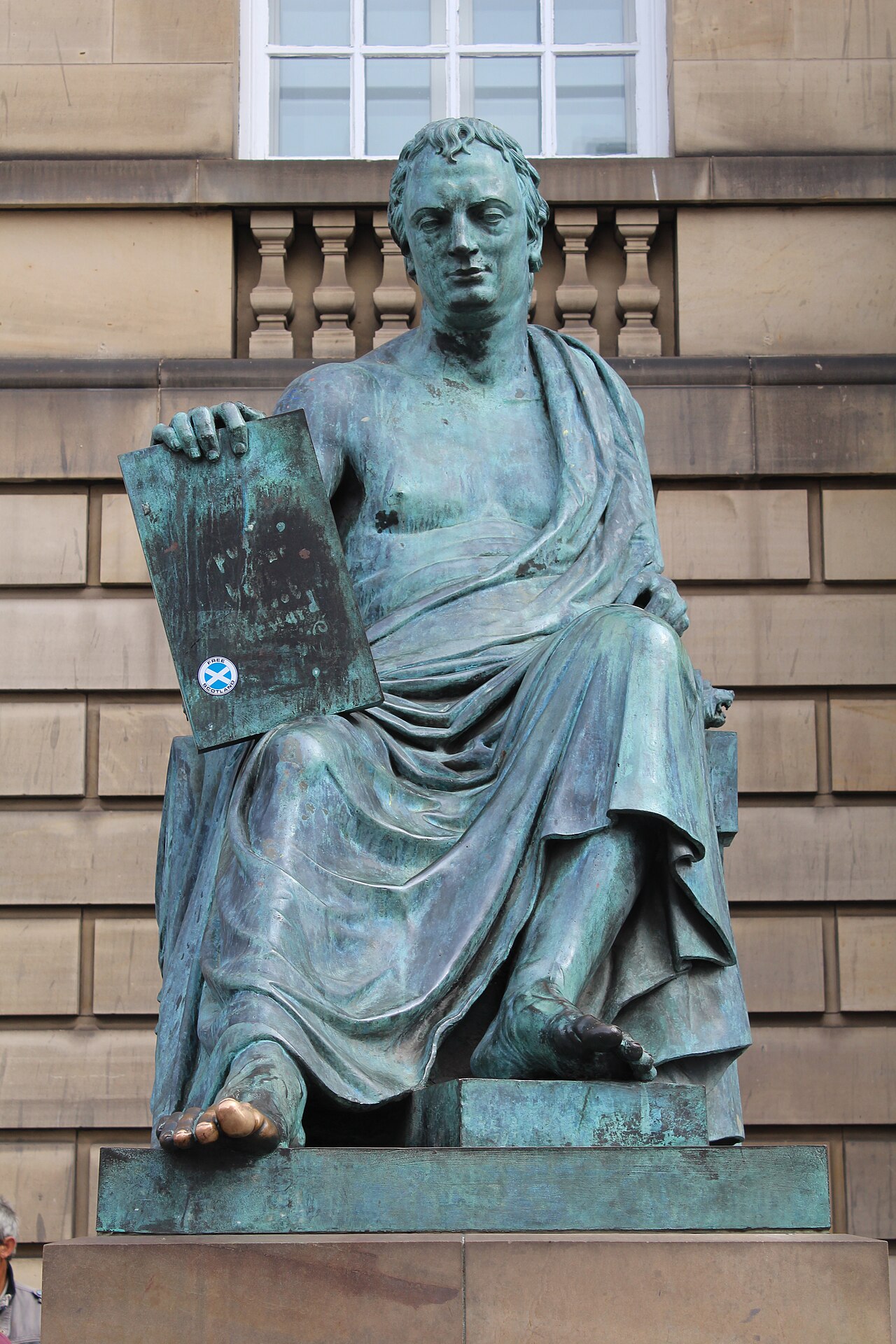
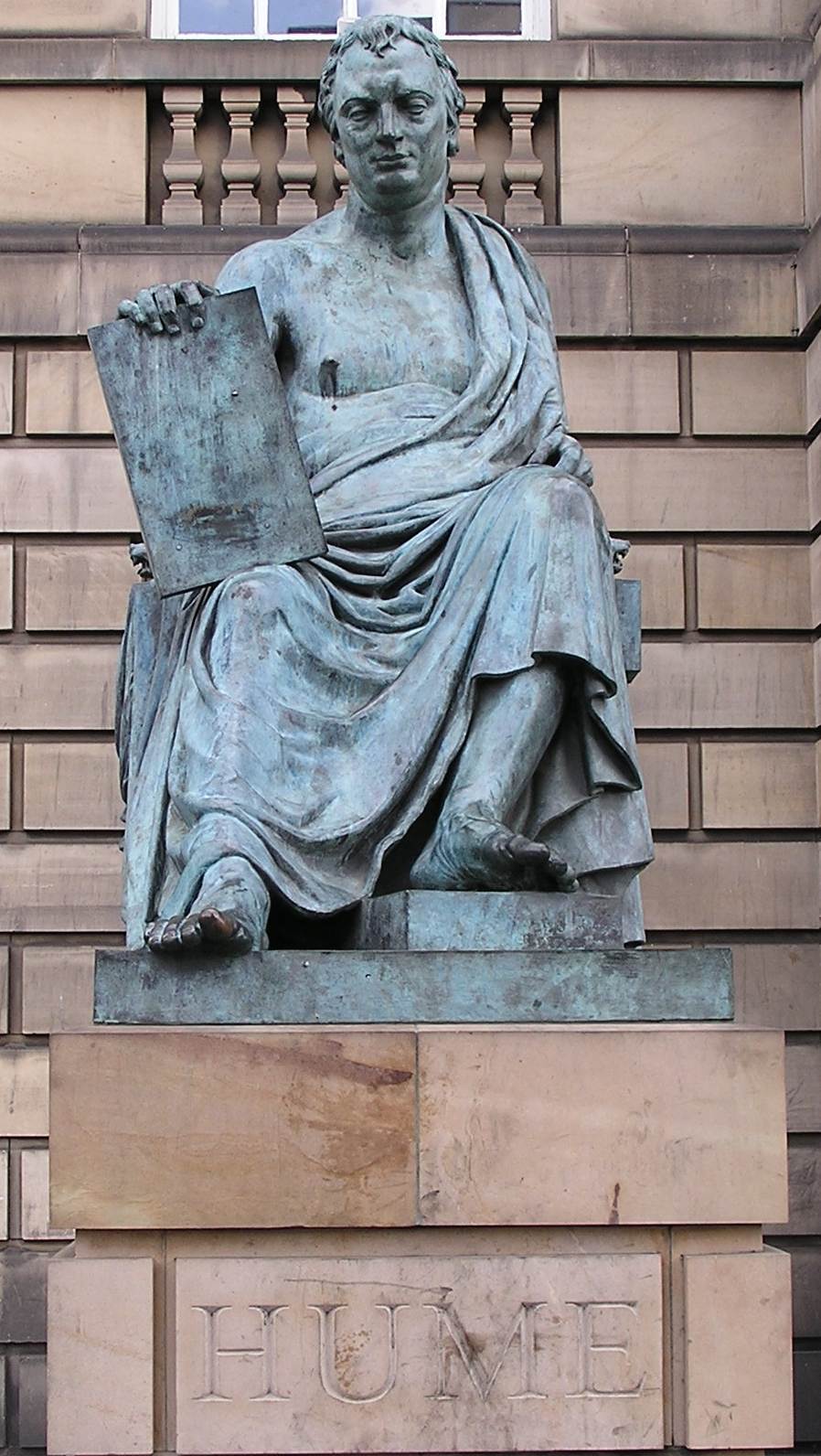
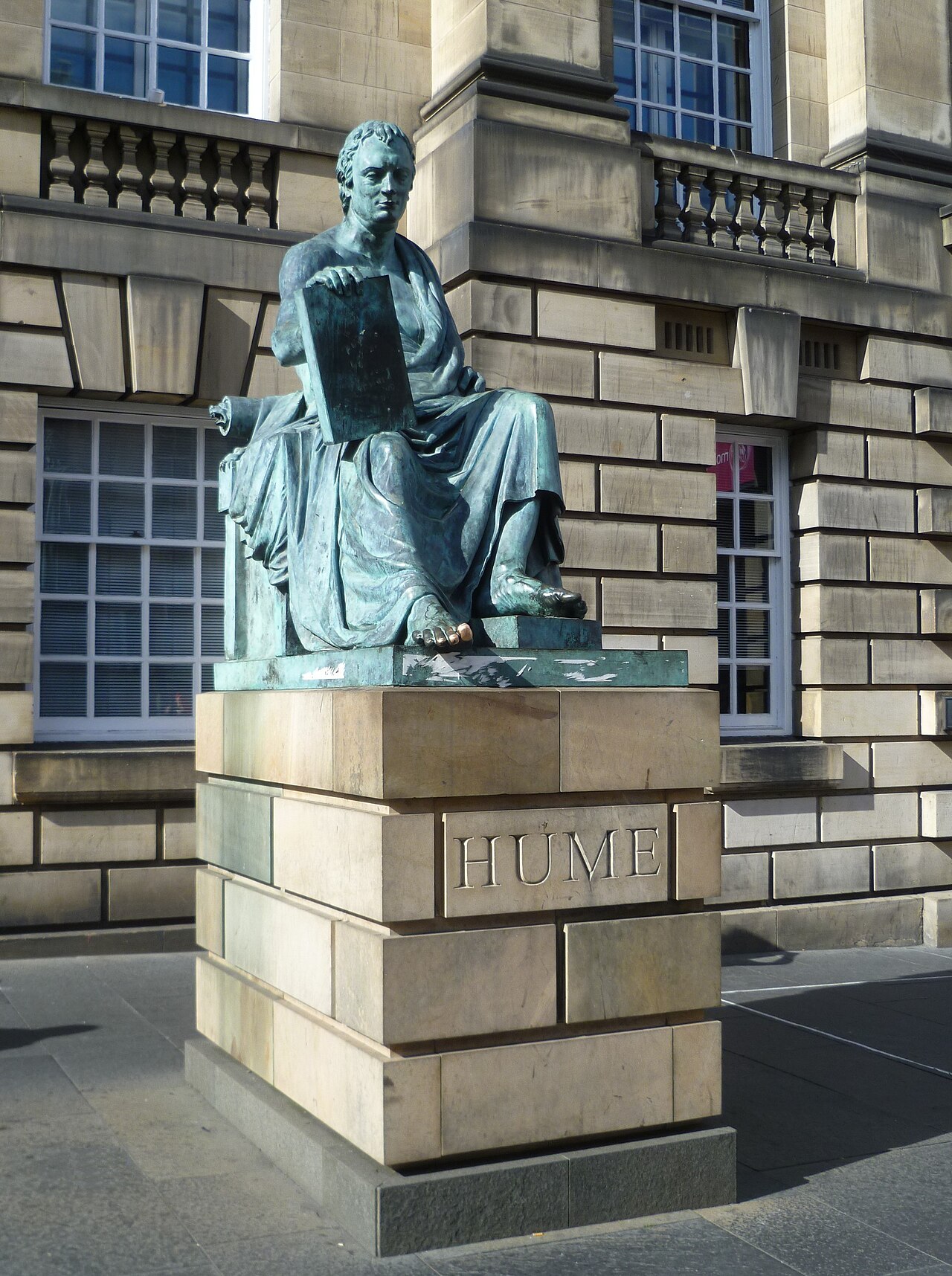
Bronze-green patinated statue of a seated man in classical robes holding a large tablet or book on his left knee, set on a stone plinth engraved with the word HUME, in front of a grey stone building with a sash window.Photograph

Secondary source

Hume statue by Sandy Stoddart, Edinburgh, 2006 photo

Kevin Hammond · 11 June 2006

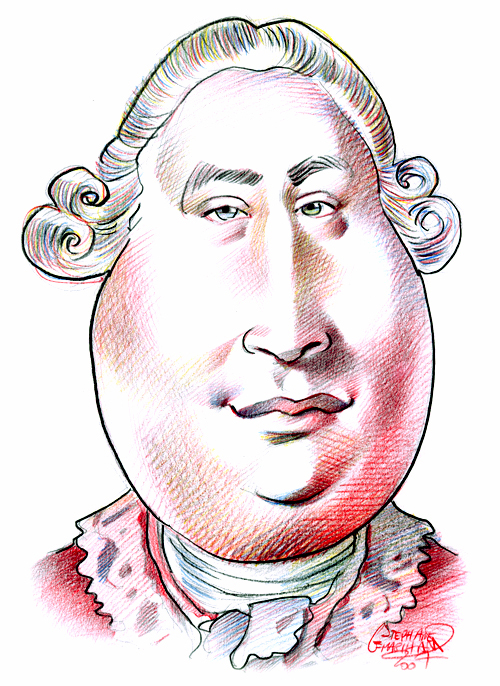
Colored pencil caricature drawing of a man in an 18th-century style powdered wig with rolled side curls. He has a large, egg-shaped head, heavy brows, a small nose, and a faint smile, wearing a white cravat and red-tinged collar. A signature and the year 2007 appear in the lower right.Painting

Secondary source

Caricature of David Hume, 2007 colored pencil drawing

Stéphane Lemarchand · 2007

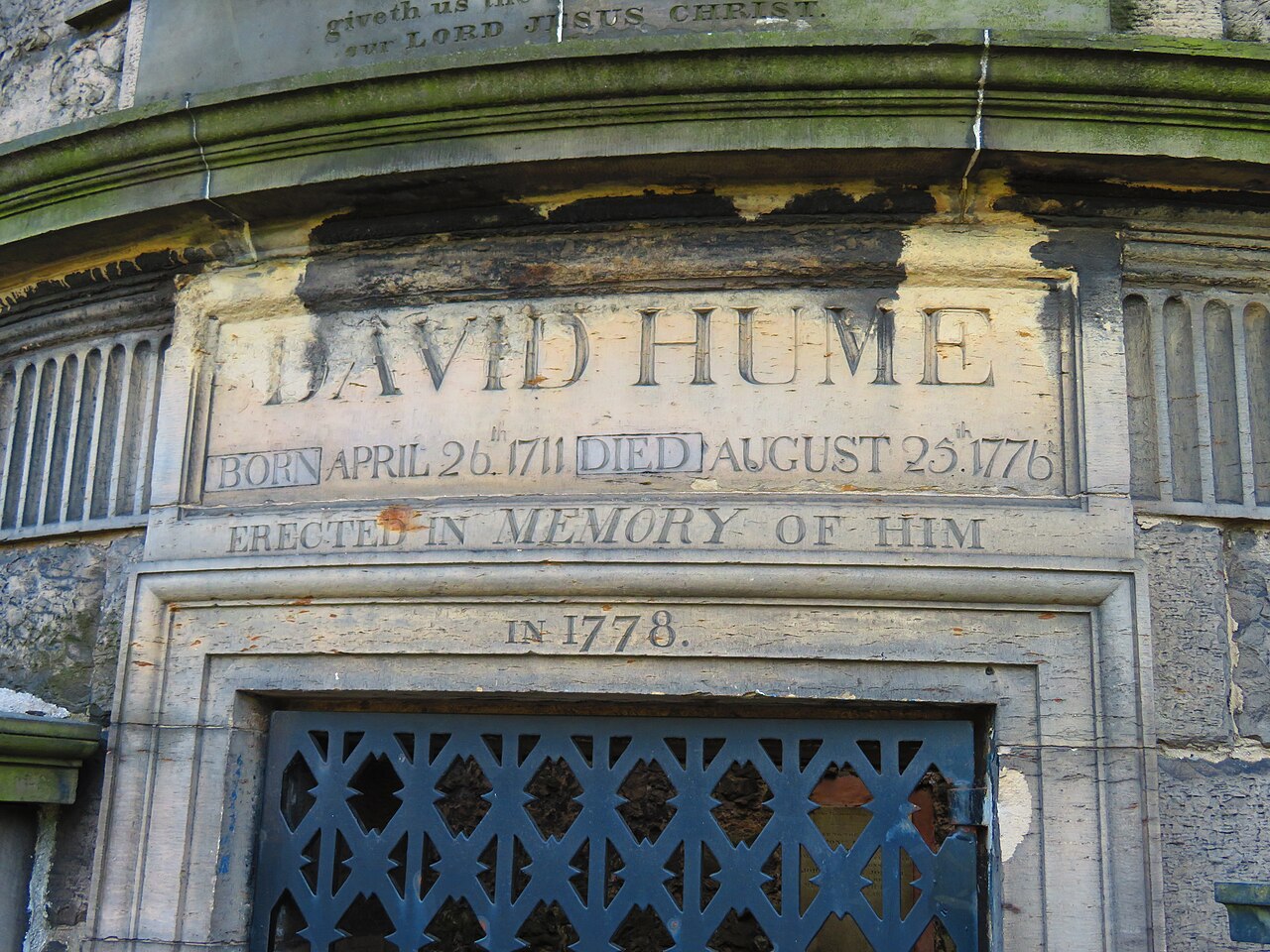
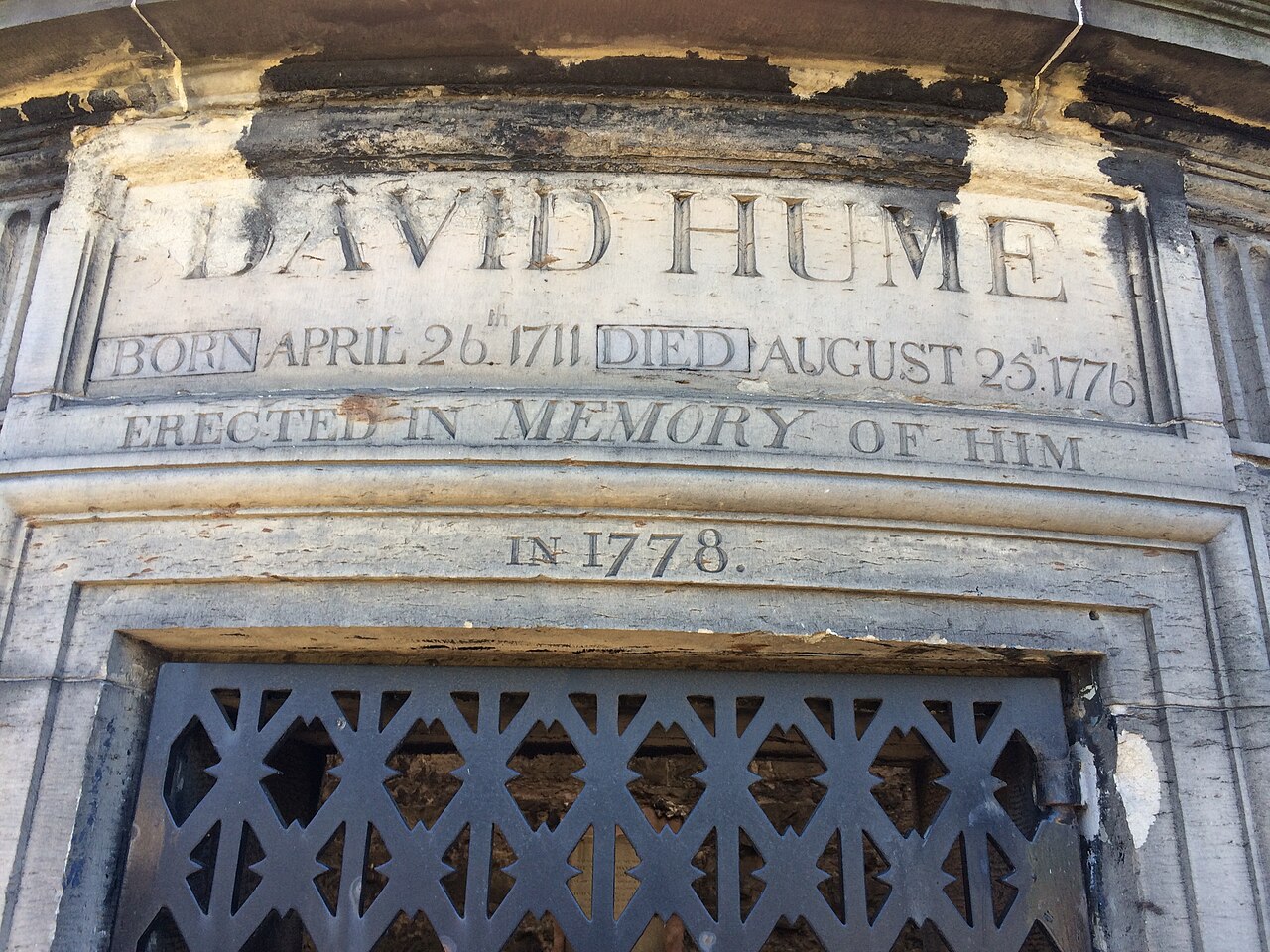
Close-up photo of the carved stone monument to David Hume. Inscription reads 'DAVID HUME, BORN APRIL 26 1711, DIED AUGUST 25 1776, ERECTED IN MEMORY OF HIM, IN 1778' above a barred metal gate. Weathered stone with a partial inscription above.Photograph

Secondary source

David Hume monument photo, Edinburgh

Kristijrn · 2017-09-11

Bronze statue of a seated man in classical draped robes, holding a book on his lap with his left hand, set on a stone plinth in front of a stone building with a window and balustrade. A small blue and white Scottish saltire sticker is on the book.Photograph

Secondary source

Statue of David Hume, Edinburgh

Chabe01 · 2018-06-23

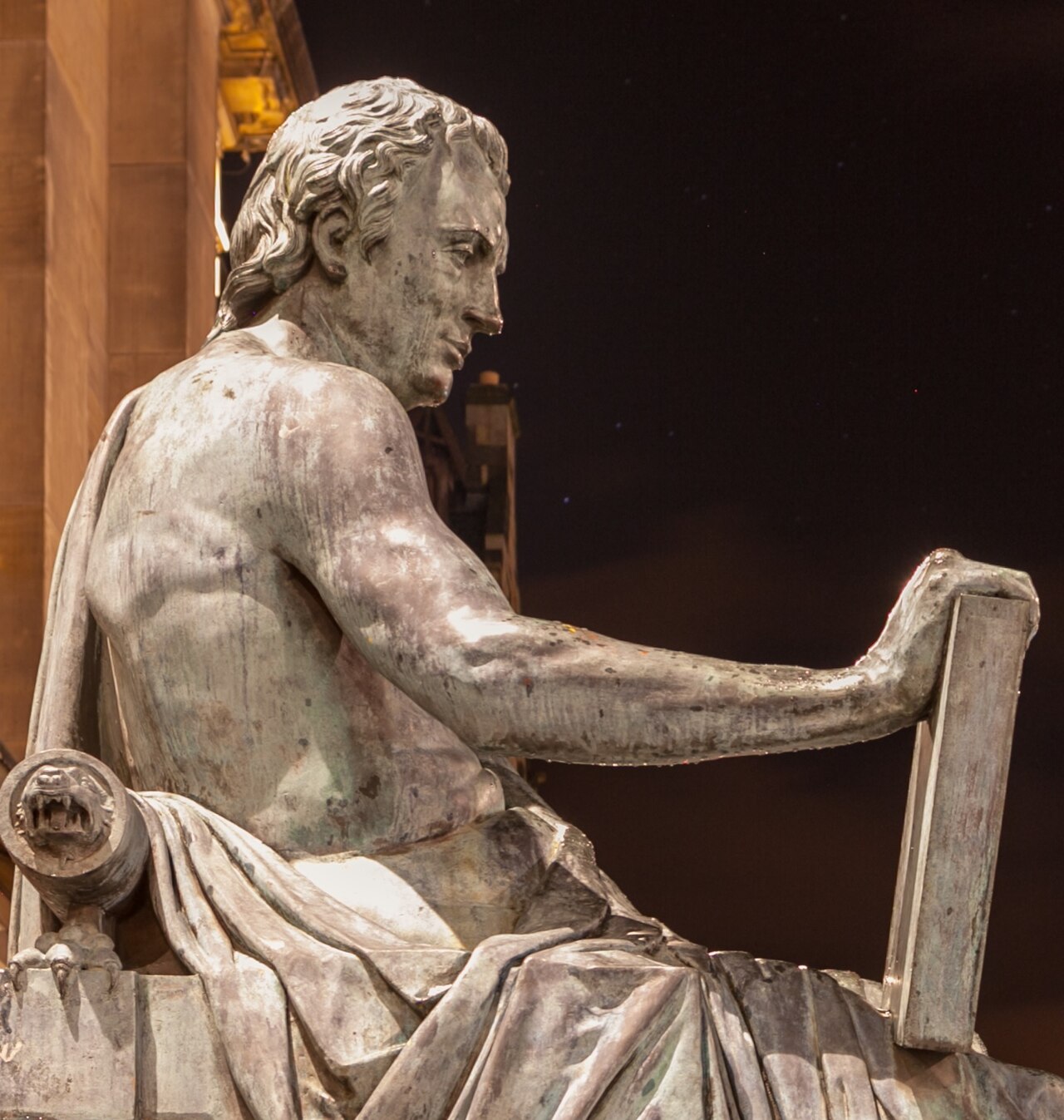
Night photograph, close crop, of a weathered bronze seated statue of a man with wavy hair, bare upper torso and draped lower body, gazing to the right. His right arm rests on a tall stone-like block. Behind is a dark sky and a yellow-lit stone building edge.Photograph

Secondary source

Hume statue, night photograph, Edinburgh

User:Bandan · 2018-12-16

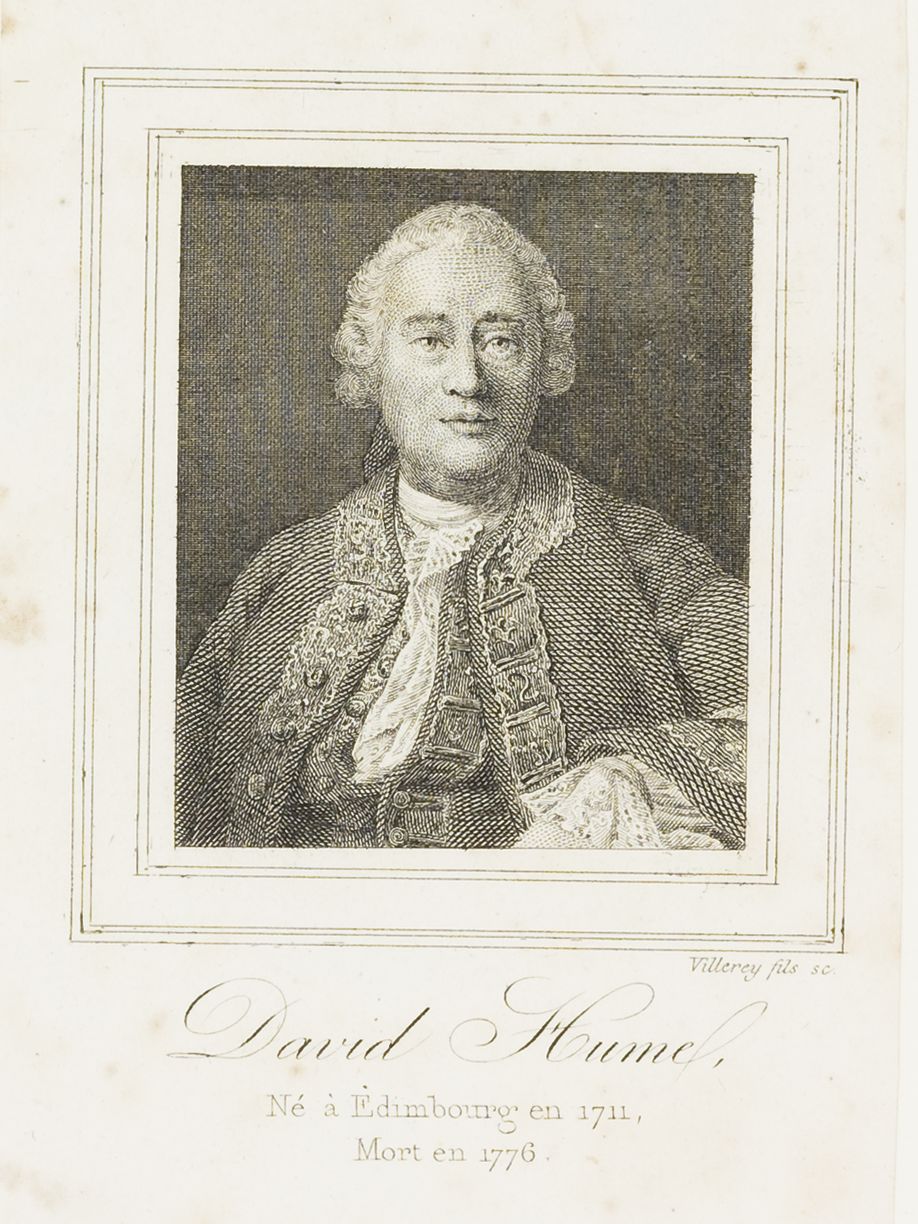
Engraved portrait of a man with light curled hair, wearing an embroidered coat with lace cravat, set in a double-ruled frame. Cursive French caption below reads David Hume, Né à Édimbourg en 1711, Mort en 1776. Signed Villerey fils sc.Painting

Secondary source

David Hume portrait engraving by Auguste Villerey

Auguste Villerey · s.d. (published 1801-1900)

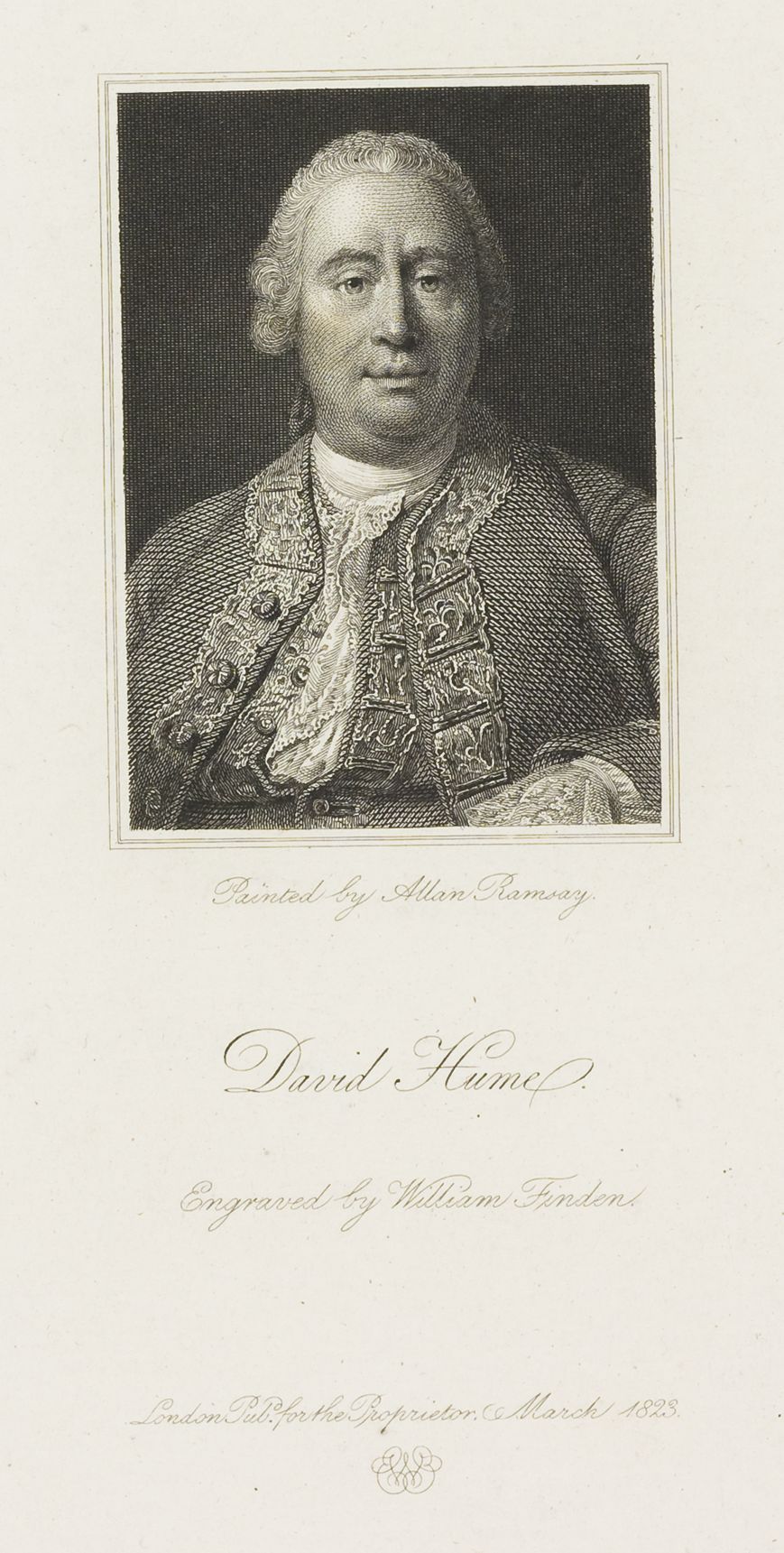
Engraved portrait of David Hume, a man with curled powdered hair, wearing an embroidered coat over a lace cravat, in an oval-free rectangular frame. Printed text below reads 'Painted by Allan Ramsay', 'David Hume', 'Engraved by William Finden', and 'London Pub. for the Proprietor, March 1823'.Painting

Secondary source

David Hume engraving by William Finden after Allan Ramsay, 1823

William Finden · March 1823

Free Will and Four English PhilosophersBook

Secondary source

Free Will and Four English Philosophers

Joseph Rickaby · 1906

Book

Secondary source

A View of the Principal Deistical Writers

John Leland · 1808

Book

Secondary source

A Biographical Index to Hume's History of England

S. Y. McMasters · 1854

Autobiography, volume 27 (Memoirs of Vidocq), with Hume's lifeBook

Secondary source

Autobiography, volume 27 (Memoirs of Vidocq), with Hume's life

1826

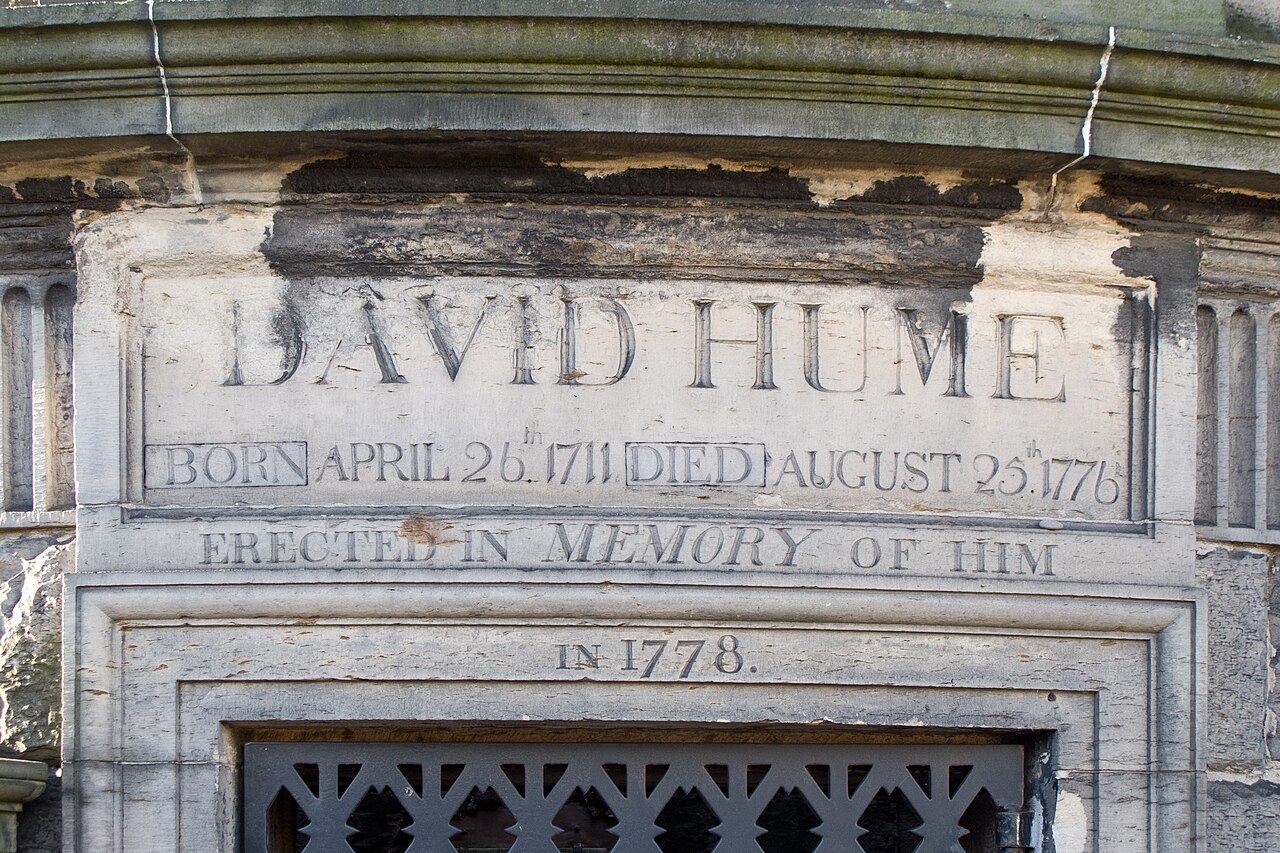
Close-up of a weathered stone inscription on a tomb: 'DAVID HUME' carved in large capitals, below it 'BORN APRIL 26 1711 DIED AUGUST 25 1776', then 'ERECTED IN MEMORY OF HIM' and 'IN 1778'. Beneath is an ornate iron grille over a doorway.Photograph

Secondary source

Tomb of David Hume, Edinburgh (detail)

TonyBallioni · 2015

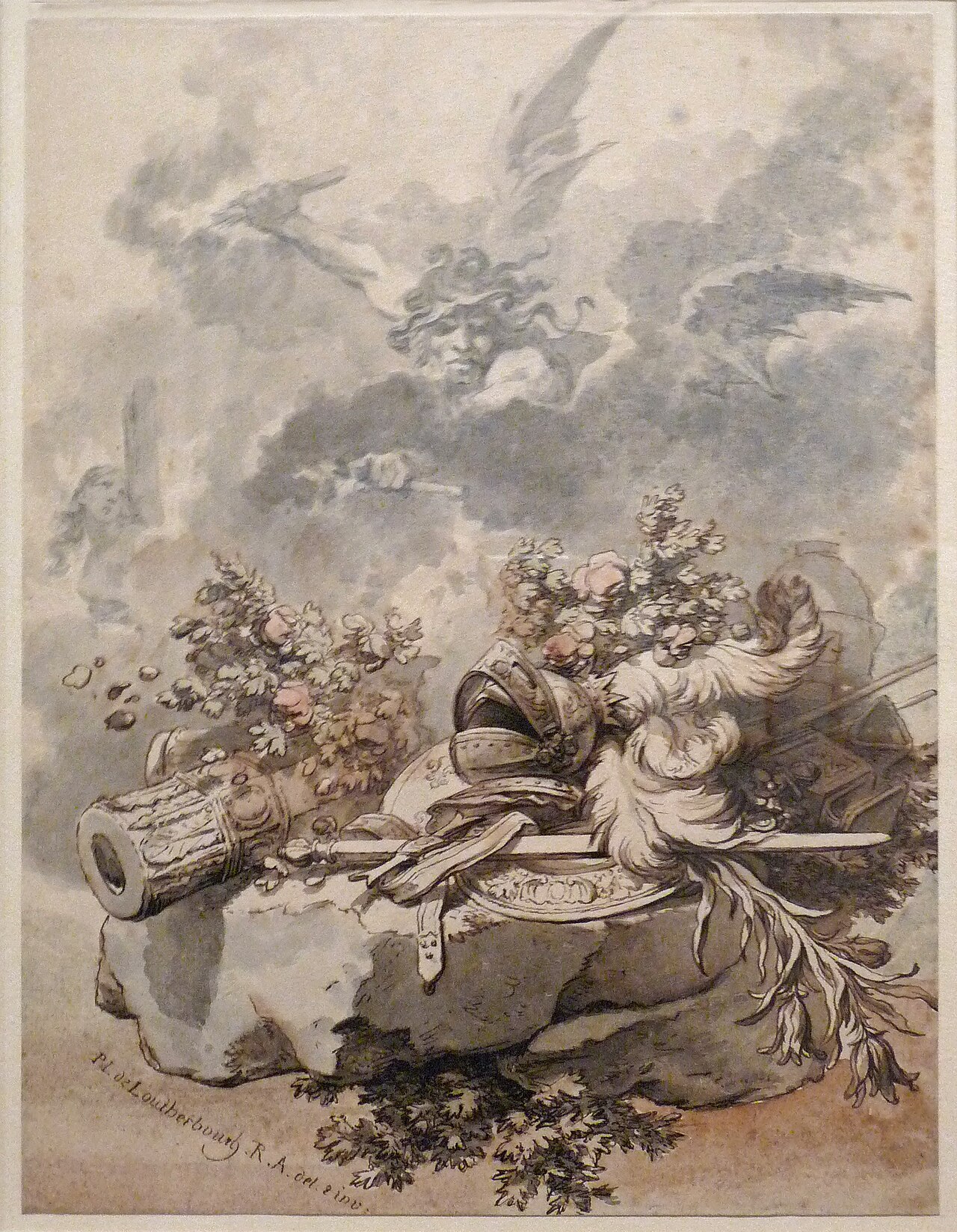
Pen, brown and grey ink and wash drawing of a rock strewn with a helmet, plumed headdress, sword, shield, and cannon-like barrel, with flowers and foliage. Above, clouds, a face with flowing hair, wings, and a faint figure at left.Painting

Secondary source

The House of Lancaster, frontispiece design for Bowyer's edition of Hume's History

Philippe-Jacques de Loutherbourg · c. 1780s or later, undated in facts

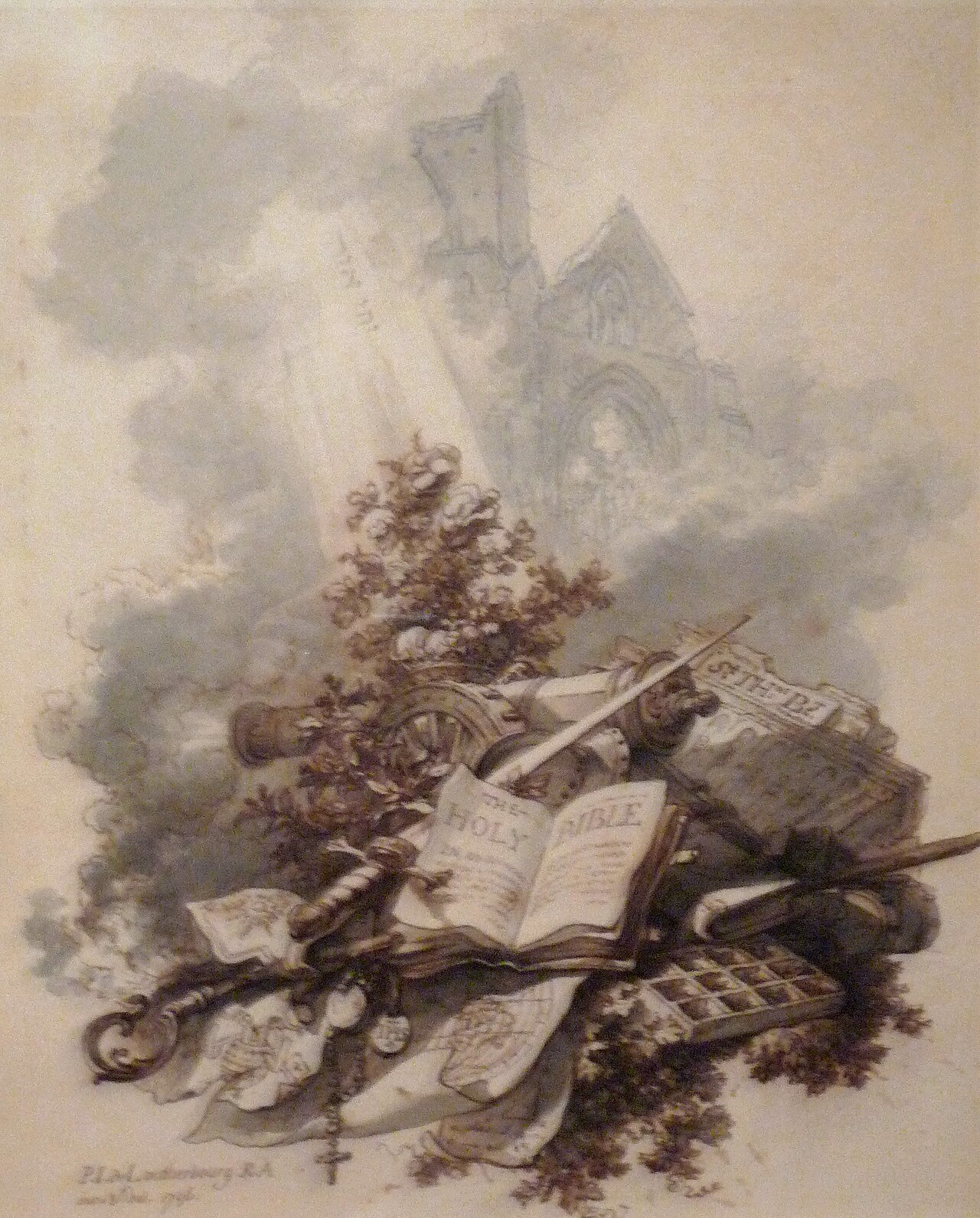
Sepia and grey wash drawing of a still-life trophy: an open Holy Bible with a pen, a ruined Gothic abbey in the misty background, a cannon, a rolled scroll labeled 'Hume', a chain, and a grated box in the foreground.Painting

Secondary source

Frontispiece design for Hume's History of England

Philippe-Jacques de Loutherbourg · c. 1780s or later, undated in facts

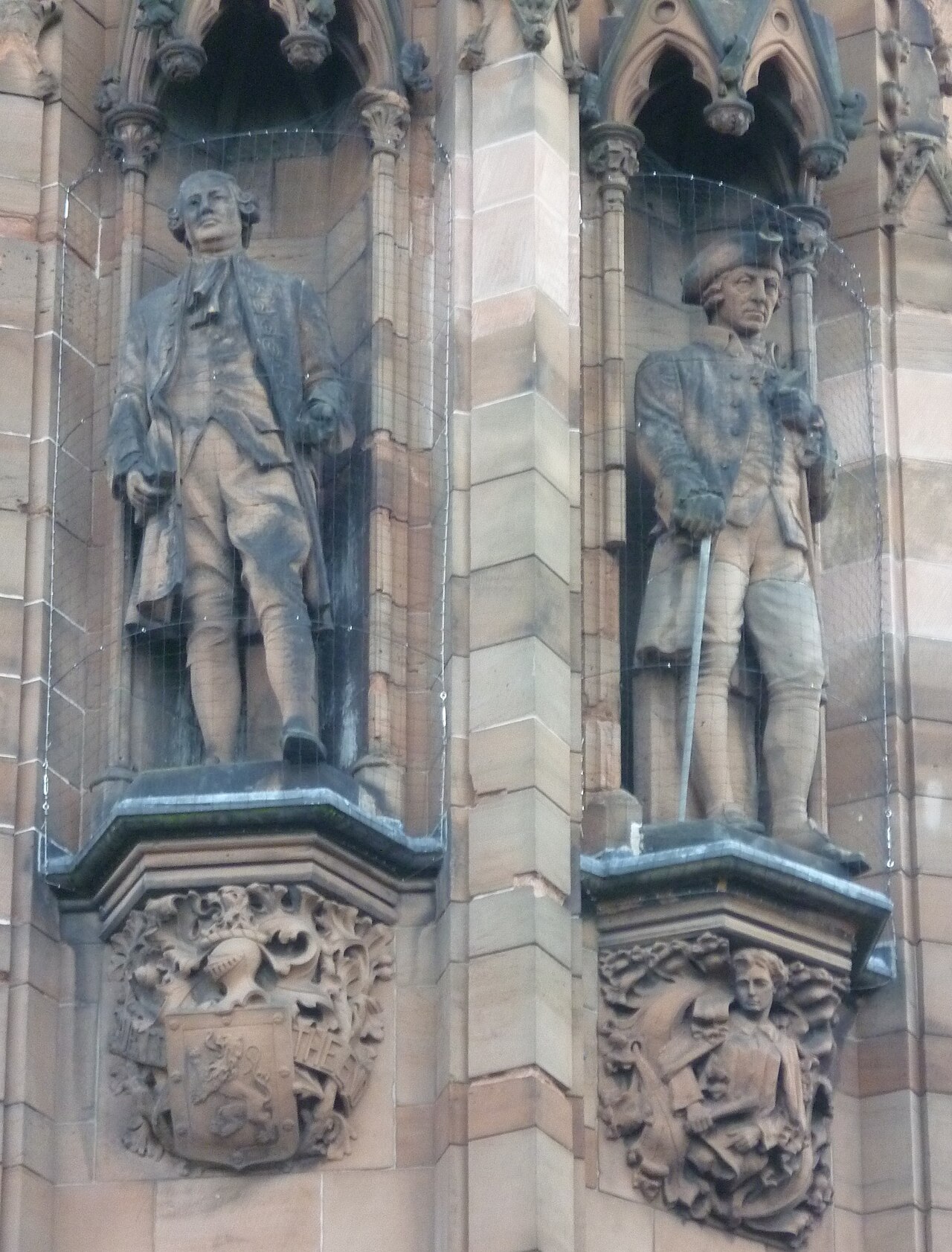
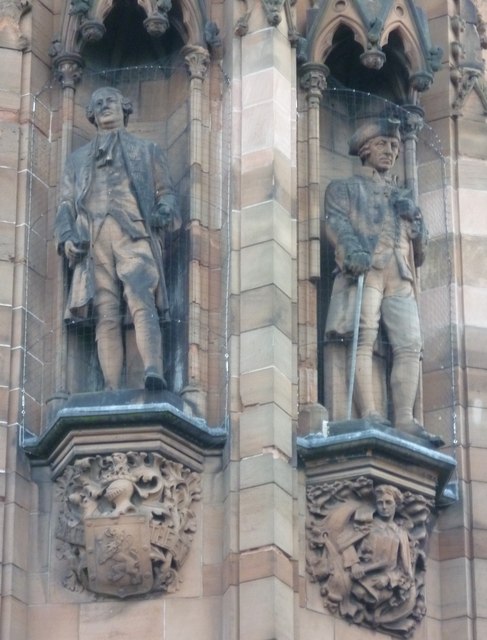
Two stone statues in Gothic niches on a sandstone building. The left statue shows a man in a long coat, waistcoat and breeches with a cravat. The right shows a man in a tricorn hat and coat holding a sword. Carved corbels with foliage sit below.Sculpture

Secondary source

David Hume and Adam Smith statues, Edinburgh

Kim Traynor · 2011-08-31

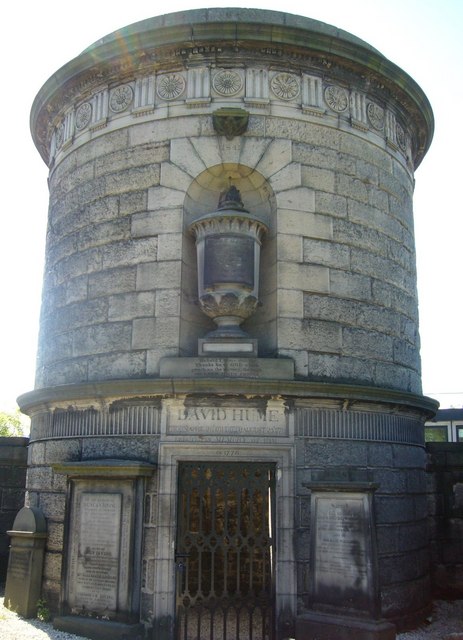
A cylindrical stone mausoleum with a domed top and a frieze of rosettes, set in a cemetery. A central arched niche holds an urn, and the lower inscription reads DAVID HUME. A black iron gate marks the door, with gravel and gravestones around it.Sculpture

Secondary source

Tomb of David Hume, Old Calton Cemetery

Robert Adam · 2010 (photograph); tomb designed by Robert Adam

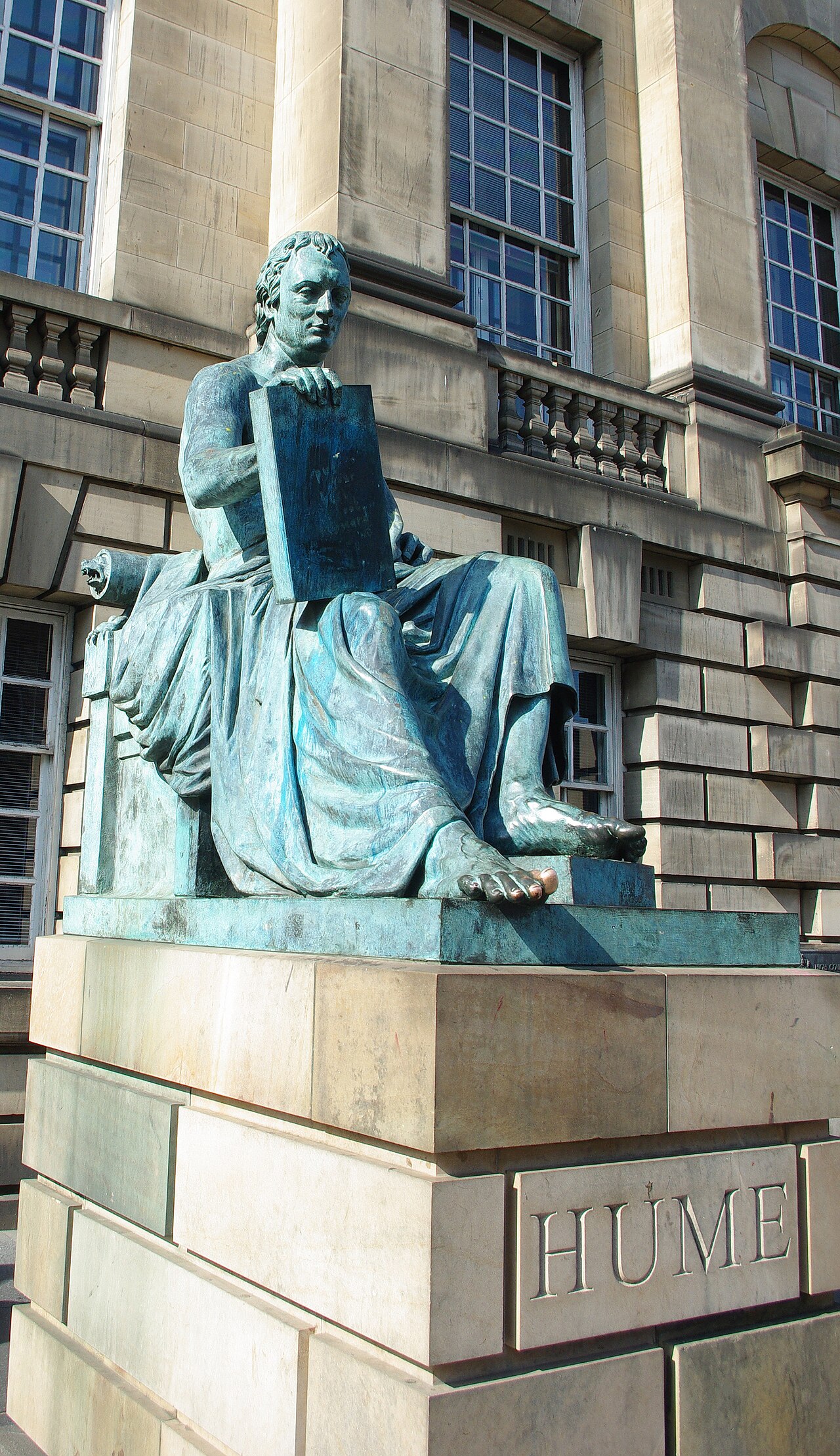
Bronze statue of a seated man in a toga-like draped robe, holding a large tablet on his lap, set on a stone plinth engraved with the name HUME, in front of a stone building with balustrades.Sculpture

Secondary source

Statue of David Hume by Alexander Stoddart

Alexander Stoddart · 15 April 2004 (photograph); statue by Alexander Stoddart

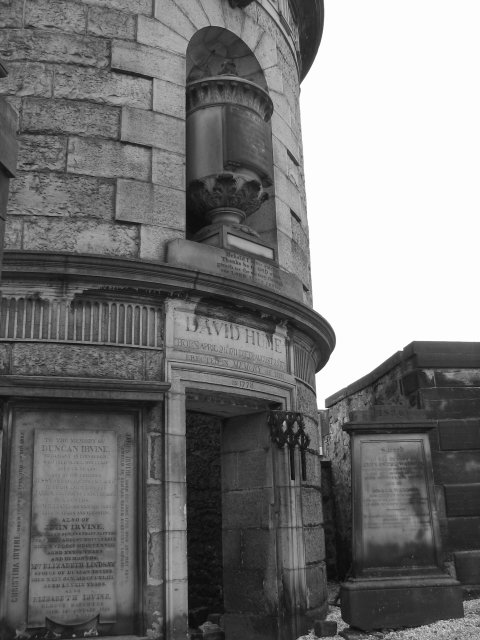
Black-and-white photo of David Hume's tomb monument in Old Calton Burial Ground: a circular stone mausoleum with a carved inscription 'DAVID HUME' over a doorway, a niche with a column above, and a memorial plaque beside it.Sculpture

Secondary source

Grave of David Hume, Old Calton Burial Ground

Callum Black · 27 September 2008 (photograph)

Photograph of a cylindrical stone mausoleum with a domed top and a classical urn set in a niche, with the name DAVID HUME carved above a bronze-barred door in Old Calton Burial Ground.Sculpture

Secondary source

David Hume's tomb, Old Calton Burial Ground

Kim Traynor · 8 June 2009 (photograph)

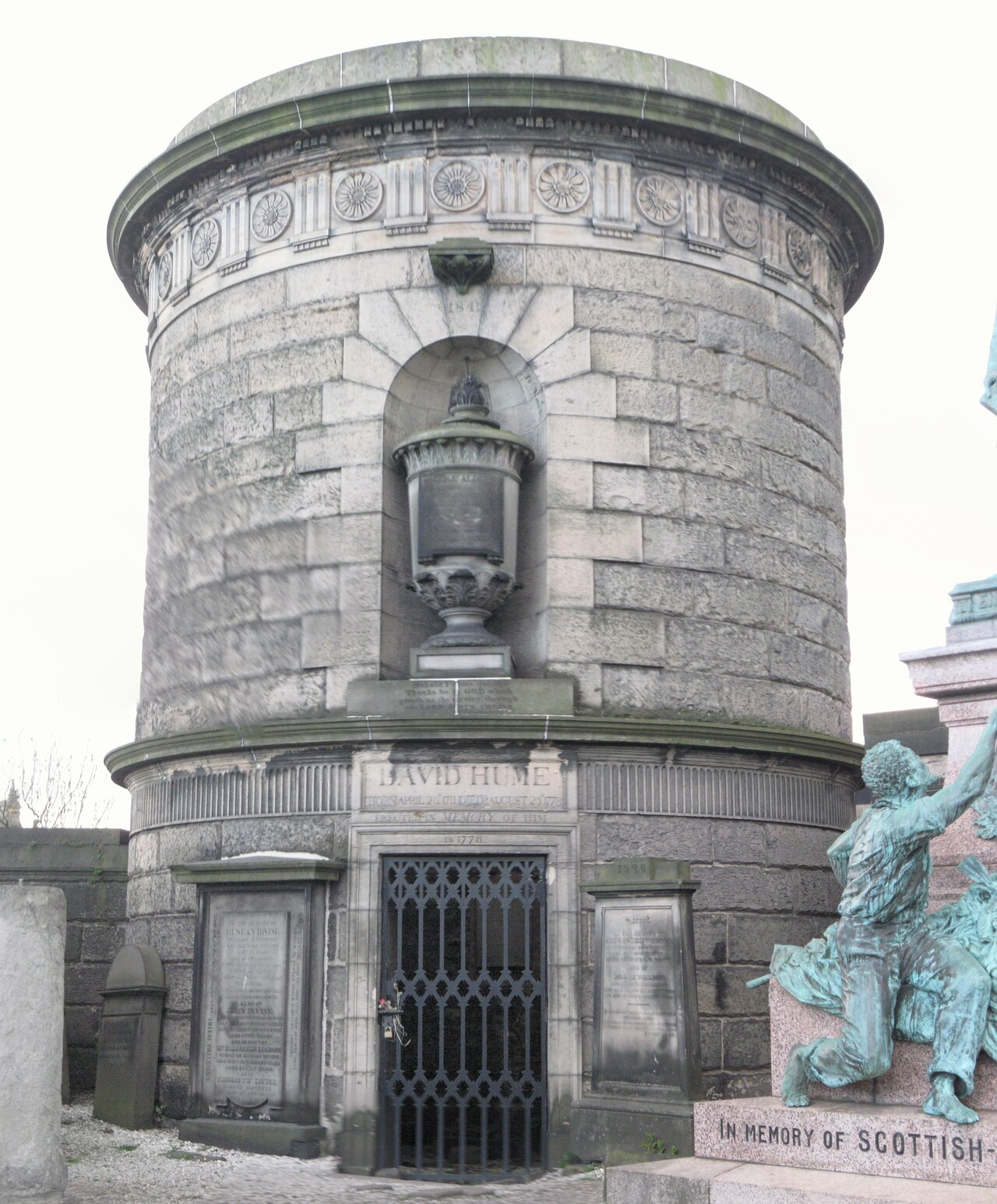
Circular stone mausoleum with a conical-domed roof and a frieze of rosettes and pilasters. A bronze urn sits in a recessed arch above a plaque reading DAVID HUME with a black iron gate at the entrance. A bronze statue stands at the right edge.Sculpture

Secondary source

Hume's tomb, Old Calton Burial Ground (stitched photograph)

Brian McNeil · 22 May 2013 (photograph)

Close-up of a stone monument's inscription reading DAVID HUME, BORN APRIL 26th 1711, DIED AUGUST 25th 1776, ERECTED IN MEMORY OF HIM, IN 1778, above a dark metal grille door.Sculpture

Secondary source

Hume monument, Old Calton Cemetery

1778

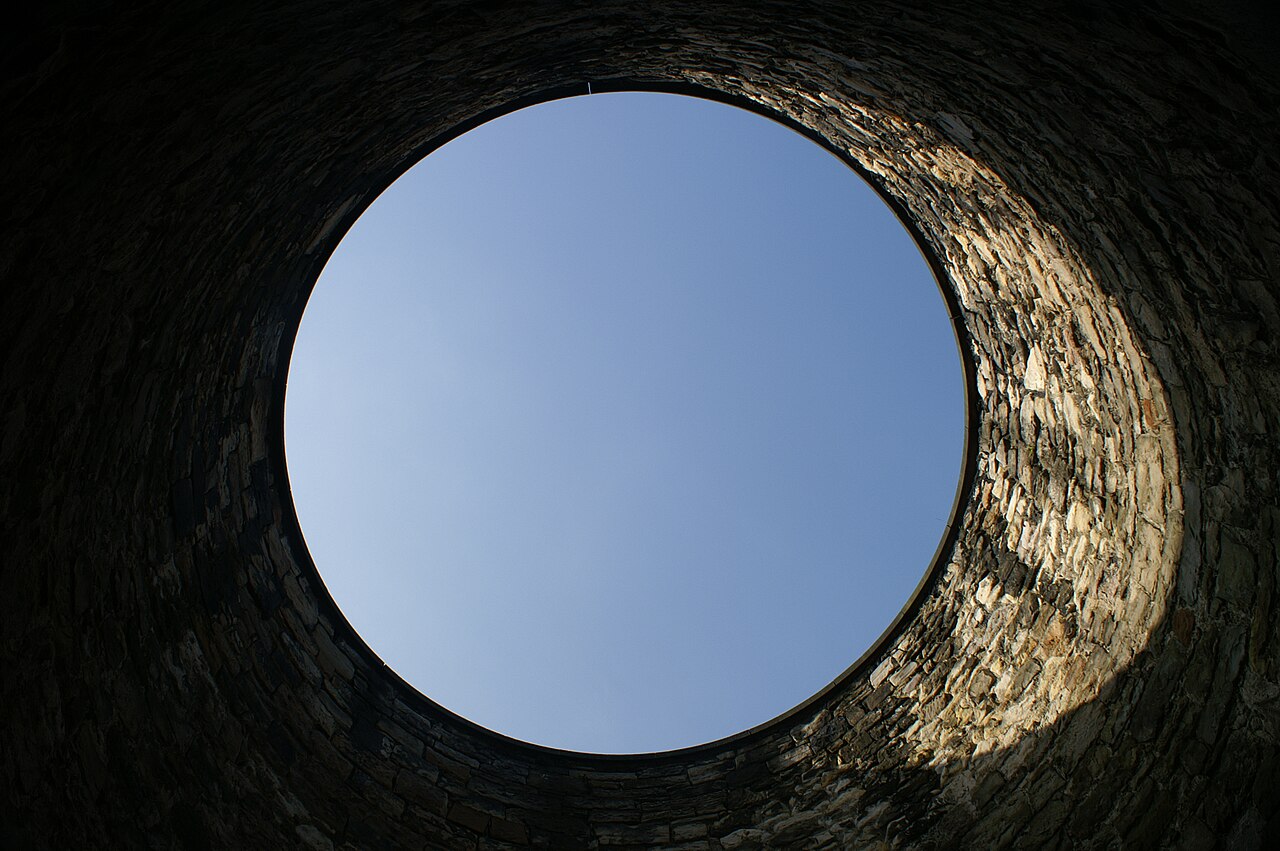
Looking straight up through a circular opening in a dark stone wall, showing a clear blue sky. Light falls on the textured stone interior of the circular shaft on the right side.Photograph

Secondary source

David Hume Memorial Sunlight Circle

Kell-McDonald · 18 March 2009

Two stone statues of standing men in period dress set in Gothic niches on a sandstone building facade, each on a carved corbel with heraldic or decorative relief below. The left figure wears a coat and cravat, the right figure a tricorn hat and holds a sword.Photograph

Secondary source

Two Edinburgh worthies, Queen Street

kim traynor · 1 January 2011

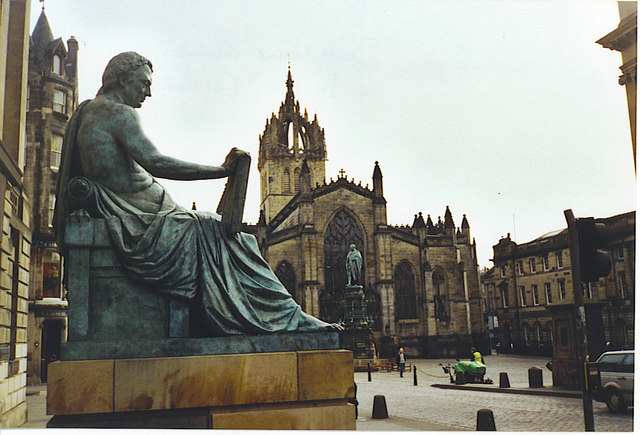
Bronze seated statue of a man in classical robes holding a scroll, on a stone plinth, with a Gothic cathedral with a spired tower behind it on a cobbled street under an overcast sky.Photograph

Secondary source

David Hume statue and St Giles Cathedral

Colin Smith · March 2002

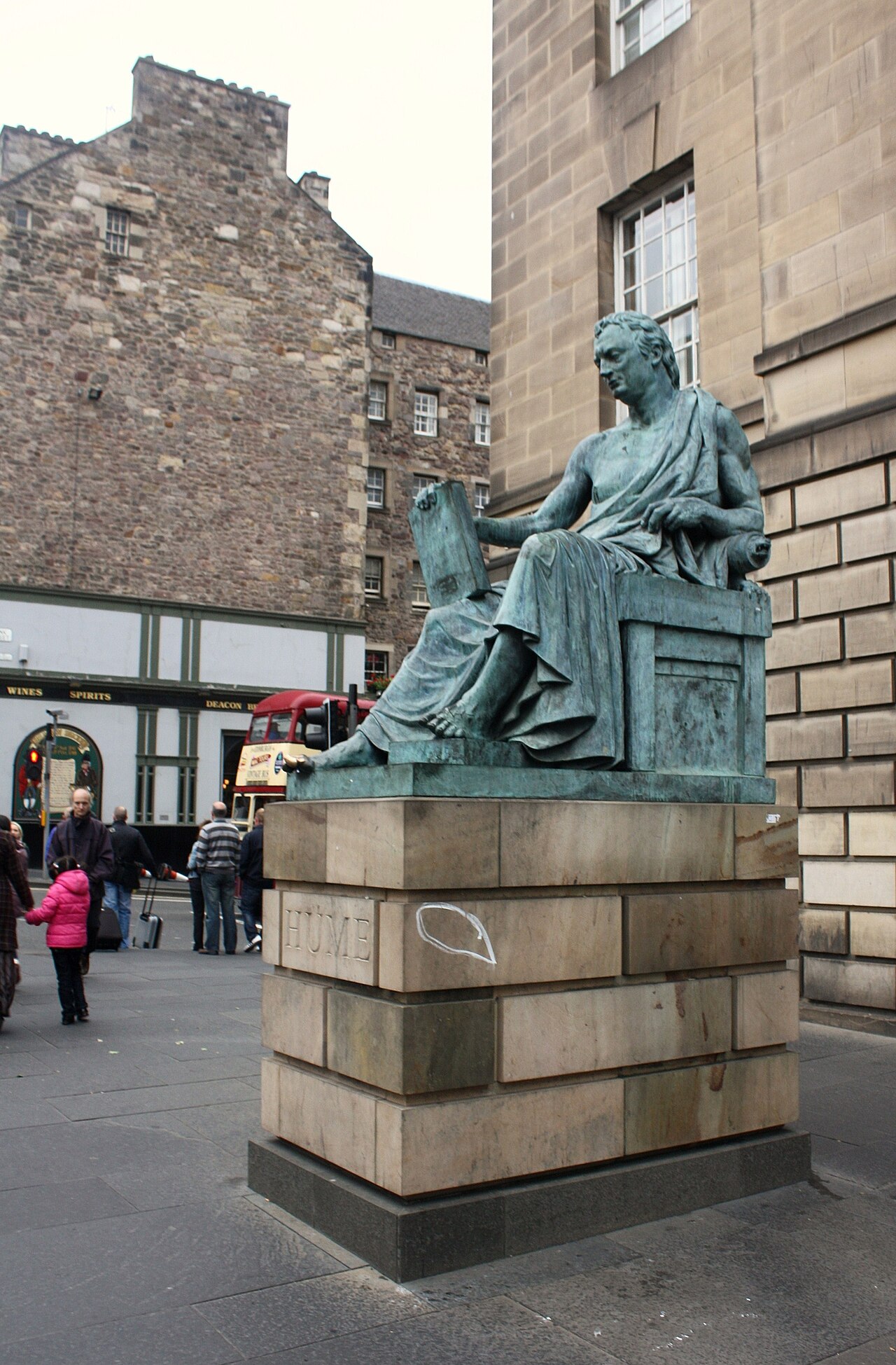
Bronze statue of a seated, partly draped man holding a book on his knee, set on a large stone plinth on a paved street in Edinburgh. Street scene behind with stone buildings, a red bus, and pedestrians. The plinth reads HUME.Photograph

Secondary source

Alexander Stoddart's statue of David Hume

Alexander Stoddart · 1995

Bronze statue of seated David Hume, a philosopher, holding a large book on his lap and a scroll in his left hand, with draped robes. It rests on a stone plinth engraved HUME, in front of a stone building with windows.Photograph

Secondary source

David Hume statue on the Royal Mile

Alexander Stoddart · 12 August 2013

Bronze statue of a seated man in robes holding a large book on his knee, resting his chin on his hand, set on a stone pedestal engraved with the name HUME. Stone building facade with tall windows behind.Photograph

Secondary source

Hume statue on the Royal Mile, Edinburgh

Agusto757 · 30 July 2011

Want the full shelf? Chat with David Hume in the app and open the Sources panel — every quote links back to the original.

Use David Hume in class

1 collection

A ready-made collection from the Humy team that features David Hume. Preview it, then try it free.

Trusted by educators worldwide

Conversations
375,000+
Real exchanges between students and historical figures
Messages exchanged
4,142,000+
Across every figure, classroom and language
Historical figures
100,000+
Each informed by a curated biography and selected sources
Languages supported
50+
From English and Spanish to Arabic and Korean

Paying customers

Used by 98 schools and universities

Partner school logo
Tecnológico de Monterrey logo
Hyper Island logo
Partner school logo
Chambersburg Area School District logo
Broward County Public Schools logo
Nebo School District logo
National Louis University logo
South Florida PBS logo
Punahou School logo
University of Wisconsin–River Falls logo
Partner school logo
Partner school logo
Archbishop Mitty High School logo
Kingsburg High School logo
Norwalk Public Schools logo
Partner school logo
Connections logo
Partner school logo
Moore Public Schools logo
Partner school logo
Partner school logo
Partner school logo
Partner school logo
Robbinsville Public Schools logo
Partner school logo
Partner school logo
Partner school logo
Tecnológico de Monterrey logo
Hyper Island logo
Partner school logo
Chambersburg Area School District logo
Broward County Public Schools logo
Nebo School District logo
National Louis University logo
South Florida PBS logo
Punahou School logo
University of Wisconsin–River Falls logo
Partner school logo
Partner school logo
Archbishop Mitty High School logo
Kingsburg High School logo
Norwalk Public Schools logo
Partner school logo
Connections logo
Partner school logo
Moore Public Schools logo
Partner school logo
Partner school logo
Partner school logo
Partner school logo
Robbinsville Public Schools logo
Partner school logo
Partner school logo

What educators are saying

“We enjoyed the program last year and used it frequently.”
“My students say it’s a welcome change of pace. I’m not a fan of the “sage on the stage” model, so I try to incorporate research-oriented and self-paced activities. With Humy, students have to take charge of their learning. They’ve become more adept at critical thinking, forming better questions, and improving their reading comprehension. The interview feature has been my go-to tool. I create assignments where students must ask historical figures a set number of questions, then summarize the responses to ensure they’re truly absorbing the material. This approach lets them actively explore the past rather than passively consuming information.”
“Humy has helped me bring historical figures, sometimes long past, to life. When my students interact with these figures in real-time, it eliminates some of the perceived “ancient” characteristics of my curriculum. This has shifted my students’ thinking away from viewing history as abstract or irrelevant. Real-time interactions make historical figures relatable, even allowing students to ask off-topic questions that help put historical lives in a more relevant context for 13-year-olds. The feature I use the most is the interview feature. After teaching a topic, most recently Gandhi and Joan of Arc, I have the students ask pointed, focused questions. We practice good conversation techniques beforehand, teaching them to listen (or read) carefully and formulate thoughtful follow-up questions rather than just interrogating. It helps students practice effective conversation skills.”

FAQ

Frequently asked questions

Who is David Hume?
Scottish philosopher and historian of the 18th century. On Humy.ai you can chat with an AI version of David Hume that draws on a short biography and 92 historical sources during the conversation — by text or voice, in 42 languages.
Is David Hume AI free?
David Hume is part of Humy's full library of more than 100,000 figures, which comes with a paid plan. A free account (no credit card) includes 20 messages a month with the free library's figures, so you can try how the conversations work first.
What sources does the David Hume AI use?
It draws on a short biography and 92 historical sources (books, paintings and photographs), including “A Treatise of Human Nature”, “Philosophical Essays Concerning Human Understanding” and “Dialogues Concerning Natural Religion”. Each source has its own page on Humy.ai.
How historically accurate is the AI version of David Hume?
Each figure uses a short biography and a small set of selected historical sources as context (retrieval-augmented generation), so answers stay closer to known material than the model's general knowledge alone. It isn't a citation-grade research tool — like any LLM, the AI can get details wrong or extrapolate. Treat it as a strong starting point for inquiry and cross-reference important claims.
Can I talk to David Hume by voice?
Yes. In addition to text chat, you can call David Hume and hear their voice respond in real time — useful for auditory learners, interview practice and Socratic dialogue.
Is Humy.ai safe and compliant for schools?
Yes. Humy.ai is used by more than 100 schools, universities and organisations. The platform is FERPA- and GDPR-aligned, supports SSO, and offers an IT-approval pack tailored for school procurement teams.

Ready when you are

Start chatting with David Hume now.

20 messages free · No credit card · Available in 50+ languages.