


Primary sourceBook1748
Page from Hume's Enquiry (1748)
David Hume · 1748
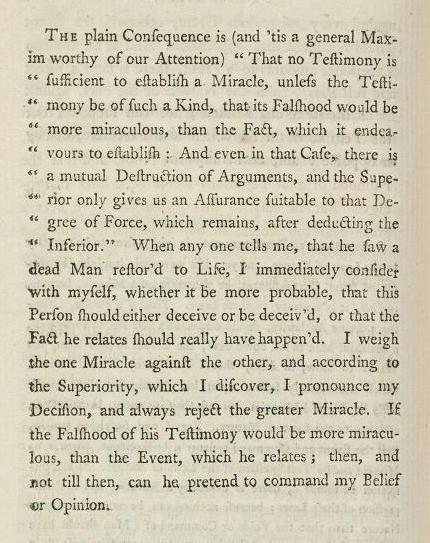
A photograph of a page from an original 1748 edition of Hume's Enquiry, showing his argument about miracles and testimony.
This page shows Hume's own printed words from the Enquiry, including his argument about miracles.
About this source
What it is
This is a photograph of a page from an original 1748 edition of Hume's Enquiry. The photograph was taken by a Wikimedia Commons contributor who paid the Cambridge University Library for the copy. The page shows printed text in an eighteenth-century typeface.
Why it matters
The page contains Hume's argument about miracles. He argues that no testimony is enough to establish a miracle unless the falsehood of that testimony would be more miraculous than the event it describes. This argument became one of the most discussed parts of his work, and it shows how Hume tested claims against evidence.
The photograph lets students read Hume's own printed words, rather than a modern edition.
Look closer
- How does the typeface and layout of the page differ from a modern book?
- What does Hume say about weighing one miracle against another, and why does that matter for belief?
- What does this single page leave out of the larger argument in the Enquiry?
This book is part of the curated material that grounds the AI version of David Hume on Humy.ai — when students ask about related events, the AI can quote it and cite it.
More David Hume sources
Meet the AI David Hume →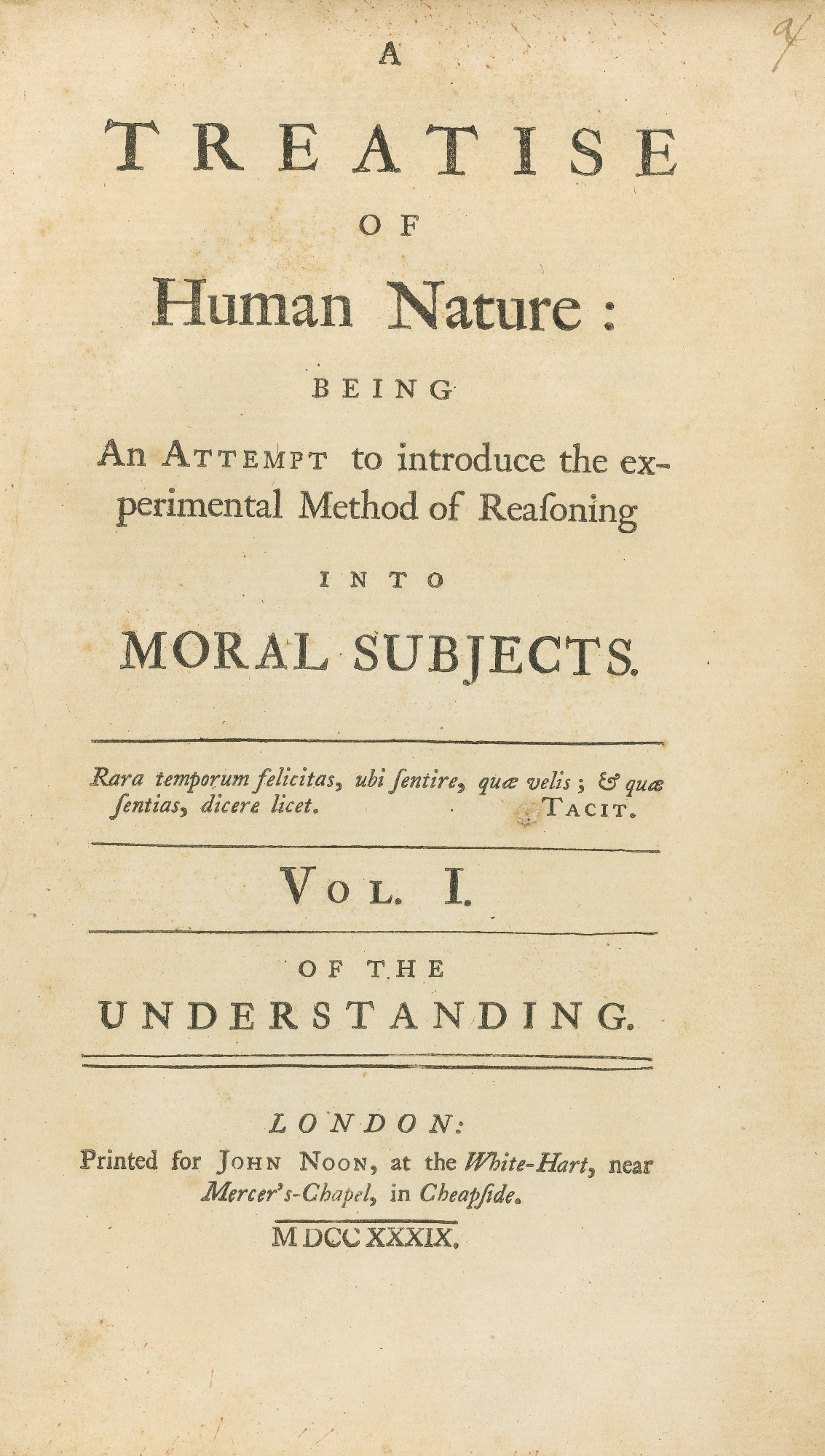 Book
Primary source
A Treatise of Human Nature
David Hume · 1739-1740
 Book
Primary source
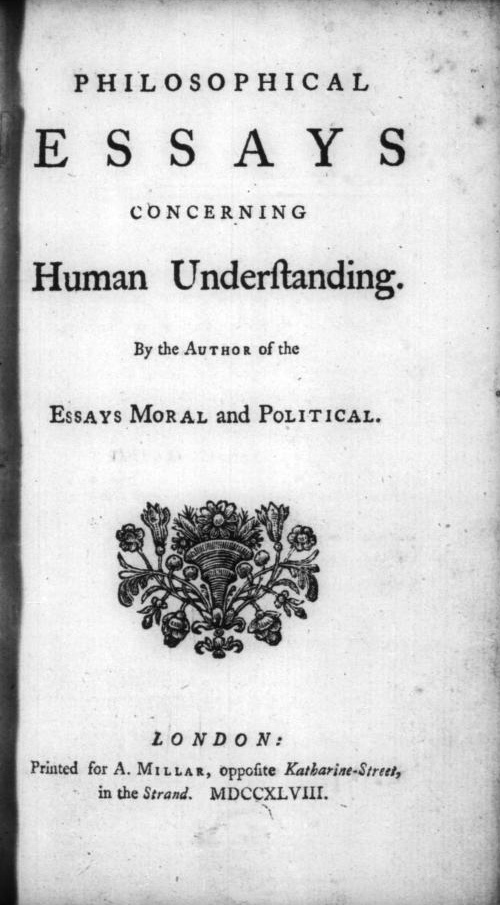
Philosophical Essays Concerning Human Understanding
David Hume · 1748
 Book
Primary source
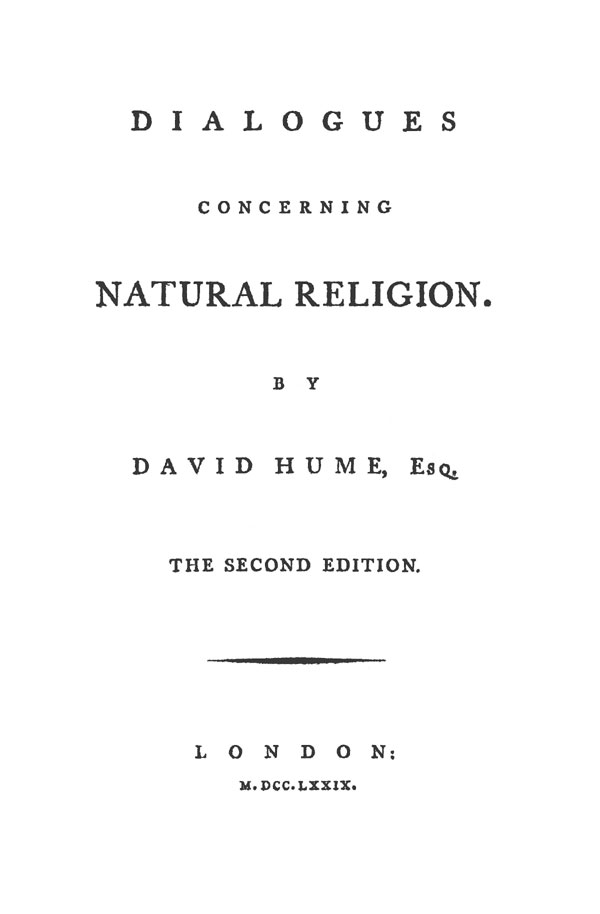
Dialogues Concerning Natural Religion
David Hume · 1779
Primary source
Of Miracles
David Hume · 1748
Primary source
An Enquiry Concerning the Principles of Morals
David Hume · 1751
Ready when you are
Start chatting with David Hume now.
20 messages free · No credit card · Available in 50+ languages.