


Primary sourceBook1888
Treatise of Human Nature, Book 1, Part 3
David Hume · 1888
An excerpt from Hume's Treatise of Human Nature, on knowledge and probability, as presented in an online text edition.
Presents Hume's own written argument from his major philosophical work, the Treatise of Human Nature.
About this source
What it is
This is an excerpt from Hume's Treatise of Human Nature, Book 1, Part 3, titled 'Of knowledge and probability,' as presented on Wikisource. The opening section discusses seven kinds of philosophical relation, including resemblance, identity, proportion, degrees in a quality, contrariety and causation. The Wikisource page is a volunteer-prepared online text, not a scan of the original printed book, so its wording may differ from the first edition.
Why it matters
The Treatise is one of the most important works of the Scottish Enlightenment. In this passage Hume distinguishes relations that depend only on ideas, such as the angles of a triangle, from relations that can change when objects move, such as distance. This careful sorting of knowledge shaped later debates among philosophers about how we know things.
Look closer
- What examples does Hume use to explain the difference between relations that depend on ideas and those that do not?
- Why might a long philosophical work be published in parts, and how does this excerpt fit into the whole?
- What is left out of a short online excerpt that a full edition would show?
This book is part of the curated material that grounds the AI version of David Hume on Humy.ai — when students ask about related events, the AI can quote it and cite it.
More David Hume sources
Meet the AI David Hume →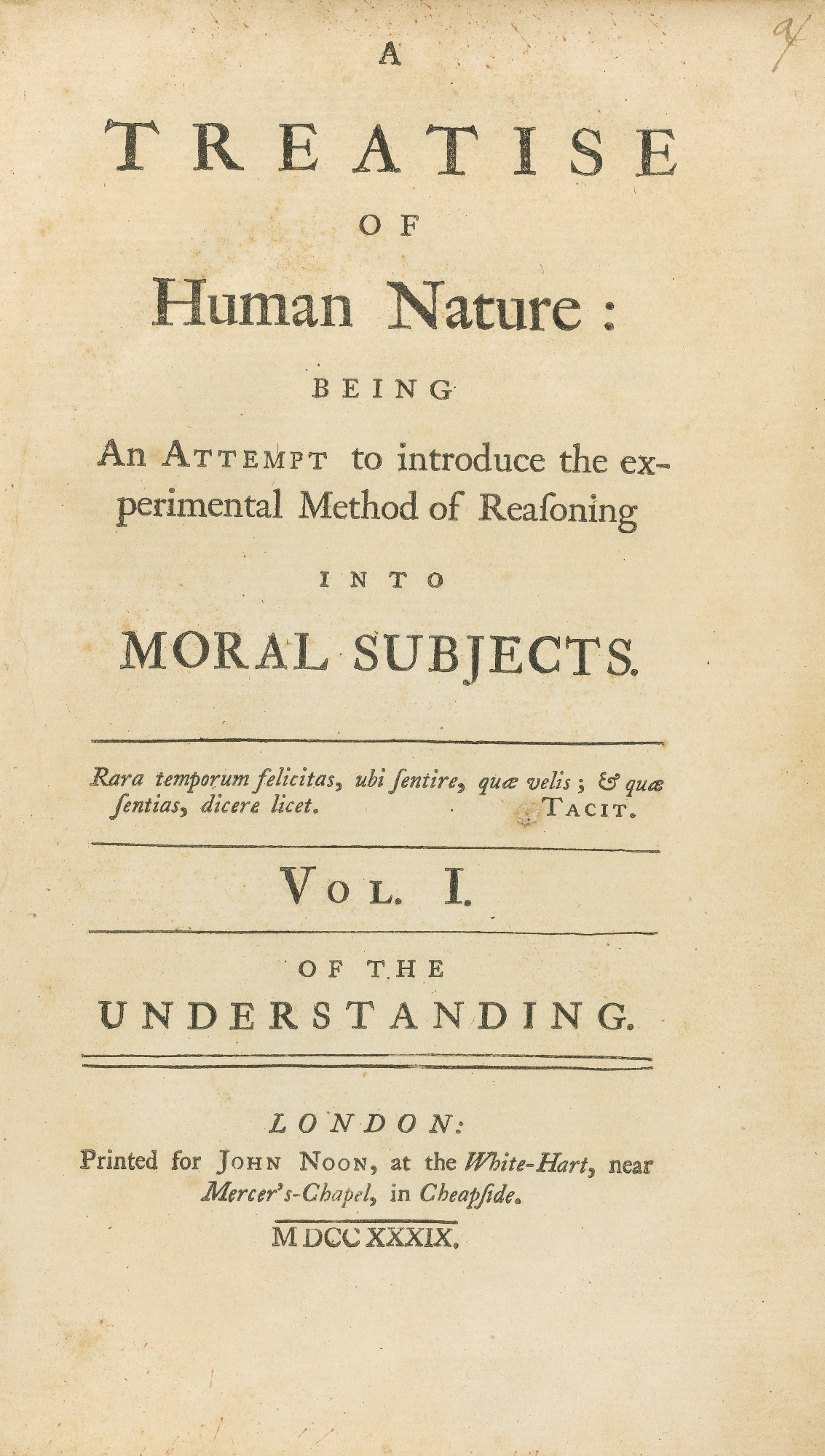 Book
Primary source
A Treatise of Human Nature
David Hume · 1739-1740
 Book
Primary source
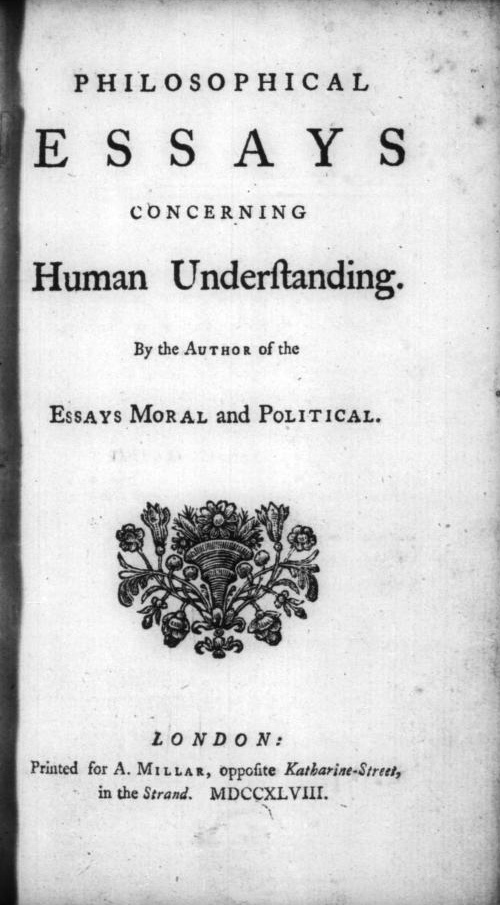
Philosophical Essays Concerning Human Understanding
David Hume · 1748
 Book
Primary source
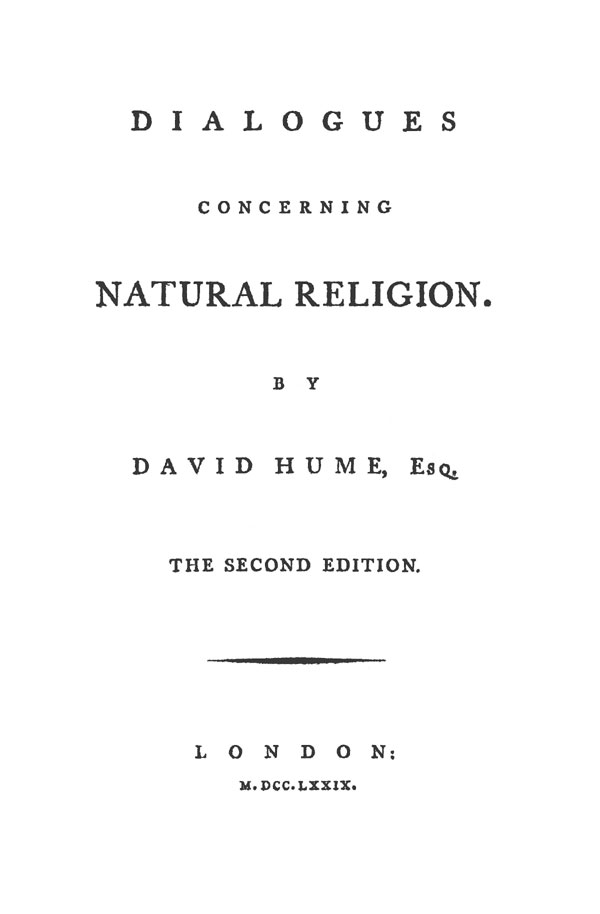
Dialogues Concerning Natural Religion
David Hume · 1779
Primary source
Of Miracles
David Hume · 1748
Primary source
An Enquiry Concerning the Principles of Morals
David Hume · 1751
Ready when you are
Start chatting with David Hume now.
20 messages free · No credit card · Available in 50+ languages.