


Primary sourceDocument4 July 1776
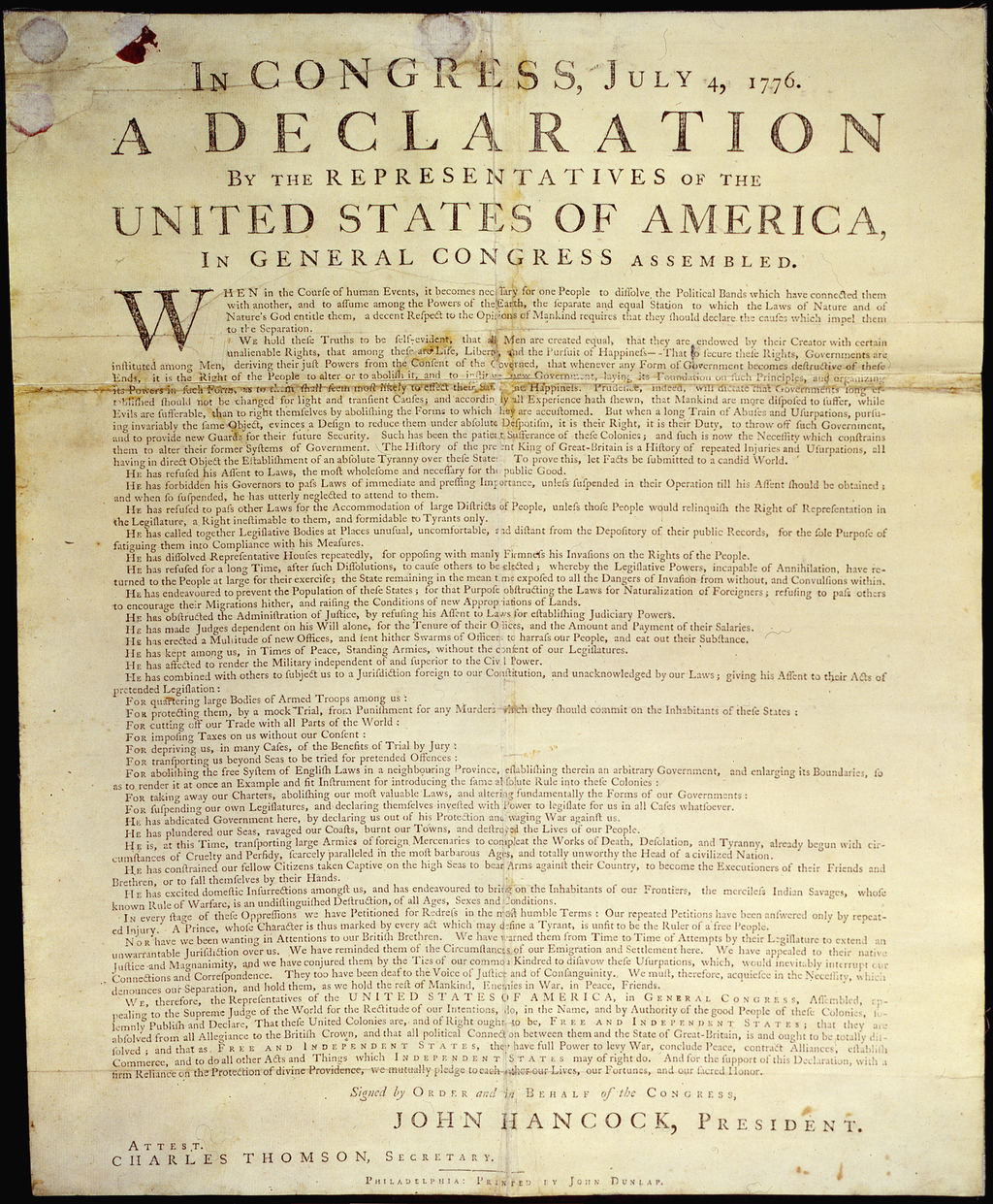
Dunlap Broadside, first printing of the Declaration, 1776
Thomas Jefferson · 4 July 1776
The first printed version of the Declaration of Independence, produced by John Dunlap in Philadelphia on the night of July 4, 1776. It closes with the attestation 'John Hancock, President'.
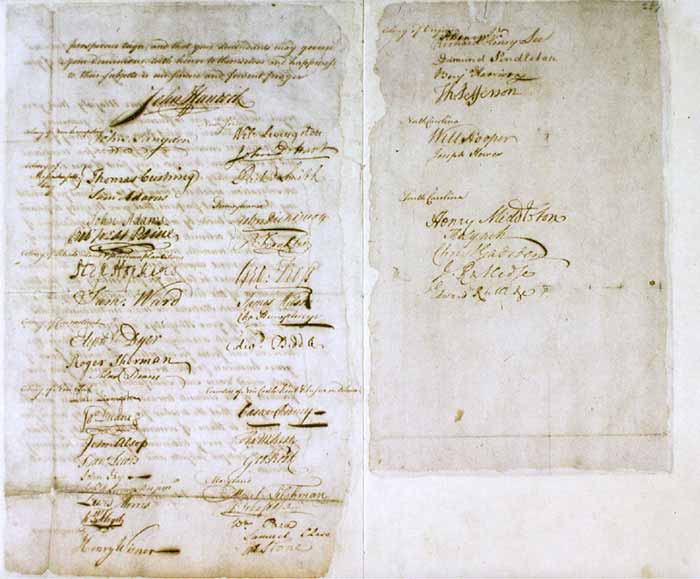
Hancock's name, as president, is printed on this first printed Declaration, the text Congress adopted under his presidency.
About this source
What it is
This is a scan of a printed sheet headed 'In Congress, July 4, 1776', with the Declaration in large capitals followed by dense body text. It ends with 'John Hancock, President' and 'Attest. Charles Thomson, Secretary', and small print reads 'Philadelphia: Printed by John Dunlap'. The shown copy is from the U.S. National Archives and Records Administration. The Dunlap broadside is known from about twenty-five surviving copies.
Why it matters
According to the record, John Dunlap, the official printer to the Continental Congress, printed the Declaration in his Philadelphia shop on the night of July 4, 1776. The next morning copies went out to assemblies, conventions and committees of safety, and to commanders of Continental troops. Hancock's signed attestation shows that the printed text was issued in the name of Congress.
Look closer
- Why does the printed text end with the names of the president and secretary rather than the signers?
- Who was meant to receive these copies, and what does that suggest about the document's purpose?
- Why do you think only about twenty-five copies survive today?
This document is part of the curated material that grounds the AI version of John Hancock on Humy.ai — when students ask about related events, the AI can quote it and cite it.
More John Hancock sources
Meet the AI John Hancock →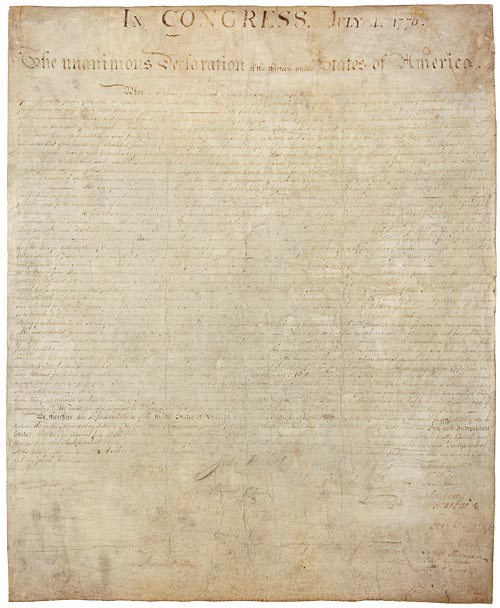 Document
Primary source
Declaration of Independence
Continental Congress (drafted by Thomas Jefferson) · 1776
 Document
Primary source
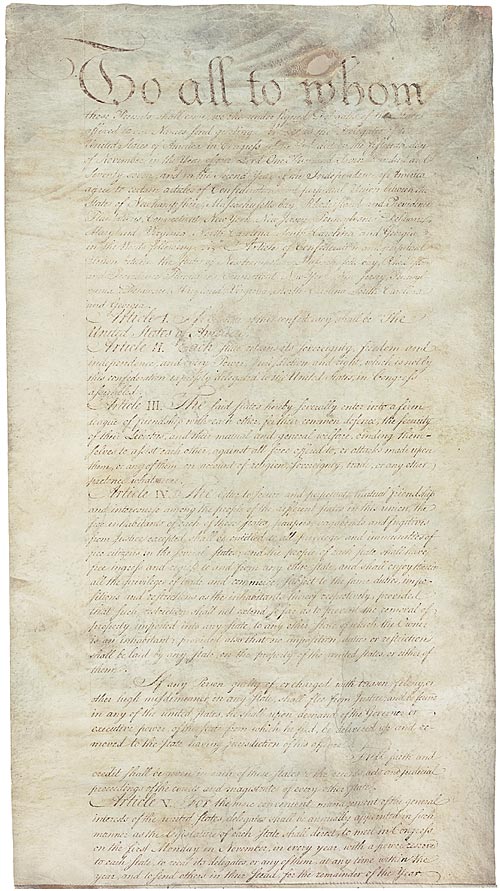
Articles of Confederation
Continental Congress · 1777
 Painting
Primary source
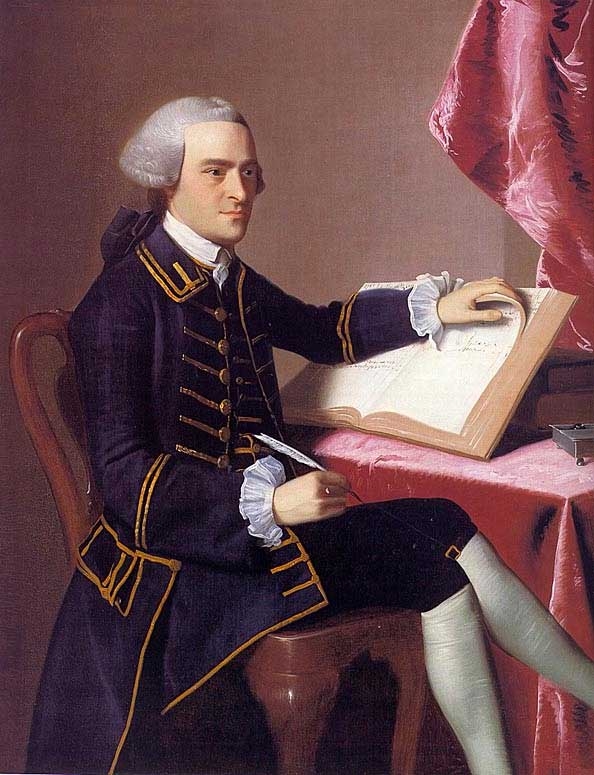
John Hancock
John Singleton Copley · 1765
 Document
Primary source
Olive Branch Petition
Second Continental Congress · 1775
 Painting
Secondary source
Declaration of Independence
John Trumbull · 1818
Ready when you are
Start chatting with John Hancock now.
20 messages free · No credit card · Available in 50+ languages.