


Secondary sourcePainting1853
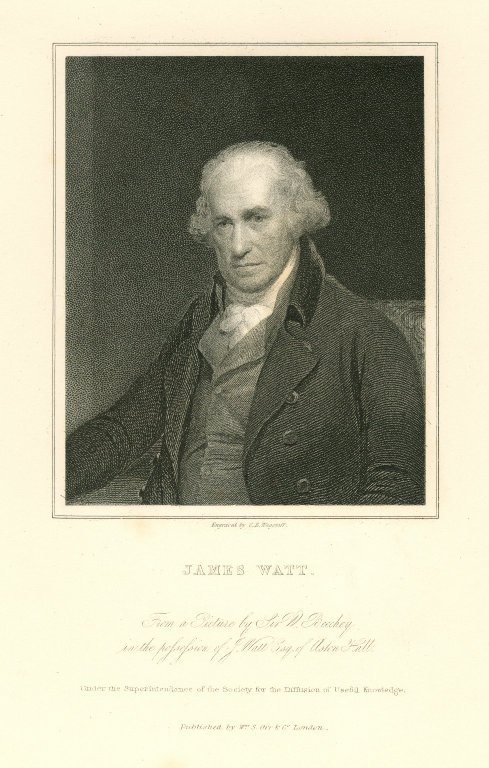
Engraved portrait of James Watt
Charles Eden Wagstaff · 1853
An 1853 engraved portrait of James Watt by Charles Eden Wagstaff, made after a painting by William Beechey. It is held by the University of Edinburgh.
Shows how Watt's likeness, first painted by William Beechey, was engraved and circulated decades after his death.
About this source
What it is
This is an engraved portrait of James Watt made in 1853 by C. E. Wagstaff. It is based on a work by William Beechey. It shows an older man with white hair, a dark coat and a white cravat, seated and turned slightly within a plate border. The title 'JAMES WATT' appears below the image, with a dedication and publisher line. The print is held by the University of Edinburgh.
Why it matters
The portrait was made more than thirty years after Watt's death in 1819. Engravings like this carried famous likenesses to readers who could not see the original paintings. The chain from Beechey's portrait to Wagstaff's engraving shows how Watt's face was spread through the nineteenth century, a period when his inventions were central to British industry.
Look closer
- What does the dark coat and white cravat tell you about how Watt wanted to appear?
- Why might an 1853 print be based on an earlier painting instead of a new portrait?
- What does the dedication below the image suggest about who the print was meant for?
This painting is part of the curated material that grounds the AI version of James Watt on Humy.ai — when students ask about related events, the AI can quote it and cite it.
More James Watt sources
Meet the AI James Watt →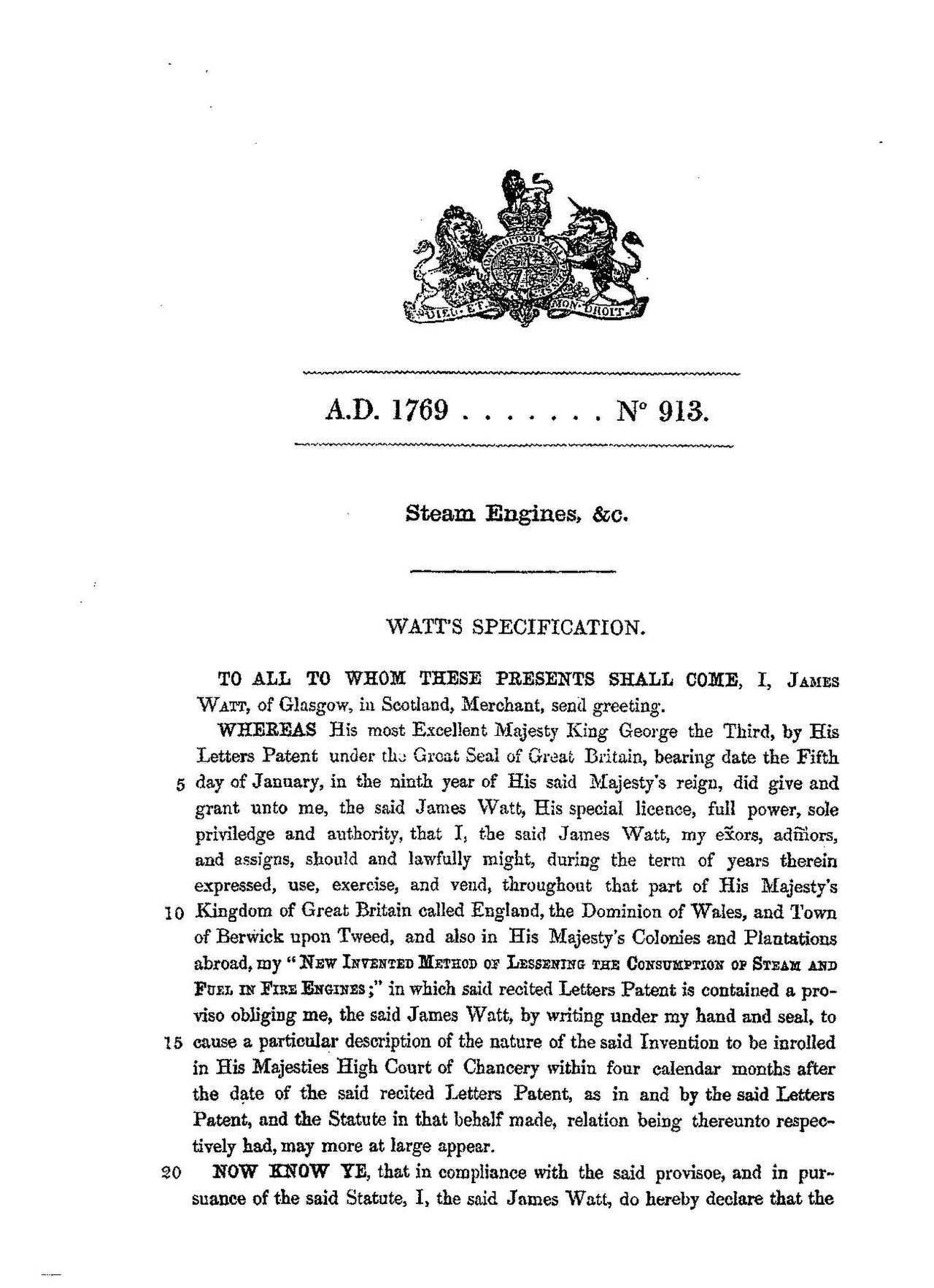 Document
Primary source
James Watt Patent No. 913
James Watt · 1769 (reprinted 1855)
 Artifact
Primary source
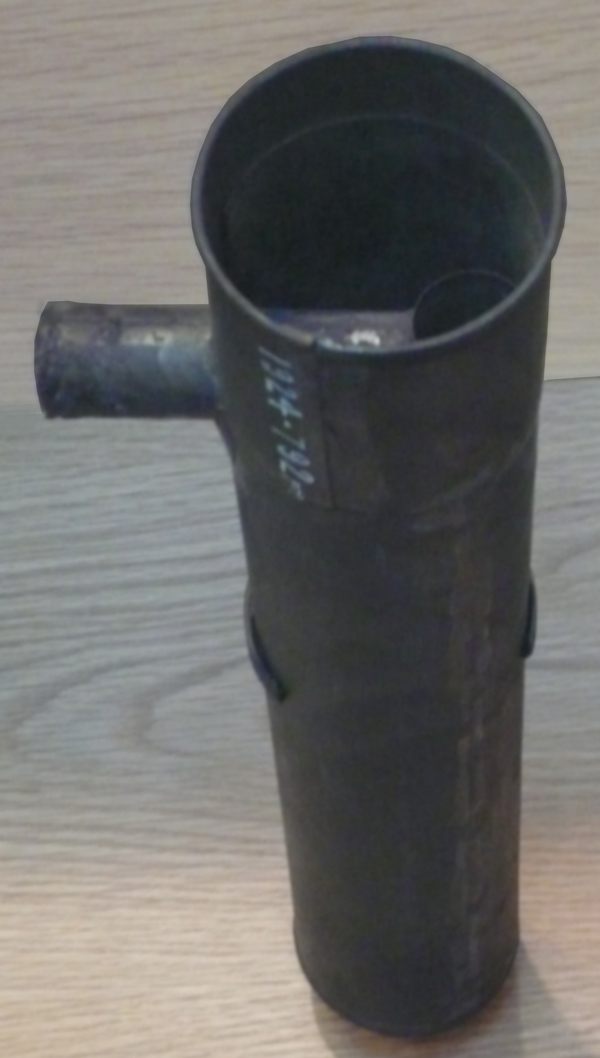
Watt's First Condenser
James Watt · c. 1765
 Artifact
Primary source
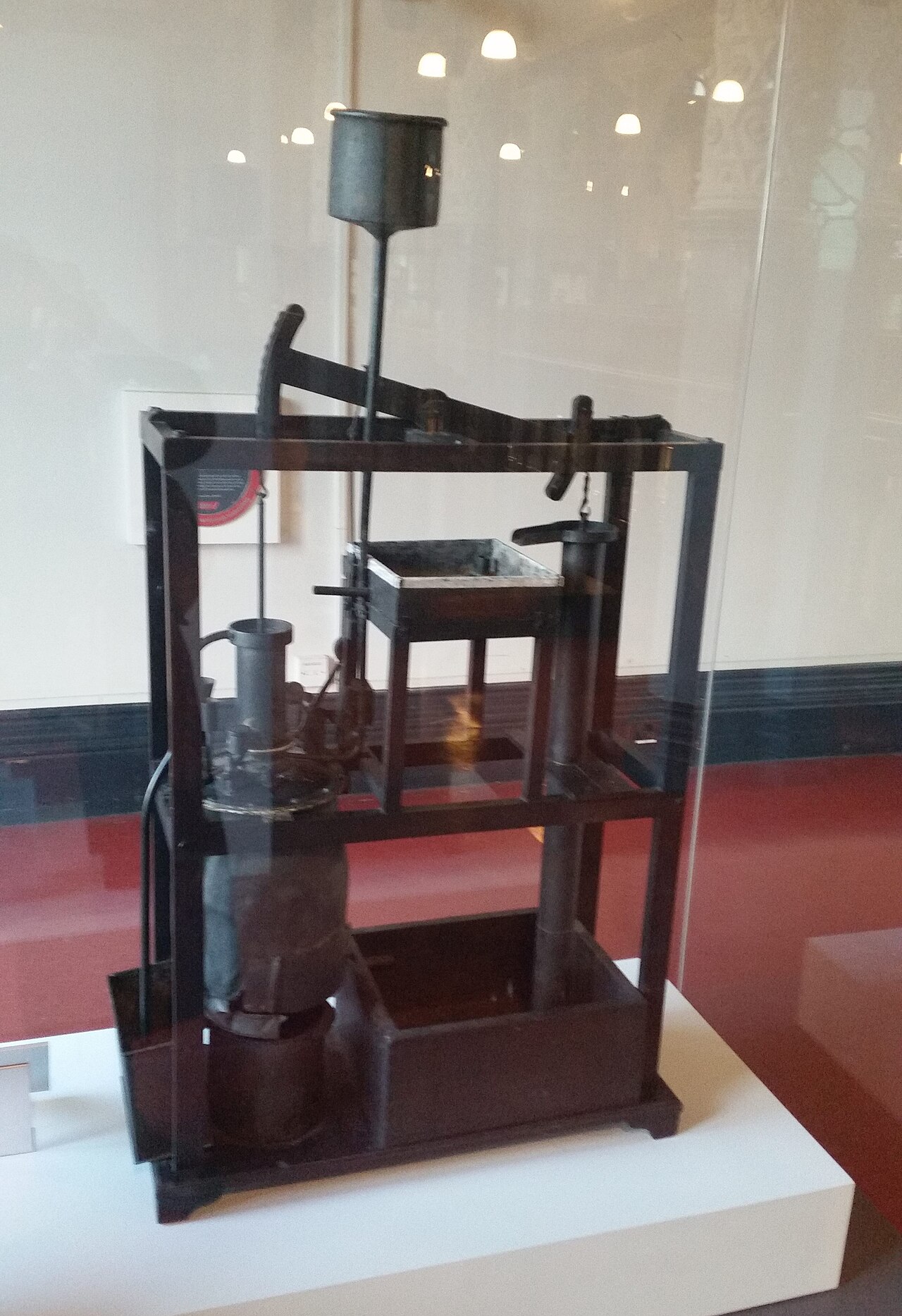
Model Newcomen Engine Repaired by James Watt
Unknown maker (repaired by James Watt) · c. 1760
 Artifact
Primary source
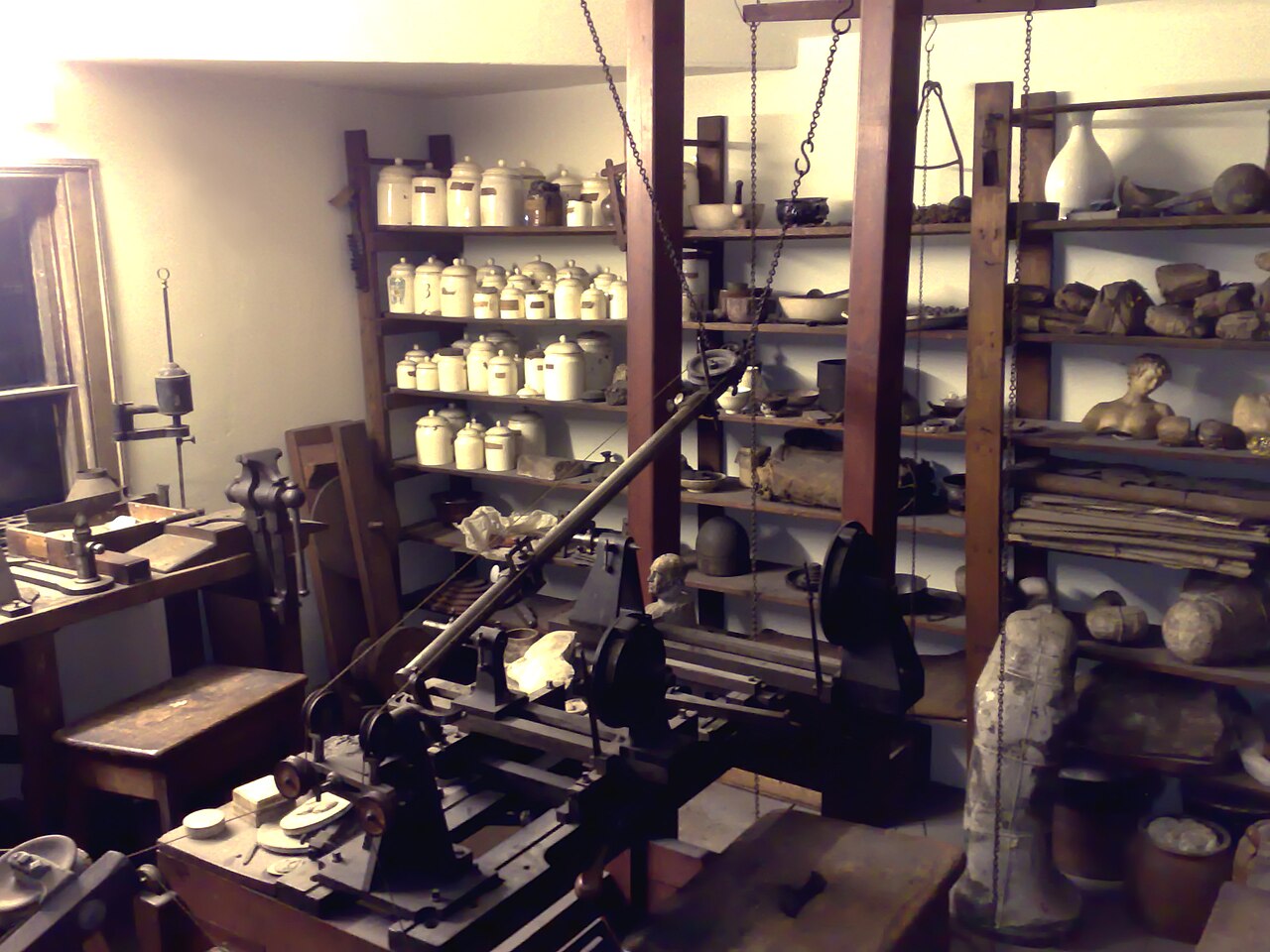
James Watt's Workshop
 Artifact
Primary source
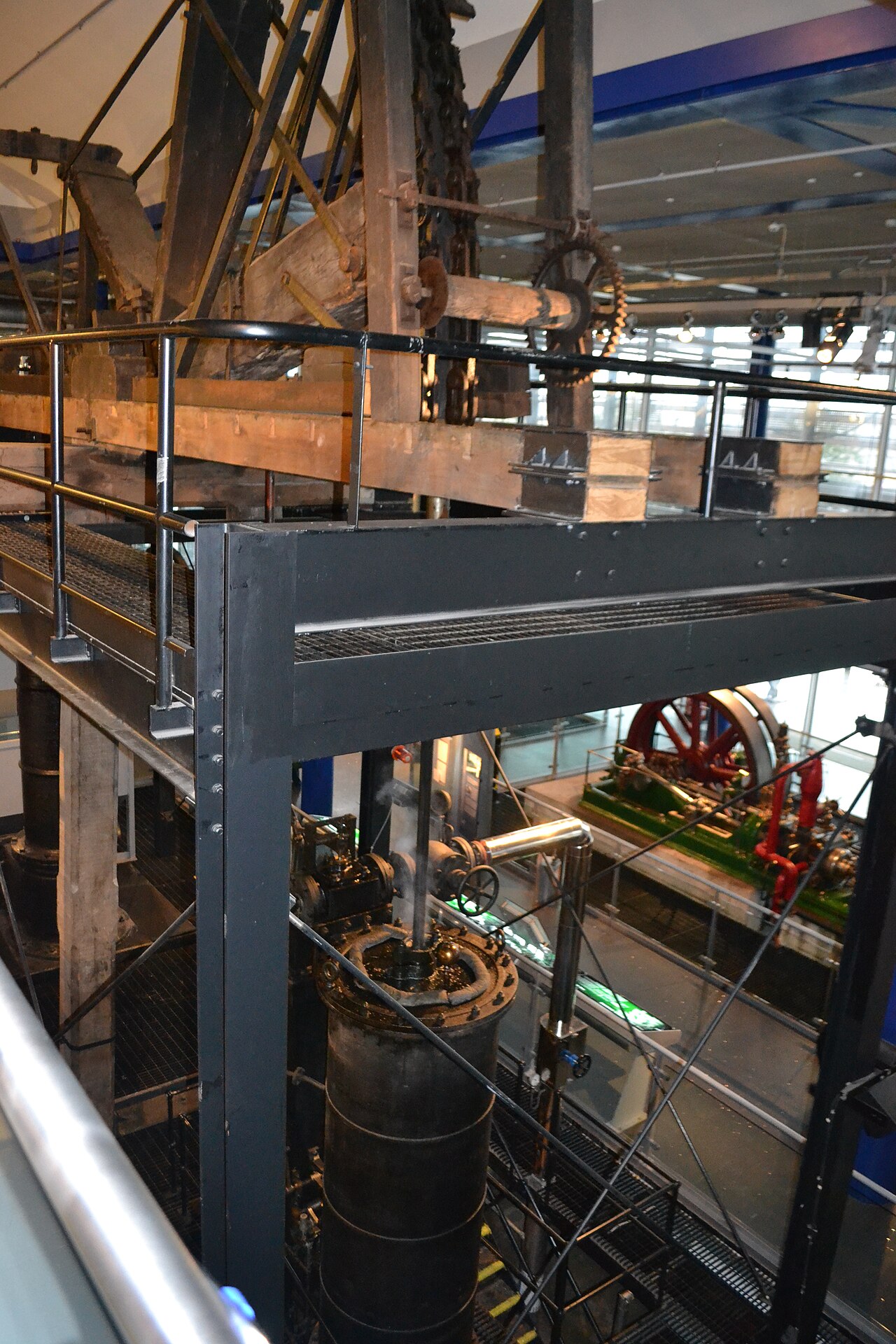
Smethwick Engine
James Watt · 1779
Ready when you are
Start chatting with James Watt now.
20 messages free · No credit card · Available in 50+ languages.